Japanese Crystal Candy (Kohakutou) — Crunchy Outside, Jelly Inside
Japanese crystal candy, or kohakutou, is a jewel-like Japanese treat that's crunchy on the outside and soft like jelly inside. Made with just agar agar, sugar, and water, it needs no special tools — only patience while it dries.
By Alyssa
- Prep
- 60 min
- Cook
- 10 min
- Total
- 70 min
- Serves
- 20
On this page11 quick jumps
TOC
11 quick jumps
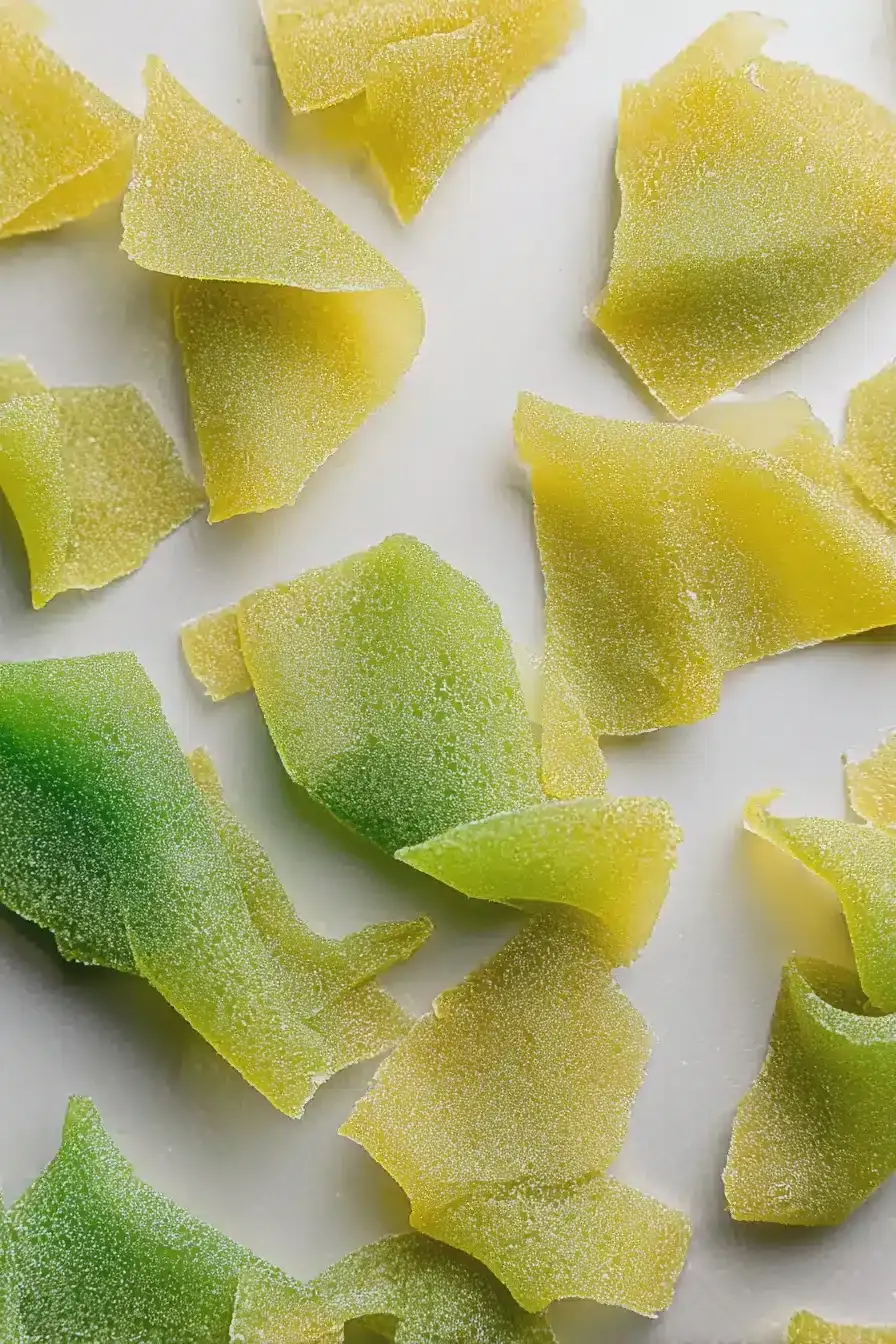
Japanese crystal candy, known as kohakutou (琥珀糖), is a traditional Japanese sweet made from three simple base ingredients: agar agar, sugar, and water. The candy begins as a firm jelly, but after several days of air-drying it develops its signature texture — a delicate, crunchy sugar shell surrounding a soft, jelly-like center.
The translucent pieces can be cut or torn into irregular shapes that look like crystals, gemstones, or pieces of colored glass. Food coloring and flavorings are optional, so you can keep the candies clear or create everything from pastel fruit-flavored gems to matcha, citrus, pandan, or berry crystals.
Kohakutou is surprisingly easy to make because you don't need a candy thermometer or complicated sugar work. The active cooking takes only a few minutes. The difficult part is patience: the shaped jelly usually needs 3–7 days to dry and crystallize, depending on its thickness, airflow, and the humidity in your kitchen.
Below you'll learn how to make Japanese crystal candy step by step, why agar agar is important, how to get the crunchy exterior, and what to do if your kohakutou stays sticky or refuses to crystallize.
Japanese Crystal Candy at a Glance
Japanese name: Kohakutou (琥珀糖)
Meaning: Often translated as “amber sugar” or “amber candy”
Texture: Crisp, crystallized shell with a soft jelly center
Base ingredients: Water, granulated sugar, and agar agar
Optional additions: Food coloring, extracts, tea, matcha, or concentrated fruit flavors
Active preparation: About 15–20 minutes
Setting time: About 1–2 hours
Drying time: Usually 3–7 days
Difficulty: Easy
Special equipment: None
Gelatin required: No
What Is Japanese Crystal Candy?
Kohakutou is a traditional Japanese confection sometimes described as an “edible jewel” because of its translucent appearance. Freshly set kohakutou looks and feels like firm jelly. As the pieces sit exposed to air, moisture gradually leaves the surface and the sugar begins to crystallize.
That crystallized surface is what gives properly dried Japanese crystal candy its distinctive crunch. Bite through the thin shell and the center should still be softer and jelly-like.
The traditional Japanese gelling ingredient is kanten, an agar-based ingredient made from seaweed. Agar agar powder is widely used for homemade versions because it produces the firm gel needed for the candy to hold its shape while drying.
The 3 Essential Ingredients
A basic batch requires only:
Water
Water hydrates the agar and creates the jelly base. Some recipes replace part or all of the water with strongly brewed tea or juice for additional flavor.
Granulated sugar
Sugar does more than make the candy sweet. As moisture evaporates from the surface during drying, the sugar forms the delicate crystalline shell that gives kohakutou its famous crunch.
Agar agar powder
Agar creates a much firmer gel than standard gelatin and allows the cut pieces to keep their shape while their exterior dries.
Food coloring and flavorings are completely optional. They make the crystals more dramatic, but they aren't necessary for the basic recipe.
Agar Agar vs. Gelatin
For authentic kohakutou-style texture, use agar rather than gelatin.
Gelatin produces a softer and more elastic gummy texture. Agar forms a firmer, more brittle gel, which is better suited to developing the crisp exterior and jelly center associated with Japanese crystal candy.
Agar products can vary in strength from one manufacturer to another, so weighing the agar in grams is more reliable than measuring it only by spoonfuls whenever your package provides weight information.
Why Japanese Crystal Candy Gets Crunchy Outside but Stays Soft Inside
The unusual texture is the reason kohakutou is so satisfying to eat.
First, agar turns the cooked sugar-and-water mixture into a firm jelly. After the jelly sets, it is cut or torn into individual crystal shapes and left exposed to the air.
Over the next several days, moisture evaporates from the surface. As that happens, sugar near the exterior crystallizes and creates a thin, dry shell. The center loses moisture much more slowly, so it remains softer.
The result is the classic two-texture experience:
a light crunch when you first bite through the surface;
followed by a tender, slightly chewy jelly center.
You may even notice the appearance changing while the candy dries. Fresh pieces can look very clear and glossy. As crystallization progresses, the exterior may become slightly frosted or resemble sea glass.
Humidity Makes a Big Difference
Drying time isn't identical in every kitchen.
In a dry room, thin pieces may develop a noticeable shell after only a few days. Thick crystals or candy drying in a humid climate can take a week or longer.
For more even drying:
leave space between each piece;
keep the candy in a dry, well-ventilated area;
turn the pieces occasionally;
avoid stacking them;
keep them away from steam and direct sunlight.
The candy is ready when the exterior feels dry rather than sticky and gives a noticeable crack or crunch when bitten.
How to Make Japanese Crystal Candy Step by Step
The process is simple, but each stage affects the final texture.
1. Dissolve the Agar
Pour the water into a saucepan and whisk in the agar agar powder.
Bring the mixture to a boil while stirring so the agar dissolves completely. This step is important: agar needs enough heat to activate properly.
If you can still see particles or clumps, continue stirring until the mixture looks smooth.
2. Add the Sugar
Once the agar has dissolved, add the granulated sugar.
Continue cooking over gentle heat while stirring until the sugar has completely dissolved and the mixture looks smooth and slightly thickened.
Avoid aggressively boiling the mixture for longer than necessary.
3. Add Flavor and Color
Remove the mixture from the heat.
If you're making several colors or flavors, divide the hot mixture between small heatproof containers.
Add extracts, concentrated flavorings, matcha, tea, or food coloring sparingly. A toothpick works especially well for creating streaks and marbled patterns without completely mixing the colors together.
4. Let the Jelly Set
Pour the mixture into a shallow heatproof dish.
Allow it to cool and then refrigerate until completely firm, usually about 1–2 hours.
The jelly should be firm enough to lift from the container without falling apart.
5. Create the Crystal Shapes
Remove the set jelly from the mold.
You can use a knife to cut diamonds, cubes, and pointed crystals, but tearing pieces by hand often creates the most natural gemstone appearance.
Don't worry about making every piece identical. Uneven edges are part of what makes kohakutou look like real crystals.
6. Air-Dry the Candy
Arrange the pieces in a single layer on parchment paper or a drying rack, leaving space around each one.
Allow them to dry at room temperature for approximately 3–7 days.
Turn the crystals from time to time so the bottoms can dry as well.
You'll gradually notice the exterior becoming firmer and less sticky as the sugar crystallizes.
7. Test the Texture
Try one piece once the outside feels completely dry.
Properly dried Japanese crystal candy should have a thin crunchy shell that gives way to a softer jelly center.
If it is still sticky, simply give it more drying time.
Pro-Tips:
I like to use a shallow, wide dish so pieces form more crystals and dry evenly.
For vibrant veins of color, use concentrated fruit pulp or gel food coloring applied with a toothpick after pouring.
If kids want to help, give them the coloring step and the tearing step once the jelly is fully chilled — those are hands-on and safe.
Keep the cooking heat gentle; a rolling boil can break down delicate flavors and make the mixture too thin.
Why Is My Kohakutou Not Crystallizing?
Don't throw away a batch simply because it hasn't become crunchy after three days. Drying time varies considerably.
Here are the most common Japanese crystal candy problems and how to fix them.
The Candy Is Still Sticky
Humidity is usually the biggest reason.
Move the crystals to a drier location, spread them farther apart, and make sure air can circulate around every piece. A nearby fan on a gentle setting can improve airflow.
Thicker crystals also need more time than thin pieces.
The Jelly Never Set Firmly
The agar may not have fully dissolved or the liquid-to-agar ratio may be too high.
Agar needs to reach a boil to activate correctly. Simply warming it isn't always enough.
Also remember that agar powders can differ in strength, which is why weighing your ingredients produces more predictable results.
The Candy Is Grainy
Visible grains can come from agar or sugar that didn't dissolve completely.
Make sure the agar dissolves during cooking and continue stirring after adding the sugar until the mixture is smooth.
The Candy Is Too Hard Inside
Too much agar can produce a center that feels firm instead of pleasantly jelly-like.
Measure carefully, and avoid adding extra agar simply because you're worried the mixture won't set.
The Candy Is Crunchy All the Way Through
This usually means it has dried for too long or the pieces were very small.
Kohakutou should normally retain some softness in the middle. Once you have the shell texture you like, transfer the candy to an airtight container.
My Kohakutou Is Taking More Than a Week to Dry
That can happen in humid conditions.
Give the pieces more space, turn them regularly and improve airflow. Avoid simply applying high heat—the goal is slow surface crystallization, not cooking the candy again.
Japanese Crystal Candy Flavor Ideas
Plain kohakutou is very sweet and relatively neutral, which makes it easy to customize.
Matcha
Mix a small amount of sifted matcha into the liquid for earthy green crystals. The slight bitterness of matcha also helps balance the sweetness.
Pandan
A small amount of pandan extract gives the candy a fragrant, slightly floral flavor and a beautiful green tint.
Citrus
Lemon, yuzu, orange, or lime flavorings work particularly well because acidity and citrus aroma help cut through the sweetness.
Berry
Use concentrated strawberry, raspberry, or blueberry flavoring for colorful fruit-flavored crystals.
Passion Fruit
Passion fruit adds tartness that contrasts nicely with the high sugar content. Use a concentrated flavor whenever possible so you don't add too much extra liquid.
Tea
Strongly brewed green tea, hojicha, hibiscus, or other teas can replace part of the water.
When experimenting, remember that large quantities of fruit puree, juice, or other watery ingredients can change how firmly the agar sets and how quickly the finished candy dries.
Pro Tip: Speed Up Drying Safely
Drying is the longest part, but there are safe ways to speed it without sacrificing that crunchy shell. Use these methods carefully when children are around.
Use a low-temp dehydrator set to under 100°F (or its lowest setting) to keep the inside from melting while firming the outside faster.
Set a small fan on low to improve air circulation across the pieces; this helps moisture evaporate more evenly in humid rooms.
Space pieces well on parchment and flip them occasionally so both sides dry uniformly; I learned flipping every other day prevents one-sided brittleness.
Avoid ovens or direct heat above 120°F — too hot and the interior will collapse or become chewy instead of jelly-like.
Keep the drying area dust-free and out of direct sunlight so colors don’t fade and children can’t accidentally touch the pieces.
How to Store, Gift, and Make-Ahead Your Kohakutou
Once your kohakutou has dried fully and the shell is crisp, here are easy ways to keep them beautiful and gift-ready.
Storage – Place cooled pieces in an airtight container at room temperature with parchment layers to prevent sticking; they’ll keep about a month.
Humidity tip – Add a small silica packet in the container for long-term storage if your climate is humid (keep packets away from kids).
Gifting – Pack in clear cello bags or small jars with tissue paper and a handwritten label; they make charming little presents. Consider creating a gift basket that includes your kohakutou and some homemade strawberry truffles for a sweet surprise.
Make-ahead – You can make the jelly and keep it chilled for a day or two before tearing and drying; just be sure to tear it fresh so the edges have texture to form a shell.
Making kohakutou is one of those projects I return to when I want a quiet, creative afternoon with kids. The steps are forgiving, the results are beautiful, and the slow drying builds anticipation — which, in my house, is half the fun.
Ingredients
- 1 cupwater
- 1 tablespoonpassion fruit pulp or matcha powder (skip if using juice for water)
- 1.5 cupsgranulated sugar
- 1 tablespoonagar agar powder
- —Pandan extract or your favorite food coloring/extract
Instructions
- 1
In a small saucepan, combine water and passion fruit pulp (or your preferred liquid), agar agar powder, and granulated sugar. Mix thoroughly. Heat over medium-low until the mixture boils, about 6 minutes. Then reduce the heat and simmer for about 4 more minutes, until the liquid clings to the spoon when lifted.
- 2
Pour the mixture into a flat, heatproof container, aiming for a depth of at least 1 inch. The liquid should be thick enough so that any food coloring, gel, or extract you add will hold its shape. If the mixture seems too watery, let it sit for a minute for the agar agar to thicken. Use a toothpick to dip into the food coloring and swirl it into the jelly for streaks.
- 3
Put the mold in the fridge and let the jelly set for about one hour.
- 4
Once the jelly is firm, run a knife along the edges to loosen it, then lift it out. Tear the jelly into pieces by hand for natural, jagged edges resembling shards of glass. You can also use a knife to cut irregular, crystal-like shapes, and press any leftover small pieces onto the larger ones.
- 5
Place the shaped pieces on parchment paper and let them dry at room temperature for about one week. Cover them loosely with tented parchment paper to keep dust off. The outer shell will harden, forming a crunchy layer while the inside remains soft. When fully dried, store the candy in an airtight container at room temperature for up to one month.
FAQs
What is Japanese crystal candy?
What is kohakutou made of?
What does kohakutou mean?
What does Japanese crystal candy taste like?
How long does Japanese crystal candy take to dry?
Why isn't my kohakutou crystallizing?
Can you make Japanese crystal candy with gelatin?
Is Japanese crystal candy vegan?
Can I use juice instead of water?
Can you eat kohakutou before it dries?
How should I store Japanese crystal candy?
Recipe Card
Japanese Crystal Candy (Kohakutou) — Crunchy Outside, Jelly Inside
Keep it handy for later, send it to someone cooking with you, or open the clean print view.
- Prep
- 60 min
- Total
- 70 min
- Serves
- 20
You might also like
How I Make Quick Blueberry Lemon Jam — Canning in 1 Hour
May 21, 2026
The 5-Ingredient Japanese Jelly Dessert I Make All Summer
May 21, 2026
The Homemade Peachy Gummies My Kids Love — Fun, Simple Treat
May 21, 2026
How I Make Green Tea Lemon Ginger Gummies for Daily Immune Support
May 21, 2026
Reviews
Be the first to review this.