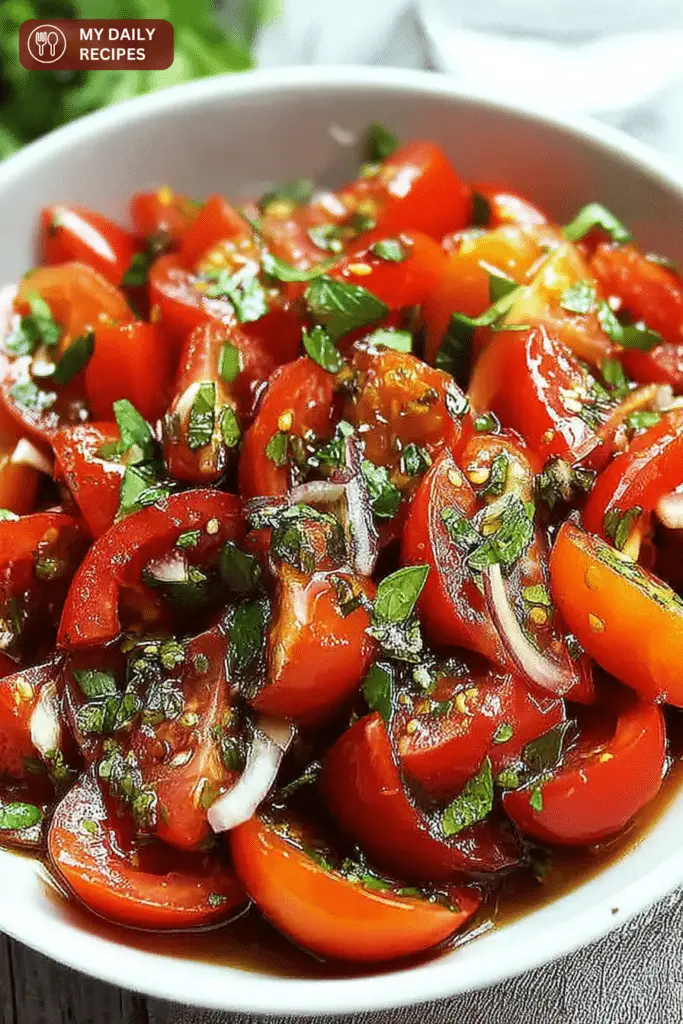
When I think of easy, bright summer food, this refreshing Lebanese tomato salad is the first thing that comes to mind. It’s the kind of salad I make when the tomatoes at the farmer’s market smell like sunlight and the kitchen is already full of summer heat — simple ingredients, bold flavor, and a vibrancy that wakes up whatever you serve it with.
I first started making this version years ago from a simple pantry-driven idea: use ripe tomatoes, a soft red bell pepper blended with garlic for a dressing, and finish with parsley and a good olive oil. It’s not fancy, but the smell of roasted-ish pepper meeting fresh tomato and garlic is instantly refreshing — sweet, a touch smoky from paprika, and bright from lemon or a little acid. I make it for weeknight dinners, and it’s the salad I bring to impromptu summer barbecues because it travels well and always disappears first.
Ingredients Required for the Refreshing Salad
- Campari or vine-ripened tomatoes – juicy, sweet tomatoes are the star; they give the salad body and bright flavor.
- Red bell pepper – blended into the dressing for sweetness and color; roast it for a smoky twist.
- Garlic – sharp at first, it mellows when pureed and plays off the tomatoes beautifully.
- Smoked paprika – adds warmth and subtle smokiness that deepens the dressing.
- Sumac – a lemony, tangy spice that lifts the whole salad; use it if you have it.
- Good olive oil – brings everything together and gives a silky mouthfeel; choose extra virgin for flavor.
- Parsley – fresh parsley brightens and adds herbal lift; mint can be added for extra freshness.
- Salt and pepper – small amounts are crucial to coax flavor from tomatoes; taste and adjust.
Step-by-Step Instructions to Craft Your Salad
I’m going to walk you through this exactly like I do in my kitchen: with clear checks so you know what the salad should look, smell, and feel like at each stage. Read the steps through first, then make the salad — it helps to prep everything before you start combining.
- Prep the tomatoes: Cut the campari tomatoes into quarters (or halve cherry tomatoes). I like fairly large pieces so they still have texture in the bowl. Place them in a large mixing bowl. You should hear a little juicy squeeze as you cut — that’s the sugar and acid that makes the salad sing.
- Prepare the red bell pepper: Remove the stem and seeds, chop into large chunks so your food processor can handle them. If you roast the pepper first (I often do on a gas burner or under the broiler), the skin will char, you’ll peel it, and the dressing gets smoky depth — but raw pepper keeps the dressing bright and fresh.
- Make the dressing base: In a small food processor or blender, combine the chopped red bell pepper and peeled garlic cloves. Blend until smooth. The mixture should be vibrant red and fragrant — the raw garlic will smell assertive at first, but once it’s emulsified with oil and paprika it softens. If the paste seems too coarse, scrape it down and pulse a few more times.
- Season the dressing: Transfer the pepper-garlic paste to a separate bowl and stir in smoked paprika, sumac, olive oil, and salt and pepper. The olive oil should turn the paste into a looser, glossy dressing — it should coat the back of a spoon, not sit like separate oil on top. If it’s too thick, thin with a splash more olive oil or a teaspoon of lemon juice. If it’s flat, add a pinch more salt; often acid or salt fixes a dull dressing, not sugar.
- Toss gently: Pour the dressing over the quartered tomatoes and gently toss to coat, being careful not to crush the tomatoes. Use a large spoon and lift from the bottom so you don’t turn this into tomato mush. The tomatoes should be glossy and lightly dressed — not swimming.
- Add herbs: Stir in chopped parsley (and mint if you like). The herbs add lift and a cool herbal note against the warm paprika. Taste and adjust salt or pepper now.
- Chill to meld: Refrigerate the salad for about 30 minutes. I’ve found that 20–40 minutes lets the dressing seep into the tomato without making them collapse; the salad will become juicier as it sits, so if you want firmer tomatoes toss the dressing in just before serving. This salad always tastes brighter after a short rest.
- Finish and serve: Give it one last gentle toss, spoon into a shallow bowl, and garnish as you like — a few extra parsley leaves, a dusting of sumac, or a drizzle of olive oil. Expect it to look glossy, smell of sweet tomato and warm paprika, and have a texture that’s tender but not mushy.
Common kitchen mistakes and fixes:
- If the dressing tastes flat — add a squeeze of lemon or a pinch more salt (acid and salt brighten flavors).
- If tomatoes become too watery — drain a little liquid before serving or toss just before plating.
- If the garlic is too sharp — let the salad rest longer in the fridge, or blanche the garlic briefly in boiling water before blending next time.
- If the dressing separates — whisk in a little more olive oil or pulse in the blender to re-emulsify.
Nutritional Benefits of Tomatoes and Fresh Herbs
I always mention the simple health wins when I bring a bowl of this salad to the table — it’s low in calories, high in flavor, and full of useful nutrients. Tomatoes are a great source of vitamin C (good for immunity and skin), vitamin K (important for blood and bone health), potassium, and dietary fiber which supports digestion. They also contain lycopene, an antioxidant that’s more available after cooking but still present in fresh tomatoes.
Fresh herbs like parsley and mint are small but mighty: they add vitamins, antioxidants, and compounds that have mild anti-inflammatory effects. Olive oil contributes healthy monounsaturated fats that help your body absorb fat-soluble vitamins and lend a satisfying mouthfeel.
All together, this salad is a light, nutrient-dense side that pairs especially well with protein-rich mains because it provides moisture, acidity, and plant-based nutrients without weighing the meal down.
Variations for Seasonal Produce and Dietary Needs
One of the things I love about this salad is how forgiving it is. Over the years I’ve adapted it dozens of ways depending on what’s in season or what’s in my fridge.
- Summer fruits: Add diced peaches or nectarines for a sweet contrast. The fruit’s fragrance plays beautifully with parsley and sumac.
- Roasted vs raw pepper: Roast the red pepper for a smoky dressing, or keep it raw for a brighter finish.
- Crunch and texture: Toss in toasted pita chips or chopped toasted almonds for crunch. If you need gluten-free, use toasted gluten-free crackers or skip it.
- Protein boosts: Add chickpeas for a vegan protein lift, or crumble feta for a salty, tangy contrast (not vegan).
- Pomegranate seeds: A classic addition in many Lebanese salads — they add pop and a sweet-tart note that’s addictive.
- Make it herb-forward: Increase mint and parsley for a green, almost tabbouleh-like twist.
Dietary notes: The base recipe is naturally vegan and gluten-free. If you add feta or toasted pita, swap to vegan cheese or gluten-free grains to maintain those dietary preferences.
Serving Suggestions: Pairing with Main Dishes
This salad is a brilliant foil for richer, spicier mains because it cools and brightens the palate. I often serve it with:
- Grilled kebabs (lamb, chicken, or beef) — the salad cuts the richness and complements charred meat.
- Roasted fish — the acidity and herbs breathe life into fatty fish like salmon.
- Pita and mezze — make it part of a spread with hummus, baba ganoush, and olives for an easy mezze board.
- Rice dishes — particularly greasy rice or pilafs where the salad’s acidity balances oil and spices.
When I serve this at home, it often ends up as the refreshing component of a larger meal — everyone reaches for it between bites of richer bites, and it brightens the whole plate.
Cultural Significance of Lebanese Cuisine
In Lebanese tradition, food is a way of showing hospitality and building connection. Salads, simple vegetables, and mezze plates play a central role: they’re often shared, passed around, and eaten with conversation. This tomato salad belongs to that spirit — simple ingredients, prepared thoughtfully, and placed in the center of the table.
I first learned to appreciate that sharing aspect at a small dinner with friends whose family is Lebanese. The host set out plates of salads and dips and said, in the best possible way, that we should help ourselves and pass dishes along. There was a relaxed generosity to it — a reminder that the best food isn’t just about flavor but about company and rhythm. This salad is that kind of dish: unpretentious, generous, and built to be shared.
FAQs about Lebanese Salad and Ingredients
Below are answers to the questions I get most often when I bring this salad to potlucks or post a photo on social media.
- Can I make this salad ahead of time?
Yes. You can chop the vegetables and make the dressing a few hours ahead. For best texture, toss the tomatoes with the dressing 15–30 minutes before serving. Fully dressed salad keeps in the refrigerator 1–2 days but will become juicier and softer over time. - What tomatoes work best for this recipe?
Campari or vine-ripened tomatoes are ideal for their sweetness and firm texture. Roma or heirloom tomatoes also work. If using cherry tomatoes, halve them and adjust quantity. Avoid mealy supermarket tomatoes for best results. - Can I add other ingredients or make variations?
Absolutely. Common additions are cucumber, radish, pomegranate seeds, or toasted pita for crunch. For more protein, add chickpeas or crumbled feta (not vegan). You can roast the red pepper for a smoky flavor or use seasonal fruit like peaches for a sweet twist. - How should I store leftovers?
Store leftovers in an airtight container in the fridge for up to 48 hours. If the tomatoes release too much liquid, drain excess before serving or refresh with a little extra olive oil and lemon. - Can I make this salad vegan or gluten-free?
Yes. The base recipe is naturally vegan and gluten-free. If you add ingredients like feta or toasted pita, substitute with vegan cheese or gluten-free grains/crisps to keep it vegan or gluten-free.
Conclusion: Enjoying the Salad Year-Round
This refreshing Lebanese tomato salad is the kind of recipe I keep returning to because it’s quick, flexible, and reliably bright. It works as a cooling counterpoint to heavy mains, a light lunch with crusty bread, or a centerpiece on a mezze spread. The more you make it, the more you learn how to tune it to your taste — more sumac for tang, more mint for brightness, a splash of lemon to wake it up.
Try it when tomatoes are at their peak, and experiment in the off-season with roasted peppers or pomegranate seeds. It’s simple enough for a weekday meal, and generous enough to share at a gathering. If you make it, I’d love to hear what variation you tried — the best recipes are the ones you make your own.
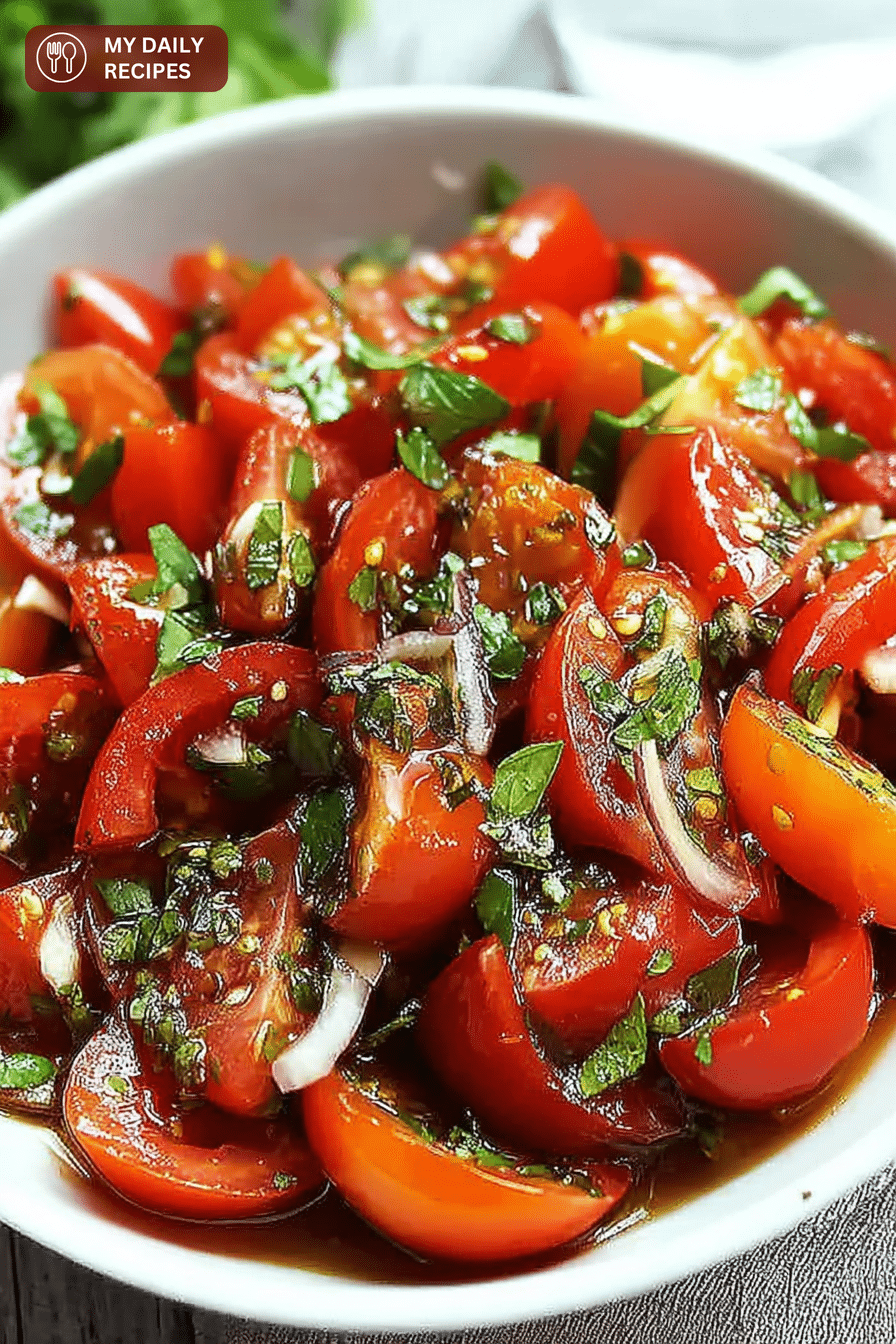
Refreshing Lebanese Tomato Salad
Ingredients
Method
- Begin by cutting 2 lb campari tomatoes into quarters. Place them in a large mixing bowl. The sweet, juicy tomatoes will be the star of your salad.
- Take 1 large red bell pepper, remove the stem and seeds, and chop it into four large pieces. This allows for easier blending.
- In a food processor, combine the chopped bell pepper and 4 cloves of garlic (peeled). Blend until smooth. This mixture will form the base of your dressing.
- In a separate bowl, combine the bell pepper-garlic paste with 1 tablespoon smoked paprika, 1 teaspoon sumac, 4 tablespoons olive oil, and season with salt and pepper to taste. Mix well until fully combined.
- Pour the dressing over the quartered tomatoes in the mixing bowl and gently toss to coat the tomatoes evenly.
- Stir in 1/4 cup chopped parsley for freshness and an added layer of flavor.
- Allow the salad to chill in the refrigerator for about 30 minutes.
- After chilling, serve the salad in a bowl, garnished as desired, and prepare to enjoy the wonderful flavors you’ve created!