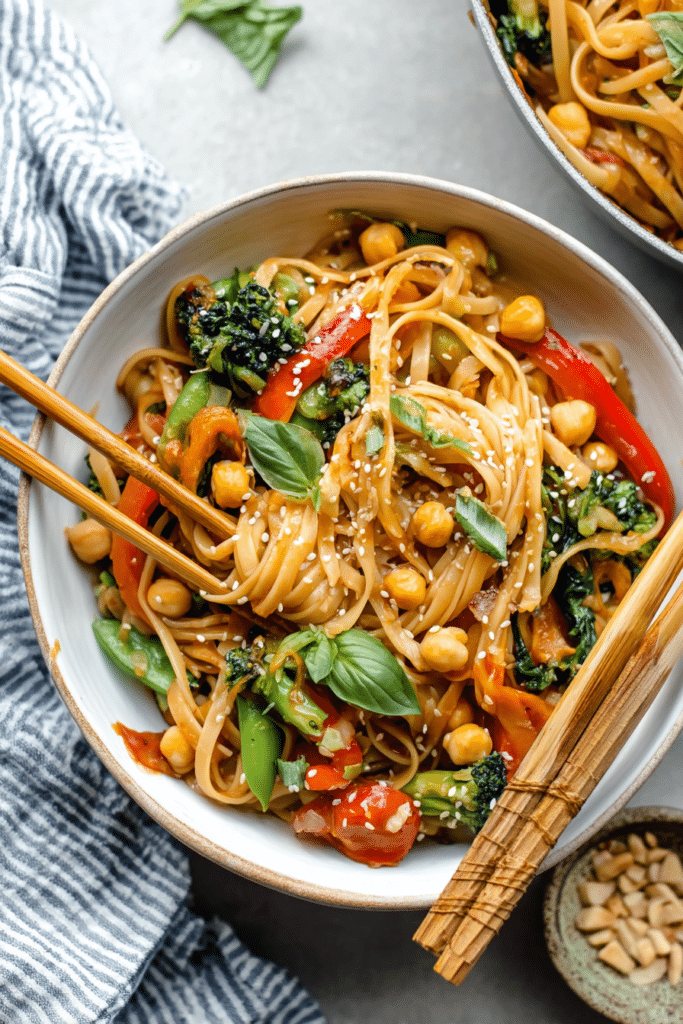
I make this sesame noodle stir-fry when the week gets away from me and I still want something wholesome on the table fast. In my kitchen it’s one pan, a quick sauce I whisk in under a minute, and whatever vegetables are at their brightest in the fridge. I love how the toasted sesame oil and fresh ginger fill the air — it tells me dinner is nearly done.
I appreciate recipes that trust my instincts: a bright pile of broccoli florets, crisp red pepper, carrots sliced thin so they cook in the time it takes the noodles to soften. The chickpeas give bite and staying power — you get protein and fiber without a fuss. I often swap vegetables to match the season and keep the colors popping.
What I like most is how forgiving this dish is. You can prep the sauce earlier in the day, change the noodles to what you have on hand, and still get that glossy, slightly spicy sesame coating that clings to each strand. It’s quick, delicious, satisfying — exactly what a weeknight needs.
Why This 30-Minute Vegan Stir Fry Sesame Noodles Is Ideal for Busy Weeknights
This recipe is designed so you can get a nutritious dinner finished in the time it takes to catch up on a few emails or help with homework. The total time is 30 minutes — that includes quick prep and a short cook time. You’ll use pantry staples and common produce, and the recipe scales easily if you need more portions for family or leftovers.
Visually, the dish reads bright: orange carrot ribbons, green broccoli, and red pepper. The aroma of sesame oil and garlic is immediate and pleasing. Practically, it’s a one-pot toss with a simple homemade sauce that doesn’t rely on bottled mixes.
Everything You Need for 30-Minute Vegan Stir Fry Sesame Noodles
Below I walk you through the core ingredients and their roles so you know exactly why each one matters. I also note simple swaps and seasonal veg ideas so you can tailor the dish without losing flavor.
- Soy sauce or coconut aminos – Provides savory saltiness and umami; use low-sodium if you want to control the salt level.
- Garlic & fresh ginger – Aromatics that build the backbone of the sauce; fresh is best for brightness.
- Toasted sesame oil – Gives the dish its nutty, toasty aroma and finish; use light sesame oil for cooking if you don’t have toasted.
- Rice vinegar – Adds acidity to balance soy sauce and sugar for a clean finish.
- Sweetener (coconut sugar or maple) – Rounds out the salt and brightens flavors; a little goes a long way.
- Arrowroot or cornstarch – Thickens the sauce quickly so it clings to noodles and veggies.
- Rice or other stir-fry noodles – The vehicle: rice noodles are traditional, but ramen or soba work too.
- Chickpeas – The main plant protein here; they add texture and keep the meal filling.
- Broccoli, carrots, bell pepper, onion – Base veg that give crunch, color, and nutrients; swap in seasonal produce below.
- Basil, scallions, cashews, sesame seeds – Fresh garnishes that add herbal lift, crunch, and extra sesame notes.
Seasonal vegetable customizations: in spring try snap peas and baby bok choy; in summer add zucchini and sugar snap peas; in fall swap in roasted sweet potato cubes or shaved Brussels sprouts for a heartier bite. If you’d rather something milder, baby spinach stirred in at the end wilts quickly and adds iron.
The Secret to a Silky Sesame Sauce
The sauce succeeds when salty, sweet, tangy, and spicy feel balanced and the texture is glossy and smooth. The trick is to whisk the soy, water, aromatics, and sweetener first, then stir in the starch to make a thin slurry — that’s what thickens quickly when it hits low heat.
Emulsification happens when you combine the sesame oil with the other wet ingredients and whisk; the oil disperses into tiny droplets that cling to noodles, giving a silky sheen. If you want a nuttier mouthfeel, add a spoonful of tahini or extra sesame seeds and whisk until smooth.
Nutritional snapshot (per serving estimate): approximately 595 calories, with most calories coming from carbohydrates for energy, moderate healthy fats from sesame oil and cashews, and around 15 grams of plant protein from chickpeas and nuts. The vegetables contribute fiber, vitamins, and phytonutrients that support a balanced meal.
For a slightly different flavor profile, try this alternative:
For a different flavor profile, try our simple teriyaki sauce to complement the noodles.
How to Keep Veggies Crisp: Timing & Heat Tips
Keeping vegetables bright and crisp is mainly about heat, timing, and prep. Cut veggies so they cook at similar rates and add them to the pan in stages — denser vegetables first, delicate ones last.
- Preheat your pot so oil sizzles when it hits the pan; that immediate sear helps lock in color and texture.
- Start with aromatics and dense veg (onion, carrots), cook briefly until the onion softens, then add broccoli and peppers so they remain slightly firm.
- Stir frequently but avoid crowding the pan — if your pan is too full, steam will form and vegetables will go limp; cook in batches if necessary.
- Finish with a quick toss in the sauce over low heat so the sauce thickens without overcooking the veg.
Bright, crisp vegetables also retain more nutrients than overcooked veg — that snap you see and feel is a sign of minimal nutrient loss. For tips on keeping vegetables perfectly crispy in other dishes, try this write-up:
Check out these crispy garlic Brussels sprouts for tips on keeping your vegetables perfectly crispy when cooked.
Protein Boosts: Make These Noodles Truly Satisfying
Chickpeas are the built-in protein here — they add texture, fiber, and plant-based protein that keeps you full. If you want more protein or different textures, swap or add other options depending on your diet.
- Chickpeas – Tender, slightly nutty, and filling; they’re the quickest way to add protein without extra prep.
- Firm tofu or tempeh – Press and pan-fry for extra chew; great soaked in the sauce before tossing.
- Edamame – Shelled edamame adds fresh green color and a protein boost that’s easy to stir in.
- Nuts & seeds – Roasted cashews or toasted sesame seeds offer crunch and more healthy fats.
- Less common options – Smoked tempeh, seitan (if not gluten-free), or a sprinkle of hemp seeds for extra omegas.
If you’re not strictly plant-based and want a meaty alternative, you can pair these noodles with other mains:
For an extra protein boost, try adding our easy soy garlic chicken thighs to your sesame noodles.
For plant-based pairings, consider a stir-fry protein side like this:
If you’re looking for a plant-based protein option, consider pairing this dish with stir-fried tofu with vegetables.
How to Make 30-Minute Vegan Stir Fry Sesame Noodles (Step-by-Step)
- Whisk the sauce ingredients together in a bowl so the flavors marry; keep the starch as a thin slurry so it thickens fast when warmed.
- Bring a pot of water to a boil and cook the noodles according to package directions; drain and set aside so they don’t overcook while you finish the veg.
- Heat your large pot or wok, add toasted sesame oil, then add onions and carrots and cook until the onions begin to soften — this builds the base flavor.
- Add the broccoli florets and bell pepper; stir frequently over medium-high heat until the broccoli is slightly tender but still crisp.
- Stir in drained chickpeas, reduce heat to low, and pour in the sauce; cook for a couple of minutes until the sauce thickens and becomes glossy.
- Add the cooked noodles, torn basil, and chopped cashews; toss gently so everything is coated in the sauce and heated through.
- Garnish with scallion greens and extra sesame seeds before serving.
Common mistakes to avoid: don’t add the starch too early (it can clump), don’t overcrowd the pan, and don’t overcook the noodles — they should be just tender and then finish in the sauce.
Pro Tip for 30-minute vegan stir fry sesame noodles: Make the sauce ahead & thicken fast
- I like to make the sauce in the morning or the night before; it keeps well in the fridge and saves time when you’re ready to cook.
- To thicken quickly: mix your starch with a little cold water first, then whisk into the sauce right before adding to the pan — it will set up in a minute over low heat.
- If the sauce is too thick after resting, thin with a splash of water and reheat gently.
- Toast sesame seeds and cashews briefly in a dry pan for extra flavor just before serving — it takes seconds and makes a big difference.
- Troubleshooting – If noodles clump, rinse briefly in warm water and toss with a little oil; if sauce separates, whisk in a teaspoon of warm water to re-emulsify. If veggies are limp, finish with a very brief high-heat toss to restore some texture.
- Variations – Swap rice noodles for ramen or soba; add a spoonful of tahini for a creamier sauce; use maple instead of sugar for a different sweetness profile; add a splash of chili oil for more heat.
Note to the writer: Generate the Pro-Tips, Troubleshooting, and Variations sections as bulleted lists for high scannability.
How to Store, Reheat, and Customize These Sesame Noodles
Store leftovers in an airtight container in the refrigerator for up to three days. To reheat, warm gently in a pan with a splash of water and a little oil so the noodles don’t dry out; microwave reheating works too but do it in short bursts and stir between intervals.
Customization ideas: swap in seasonal vegetables, add a spoonful of peanut butter for a Thai twist, or toss in quick-pickled cucumbers at the end for brightness. For a full plate, serve with a light side salad or chilled cucumber salad to contrast the warm noodles.
Beverage pairings: jasmine or green tea for a calming complement; a crisp lager or dry riesling if you prefer wine; or sparkling water with a squeeze of lime for a refreshing, non-alcoholic option.
Serving Suggestions: Serve the noodles hot, topped with fresh basil, chopped roasted cashews, and a sprinkle of sesame seeds. Offer lime wedges and extra red pepper flakes on the side so everyone can season to taste.
Frequently Asked Questions
How long does it take to make these vegan stir fry sesame noodles?
The entire recipe can be made in just 30 minutes, making it perfect for busy weeknights!
Can I use a different type of noodle instead of rice noodles?
Absolutely! You can substitute rice noodles with ramen or soba noodles, depending on your preference.
What can I do to keep my vegetables crisp while cooking?
To retain the crispness, cook the veggies over medium heat and avoid overcooking. Adding them in stages, as outlined in the recipe, also helps!
Is there a way to increase the protein content of this dish?
Yes! You can add more chickpeas or include tofu, tempeh, or edamame to boost the protein content further.
How should I store leftovers of the stir fry noodles?
Store any leftovers in an airtight container in the refrigerator for up to 3 days. Make sure to reheat gently to retain the best texture.
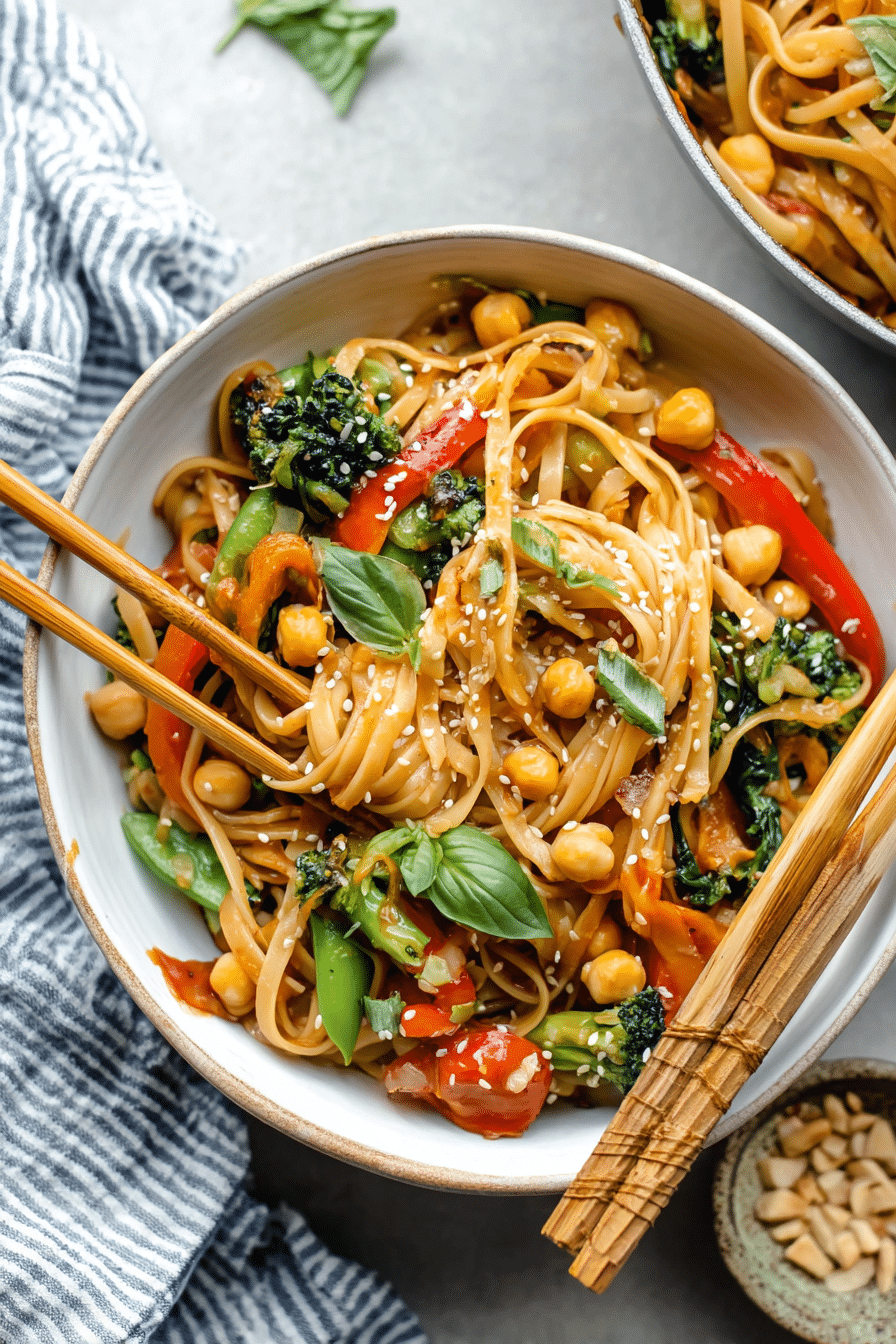
30-Minute Vegan Stir Fry Sesame Noodles
Ingredients
Method
- First, make your stir fry sauce: in a medium bowl, whisk together the soy sauce, water, garlic, coconut sugar, sesame oil, rice vinegar, fresh ginger, sesame seeds, red pepper flakes, and arrowroot starch (or cornstarch). Set aside.
- Cook the veggies: Add 1 tablespoon sesame oil to a large pot, then add in chopped onion and sliced carrots and cook for 2-4 minutes until onions begin to soften. Next, add in broccoli and bell pepper and cook, stirring frequently, for an additional 6-8 minutes or until broccoli is slightly tender but still has a bite.
- Cook the noodles: While the veggies are cooking, make your stir fry rice noodles according to the directions on the package. Then drain and set aside.
- Combine the veggies and noodles: Add the drained chickpeas to the pot with the cooked veggies. Immediately turn the heat to low and add in the sauce. Cook for an additional 2 minutes over low heat until the sauce begins to thicken a bit. It should be nice and saucy. Stir in rice noodles, fresh basil ribbons and cashews; toss again to combine. Garnish with scallions and sesame seeds.