Tags
- Prep
- 5 min
- Total
- 5 min
- Serves
- 2
- Calories
- 142 kcal
- Carbs
- 29.00 g
Introduction
Introduction to Smoothie Bowls
Smoothie bowls are basically a thick, spoonable smoothie served in a bowl and dressed up with colorful toppings — think breakfast that looks as good as it tastes. Over the last few years they’ve become a social-media darling: bright layers, artful swirls, and crunchy toppings that photograph beautifully. But beyond the photos, they’re genuinely practical: fast, nutrient-dense, and endlessly adaptable. I make a version of this 5-minute fruit smoothie bowl at least once a week. I remember the first time I treated myself to one at home: it was a sleepy Sunday, my bananas were overripe, and I’d thrown frozen strawberries into the freezer the week before. The blender hummed, the kitchen smelled faintly of fruit and yogurt, and the first spoonful was cool, slightly tangy, and just enough to wake me up without weighing me down. This post is the version I use when I want something that comes together in the time it takes to brew coffee — thick, creamy, and topped with crunchy bits for contrast.Ingredients You’ll Need
Below I list the core ingredients and a few easy swaps I use depending on what’s in the fridge. Note: measurements are discussed later in the recipe section, but here I focus on what each ingredient contributes so you can mix and match confidently.- Banana – provides natural sweetness and creaminess; frozen bananas are essential if you want a thick, ice-cream-like texture.
- Frozen strawberries – the backbone of the flavor in my favorite version; they keep the bowl cold and bright.
- Frozen pineapple – optional but great for tropical brightness and a juicy, tangy counterpoint.
- Vanilla Greek yogurt – adds protein, tang, and a silky mouthfeel; swap for plant-based yogurt for dairy-free options.
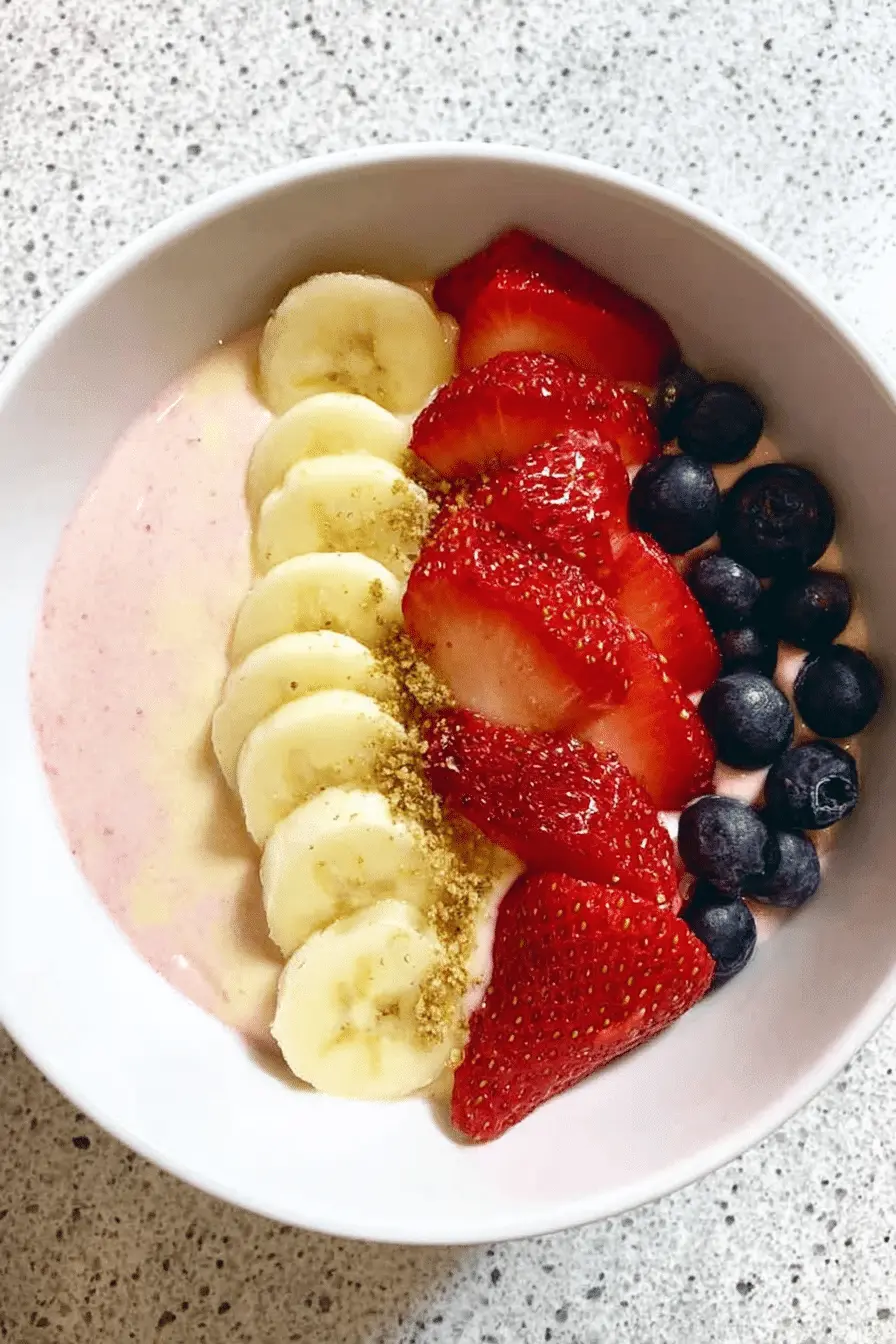
- Fresh fruit (for topping) – sliced strawberries, banana rounds, or fresh blueberries make the bowl pop visually and add a juicy bite.
- Granola – for crunch and toasty flavor; sprinkle on last so it stays crisp.
- Shredded coconut – adds chew and a mild sweetness; great with pineapple.
- Nuts (slivered almonds, walnuts) – provide crunch, healthy fats, and a toasty edge.
- Seeds (chia, sunflower) – tiny nutrition powerhouses that add texture and a nutritional boost.
Step-by-Step Preparation — 5-minute fruit smoothie bowl
Here’s how I make this exact bowl. I’ll walk through the texture cues I look for and common mistakes I see when people try this at home.- Prep the banana: Chop a ripe banana into inch-sized pieces and freeze for at least 1–2 hours, or overnight if you can. I rarely skip this — the frozen banana is the trick that gives the bowl body. If the banana isn’t well frozen, the end result will be runny. If you only have fresh banana, add a handful of ice to the blender and reduce the yogurt slightly.
- Add everything to the blender or food processor: Put the frozen banana pieces, a cup of frozen strawberries, a small handful of frozen pineapple chunks, and about half a cup of vanilla Greek yogurt into a food processor fitted with an S-blade or a high-speed blender. I use a food processor sometimes because its wider bowl handles thicker mixtures more easily without the blades cavitating.
- Pulse, then blend: Start by pulsing a few times to break down the fruit, then let the machine run. The mixture will go through an awkward stage where it looks crumbly and dry — that’s normal. Stop, scrape the sides with a flexible spatula, and push the fruit toward the blade. After 2–4 minutes total processing (depending on your machine), it should become smooth, thick, and slightly glossy. It should mound on a spoon rather than pour.
- Check texture and adjust: If it’s too thick to move, add a splash of milk (almond, oat, or regular) — a tablespoon at a time — until you get a soft-serve consistency. If it’s too thin, add more frozen banana or a handful of ice and blitz again. Taste: if it needs more brightness, a squeeze of lemon or a touch more yogurt can help.
- Spoon into bowls and top: Scoop into two bowls, then add your chosen toppings — sliced fruit, granola, nuts, seeds, and coconut. Serve immediately so the textures contrast: cold and creamy base, crunchy toppings.
Nutritional Benefits of Smoothie Bowls
Smoothie bowls are a surprisingly efficient way to pack vitamins, minerals, protein, and fiber into an easy meal. The fruit provides vitamin C, folate, and antioxidants; Greek yogurt adds protein and calcium; nuts and seeds contribute healthy fats and more protein. Together they make a balanced breakfast that can keep you satisfied until lunch. For a nutritious snack, consider adding blueberry cheesecake protein balls to your smoothie bowl for an extra protein boost. From a practical standpoint: if you’re using Greek yogurt and a mix of fruits, expect a good dose of protein (helpful for mid-morning hunger), potassium from bananas, and antioxidants from berries. The calories can vary depending on portion sizes and toppings — nuts and granola add calories quickly, so I usually portion those deliberately. If you’re watching sugar, remember that fruit contributes natural sugars — pairing fruit with protein and fat (yogurt and nuts) helps blunt rapid blood sugar spikes.Creative Topping Ideas
Toppings are where you can have fun and create contrast in every bite. Aim for at least two textures (creamy + crunchy) and two temperatures (cold base + room-temperature topping) to keep things interesting.- Fresh fruit – bright slices of strawberries, banana rounds, or a handful of blueberries add freshness and color.
- Granola – choose a toasted granola for nuttiness and crunch; sprinkle just before serving so it stays crisp.
- Nuts & seeds – slivered almonds, chopped walnuts, chia seeds, and sunflower seeds add dimension and healthy fats.
- Textural accents – shredded coconut, cacao nibs, or crushed freeze-dried fruit give a gourmet touch.
- Drizzles – a spoonful of nut butter, a light drizzle of honey or maple syrup, or a spoonful of jam swirled on top elevates flavor.
Dietary Adaptations (Keto, Low-Sugar)
Adapting a smoothie bowl to a specific diet is mostly about swaps and portion control.- Dairy-free / vegan – replace Greek yogurt with a thick plant-based yogurt (coconut or almond), or use extra frozen banana for creaminess.
- Lower sugar – use low-sugar fruits (berries) and reduce sweeter fruits like banana and pineapple; add avocado for creaminess without sugar.
- Keto-friendly – traditional fruit-forward bowls are hard to make strictly keto because of the natural sugars. Try a base of avocado + unsweetened almond milk + a handful of raspberries, and use a high-fat yogurt or coconut cream instead of fruit. Keep toppings to nuts and seeds.
Tips for Meal Prepping Smoothie Bowls
Meal prepping is my go-to for busy mornings. I keep freezer packs of pre-chopped fruit so I can make a bowl in under five minutes.- Portion fruit into freezer bags – measure single-serving bags with frozen banana pieces, strawberries, and pineapple. When you blend straight from those packs you skip measuring and save time.
- Prep topping jars – portion granola, nuts, and seeds into small containers so you just grab and sprinkle.
- Label and date – most frozen fruit is fine for several months; label packs so you know what to use first.
Visual Presentation for Social Media
If you want your bowl to look the part, a few simple styling tricks go a long way. Use natural light, keep the background uncluttered, and choose a bowl with a matte finish so the colors pop. When arranging toppings, think in bands or clusters rather than scattering. Bright contrast (blueberries against a pink base) reads well on camera. I like to take a quick overhead shot, then a close-up of a spoonful to show texture. A napkin or wooden spoon in the frame makes the scene feel homey. One practical note: the bowl looks best right after you finish. If you take photos, do them first — the granola will go soggy after a few minutes and the surface will begin to melt.Real-World Troubleshooting and Expert Tips
Here are the problems I run into most often and how I fix them:- Too runny: Either the fruit wasn’t well frozen or there’s too much liquid. Fix: add more frozen banana or a handful of ice, then re-blend. Alternatively, chill the bowl before serving.
- Too icy or grainy: Your blender didn’t fully break down the fruit. Fix: blend longer, stopping to scrape the sides. A high-speed blender will get creamier results faster.
- Flavor is flat: This often means it needs acid, not sugar. Fix: a small squeeze of lemon or lime brightens the entire bowl. A pinch of salt can also amplify flavors subtly.
- Granola goes soggy: Add crunchy toppings right before serving. If you must prep toppings in advance, keep them separate until you eat.
Original Recipe (Quick Reference)
Here’s the straightforward recipe I use when I want the exact bowl I described above.- Yield – 2 smoothie bowls
- Prep time – about 5 minutes (assuming fruit is pre-frozen)
- Core ingredients – banana, frozen strawberries, frozen pineapple chunks, vanilla Greek yogurt; toppings as desired.
- Chop banana into 1-inch pieces and freeze for at least 1–2 hours if possible (or overnight).
- Add all ingredients to a food processor fitted with a standard S blade and process for 2–4 minutes, stopping to scrape the sides down with a plastic spatula as needed.
- Once everything is incorporated and smooth, scoop out mixture into individual bowls. Add any desired toppings, and enjoy immediately.
Conclusion and Serving Suggestions
This 5-minute fruit smoothie bowl is my go-to when I want something that feels special but is fast and forgiving. Expect a thick, creamy base that’s slightly tangy from the yogurt, with pops of freshness from the fruit and crunch from the toppings. Serve it for breakfast, an afternoon pick-me-up, or even a light dessert. It’s perfect for busy mornings, but also elegant enough for weekend brunch when you have a little extra time to arrange the toppings. Serving ideas: pair with strong coffee for a morning boost, or bring it to a brunch spread with a small platter of toppings so guests can customize their bowls. Leftovers: it’s best fresh; if you have leftovers, store in the fridge for up to 1 day and stir before eating — it will be thinner but still tasty.FAQ
Can I use fresh fruit instead of frozen in this smoothie bowl? Absolutely! While frozen fruit helps achieve a thick and creamy texture, you can use fresh fruits. Just add some ice or adjust the yogurt quantity for the right consistency. How can I make this smoothie bowl dairy-free? To make it dairy-free, you can substitute the Greek yogurt with a plant-based yogurt or a frozen banana to keep it creamy. Just make sure to choose a non-dairy yogurt that you enjoy! What toppings do you recommend for this smoothie bowl? Some great toppings include sliced strawberries, bananas, fresh blueberries, granola, shredded coconut, nuts, and seeds. Feel free to mix and match based on your preferences! How long can I store leftover smoothie bowl? It's best to enjoy the smoothie bowl fresh, but if you have leftovers, you can store it in the fridge for up to a day. Just give it a good stir before eating. It may not be as thick, but still delicious! Is this smoothie bowl suitable for meal prepping? Yes! You can prep the ingredients ahead of time. Just store the chopped fruits in the freezer and the yogurt in the fridge. In the morning, blend them together for a quick, healthy breakfast!Recipe Card
Quick and Satisfying 5-Minute Fruit Smoothie Bowl Recipe
- Prep
- 5 min
- Total
- 5 min
- Serves
- 2
- Calories
- 142 kcal
- Carbs
- 29.00 g
Ingredients
- 1 mediumbanana
- 1 cupfrozen strawberries
- 1/3 cupfrozen pineapple chunks
- 1/2 cupvanilla Greek yogurt
- —sliced strawberries
- —sliced bananas
- —fresh blueberries
- —granola
- —shredded coconut
- —slivered almonds
- —chopped walnuts
- —chia seeds
- —sunflower seeds
Instructions
- 1
Chop banana into 1-inch pieces and freeze for at least 1-2 hours if possible (or overnight).
- 2
Add all ingredients to food processor fitted with a standard S blade and process for 2-4 minutes, stopping to scrape the sides down with a plastic spatula as needed.
- 3
Once everything is incorporated and smooth, scoop out mixture into individual bowls. Add any desired toppings, and enjoy immediately.
You might also like
Reviews
Be the first to review this.