- Prep
- 15 min
- Cook
- 20 min
- Total
- 35 min
- Serves
- 4
- Calories
- 380 kcal
On this page12 quick jumps
TOC
12 quick jumps
Introduction
I wait all winter for the first crates of Spargel at the market. There’s a small, particular pleasure in lifting a pale bundle of white asparagus from the ice, feeling the cool, firm stalks in my hands and knowing that spring has finally arrived. In my kitchen this ritual is quiet: I peel, I trim, I remember tables in Germany where the arrival of Spargel felt like a holiday. I have prepared this German asparagus the way families do across the regions: simply, with few distractions, and with Hollandaise that sings without stealing the show. Over the years I’ve learned that the secret isn’t a complicated technique but attention — to temperature, to timing, and to trusting the produce. The butter-scented steam as the asparagus cooks is one of my favorite spring smells. Serve this the first time on a sunny weekend with friends and you’ll see how the dish brings people to the table. It is celebratory without fuss, a tradition that honors the season’s best ingredient. I’ve made mistakes (overcooked spears, a split sauce) and learned small corrections that make the plate feel both elegant and honest.Why This Asparagus German Recipe Belongs on Your Spring Menu
White asparagus is the centerpiece of spring in Germany — markets brim with it and towns hold festivals to celebrate the short Spargel season. Traditionally eaten from April through June, this vegetable is a seasonal marker: people plan meals around it, and restaurants change their menus accordingly.
The flavor profile is a gentle balance: the vegetable brings a delicate, earthy sweetness that pairs beautifully with the rich, lemony Hollandaise. That contrast — pale, tender stalks against warm, glossy sauce — is why this dish feels like spring on a plate. Imagine the faint vegetal aroma as you peel each stalk and the soft, yielding texture when you bite through the tip.
This is not a heavy dish. It’s a celebration of renewal and simplicity: a restrained richness that lets the asparagus speak for itself. When you serve it, the pale stalks frame whatever accompaniments you choose, from boiled potatoes to smoked ham or salmon.
Everything You Need for Asparagus German Recipe
- White asparagus (Spargel) – The star: choose firm, unblemished stalks with tightly closed tips; freshness matters most.
- Butter – For the cooking water and the Hollandaise; a high-quality unsalted butter gives a clean, creamy finish.
- Egg yolks – Provide richness and act as the emulsifier for a glossy Hollandaise.
- Lemon juice – Brightness that cuts the butter’s weight and lifts the sauce.
- Sugar and salt – A pinch in the cooking water tames bitterness and enhances the asparagus’ natural sweetness.
- Buttered breadcrumbs – Optional, for a toasty, textural topping that contrasts the soft stalks.
- Fresh herbs (parsley, dill) – A light, herbaceous finish that adds color and freshness.
To complement your asparagus dish, you might want to prepare some cheesy garlic butter rollups for a side.
Why White Asparagus (Spargel) Matters in German Cooking
White asparagus is raised differently than the green variety: it’s cultivated underground or under mounds of soil to keep it from photosynthesizing, which leaves the stalks pale and tender. This method produces a subtler, less grassy flavor and a thicker, silkier stem that feels almost velvety when cooked.
Across Germany the arrival of Spargel is marked by markets and festivals — entire towns celebrate the short season with dedicated menus. The vegetable carries cultural weight: families plan gatherings around it, and regional recipes pay homage to local traditions.
On the plate, white asparagus reads visually like a soft, pale canvas beside brighter greens or the golden Hollandaise. Serve it with contrasting textures — crisp breadcrumbs or salty smoked ham — and the difference between white and green asparagus becomes clear: white is tender and delicate, green is brighter and more herbaceous.
The Secret to Silky Hollandaise Without Curdling
Hollandaise is an emulsion, which simply means you are coaxing butter and egg yolks to hold together in a stable, creamy sauce. The single most important element is temperature. Keep the heat low and steady; too much direct heat will scramble the yolks and cause the sauce to split.
- Start the sauce over very gentle steam rather than direct flame so the yolks warm slowly and you can whisk continuously.
- Introduce the melted butter gradually, adding it in a thin stream while you whisk; adding it too quickly overwhelms the eggs and the sauce can break.
- If the sauce thickens or starts to look grainy, I stop and whisk in a little warm water — even a small splash rescues the texture and brings it back to silky.
- If the sauce does split, don’t panic: start with a fresh warm yolk in a bowl and slowly whisk the split sauce into it to re-emulsify.
Think of the sauce as a living thing that needs gentle coaxing: steady whisking, gradual fat incorporation, and a cool head when the texture changes. The reward is a warm, glossy sauce that clings to the asparagus without pooling too heavily.
Serving Suggestions: Traditional Sides and Wine Pairings
Classic accompaniments are simple: tender boiled potatoes and slices of smoked ham make a traditional, rustic plate. For a lighter menu, serve the asparagus with smoked salmon or simply more herbs and a squeeze of lemon. Vegetarians can enjoy the dish plain with potatoes and the buttery breadcrumbs for texture.
When it comes to wine, German whites are natural partners: a dry or off-dry Riesling balances the butter and lemon with crisp acidity. A light-bodied Grüner Veltliner or a cool-climate Sauvignon Blanc will also keep the plate bright.
For a fuller meal flow, consider pairing the main with a warm bowl of roasted asparagus soup as a starter and finishing with a classic sweet bite.
For a delightful addition to your meal, consider pairing the dish with a warm bowl of roasted asparagus soup.
Finish your meal with a slice of German chocolate pecan pound cake for a sweet treat.
How to Make Asparagus German Recipe (Step-by-Step)
- Peel and trim the white asparagus: start just below the tips and work down the stalks until the outer layer slides away easily; snap or trim off any woody ends.
- Bring a large pot of water to a gentle boil and season with a pinch of salt and a bit of sugar; add a knob of butter to the water for flavor.
- Gently lower the asparagus into the simmering water and cook until tender when pierced with a knife — depending on thickness, this will take a few minutes; avoid overcooking so the stalks remain slightly firm.
- While the asparagus cooks, whisk egg yolks with fresh lemon juice in a heatproof bowl set over a pot of barely simmering water; whisk until the mixture is warm and slightly thickened.
- Slowly drizzle in melted butter while whisking constantly until the sauce is glossy and coats the back of a spoon; season with salt and white pepper to taste.
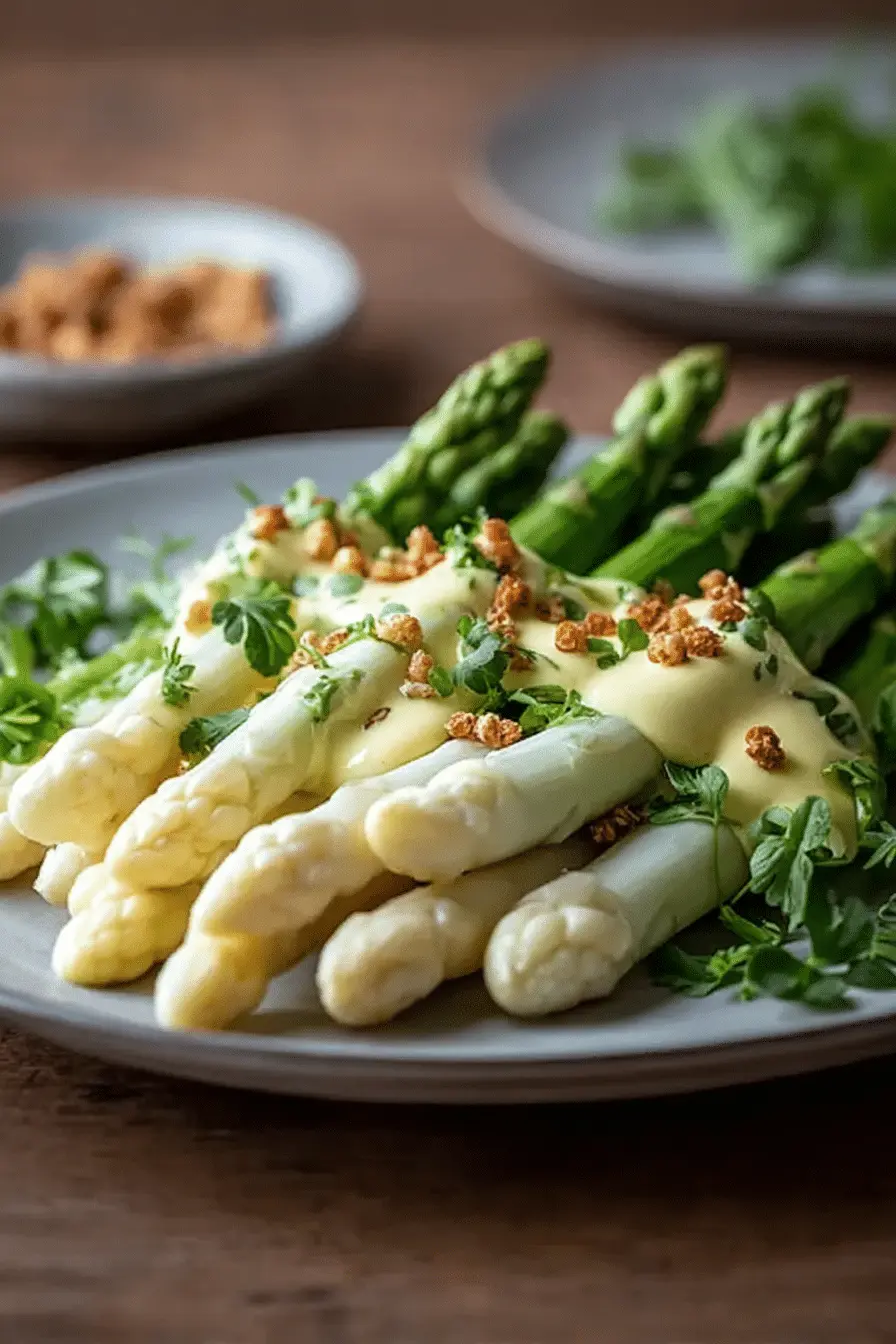
- Drain the asparagus carefully and arrange on a warmed platter; pour warm Hollandaise over the stalks and, if using, sprinkle with buttered breadcrumbs and fresh herbs.
- Serve immediately with boiled potatoes, smoked ham, or salmon, and a chilled white wine.
- Watch the Hollandaise as you serve: if it thickens too much, whisk in a small amount of warm water to loosen it, and if it starts to separate, re-emulsify using a warm yolk as a base.
Pro Tips for Asparagus German Recipe: Speed Up Prep Without Losing Flavor
- I often peel asparagus the night before and keep the stalks wrapped in a damp cloth in the fridge to save time on service day.
- Cook the stalks in batches if your pot is crowded — they need room to move so they cook evenly.
- Keep your Hollandaise bowl warm but not hot; I place mine over barely simmering water and remove it from heat if I need a moment to plate.
- For a crisp finish without extra work, lightly toast buttered breadcrumbs in a pan while the sauce heats.
- Try enhancing your asparagus experience by serving it with garlic butter shrimp for a flavor boost.
Storage, Make-Ahead and Dietary Variations
- Storage: Store cooked asparagus in an airtight container in the refrigerator and use within two to three days; reheat gently in a pan or briefly in the microwave to preserve texture.
- Make-ahead: Peel and trim the asparagus, and prepare the Hollandaise base (yolks and lemon) ahead of time; finish the sauce just before serving for best texture.
- Vegan variation: Replace butter with a plant-based oil and make a vegan 'Hollandaise' using silken tofu or aquafaba as the thickening base, seasoned with lemon and nutritional yeast for depth.
- Gluten-free: Omit the breadcrumbs or use a gluten-free crumb for the topping; the rest of the recipe is naturally gluten-free.
- Vegetarian: Simply omit any meat accompaniments and serve with potatoes and the buttery breadcrumbs for a satisfying plate.
Frequently Asked Questions
What is the best way to cook white asparagus? The best way is to peel the stalks thoroughly, then gently boil them in water seasoned with a little salt, sugar, and butter until tender but not mushy — typically several minutes depending on thickness.
Can I make the Hollandaise sauce in advance? It’s best made fresh, but if you must prepare it ahead, keep it warm and whisk in a bit of warm water if it thickens; re-emulsify gently if needed.
What are some traditional sides for this dish? Traditional sides include boiled potatoes, smoked ham, or salmon. Pair the plate with a crisp white wine like Riesling for an authentic experience.
How should I store leftover asparagus? Store leftover cooked white asparagus in an airtight container in the fridge. Reheat gently in a pan or microwave and enjoy within 2–3 days for best flavor.
Is this recipe suitable for vegetarians? Yes — omit any meat accompaniments and enjoy the asparagus with Hollandaise and potatoes or breadcrumbs for a satisfying vegetarian meal.