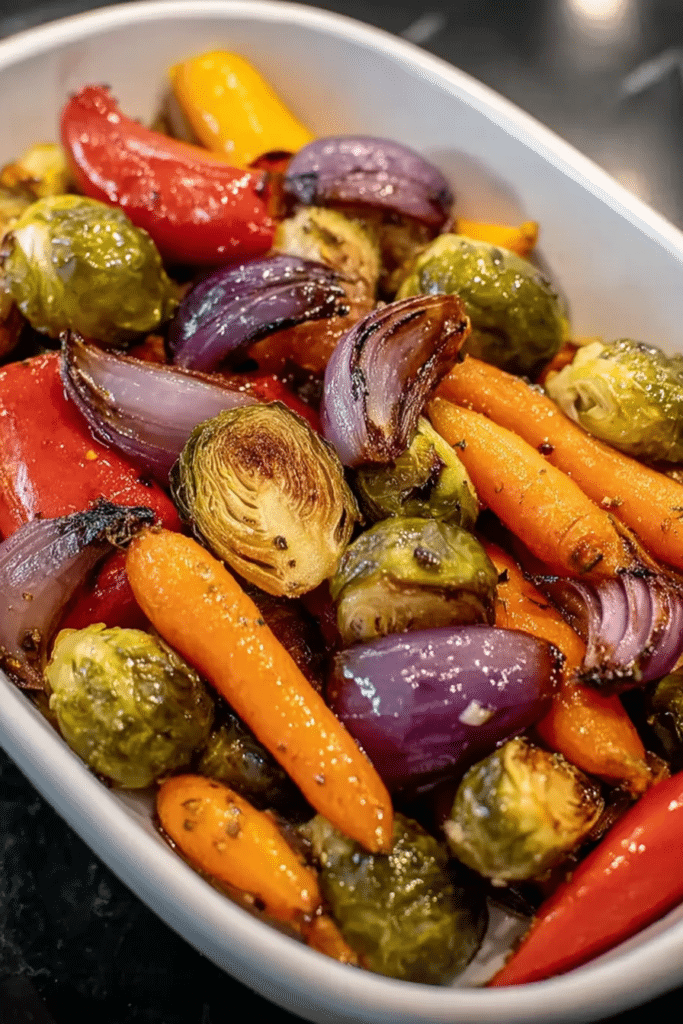
I make this balsamic glazed roasted vegetables recipe on busy weeknights when I want something nutritious, flavorful, accessible, and fast. Over the years I’ve learned which vegetables hold up to high heat, when to add the glaze, and how to avoid soggy results — small adjustments that save time and make the dish consistently good in my kitchen.
What sells this dish to my family is the contrast — glossy, slightly sweet balsamic glaze clinging to caramelized edges, bright crunchy centers, and the aroma of browned sugars and roasted vegetables filling the kitchen. It takes a few minutes to prep and about half an hour in the oven, which makes it a reliable side for hectic evenings.
I also lean on flexibility: swap in whatever’s seasonal, use maple syrup instead of honey if you prefer vegan, or roast only a couple of vegetables for a child-friendly plate. The result is a colorful, nutrient-dense side that fits weeknights without fuss.
Everything You Need for Balsamic Glazed Roasted Vegetables
Start with fresh, firm vegetables — they roast more evenly and caramelize better than limp produce. Use a good-quality balsamic vinegar (you don’t need expensive aged varieties; a balanced, slightly sweet bottle works best), a neutral oil with a high smoke point, and a touch of sweetener to help the glaze cling and caramelize. Salt and pepper are essential for depth. If you want extra finish, add fresh herbs after roasting.
- Brussels sprouts – Provide texture and hold up well when halved; swap for broccoli if you prefer.
- Carrots – Add natural sweetness and color; use baby carrots or sliced larger carrots for faster cook time.
- Bell peppers – Bring brightness and a tender bite; any color works and they roast quickly.
- Red onion – Adds sweet, savory depth when caramelized; shallots are a milder swap.
- Balsamic vinegar – The acidic backbone that reduces into a glossy glaze; balance with a touch of sweetener.
- Olive oil – Helps with browning and prevents sticking; use a light olive oil for high-heat roasting.
- Honey or maple syrup – Helps the glaze caramelize and tames the vinegar’s edge; use maple or agave to keep it vegan.
- Salt & pepper – Simple seasonings that draw out sweetness during roasting and lift all flavors.
Nutrition snapshot: a serving is modest in calories and rich in fiber, vitamins, and antioxidants — a great way to add vegetables to family meals. For protein-rich pairings, combine these vegetables with legumes or a lean protein.
For an additional side, check out our flavorful Mediterranean chickpea salad to complement your balsamic glazed roasted vegetables.
The Secret to Perfectly Caramelized Roasted Vegetables
Caramelization and Maillard reactions are what give roasted vegetables that irresistible color and flavor. The key is controlling surface moisture, heat, and spacing so sugars can brown rather than steam.
- Cut vegetables into pieces that cook at similar rates so everything finishes evenly; consistent size is more important than perfect shapes.
- Preheat the oven to a high temperature so the exterior browns quickly; a hot oven encourages caramelization without long drying times.
- Dry vegetables well after washing — excess water creates steam and prevents browning.
- Use enough oil to lightly coat pieces; oil promotes even heat transfer and a glossy finish for the glaze to cling to.
- Spread vegetables in a single layer on the sheet pan and avoid overcrowding; give them air so edges crisp.
- Apply the balsamic mixture so sugars are present during roasting; alternatively, reserve a small amount to toss with the vegetables just after roasting for a brighter finish.
Troubleshooting (I learned these the hard way):
- If vegetables are soft but pale, your oven was too cool or pan overcrowded — increase oven temp slightly and roast in batches.
- If the glaze burns, your oven is too hot or the glaze had too much sugar — reduce heat a bit and add glaze in the last 5–8 minutes.
- If they’re soggy, make sure pieces are dry, cut larger, and don’t cover the pan while roasting.
Best Vegetables to Use — seasonal swaps and nutrition notes
Choose vegetables that balance texture and sweetness. Seasonal choices will change the dish’s character — summer peppers add juice and color, fall root vegetables give earthiness, and winter cruciferous vegetables lend structure.
- Spring — Asparagus and sugar snap peas for bright, tender bites; high in vitamin K and C.
- Summer — Zucchini and bell peppers roast quickly and stay juicy; good sources of vitamin A and C.
- Fall — Carrots, sweet potatoes, and beets deliver caramelized sweetness and beta-carotene.
- Winter — Brussels sprouts and root vegetables hold up to longer roasting and provide sturdy texture plus fiber.
- Leafy add-ins — Kale or chard can be added near the end to crisp slightly; they boost iron and vitamin K.
Seasonality affects moisture and sugar content, which in turn affects caramelization — sweeter vegetables will glaze more intensely, while denser roots need longer roasting to develop that brown edge.
How to Make Balsamic Glazed Roasted Vegetables (Step-by-Step)
- Preheat your oven until it’s very hot; a hot oven promotes quick browning and a caramelized exterior.
- Trim and chop vegetables into uniform pieces so they cook together; denser roots should be slightly larger than tender vegetables to match cook times.
- Pat vegetables dry, then toss with enough oil to coat and with salt and pepper so they start seasoning before heat hits.
- Whisk balsamic vinegar with your sweetener of choice and a bit of oil; decide whether to toss vegetables with most of the mixture before roasting or to reserve some to finish after roasting.
- Spread vegetables in a single layer on a rimmed baking sheet; roast, stirring or flipping once halfway through for even browning.
- Adjust roast time: tender vegetables may need less time, dense roots will need more — aim for deeply browned edges and a tender interior.
- If you didn’t glaze before roasting, drizzle reserved glaze over hot vegetables and return to the oven briefly, or toss off-heat so the glaze remains glossy and slightly tacky.
Pro Tip for balsamic glazed roasted vegetables: balance sweetness, acidity and caramelization
- Taste as you go — I often adjust a spoonful of sweetener or a pinch more salt after roasting because flavors concentrate.
- If your balsamic is very sharp, mellow it with a little more sweetener or a splash of orange juice for brightness without extra sugar.
- Finish with a sprinkle of fresh herbs (parsley, thyme, or basil) off the heat to add freshness that counterpoints the glaze.
- For a silky finish, stir in a tiny drizzle of extra-virgin olive oil after roasting; it smooths acidity and rounds flavors.
Serving Suggestions and Pairings Beyond Rice or Pasta
These vegetables shine with whole grains, salads, and grilled proteins. Try them over warm quinoa or farro for a hearty bowl, fold them into a leafy salad with a soft cheese, or serve alongside simply seasoned grilled fish or chicken.
For a delightful meal, pair your balsamic glazed roasted vegetables with our honey glazed roasted Brussels sprouts. For a bolder pairing, serve them with a blackberry balsamic grilled chicken salad to mirror those sweet-tart notes.
Easy Variations for Dietary Needs — vegan, low-sugar, and kid-friendly
- Vegan – Use maple syrup or agave in place of honey and keep the glaze simple; roasted chickpeas or a side of hummus add protein.
- Low-sugar – Cut the sweetener amount and finish with a splash of citrus to brighten the glaze without extra sugar.
- Kid-friendly – Focus on sweeter vegetables like carrots and sweet potatoes, cut into fun shapes, and skip strong herbs until serving.
- Nut-free – This recipe is naturally nut-free; use neutral oils and avoid adding nuts as a topping.
For a unique flavor twist, consider trying our roasted carrots with whipped ricotta as a partner to your balsamic glazed vegetables.
How to Store, Reheat, and Meal-Prep Balsamic Glazed Roasted Vegetables
- Store cooled leftovers in an airtight container in the refrigerator for up to 3–4 days; cut larger pieces before storing for easier reheating.
- Reheat in a hot oven or toaster oven to revive crisp edges; if using a microwave, finish briefly under a broiler or in a hot skillet to restore texture.
- For meal-prep bowls, portion roasted vegetables over grains with a protein and keep dressing separate until serving to avoid sogginess.
- I often double the batch and use leftovers cold in salads or warmed in wraps for quick lunches during the week.
Frequently Asked Questions
Can I use frozen vegetables for this recipe?
Yes, you can use frozen vegetables! Just be sure to thaw and drain them well before seasoning to avoid excess moisture.
How do I ensure my vegetables are perfectly caramelized?
To achieve perfect caramelization, make sure to spread the vegetables in a single layer on the baking sheet and avoid overcrowding. Stir them halfway through the roasting time for even browning!
What can I serve with balsamic glazed roasted vegetables?
These roasted vegetables pair beautifully with grilled chicken, fish, or as a topping for salads and grain bowls. You can also enjoy them with quinoa or couscous!
How do I store leftovers?
Store any leftovers in an airtight container in the refrigerator for up to 3-4 days. Reheat them in the oven or microwave until warmed through.
Can I make this recipe vegan?
Absolutely! Simply replace honey with maple syrup or agave nectar to keep the recipe vegan-friendly.
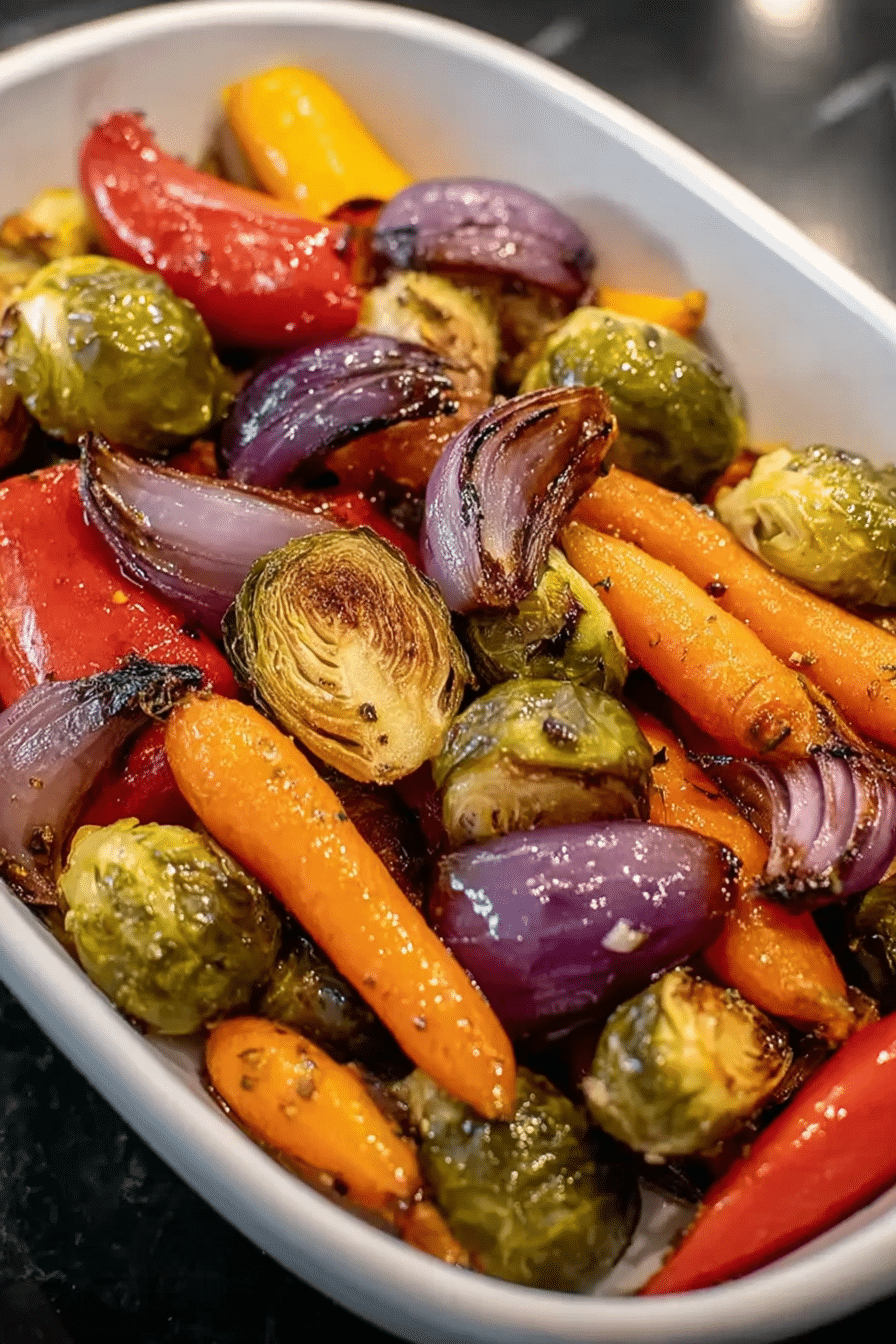
Balsamic Glazed Roasted Vegetables
Ingredients
Method
- Preheat the oven to 425°F (220°C).
- In a large bowl, combine the Brussels sprouts, carrots, bell peppers, and red onion.
- In a small bowl, whisk together the balsamic vinegar, olive oil, honey (or maple syrup), salt, and pepper.
- Pour the balsamic mixture over the vegetables and toss to coat evenly.
- Spread the vegetables in a single layer on a baking sheet.
- Roast in the preheated oven for 25-30 minutes, stirring halfway through, until the vegetables are tender and caramelized.
- Serve warm and enjoy!