- Prep
- 15 min
- Cook
- 8 min
- Total
- 23 min
- Serves
- 6
- Calories
- 430 kcal
- Protein
- 28.00 g
- Carbs
- 6.00 g
- Fat
- 32.00 g
Introduction
I cook a lot of burgers in my kitchen. Over the years I learned that the things that make a burger great aren’t complicated: good beef, gentle handling, and a little patience. When friends drop by last minute or I want a no-fuss weeknight dinner, this is the recipe I reach for because it’s fast, forgiving, and delivers a reliably juicy patty whether I’m firing up the grill or a heavy skillet. I like to pay attention to the small details others skip — the aroma of sizzling beef, the satisfying press of a thumb to make a center dent, the sound of a proper crust forming. Those little moments add up and they’re why I call this my go-to method. I’ve made the mistakes too: overworked meat, patties that puff into hockey pucks, and dry middles. After testing a few fixes, the results are predictable and excellent. What I’ll share here is practical and straightforward: what to keep in your kitchen, how to handle the meat so it stays tender, quick options for grill, stovetop, air fryer, and an easy set of spice swaps so you can vary flavors without extra fuss. If you want a burger that looks and smells like something from a weekend cookout but takes less than half an hour, this is it. I’ll also walk you through storage, reheating, and make-ahead options so leftovers stay useful for sandwiches or quick lunches. These are the little habits I use to keep weeknight cooking calm and satisfying.Why this is the best hamburger patty recipe for busy home cooks
This recipe gives you juicy, well-seasoned patties in under 30 minutes with minimal hands-on time. The short prep and quick cooking mean it fits into a busy weeknight—no long marinades or complicated steps. You can make thick, juicy patties for a Sunday grill or thin griddle-style burgers that cook almost instantly.
The method is flexible: grill, cast-iron skillet, griddle, or air fryer all work. That flexibility matters when plans change or weather doesn’t cooperate. The smell of beef searing and the sight of an even, brown crust tell you the burger is on the right track—simple sensory cues you can rely on.
Everything You Need for the Best Hamburger Patty Recipe
Keep your pantry and toolbox simple. Fresh, quality ingredients and a few sturdy tools are all you need to get excellent results every time.
- Essential tools – A large mixing bowl, a sturdy spatula, a flat griddle or heavy skillet (or a clean grill grate) and a reliable instant-read thermometer make the process easy and consistent.
- Pantry basics – Simple pantry binders like crushed crackers or panko and a single egg keep the patties cohesive without turning them dense.
- Seasonings – Salt, onion and garlic powders, and black pepper are all you need for a classic burger; Worcestershire and a splash of milk add savory depth and tenderness.
For tips on achieving the ideal flavor and texture, check out our guide on how to make the perfect burger.
How to Make the Best Hamburger Patty Recipe (Step-by-Step)
- Start with the beef in a large bowl. Add your binders and seasonings and mix gently with your hands until the mixture looks even — stop as soon as everything is combined. Overworking creates a tight texture.
- Press the meat into a flat disk in the bowl and divide it into portions. Shape each portion into a patty slightly larger than your bun so they’ll shrink into the right size while cooking.
- Place formed patties on a lined baking sheet and press a shallow dent in the center of each with the back of a spoon. That dent helps prevent the patty from puffing up and keeps the cooking surface even.
- Preheat your cooking surface to medium heat. A grill or skillet around the moderate range gives a nice sear without burning the outside before the center cooks.
- Cook thick patties about a few minutes per side until a crust forms and the internal temperature reaches your target. For thinner patties, a couple of minutes per side on a hot griddle will do. Use an instant-read thermometer to check doneness: aim for safe internal temperatures while keeping them as juicy as you like.
- Finish on the grill or pan with a brief rest—transfer cooked patties to a plate, tent loosely, and let them rest while you toast buns or finish toppings.
- Alternatives: for air fryer cooking, preheat the basket and cook on high for a short time, flipping once; for smoking, cook low and slow until the desired internal temperature is reached, then sear briefly for crust.
The Secret to a Juicy, Not Dense, Patty
The most common reason patties turn out dense is overhandling. When you squeeze and knead ground beef too much it tightens the protein and squeezes out the juices. Handle the meat just enough to combine ingredients and shape the patties.
Fat content is your friend for juiciness. A higher-fat grind carries flavor and moisture; if you prefer leaner meat, consider blending a fattier cut back in or adding a touch of olive oil to compensate. The dent in the center we talked about keeps patties from ballooning and ensures an even cook. Resting after cooking allows juices to redistribute so each bite feels succulent rather than dry.
For optimal results, learn about cooking burgers on the grill and tips that enhance patty juiciness.
Choosing the Right Beef Blend for Flavor and Texture
Different cuts bring distinct flavors and textures. Ground chuck has great balance between beefy flavor and enough fat for juiciness. Ground sirloin is leaner and more intensely beefy but can dry out faster. Brisket adds rich, beefy depth and a nice mouthfeel when blended. Mixing two or more cuts gives you control over flavor, fat, and texture.
If you want a richer, slightly caramelized crust try blending chuck with a small portion of brisket. For a lighter burger, use more sirloin but watch cooking time closely and don’t overcook. If you prefer plant-based options, choose a product designed to sear well and add a lone egg or binder alternative to help with texture.
Why Temperature and Resting Time Make All the Difference
Cooking temperature determines how the outside browns and how quickly the interior comes up to temperature. A moderate-to-medium heat gives you a good crust without overcooking the center. An instant-read thermometer takes the guesswork out of doneness and food safety.
Resting is essential. When you let patties rest briefly after cooking the juices redistribute and the texture relaxes. You’ll get a juicier bite and avoid a stream of hot juices escaping onto the plate the moment you cut into the burger.
Pro Tip for best hamburger patty recipe: Rest, Dent, and Simple Spice Swaps
- Rest – I always rest patties for about five minutes after cooking. Tent them loosely with foil so they don’t steam and lose their crust.
- Dent – Make the center dent when shaping. It’s a tiny step that makes a big visual and textural difference.
- Simple spice swaps – Swap smoked paprika for a touch of sweetness and smoke, add a pinch of chili flakes for heat, or stir in a little Dijon mustard for tang. These are quick changes that don’t require extra prep.
Troubleshooting Common Patty Problems
- If patties are tough: I probably overmixed. Next time mix just until combined and shape gently.
- If patties puff up into domes: Press a dent in the center before cooking and avoid pressing down with a spatula while they cook.
- If the outside burns before the center cooks: Your heat is too high—lower the temperature slightly and give the patty more time to cook through.
- If patties are dry: Try a fattier blend or add a small binder like an egg or a splash of milk to help retain moisture.
Variations
- Cheesy-stuffed patties: Add a small cube of cheese in the center before sealing the patty.
- Herb-forward: Fold fresh chopped parsley and chives into the mix for a bright finish.
- Spicy: Mix in diced jalapeño or a pinch of cayenne for a kick.
- Smoky BBQ: Add a bit of smoked paprika and serve with BBQ sauce and pickled onions.
How to Store, Reheat, and Make-Ahead Patty Options
- Refrigerating: Store cooked patties in an airtight container in the fridge for up to three days. Separate stacked patties with wax paper so they don’t stick.
- Freezing: Freeze cooked or uncooked patties flat in a single layer on a tray, then transfer to a freezer bag. Use within a couple of months for best quality.
- Reheating: Gently reheat leftover patties in a skillet over medium-low heat with a splash of water and a lid to steam gently, or finish in a 350°F oven until warmed through. Avoid high heat that will dry them out.
- Make-ahead: Form patties and freeze them raw on a tray; stack with wax paper between each patty and store in a freezer bag so you can cook from frozen or thaw in the fridge overnight.
Pairing Patties with Toppings and Sides for a Complete Meal
Simple, classic toppings let a good patty shine: sliced tomato, crisp lettuce, raw or caramelized onions, and a melty slice of cheese. For more creative combinations, think avocado and chipotle mayo, or tangy pickles and a smear of mustard. Complement your burgers with fries, a crisp green salad, or grilled veggies for a balanced plate.
Don’t forget to explore the best burger toppings to make your meal even more enjoyable.
Complement your burgers with our selection of best side dishes for burgers for a well-rounded meal.
Make your buns and toppings ready while the patties rest so everything comes together hot and fresh. A quick toast on the grill or skillet and the right condiments will take a simple patty to a full, satisfying meal.
Frequently Asked Questions
What is the best way to prevent hamburger patties from becoming dense? To keep your hamburger patties light and juicy, handle the meat gently and avoid overmixing. Form the patties just larger than your buns and press a small dent in the center to help them cook evenly.
Can I use different types of ground beef for this recipe? Absolutely! While ground chuck is recommended for its flavor and fat content, you can experiment with blends like sirloin or brisket for different taste profiles. Just make sure to maintain a good fat ratio for juiciness.
How should I store leftover hamburger patties? Leftover hamburger patties can be stored in an airtight container in the refrigerator for up to 3 days. You can also freeze them for longer storage—just make sure to separate layers with wax paper.
What toppings pair well with the hamburger patties from this recipe? Get creative with your toppings! Classic choices are cheese, lettuce, tomatoes, and onions, but you can also try avocado, BBQ sauce, or spicy jalapeños for a twist.
How long should I let hamburger patties rest after cooking? Let your hamburger patties rest for about 5 minutes after cooking. This allows the juices to redistribute, making each bite more flavorful and juicy.
Recipe Card
How I Nailed the Best Hamburger Patty Recipe — Grill or Stovetop
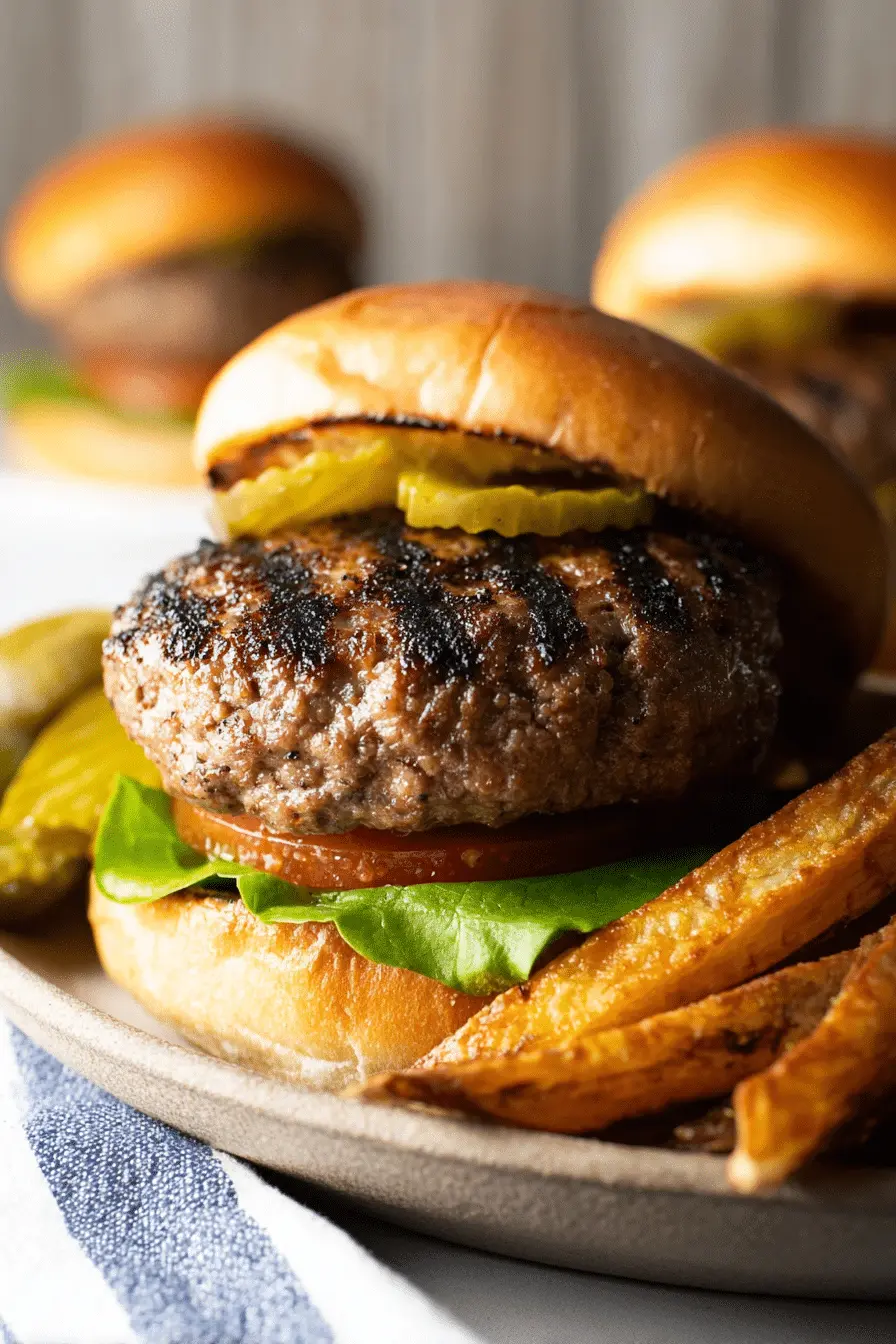
- Prep
- 15 min
- Cook
- 8 min
- Total
- 23 min
- Serves
- 6
- Calories
- 430 kcal
- Protein
- 28.00 g
- Carbs
- 6.00 g
- Fat
- 32.00 g
Ingredients
- 2 poundsground chuck
- ½ cupcrushed saltine crackers (or Panko breadcrumbs)
- 1 largeegg
- 2 tablespoonsWorcestershire sauce
- 2 tablespoonsmilk
- 1 teaspoonsalt
- 1 teaspoongarlic powder
- 1 teaspoononion powder
- ½ teaspoonblack pepper
Instructions
- 1
Set out a large mixing bowl. Add in the ground beef, crushed crackers, egg, Worcestershire sauce, milk, salt, garlic powder, onion powder, and pepper. Mix by hand until the meat mixture is smooth, but stop once the mixture looks even. (Overmixing can create a dense heavy texture.)
- 2
Press the meat down in the bowl, into an even disk. Use a knife to cut and divide the hamburger patty mixture into 6 - 1/3 pound grill or skillet patties, or 12 thin griddle patties.
- 3
Set out a baking sheet, lined with wax paper or foil, to hold the patties. One at a time, gather the patty mix and press firmly into patties. Shape them just slightly larger than the buns you plan to use, to account for shrinkage during cooking. Set the patties on the baking sheet. Use a spoon to press a dent in the center of each patty so they don't puff up as they cook. If you need to stack the patties separate them with a sheet of wax paper.
- 4
Preheat the grill or a skillet to medium heat. (Approximately 350-400 degrees F.)
- 5
For thick patties: Grill or fry the patties for 3-4 minutes per side.
- 6
For thin patties: Cook on the griddle for 2 minutes per side.
- 7
Stack the hot patties on hamburgers buns, and top with your favorite hamburgers toppings. Serve warm.
You might also like

Reviews
Be the first to review this.