- Prep
- 35 min
- Cook
- 28 min
- Total
- 93 min
- Serves
- 16
- Calories
- 314 kcal
- Carbs
- 17.00 g
Introduction
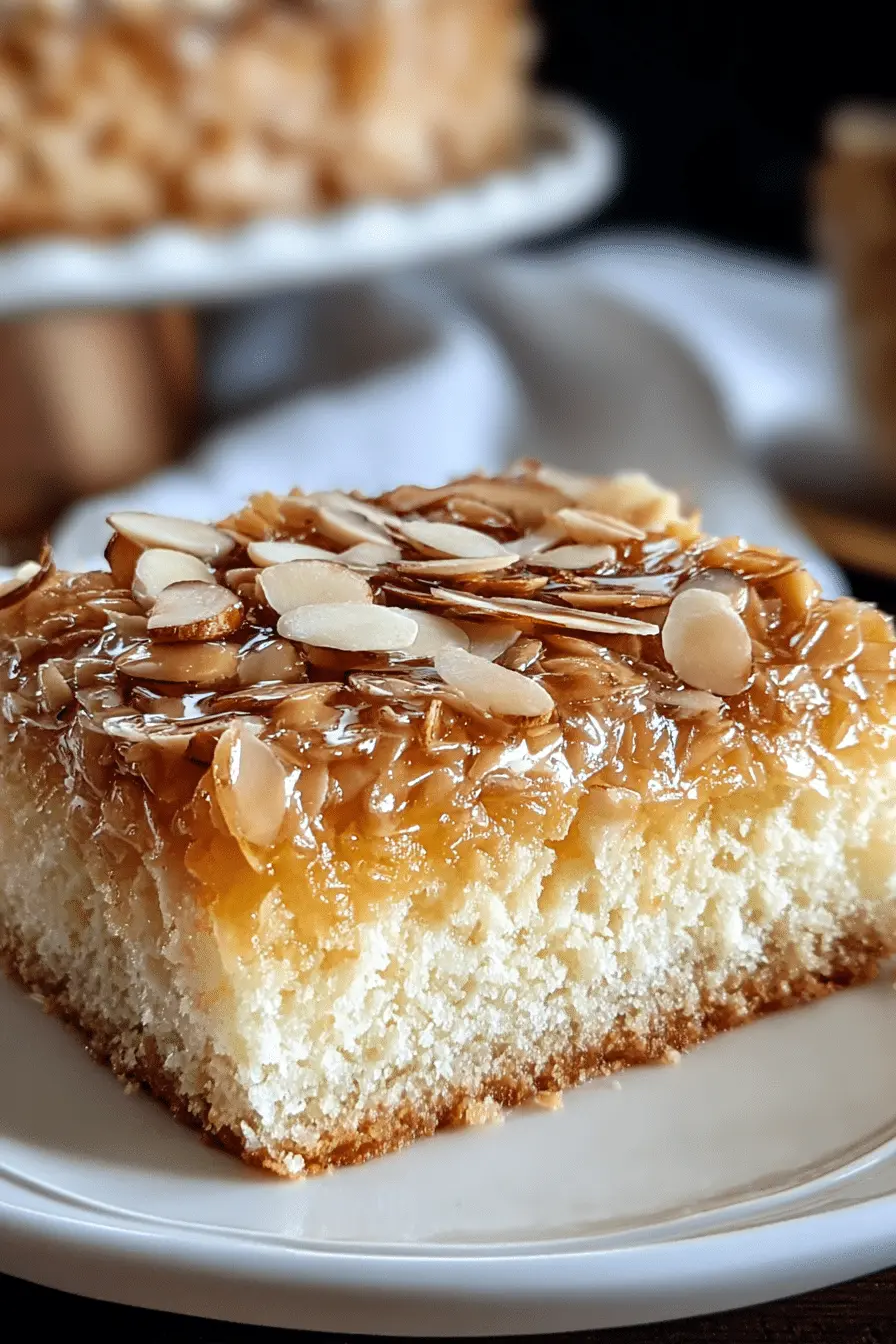
I first met Bienenstich in a small café where the air always smelled faintly of honey and butter. I remember the first slice I stole from the display — the warm almond top still crackling, a soft yeasted base, and a cool vanilla cream that felt like summer afternoons. Over the years, baking this cake has become a ritual for me: the slow stretch of dough, the brief panic at the bubbling honey, and the quiet reward of that first clean bite. I like to think of Bienenstich as a neighborhood cake — something brought to potlucks, sold by beloved bakers, and tied to moments of sharing. Its German name, Bee Sting Cake, is part memory and part myth; some stories say it was named after a baker stung by a bee attracted to the honey topping. To me the story matters less than the feeling: a cake that asks to be split and shared. Bienenstich sits at the intersection of pastry and bread. The yeasted base needs patience to develop flavor; the honeyed almond top needs careful timing so it caramelizes but doesn’t scorch; and the filling needs enough body to stay light yet supportive. I’ll walk you through each part with the practical notes I wish I’d had when I first tried to make it at home.Experience a Slice of Germany: Why Bienenstich Belongs on Your Table
Bienenstich has been a fixture in German bakeries for generations. It’s the sort of pastry that marks a holiday or a small celebration — baptisms, café catch-ups, or a neighbor bringing a cake to say thanks. Its layers carry cultural meaning: the yeasted dough speaks to everyday baking traditions, the custard filling nods to continental pastry craft, and the honey‑almond crown evokes late‑spring beekeeping and communal harvests. Regional variations exist: some towns prefer a denser dough, others a lighter brioche‑like base; a few replace the custard with a ricotta‑style filling or use lemon in the cream for brightness. These adaptations show how simple recipes travel and settle into local habits, each version a small story of place and taste. When you bake Bienenstich, imagine a warm bakery window where the almond scent invites people in. The cake is meant to be shared — I find it tastes best when served on a bright afternoon with company. For a quick refresher: What is Bienenstich? Bienenstich, or Bee Sting Cake, is a German dessert made of a yeasted pastry filled with vanilla custard and topped with honey-glazed sliced almonds.Everything You Need for Bienenstich (Bee Sting Cake)
- Flour – Flour choice determines the crumb: pastry flour or unbleached all‑purpose keeps the crumb tender but still structured.
- Butter – Use real butter for flavor and a soft mouthfeel in both dough and topping; cold butter in the topping helps the almonds stay distinct.
- Sugar – Sugar feeds the yeast and sweetens the dough; extra sugar in the topping helps caramelization.
- Yeast – Instant yeast gives a reliable rise and a lightly tangy, fermented aroma when allowed to proof fully.
- Eggs – Eggs enrich the dough for a tender, golden crumb and help with structure.
- Milk or Water – Liquids hydrate the dough and control how soft or firm the crumb becomes; warmer liquids speed fermentation.
- Sliced Almonds – The aroma and crunch come from toasted sliced almonds; look for even, thin slices so they caramelize uniformly.
- Honey – Honey in the topping provides flavor depth and that characteristic bee‑sting sweetness; pair it with sugar so the topping sets properly.
- Heavy Cream – Whipped cream lightens the filling; use cold cream whipped to soft peaks so it folds in easily.
- Instant Vanilla Pudding Mix – A shortcut for pastry‑cream texture without the tempering and constant stirring of a cooked custard.
- Gelatin – Gelatin stabilizes the whipped filling so it holds between the cake layers, especially important if you plan to assemble ahead.
- Vanilla – Pure vanilla brightens the filling and complements the honeyed topping.
The Secret to the Perfect Yeasted Pastry Dough
- Mix and knead until the dough is smooth and slightly tacky. You want elasticity: when you stretch a small piece it should pass the windowpane test — thin and translucent without tearing easily.
- Allow the dough to rise until puffy rather than doubled; a gentler rise keeps the crumb tender and preserves the dough’s buttery flavor. Cooler rises overnight in the fridge deepen complexity if you have the time.
- When shaping, let the gluten relax after the first rest. Pat and gently stretch rather than force; the dough should resist and then yield, settling into the pan without springing fully back.
- Pay attention to feel: under‑kneaded dough feels rough and will tear; over‑kneaded dough will be tight and shrink back when shaped. The ideal dough is soft, supple, and slightly tacky to the touch.
Nailing the Honey‑Almond Topping: Texture and Timing
- Melt butter and combine with sugar, honey, and a touch of cream. Bring to a gentle boil and cook until the mixture turns a very light gold — this usually takes a few minutes and concentrates the flavors without burning.
- Add the sliced almonds at the end of the boiling stage so they toast in the hot syrup rather than sitting too long and burning; stir quickly to coat evenly.
- Spread the topping while it’s warm but not piping hot; warm topping adheres best and settles into a glossy, slightly crackly finish once baked.
- Visual cues: you want glossy, bubbling syrup when you slide it over the dough, and a pale golden almond color after baking — too dark means it was overcooked and may be bitter.
What Makes This Filling 'Pastry Cream' Without the Hassle
- Instant pudding mix gives a stable, vanilla‑rich base quickly; it mimics the thickness of cooked custard without tempering eggs on the stovetop.
- Gelatin creates structure so the filling doesn’t weep between layers. Melt gelatin gently and cool slightly before folding into cream to avoid lumps or melted whipped cream.
- Fold a small portion of whipped cream into the gelatin first to temper it, then fold that mixture back into the remaining whipped cream — this keeps the aeration intact while distributing the gelatin evenly.
- Work quickly once the pudding sets: combine pudding, whipped cream, and gelatin before the pudding becomes too firm. The goal is a light, spoonable cream that holds its shape when sliced.
How to Make Bienenstich (Step-by-Step)
- Make the dough: combine your flour, butter, sugar, yeast, salt, eggs, and liquid. Knead until smooth and supple; you can use a stand mixer or do this by hand.
- First rise: place dough in a lightly oiled bowl, cover, and let rise until puffy — about an hour at room temperature, longer if cool.
- Divide and shape: gently deflate, divide the dough into two portions, form balls, then pat each into an 8" round and set in greased pans. Cover and rest to relax the gluten before final shaping.
- Make the topping while the dough rests: cook butter, sugar, honey, and cream until lightly golden, stir in sliced almonds, and let the mix cool slightly before spreading over the dough.
- Bake: preheat to moderate oven temperature and bake until edges are golden and the topping bubbles. Let cool in the pan so the topping firms up and doesn’t slide off.
- Flip and cool: run a knife around the pan, invert so the almond topping is up, then cool completely before slicing horizontally for filling.
- Prepare the filling: soften gelatin, whisk pudding mix with milk and vanilla, fold in the stabilized whipped cream quickly before the pudding tightens.
- Assemble: split each cake horizontally to make thin layers, spread filling between layers, and stack. Chill briefly to set before slicing.
- If the dough is sticky and hard to handle, chill briefly — a short rest firms the butter and makes shaping easier.
- If the almond topping looks pale after baking, your topping likely didn’t boil long enough to concentrate the sugars; return to a slightly higher heat next time but watch closely to avoid burning.
- If the filling weeps, the whipped cream may not have been cold enough or the gelatin wasn’t fully dissolved — always cool and strain the gelatin if necessary.
- If layers compress when you slice, chill the cake for a couple of hours to firm the filling before cutting.
Pro Tip for Bienenstich: Quick, Reliable Shortcuts for Busy Bakers
- I often make the dough the night before and let it rise slowly in the refrigerator; it saves time and deepens the flavor.
- Use instant pudding mix for an honest shortcut to pastry cream without constant stirring — it’s a reliable texture when folded with whipped cream and stabilized with a touch of gelatin.
- For a crisper topping, toast sliced almonds lightly before adding them to the honey mixture; this ensures they remain crunchy after baking.
- If you’re short on time, you can bake the dough base ahead, freeze it, and add the warm topping then — assemble with fresh filling when ready to serve.
- Substitutions that work: if pastry flour isn’t available, use unbleached all‑purpose; if you don’t have gelatin sheets, powdered gelatin will do — hydrate correctly and dissolve fully.
How to Store, Make‑Ahead, and Serve Bienenstich (Pairings & Variations)
Storage and make‑ahead: You can prepare the cakes and filling in advance; assemble right before serving for the best texture. If fully assembled, store leftover Bienenstich in an airtight container in the refrigerator — it should remain fresh for up to 2–3 days, though the topping is crispiest on the first day. Serving suggestions: Bienenstich pairs beautifully with coffee, tea, or even a light dessert wine — a slightly tannic black tea or a bright espresso cuts through the cream and complements the honeyed almonds. For a seasonal touch, serve with a few fresh berries or a spoonful of lightly sweetened crème fraîche. Variations (quick, scannable ideas):- Swap some of the pudding mix for lemon pudding and add lemon zest to the whipped cream for a brighter filling.
- Use hazelnuts instead of almonds for a deeper roast‑nut flavor.
- Turn the base into a richer brioche by increasing eggs and butter slightly for an indulgent take.
- For a lighter version, reduce the topping sugar and finish with a drizzle of runny honey just before serving.
Frequently Asked Questions
What is Bienenstich? Bienenstich, or Bee Sting Cake, is a German dessert made of a yeasted pastry filled with vanilla custard and topped with honey-glazed sliced almonds. How do I store leftover Bienenstich? Store leftover Bienenstich in an airtight container in the refrigerator. It should remain fresh for up to 2-3 days. Can I make Bienenstich ahead of time? Yes! You can prepare the cakes and filling in advance. Assemble right before serving for the best texture. What can I serve with Bienenstich? Bienenstich pairs beautifully with coffee, tea, or even a light dessert wine, enhancing its flavors. Is it possible to substitute ingredients in the recipe? Yes, but be cautious; substituting key ingredients like the flour or cream may affect the texture and taste. For best results, stick to the recipe where possible.Recipe Card
How I Finally Nailed Bienenstich: Traditional German Bee Sting Cake
- Prep
- 35 min
- Cook
- 28 min
- Total
- 93 min
- Serves
- 16
- Calories
- 314 kcal
- Carbs
- 17.00 g
Ingredients
- 2 1/3 cupsKing Arthur Pastry Flour Blend or King Arthur Unbleached All-Purpose Flour
- 4 tablespoonsbutter, at room temperature
- 2 tablespoonsgranulated sugar
- 1 1/2 teaspoonsinstant yeast
- 3/4 teaspoontable salt
- 2 largeeggs, at room temperature
- 1/4 cupwater
- 6 tablespoonscold butter
- 1/3 cupgranulated sugar
- 3 tablespoonshoney
- 2 tablespoonsheavy cream
- 1 1/2 cupssliced almonds
- 2 teaspoonsunflavored gelatin
- 2 tablespoonswater
- 1 cupheavy cream, whipped to very soft peaks
- 3-ounce packageinstant vanilla pudding mix
- 1 1/2 cupsmilk
- 1 teaspoonKing Arthur Pure Vanilla Extract
Instructions
- 1
To make the dough: Combine all of the dough ingredients and mix, then knead until smooth.
- 2
Place the dough in a lightly oiled bowl, cover, and let it rise for 60 minutes.
- 3
Transfer the dough to a lightly oiled surface, divide, shape into balls, and flatten into circles.
- 4
Make the topping by melting butter and combining with sugar, honey, and cream. Add almonds and cool.
- 5
Preheat the oven to 350°F and bake the cakes for 25 to 28 minutes.
- 6
Cool cakes in the pan for 30 minutes, then remove the cakes from the pans.
- 7
Split each cake in half, then prepare the filling with gelatin, whipped cream, and pudding mix.
- 8
Fill the cakes with the prepared filling and serve.
You might also like

Reviews
Be the first to review this.