- Prep
- 20 min
- Cook
- 10 min
- Total
- 35 min
- Serves
- 14
- Calories
- 159 kcal
- Carbs
- 11.00 g
Introduction
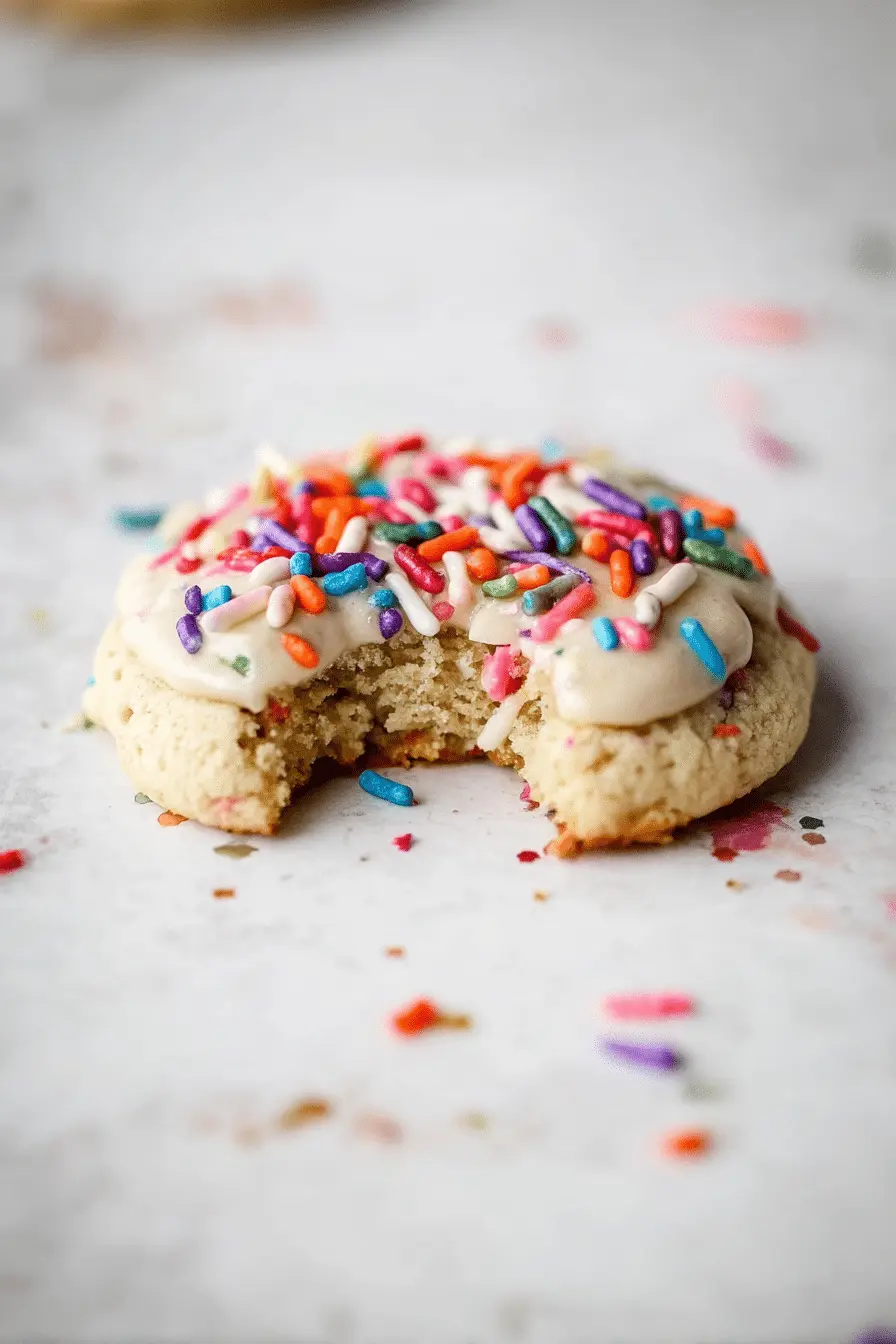
I make these birthday cake cookies whenever I want something that feels indulgent and celebratory but still fits my health-focused kitchen. The dough comes together quickly, and as the cookies bake the house fills with the warm scent of vanilla and a whisper of almond — it’s comfort baking with a lighter footprint. I love how the sprinkles pop against the pale cookie surface; they look like tiny confetti disks that promise a little party in every mouthful. In my kitchen these cookies are a go-to for birthdays, afternoon pick-me-ups, or when I want to offer something gluten-free and low-carb that doesn’t feel like a compromise. The texture is soft and tender with a gentle chew — not cakey, not dense — and the frosting adds a creamy counterpoint that makes them party-ready. Over the years I’ve refined the balance of almond and coconut flour so they stay moist without falling apart, and I’ll share why those flours work so well together, options if you’re avoiding certain allergens, and simple decorating ideas that keep these cookies fun and wholesome.Celebrate Every Day: Why These Birthday Cake Cookies Are Ideal for Health-Conscious Eaters
These cookies are built to suit people who want indulgence on a smarter plate. Using grain-free flours reduces the carbohydrate load compared with all-purpose flour and makes them approachable for gluten-sensitive or low-carb eaters. Coconut oil replaces heavier fats with a stable, plant-based option that adds a subtle coconut warmth without weighing the cookie down. The result is a treat that looks festive, smells like classic birthday cake, and fits into a mindful eating plan. Visually, the sprinkles make them feel celebratory: bright flecks against the pale dough, tiny stars and dots that lift the mood. When they’re baking, the kitchen fills with a delicate vanilla-and-almond aroma that pulls everyone to the oven — it’s an easy way to make ordinary days feel special.Everything You Need for Birthday Cake Cookies
Below I talk about the ingredients and tools I reach for in my kitchen. You’ll get guidance on substitutions and why certain brands or textures matter — and a few equipment picks that make the process simpler.- Almond flour (blanched, fine) – Provides structure, a tender crumb, and subtle nutty flavor; do not use coarse almond meal if you want a smooth, delicate cookie.
- Coconut flour – Absorbs moisture and keeps the dough from spreading too thin; adds a slight coconut note and helps create that soft interior.
- Coconut oil – My preferred fat for this recipe for its stability and light flavor; you can swap for mild olive oil or melted butter if you prefer.
- Egg – Binds the dough and contributes to tenderness; for vegan swaps, see the FAQ below.
- Sweetener – I use organic sugar for balance, but options exist for lower-sugar choices; read the low-sugar section for ideas.
- Vanilla and almond extracts – Tiny amounts make a big difference in aroma and depth of flavor.
- Baking soda and salt – Essential for light lift and balanced taste.
- Sprinkles – Choose natural or allergen-free varieties if needed; they’re mostly visual, so replace with chips or chopped nuts if you want.
- Butter or vegan butter (for frosting) – Adds creaminess and structure to the frosting; a plant-based option keeps the whole treat vegan-friendly.
- Equipment – A mixing bowl, silicone spatula, baking sheet with parchment, and a cooling rack are the basics. A small cookie scoop helps size the dough evenly.
Why Almond & Coconut Flour Make These Cookies Healthier
Almond flour has a lower glycemic impact than refined all-purpose flour and brings protein, healthy fats, and vitamin E to the batter. Coconut flour contributes fiber and soaks up liquids, which helps the cookies hold their shape without excess starch. Together they create a dough that’s naturally lower in carbs and higher in satiety than a typical wheat-based cookie. Texturally, almond flour’s fine, crumbly feel and coconut flour’s absorbency balance each other: almond flour keeps the cookie tender, while coconut flour prevents spread and gives a slight spring to the bite. The flours also add a pale, cakey look that serves as a perfect canvas for frosting and sprinkles. If you’re exploring more health-conscious recipes beyond cookies, consider a vegetable-forward dinner like our vegan pasta primavera to complement your dessert planning.The Secret to a Soft, Chewy Texture in Grain-Free Cookies
- Balance the flours: I make sure the almond flour is finely blanched and the coconut flour is measured dry — the right ratio prevents a crumbly or gummy result.
- Let the dough rest: After mixing, allow the dough to sit briefly so the coconut flour can absorb moisture; I’ve found a short rest improves cohesion and the final chew.
- Don’t overbake: Pull the cookies when the edges are set but the centers still look slightly soft; they’ll firm as they cool and remain tender.
- Use the right fat temperature: Melted and cooled coconut oil integrates smoother than hot oil; when I skipped cooling it the dough loosened too much and the cookies spread too thin.
- Size consistently: I use a small scoop or roll by hand into golf-ball-sized portions and flatten gently so each cookie bakes evenly and ends up with the same soft bite.
How to Keep Them Low-Sugar Without Losing Flavor
Keeping sweetness modest is achievable without sacrificing the cake-like flavor. Using aromatic extracts — particularly a strong vanilla and a whisper of almond — makes the cookies taste richer. Organic cane sugar reads cleaner to the palate, but you can use lower-glycemic sweeteners or a blend of a natural sweetener with a tiny amount of powdered sweetener in the frosting for lift. Texture tricks help, too: a touch more fat or a small extra egg yolk (or yolk equivalent) makes the mouthfeel indulgent so you don’t miss extra sugar. If you prefer toppings that add sweetness without refined sugar, try a smear of nut butter with a sprinkle of chopped dried fruit or a few dark chocolate chips. If you’re hunting for more low-sugar treats, try our healthy carrot cake pancakes for another morning- or brunch-friendly option.How to Make Birthday Cake Cookies (Step-by-Step)
- Preheat your oven and line a baking sheet: you want a hot but not blistering oven so the edges set while the centers stay soft.
- Mix the wet ingredients first: combine your melted-and-cooled coconut oil with sugar, the egg, and extracts until smooth so the dry ingredients hydrate evenly.
- Add the flours and leavening: stir in the almond and coconut flours with baking soda and salt until the dough comes together; fold in sprinkles gently so they don’t bleed color.
- Rest briefly: let the dough sit for several minutes so the coconut flour can absorb moisture and firm up, which helps with shaping.
- Shape and flatten: roll into evenly sized balls, place on the sheet, and press to about a quarter-inch thickness so they bake through in the center without overbrowning the edges.
- Bake and cool: watch carefully around the minimal recommended time — remove when edges are set and centers look slightly soft, cool on the sheet briefly, then transfer to a rack to finish cooling before frosting.
- Frost and decorate: beat a light buttercream or choose a lower-sugar frosting alternative, spread on cooled cookies, then top with a few sprinkles for that celebratory look.
Pro Tip for birthday cake cookies: Use blanched almond flour, rest the dough, and choose healthier frostings
- Blanched almond flour matters – I always use fine blanched almond flour; it yields a tender, uniform crumb and prevents grit in the finished cookie.
- Rest the dough briefly – a 3–5 minute rest lets coconut flour hydrate and improves texture and handling.
- Choose lighter frostings – consider a powdered sweetener blend, Greek yogurt–based topping, or whipped coconut cream for a lighter finish if you want to reduce sugar and saturated fat.
- Pick good sprinkles – look for dyes and ingredients that fit your dietary preferences; I keep a small stash of natural sprinkle options for themed cookies.
Troubleshooting
- If the dough is too loose, refrigerate briefly — I’ve saved batches this way when the kitchen was warm and the dough spread too much.
- If cookies are dry or crumbly, you likely used too much coconut flour or overbaked; add a touch more fat next time or shorten baking time.
- If cookies spread too much, make sure the coconut oil was cooled and your dough rested; also check oven temperature with an oven thermometer.
- If sprinkles bleed color into the cookie, fold them in gently at the end and use stabilizing chilled dough before baking.
How to Store, Make-Ahead, and Easy Variations
Storage is straightforward and keeps the cookies tasting fresh: store in an airtight container at room temperature for several days, or refrigerate to extend freshness. For longer-term storage, freeze the baked cookies between layers of parchment and thaw at room temperature before frosting. The cookies should remain soft with just a hint of firmness when chilled.- Make-ahead dough – shaped dough balls freeze well for up to three months; thaw in the fridge before baking for best texture.
- Freezing finished cookies – freeze unfrosted cookies on a sheet first, then transfer to a sealed container; decorate after thawing so frostings stay bright.
- Appearance after storage – cookies will still look celebratory: the sprinkles keep their color and the crumb remains pale and tender if stored properly.
Variations
- Chocolate birthday cake – add a small amount of unsweetened cocoa to the dry mix and use dark chocolate chips in place of sprinkles.
- Citrus twist – fold in finely grated lemon or orange zest and use a lemony glaze for a bright, fresh finish.
- Nut-free version – use sunflower seed flour or a blend formulated for nut-free baking; adjust liquid as these flours behave differently.
- International flavors – try cardamom and rose water for a Middle Eastern-inspired cookie, or matcha with white chocolate chips for a Japanese touch.
- Decorating ideas – make themed colors with natural food dyes, sprinkle edible glitter, or press a small candy on top for a personalized touch.
Frequently Asked Questions
Can I use regular all-purpose flour instead of almond and coconut flour? Using regular all-purpose flour will change the texture and nutritional profile of the cookies. Almond and coconut flour are low-carb and gluten-free, which is what makes these cookies healthier! How can I make these cookies vegan? You can substitute the egg with a flax egg (1 tablespoon of ground flaxseed mixed with 2.5 tablespoons of water) and use vegan butter for the frosting to make these cookies vegan-friendly! What can I use instead of sprinkles? If you'd like to skip sprinkles, you can use chopped nuts or dairy-free chocolate chips for added flavor and texture! How should I store the cookies? Store the cookies in an airtight container at room temperature for up to 5 days, or refrigerate them for longer freshness! Can I freeze the cookie dough? Yes! You can freeze the cookie dough balls for up to 3 months. Just let them thaw before baking, and you'll have fresh cookies whenever you want!Recipe Card
Celebrate Every Day with Soft, Grain‑Free Birthday Cake Cookies
- Prep
- 20 min
- Cook
- 10 min
- Total
- 35 min
- Serves
- 14
- Calories
- 159 kcal
- Carbs
- 11.00 g
Ingredients
- ⅓ cupmelted and cooled coconut oil
- ⅓ cuporganic sugar
- 1egg, at room temperature
- 1 teaspoonvanilla extract
- ¼ teaspoonalmond extract
- 1 ½ cupspacked fine blanched almond flour
- 3 tablespoonscoconut flour
- ¼ teaspoonbaking soda
- ¼ teaspoonsalt
- ¼ cupsprinkles
- 4 tablespoonsbutter or vegan butter, at room temperature (for frosting)
- ¾ cuporganic powdered sugar (for frosting)
- 1 ½ teaspoonsvanilla extract (for frosting)
- 1 tablespoonsprinkles (for frosting)
Instructions
- 1
Preheat the oven to 350 degrees F. Line a large baking sheet with parchment paper.
- 2
In a large bowl add in coconut oil, sugar, egg, vanilla and almond extract. Mix until well combined and smooth.
- 3
Next, add in almond flour, coconut flour, baking soda and salt; mix until dough forms. Fold in ¼ cup sprinkles. Allow the dough to sit for 3-5 minutes.
- 4
Use your hands to roll dough into golf-sized balls. Place on the prepared cookie sheet then flatten each dough ball with the palm of your hand so that it’s about ¼ inch thick.
- 5
Bake for 10-12 minutes. Remove from the oven and allow to cool on the cookie sheet for 5 minutes, then transfer to a wire rack and allow cookies to cool completely before frosting.
- 6
For the frosting: Beat butter, powdered sugar and vanilla on high until smooth and fluffy, about 2 minutes. Fold in 1 tablespoon sprinkles. Frost each cookie, then add a few extra sprinkles on top.
You might also like
Reviews
Be the first to review this.