- Prep
- 15 min
- Cook
- 120 min
- Total
- 135 min
- Serves
- 6
- Calories
- 412 kcal
- Carbs
- 14.00 g
Introduction
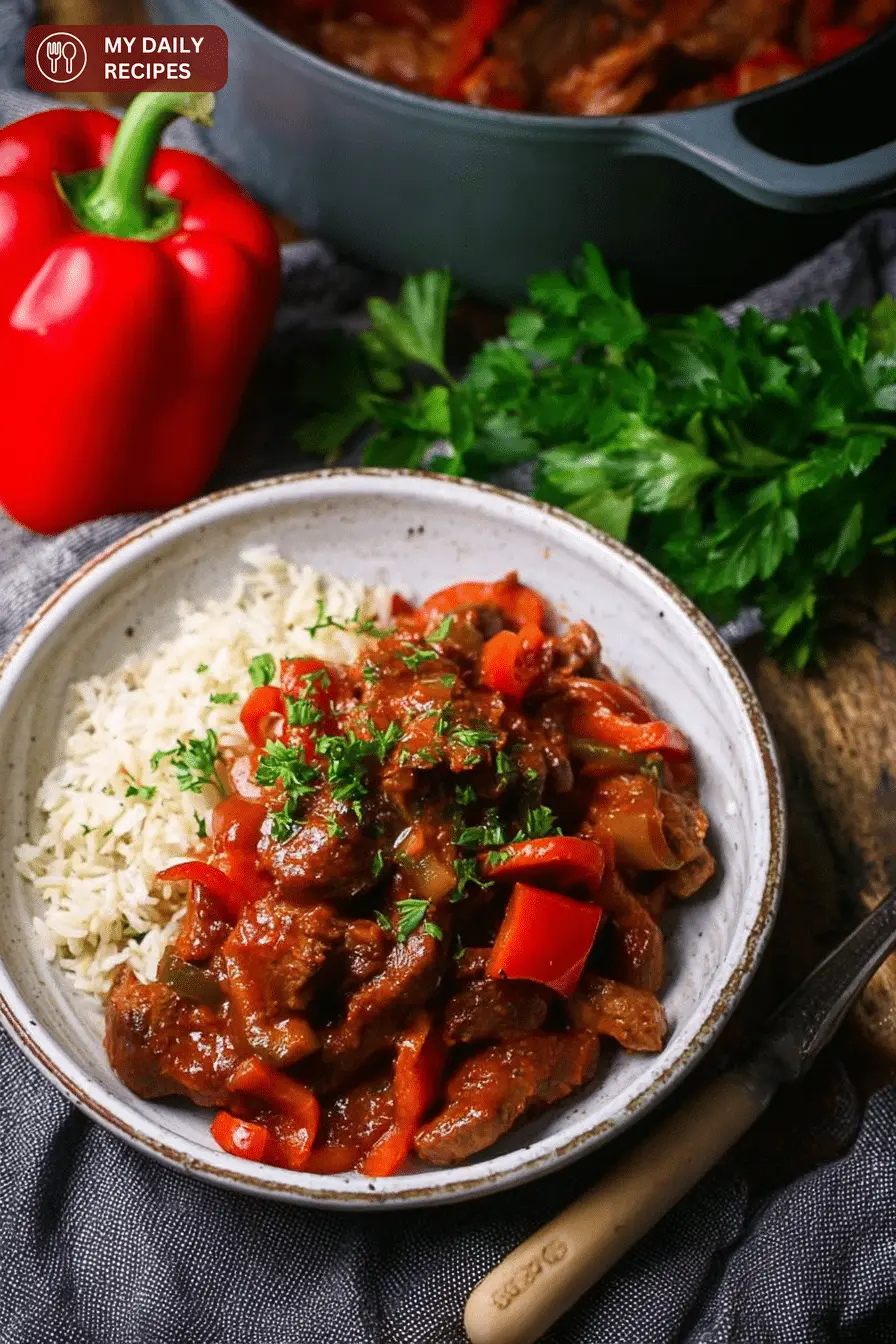
There’s something about a pot that simmers for hours that makes a house feel like a home. Braised veal and peppers is exactly that — tender chunks of meat sinking into a savory, tomato-scented sauce, brightened by soft, sweet peppers. I first cooked this on a rainy evening when I wanted something soothing but a little more special than the usual weeknight dinner, and the whole kitchen smelled like Sunday memories: onion and garlic slowly sweetening, wine evaporating to leave just a whisper of fruit, and the tomato sauce turning glossy and comforting. I usually make this for family dinners or when friends drop by — it serves a crowd and the flavors only get better the next day. The veal becomes almost spoonable, the peppers collapse into ribbons of sweet flesh, and the sauce clings to pasta or rice like a hug. Below I’ll walk you through everything I’ve learned testing this recipe in my own kitchen so you can get the same melt-in-your-mouth result.Ingredients You’ll Need
Below are the main components I reach for when I make this. I keep notes on substitutions and why each ingredient matters so you don’t get surprised at the stove.- Veal – cubed stew meat or shoulder; provides a tender, delicate-flavored protein that benefits from slow braising.
- Bell peppers – sliced thin; add sweetness, color, and a silky texture when braised until soft.
- Onion – the flavor backbone; caramelizes lightly to add sweet depth.
- Garlic – minced for fragrance; becomes nutty and sweet when cooked gently.
- Tomatoes – canned chopped tomatoes plus a touch of paste to thicken and concentrate flavor.
- White wine – used to deglaze and lift browned bits; adds brightness and complexity.
- Chicken stock – builds body in the braising liquid; can be swapped for beef stock if you want a deeper flavor.
- Tomato paste – gives the sauce body and an umami punch when cooked briefly.
- Red wine vinegar – a splash at the end wakes up the sauce and balances richness.
- Herbs & spices – oregano, parsley, red pepper flakes; they round out the sauce and add herbal notes.
- Flour – a light dredge on the meat to encourage browning and slightly thicken the braise.
- Olive oil – for searing; a drizzle provides richness and prevents sticking.
- Salt & pepper – seasoning throughout; salt in particular is the secret to making flavors pop.
Step-by-Step Cooking Instructions
I cook this in a heavy Dutch oven because it holds heat evenly and goes from stovetop to oven if needed. If you don’t have that, use a wide, heavy-bottomed pot with a tight-fitting lid. The method is simple: brown, sweat aromatics, deglaze, combine and braise low and slow.- Prep and heat: Pat the veal cubes dry — this is important so they brown instead of steam. Lightly toss with flour, shaking off excess. Heat a couple tablespoons of olive oil in a Dutch oven until shimmering but not smoking.
- Brown in batches: Add veal in a single layer, don't crowd the pan. You want a deep, caramelized crust; that Maillard flavor is the foundation of the sauce. If the pan gets too dark, wipe it out and add fresh oil for the next batch.
- Sauté aromatics: After the meat is removed, lower the heat to medium and add the onion. Cook until soft and beginning to color, then add garlic and cook until the garlic loses its raw bite and smells warm and sweet — about 30–60 seconds.
- Deglaze: Pour in the white wine and use a wooden spoon to scrape the browned bits (these are flavor gold). Let the wine reduce until almost evaporated so the alcohol cooks off but the brightness remains.
- Build the braise: Stir in tomato paste and cook for 1–2 minutes to remove any raw tomato taste. Add chopped tomatoes, chicken stock, a pinch of sugar (to balance acidity), dried oregano, chopped parsley, and the browned veal. Season with kosher salt and freshly cracked black pepper.
- First braise: Bring to a gentle simmer, then reduce the heat to very low. Cover and let cook undisturbed for about an hour — this is when collagen in the veal starts to break down and the sauce thickens. Check the pot and give it an occasional stir so nothing sticks.
- Add peppers: After the first hour, nestle in the sliced peppers and a splash of red wine vinegar. Adjust salt and pepper. Cover and continue to cook for another hour until the veal is fork-tender and the peppers are soft and integrated into the sauce.
- Finish and rest: Taste and correct seasoning — sometimes it needs a touch more salt or a little acidity to balance. Remove from heat and let sit for 10–15 minutes before serving; the sauce will thicken slightly as it cools.
Tips for Perfectly Braised Veal
I’ve made this dozens of times and refined a few steps that make all the difference. Here’s what to watch for and how to fix common problems.- Don’t skip drying the meat — moisture prevents browning. Pat well with paper towels.
- Crowding the pan is the fastest way to steam instead of sear. Brown in batches and keep the temperature high enough for a sizzle.
- Wine reduction matters — if you don’t reduce, you’ll taste raw alcohol. Let it bubble until almost gone so only flavor remains.
- If the sauce is thin, remove the lid and simmer gently to concentrate; if it’s too thick, stir in a splash of stock or water and reheat to combine.
- Salt at the end — seasoning adjusts as sauce reduces. Taste before the final rest and correct.
- Achieving tenderness — low and slow wins. Higher heat will toughen the meat and evaporate liquids too quickly; aim for a gentle barely-there simmer.
- If the veal falls apart, that’s okay — it means it’s tender. Use a slotted spoon if you prefer chunks rather than shredded meat.
Serving Suggestions and Pairings
This dish is very flexible. I like to serve it over buttered pasta during cooler months and rice or polenta when I want something heartier. For a lighter meal, spoon it over a bed of dressed greens and roasted tomatoes.- Polenta – creamy polenta soaks up the sauce beautifully.
- Mashed potatoes – use a faithful, buttery mash for ultimate comfort.
- Pasta or rice – long noodles like pappardelle or a simple spaghetti work; rice keeps it homey.
- Crusty bread – necessary for sopping up the last of the sauce.
Dietary Variations and Modifications
It’s easy to adapt this to common dietary needs without losing the essence of the dish.- Gluten-free – skip the flour dredge or use a gluten-free all-purpose blend or a dusting of cornstarch; the braise will still thicken as it reduces.
- Low-carb – serve over cauliflower rice, mashed cauliflower, or simply with a green salad.
- Dairy-free – the recipe is naturally dairy-free; avoid finishing the polenta with butter if you need to keep it dairy-free.
- Vegetarian option – swap the veal for large mushrooms and use vegetable stock; braise similarly though cooking times will be shorter.
Cultural Significance of the Dish
Braised veal and peppers sits comfortably in the tradition of Italian slow-cooked mains where humble ingredients are coaxed into something unforgettable. In regions across Italy, variations of meat braises with peppers or tomatoes appear in family gatherings, where dishes are built to feed many and to be shared. For me, cooking this evokes those multi-course Sunday meals my grandma made: long afternoons in a small kitchen, laughter and bread-dipping. It’s a communal dish meant to be ladled into bowls and eaten with hands and stories.Reader's Reviews and Feedback
I passed this recipe to a handful of friends and readers who offered honest feedback during testing. Their notes helped refine timing and seasoning so the recipe is forgiving in real kitchens.- "Made this for a chilly night and everyone went back for seconds. I added a splash of balsamic instead of red wine vinegar and loved the extra depth." — Elena, home cook
- "I used stew-cut veal and cooked it in my slow cooker. Perfectly tender and the house smelled amazing all afternoon." — Marcus, reader
- "Followed directions but added extra red pepper flakes for heat. Sauce kept well in the fridge—tasted even better the next day." — Priya, tester
Make-Ahead, Storage and Freezing
I often make a big pot on the weekend and pull out servings during the week. The flavors marry and improve after resting overnight.- Refrigerate – cool to room temperature, store in an airtight container for up to 3 days.
- Freeze – freezes well for up to 3 months. Thaw overnight in the fridge and reheat gently on the stove; loosen with a splash of stock if the sauce tightens up.
- Reheating – rewarm slowly over low heat, stirring occasionally. High heat will separate the sauce and toughen any small pieces of meat.
FAQ
- How can I make the veal extra tender? Brown the veal well, then braise low and slow as the recipe directs (about 2 hours) with enough liquid. Use a tougher cut (shoulder/stew meat) for best results. A splash of vinegar toward the end and keeping the pot covered until fork-tender also helps; if it’s still firm, continue to cook until tender.
- Can I make this in a slow cooker or Instant Pot? Yes. For a slow cooker: brown the meat first, then cook on low 6–8 hours (add peppers in the last hour). For an electric pressure cooker: brown, then pressure-cook on high about 25–35 minutes, natural release 10 minutes, add peppers and cook a few more minutes if needed.
- Can I make this ahead or freeze leftovers? Absolutely. The dish reheats well. Cool, store in an airtight container, and freeze up to 3 months. Thaw in the fridge overnight and reheat gently on the stove; you may need to loosen the sauce with a splash of stock or water.
- How can I make this recipe gluten-free or low-carb? For gluten-free, use a gluten-free all-purpose flour or cornstarch/arrowroot to dust the meat, or skip the dredge and simply sear. For low-carb, serve over cauliflower rice, mashed cauliflower or polenta made from a low-carb substitute instead of pasta or rice.
- What should I serve with braised veal and peppers and what wine pairs well? Serve over rice, pasta, polenta, or creamy mashed potatoes; crusty bread is great for sopping up sauce. For wine, try a medium-bodied Italian red like Sangiovese, Chianti or Barbera; a fuller dry white can work if you prefer white wine.
Conclusion and Final Thoughts
Braised veal and peppers is one of those recipes that rewards patience. You’ll do most of the work up front — searing and building flavor — and then let time do the rest. Expect a glossy, spoonable sauce, peppers that melt into the mix, and veal that pulls apart easily with a fork. It’s forgiving, adaptable, and ideal for feeding a family or company without fussing in the final hour. Make it once, and you’ll understand why this is a go-to for chilly nights and special gatherings: it’s warm, honest food that brings people to the table. If you try it, tell me what you changed — I learn from your tweaks just like you’ll learn from mine.Recipe Card
Braised Veal and Peppers: An Irresistible Italian Dish for Family Gatherings
- Prep
- 15 min
- Cook
- 120 min
- Total
- 135 min
- Serves
- 6
- Calories
- 412 kcal
- Carbs
- 14.00 g
Ingredients
- 2 Tbspextra virgin olive oil
- 2.5 lbsboneless veal, (cubed)
- 1/4 cupall purpose flour
- 1 mediumonion, (diced)
- 3 clovesgarlic (minced)
- 3/4 cupdry white wine
- 1 6 oz cantomato paste
- 26 ozchopped tomatoes (I like Pomi)
- 1.5 cupschicken stock
- 1 tspsugar
- 1 tspdry oregano
- 1 Tbspfresh parsley, (minced)
- 1 pinchred pepper flakes
- 3 bell peppers,(seeded and thinly sliced)
- 1 splashred wine vinegar
- —Kosher salt and pepper
- —*cooked rice or pasta for serving
Instructions
- 1
Heat the olive oil over medium/high heat in a dutch oven or large heavy bottomed pot. Season the veal cubes with kosher salt and pepper and toss with the flour until well-coated.
- 2
Brown the veal in two batches, adding a little more oil if needed. Remove the veal to a plate and add the onion and garlic to the dutch oven.
- 3
Reduce the heat to medium and cook the onion and garlic until softened and golden. Add the white wine to the pan and deglaze. Continue to cook, stirring, until the wine is almost completely absorbed.
- 4
Stir in the tomato paste and cook for 1-2 mins. Add the chopped tomatoes, chicken stock, sugar, oregano, parsley, red pepper flakes and veal to the sauce. Season generously with kosher salt and pepper and reduce the heat to very low, cover and cook for 1 hour, stirring occasionally.
- 5
After an hour, add the peppers and a splash of red wine vinegar. Adjust the seasoning, cover, and continue to cook for an additional hour. The veal should be fork tender and the peppers very soft.
- 6
Serve over rice or pasta if desired.
You might also like
Reviews
Be the first to review this.