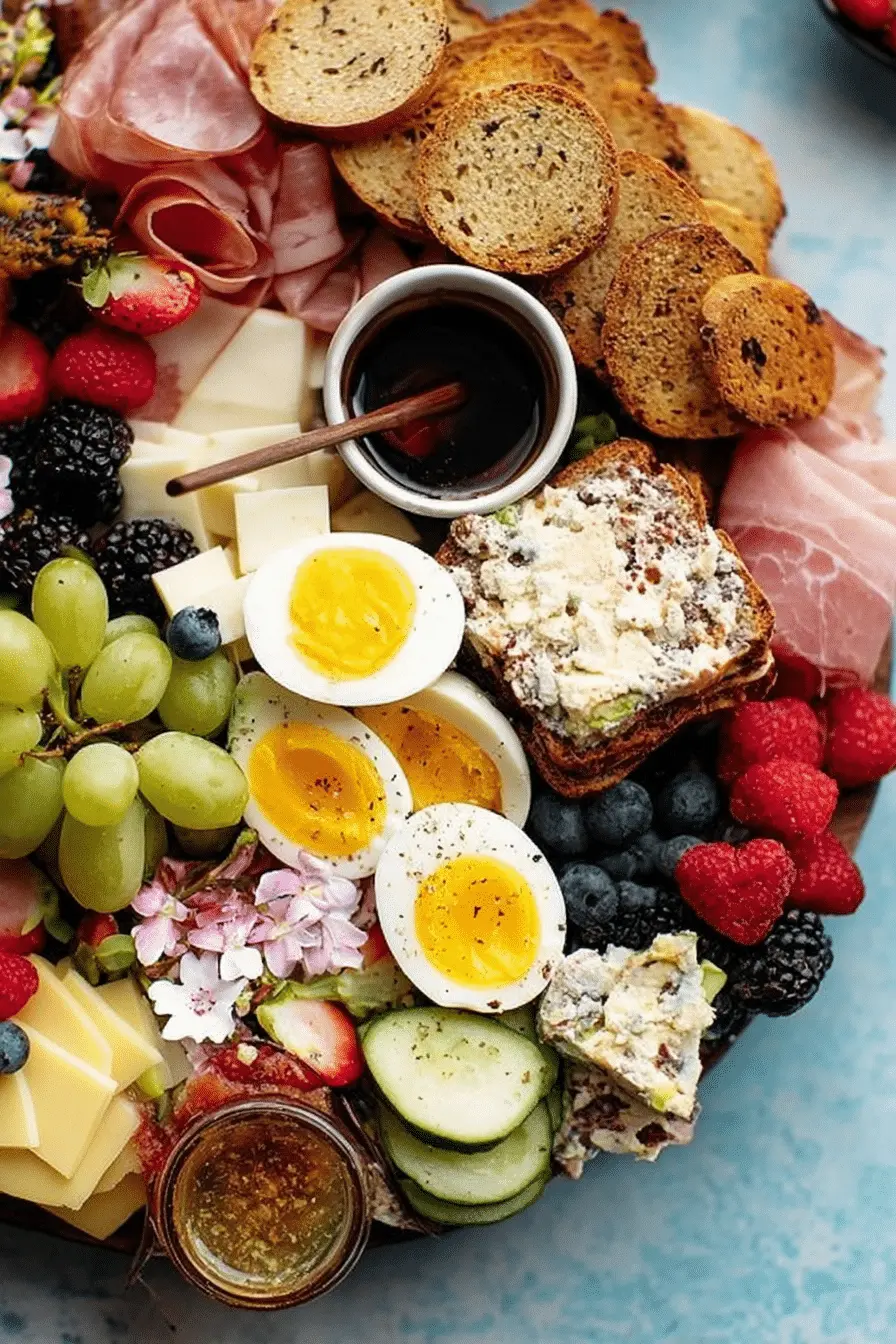
The Breakfast Charcuterie Board I Make for Brunches and Holidays
- Prep
- 15 min
- Total
- 15 min
- Serves
- 6
- Calories
- 350 kcal
On this page11 quick jumps
TOC
11 quick jumps
Introduction
I started building breakfast charcuterie boards years ago as a way to feed a crowd without standing over the stove. I love how a few thoughtful choices—fresh fruit, a couple of cheeses, tiny pastries and a few proteins—come together into something that looks like a spread worth celebrating. In my kitchen, these boards are the relaxed, pretty centerpiece for a weekend brunch or holiday morning.
What I like most is the freedom: you can mix sweet pastries with savory slices of salami, tuck honey and jams into small dishes, and let bright fruit be the color pop that draws people in. The aroma of warm mini pastries next to citrusy berries and cold, salty smoked salmon gives guests immediate cues about what to taste next.
I’ll walk you through the practical side—what to include, how to balance flavor zones, and the small temperature and texture choices that make every bite interesting. I’ll also share the swaps I use for gluten-free and vegan guests so no one feels left out.
Everything You Need for a Breakfast Charcuterie Board
Start with a base of cheeses, proteins, breads and sweet bites, then layer in produce and condiments for contrast. Choose items with varied colors and textures so the board looks abundant even when you keep it simple. If you want a warm savory addition, consider adding some savory breakfast sausage crescent rolls—those are always a hit and sit nicely next to cheeses and fruit.
- Baguette slices / mini croissants / mini muffins – Breads and small pastries give guests carriers for cheese and spreads; swap in gluten-free breads if needed.
- Mini cinnamon rolls / mini scones – Sweet pastries add a tender, buttery bite and a warm aroma that pairs beautifully with coffee.
- Crackers – Provide crunch and a neutral base for cheeses; choose a mix of plain and seeded varieties for texture.
- Brie / goat cheese / flavored goat cheese – Soft cheeses offer creamy contrast; flavored goat cheeses add an herbal or sweet note that pairs with jam.
- Cheddar cheese cubes – Firmer cheeses give bite and structure for guests who prefer savory notes.
- Salami / prosciutto / smoked salmon – Proteins bring salt and umami; smoked salmon pairs especially well with cream cheese or herbed goat cheese.
- Fresh berries / grapes / pear or apple slices / melon – Fresh fruit adds acidity, sweetness and color to brighten the board.
- Cucumber slices / grape tomatoes – Light, refreshing elements that cut through richer bites.
- Jam / honey – Small bowls of preserves and honey create sweet bridges between pastries and cheeses.
- Hard-boiled eggs – A simple, protein-rich option that guests can grab for a quick savory bite.
Consider dietary-friendly additions like gluten-free crackers, nut-based vegan cheeses, or extra fruit and vegetables to make the board inclusive.
Consider adding some savory breakfast sausage crescent rolls for a delightful addition to your charcuterie board.
Balancing Sweet and Savory: How to Build Flavor Zones
Think of the board as a small market where each zone nudges guests toward a type of tasting experience. I like to keep creamy cheeses and their best partners (crackers, breads, jam) grouped together, while placing sweet pastries and fruit on one side and salty proteins on the other. This setup invites natural pairing choices and prevents flavor clashes.
- Place creamy cheeses beside neutral crackers and a small pot of jam or honey so guests can build sweet-and-creamy bites.
- Cluster savory proteins with sturdier breads or pickles to balance salt and fat.
- Use fruit as a bridge between zones: a slice of pear or a few berries pair beautifully with both sharp cheddar and a slice of prosciutto.
When it comes to beverages, consider these pairings: coffee (regular and decaf) for pastries, a light sparkling wine or mimosas for a celebratory brunch, and herbal or green tea to cleanse the palate between richer bites. For family-friendly gatherings, a sparkling fruit punch keeps things festive without alcohol.
If you want a little protein-forward sweet, try adding small bites that pair with cheese—blueberry cheesecake protein balls make a handy, portable option that complements savory items nicely.
Incorporate blueberry cheesecake protein balls for a sweet treat that complements savory items beautifully.
Board Layout: Arrange for Beauty, Flow, and Easy Serving
Presentation matters because it sets the tone: an intentionally arranged board feels abundant and welcoming. I recommend varying heights, placing tools where guests can find them, and scattering color around the board so no single area feels dull.
- Start by setting out cheeses and proteins in separate clusters to establish the main zones.
- Place breads and crackers next to cheeses they pair with, keeping stiffer crackers slightly apart to avoid breaking delicate breads.
- Add small bowls for jams, honey, and spreads to prevent run-off and to anchor the layout visually.
- Fill gaps with fruit, small pastries, and vegetables, distributing color so the eye travels around the board.
- Position serving utensils—cheese knives, small spoons for jams, and tongs—near their relevant items so guests don’t have to search.
For readers building visual guides, consider step-by-step photos or a simple infographic showing placement order: cheeses and bowls first, breads second, sweets third, then produce to fill. That visual sequence makes it easy for beginners to reproduce the flow and ensures balanced color and height.
Texture & Temperature: Small Details That Change Every Bite
Texture is where the board comes alive: creamy, crunchy, tender and chewy elements should all be present. I like the contrast of a warm, flaky mini croissant against a cold slice of smoked salmon or a crisp cracker against a soft brie. These contrasts keep each mouthful interesting.
Temperature affects flavor perception. Serve soft cheeses at room temperature so their aromatics open up; keep smoked and cured meats cold for the best texture; bring pastries out warm if you can—there’s nothing like the smell of a just-warmed cinnamon roll to draw guests in. Small dishes of warm-indexed items (like mini quiches or sausage rolls) can be served from a warmed tray nearby.
How to Make a Breakfast Charcuterie Board (Step-by-Step)
- Choose your board—wood, slate or a large platter—and clear a workspace so you can assemble quickly.
- Place cheeses and proteins first to establish the major zones and the visual anchors of your board.
- Add small bowls for jams, honey and anything that could run, tucking them into nooks between cheeses.
- Arrange breads and crackers next to the cheeses they’ll be paired with so guests can easily assemble bites.
- Lay out sweet pastries and place fruit in small clusters, spreading color evenly across the board.
- Fill remaining gaps with vegetables, nuts, or extra berries to create a sense of abundance without crowding.
- Place utensils where they’re needed: cheese knives at cheeses, spoons at spreads, tongs for piled items like grapes.
- Take a quick step back and tweak color and height—move a handful of berries or a sprig of herb to improve balance.
- Adjust based on season: in summer, lean heavier on melons and berries; in colder months, include heartier baked goods and citrus.
Pro Tip for Breakfast Charcuterie Board: Easy Gluten-Free & Vegan Swaps
I always keep a few go-to swaps on hand so everyone at the table has something to enjoy. Labeling a small section of the board for gluten-free or vegan items helps guests find suitable choices easily.
- Gluten-free swaps: gluten-free crackers and toasted gluten-free baguette slices—these provide the same crunch and carrier function without gluten.
- Vegan cheese options: nut-based cheeses or cultured tofu spreads that offer creaminess and flavor without dairy.
- Vegan proteins: smoked carrot lox, marinated tofu slices or seasoned roasted chickpeas for a salty, chewy bite.
- Sweets swaps: GF mini muffins or fruit-based bites—if you need something show-stopping, try a fried s'mores bomb in a gluten-free version for a memorable treat.
For a sweet gluten-free option, try our fried s'mores bombs that will wow your guests!
Make-Ahead, Storage, and Serving Tips for Your Breakfast Board
I prep as much as I can the day before—hard-boiled eggs, cut fruit tossed with a little lemon to prevent browning, and cheeses wrapped and chilled. On the day, I assemble the board and bring sensitive items out at the last minute so textures and temperatures are optimal.
- Store components separately: keep pastries wrapped and chilled, place cheeses on a tray covered with plastic, and keep cut fruit in airtight containers.
- Assemble a few hours before serving if you must, then tightly cover and refrigerate; bring the assembled board out 15–30 minutes before guests arrive to let cheeses temper.
- Leftovers: store meats and cheeses wrapped individually, and pastries in airtight containers; most items keep well for 2–3 days depending on the ingredient.
- Troubleshooting tip: if a soft cheese is over-chilled and too firm, let it sit at room temperature to regain its creaminess before serving.
For an easy make-ahead centerpiece that pairs well with a charcuterie board, consider an overnight croissant breakfast casserole to feed extra guests without last-minute fuss.
Try the overnight croissant breakfast casserole for an easy make-ahead dish that complements your charcuterie board perfectly.
Writer instruction: Generate the "Pro-Tips," "Troubleshooting," and "Variations" sections as bulleted lists for high scannability.
Frequently Asked Questions
What items should I include on a breakfast charcuterie board?
Include a mix of sweet and savory items like mini muffins, croissants, cheeses, fresh fruits, hard-boiled eggs, and smoked salmon. Feel free to add your favorites!
Can I make a breakfast charcuterie board gluten-free?
Absolutely! Simply substitute any breads or crackers with gluten-free options, and include items like fresh fruits, cheese, and meats to keep it delicious.
How do I arrange the ingredients on the board?
Start by placing cheeses and proteins in the center, then add breads and crackers nearby. Fill in with sweets like pastries and finish with fresh produce to create a visually appealing layout.
How far in advance can I prepare my breakfast charcuterie board?
You can prepare the board a few hours in advance. Just cover it with plastic wrap and refrigerate to keep everything fresh until serving time.
What are some good make-ahead options for a breakfast charcuterie board?
You can prepare items like hard-boiled eggs, sliced fruits, and cheeses ahead of time. Just assemble everything on the board right before serving for maximum freshness!
Ingredients
- —baguette slices
- —mini chocolate chip muffins
- —mini croissants
- —mini cinnamon rolls
- —mini scones
- —crackers
- —brie
- —cheddar cheese cubes
- —goat cheese
- —flavored goat cheese
- —fresh berries
- —grapes
- —pear or apple slices
- —melon if in-season
- —cucumber slices
- —grape tomatoes
- —jam
- —honey
- —hard-boiled eggs
- —smoked salmon
- —salami or prosciutto
Instructions
- 1
Place cheeses, proteins, and anything in dishes out on your board.
- 2
Add bread and crackers next to cheese. (You want to group items that will be eaten together next to each other.)
A well-seasoned pan is worth more than a drawer of gadgets.
- 3
Add in the breakfast sweets and pastries.
- 4
Finish with fresh produce to fill in empty spots.
Recipe Card
The Breakfast Charcuterie Board I Make for Brunches and Holidays
Keep it handy for later, send it to someone cooking with you, or open the clean print view.
- Prep
- 15 min
- Total
- 15 min
- Serves
- 6
You might also like
The Salad My Guests Always Ask For: Strawberry Watermelon & Burrata
May 23, 2026
The Smashed Asian Cucumber Salad I Make for Hot Weeknights
May 23, 2026
The Kid-Approved Orange-Honey Fruit Snacks That Boost Immunity
May 21, 2026
How I Stash Summer in Jars: Watermelon Jelly (Quick & Easy)
May 21, 2026
Reviews
Be the first to review this.