Tags
- Prep
- 15 min
- Cook
- 7 min
- Total
- 52 min
- Serves
- 24
- Calories
- 62 kcal
- Carbs
- 6.00 g
Introduction
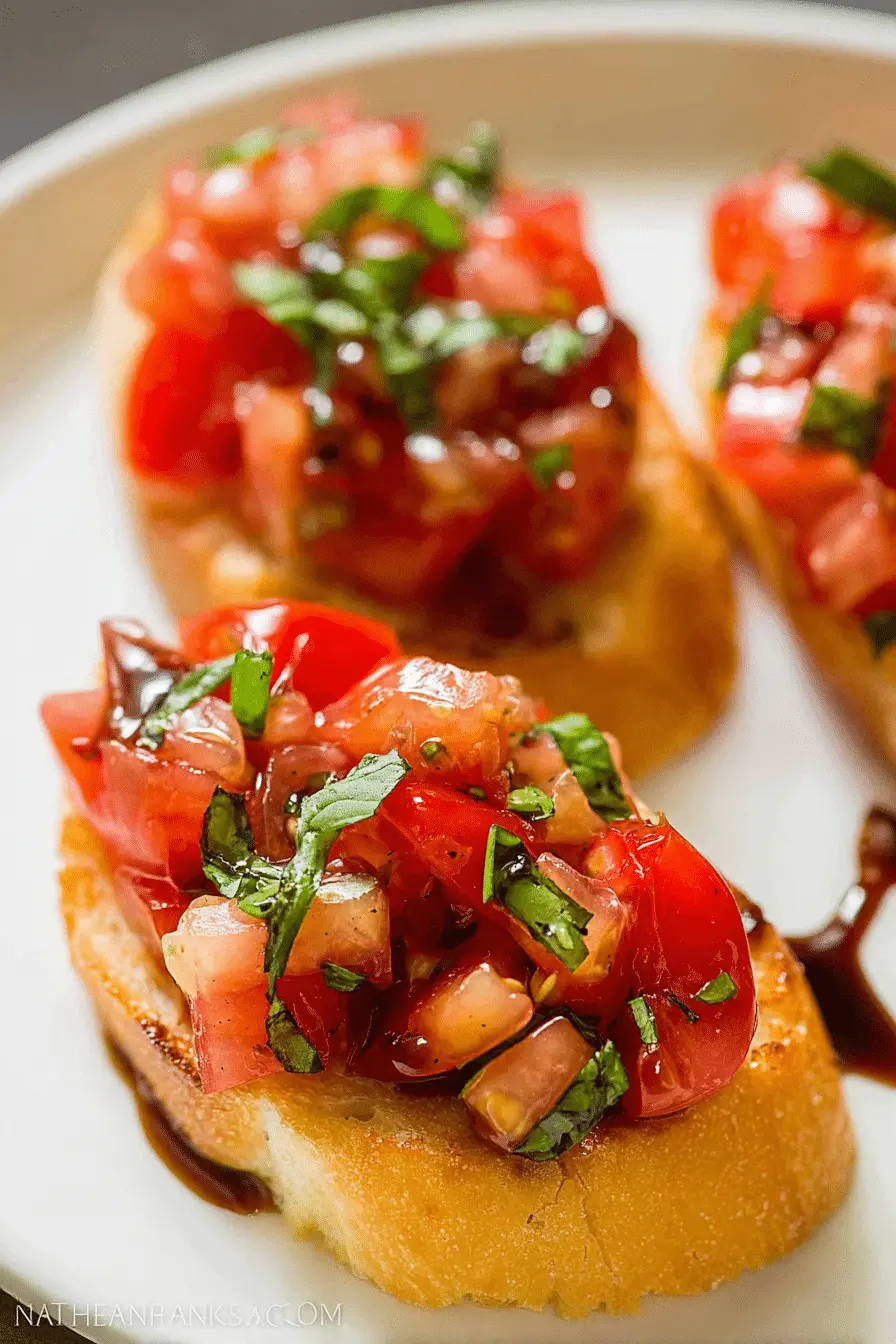
I fell for bruschetta the first time I tasted warm, garlicky toast piled with bright, diced tomatoes and fresh basil. In my kitchen the recipe is a ritual: ripe tomatoes, a quick shave of garlic into oil, and toasts crisped until the edges sing. Over the years I’ve leaned into small techniques — a light drain of tomato juices, a garlic-infused oil brushed on both sides of the baguette slices, and a final broil — that separate a good bruschetta from a memorable one. When I teach friends how to make this, I always talk about balance: sweet, acidic tomatoes; bitter, peppery basil; the salt that wakes everything up; and the savory crunch of parmesan on the toast. That balance is what has kept this humble antipasto at the center of Italian home tables for generations. If you want a simple appetizer that showcases fresh produce and a few purposeful techniques, this is it. For context and a classic rendition that shows why bruschetta remains a staple, I often point people to reference versions of the recipe that highlight traditional assembly and technique. In gatherings I rely on bruschetta for its versatility — it’s as at-home on a weekday dinner as it is on a weekend spread — and I love how small swaps (a different herb, a smear of cheese) can gently change the mood without losing the core of the dish. The sections below walk you through the essentials, the tricks I use for reliably crisp parmesan toasts, and a handful of seasonal topping ideas to try when produce is at its peak.Everything You Need for Bruschetta Recipe
I’ll keep this practical: you want quality ingredients and a couple of simple tools. Use the list below as a guide to purpose and substitutions; avoid exact measurements for now — those are in the recipe card handled elsewhere.- * Tomatoes – The star ingredient; choose ripe and flavorful varieties. If you want more texture with less juice, pick meatier tomato types.
- * Basil – Fresh basil brings herbaceous brightness; substitute with parsley or arugula if basil isn’t available.
- * Garlic – Gives the toast its backbone; infusing garlic into oil mellows the raw bite.
- * Extra‑virgin olive oil – Use a good, fruity oil for the tomato mix and for brushing the bread.
- * Balsamic vinegar/glaze – Adds sweet-acid contrast; a glaze provides a concentrated finishing note.
- * Baguette or crusty bread – Choose a bread with a sturdy crumb so it holds the topping; whole-grain or sourdough work for heartier options.
- * Parmesan – A finishing sprinkle toasting into the bread for nutty, savory depth; omit or swap for a dairy-free alternative if needed.
- * Tools – A sharp knife, a sturdy cutting board, a baking sheet, and a small bowl for marinating the tomatoes.
The Secret to Perfectly Crisp Parmesan Toasts
The toast is the foundation — if it goes soggy, the whole dish suffers. Aim for crispness, even browning, and a thin layer of flavor so the bread doesn’t overpower the topping.- Choose the right bread: a baguette sliced on the diagonal gives a larger surface area and a crisp edge; a country sourdough adds chew and flavor.
- Brush with garlic‑infused oil: mix minced garlic into oil and brush both sides of each slice so the toast carries flavor throughout, not just on top.
- Add parmesan before baking: a light sprinkle on top melts and crisps into a savory crust that helps shield the bread from moisture.
- Bake, then broil: start in a hot oven to dry and color the bread, then finish briefly under the broiler until the edges are golden and you hear a light crackle as the crust sets.
- Serve immediately: the toasts are at their best hot and crisp; assemble just before serving to keep that texture.
How to Choose and Prep Tomatoes Like an Italian
Tomatoes determine the success of the topping. Italians historically favored varieties with concentrated flavor and less watery pulp; the goal is vibrant taste without a soggy bite.- Pick the right variety: plum or Roma-style tomatoes are dense and less watery; heirlooms bring sweetness and color when you're after a showy topping.
- Dice efficiently: halve tomatoes, scoop out the cores if needed, and cut into even pieces so every bite has balance; a sharp knife makes this quick and precise.
- Drain excess juice: after dicing, let the tomatoes sit in a colander or press gently with paper towel to remove loose liquid — this keeps the toasts crisp.
- Mix with aromatics: fold in chopped basil and minced garlic so the flavors marry while the tomatoes rest.
- For deeper tomato flavor, try using ripe tomatoes with a short maceration time; they’ll concentrate without losing freshness.
How to Make Bruschetta Recipe (Step-by-Step)
When you assemble bruschetta, sequence and timing matter. Follow these steps so the toasts stay crisp and the tomato mixture shines.- Core and dice your tomatoes; drain any excess juice and transfer to a bowl.
- Stack basil leaves, roll into a tight tube, and thinly slice into ribbons before adding to the tomatoes.
- Finely mince garlic: reserve a small amount mixed into oil for brushing the bread, and add the rest to the tomato mix.
- Season the tomato bowl with olive oil, balsamic, salt, and pepper; stir gently and let sit to marinate.
- Slice your baguette on the diagonal into half‑inch slices, arrange on a parchment-lined sheet, and brush both sides with the garlic‑infused oil.
- Sprinkle the tops with shredded parmesan, bake until warmed through and the cheese begins to melt, then broil briefly until edges are golden.
- Arrange toasts on a platter, spoon the tomato mixture over individual toasts just before serving, and finish with a drizzle of extra virgin olive oil and optional balsamic glaze.
Why Resting the Tomato Mixture Makes a Difference
Letting the tomato mixture sit is more than convenience — it’s flavor development. Resting allows the acid, oil, and aromatics to meld and the salt to pull juices from the tomatoes, concentrating taste.- Short rest (about 20–30 minutes): allows flavors to marry while keeping the tomatoes bright and slightly firm.
- Longer rest (up to a couple of hours): mellows raw garlic and softens acid, yielding a more cohesive, slightly deeper flavor.
- Drain or stir before serving: if excess liquid accumulates, drain a bit to maintain toast crispness, or spoon the mixture over the toasts and let any residual liquid be absorbed by a second, softer layer of bread for informal serving.
Pro Tip for bruschetta recipe: 3 Quick, Seasonal Topping Ideas
These are easy swaps that dress the classic tomato topping for the season — fast to assemble and guaranteed to impress.- Summer: add thinly sliced fresh peaches or strawberries with a light shave of ricotta for a sweet‑savory bite.Elevate your bruschetta experience with refreshing crostini with balsamic strawberries and ricotta.
- Autumn: top with roasted bell peppers and a drizzle of balsamic glaze for smoky sweetness.For a delicious twist, try topping your bruschetta with balsamic glazed roasted vegetables.
- Winter: fold in roasted cherry tomatoes and a smear of soft goat cheese; finish with a pinch of cracked black pepper for warmth.
How to Store, Make-Ahead, and Serve Bruschetta
Hosting tip: prepare components ahead and finish just before guests arrive so everything tastes fresh.- Make-ahead tomato mix: the tomato mixture can be made a day in advance and refrigerated; bring it to near room temperature before serving for best aroma.
- Toast ahead, briefly: par‑bake the bread and re-crisp under the broiler just before serving if you need to save time.
- Transport and serve: keep toasts and topping in separate containers and assemble on site to retain crispness; present tomato mix in a bowl with toasts arranged around it for easy self‑service.
- Safety and storage: store leftovers (tomato mix only) in an airtight container in the fridge and use within a couple of days; avoid storing assembled bruschetta to prevent sogginess.
Dietary Swaps for a Healthier Bruschetta
Small swaps retain flavor while reducing calories or accommodating dietary needs.- Whole-grain or gluten-free breads – use to increase fiber or meet gluten-free needs.
- Dairy-free – omit parmesan or use a plant-based grated alternative; a sprinkle of toasted pine nuts adds savory crunch without cheese.
- Lower-oil option – reduce the oil in the tomato mix and use a light brush on the bread; add a squeeze of lemon for brightness.
- More vegetables – fold in diced cucumbers or bell peppers for extra volume and nutrients.
Video Guide for Making Bruschetta
A short video helps clarify knife technique, the garlic‑oil emulsion, and the broiling finish. If you make one, cover these points so viewers can follow along easily.- Opening shot: show ripe tomatoes and bright basil to set expectations for texture and color.
- Prep close-ups: demonstrate dicing, basil chiffonade, and mincing garlic so viewers can match your cuts.
- Toast technique: film brushing oil, sprinkling parmesan, and the moment of broil so viewers learn to judge color and sound.
- Assembly and plating: show spooning the tomato mix onto toasts and finishing with a drizzle of glaze for a polished look.
- Engage viewers: invite them to try seasonal toppings and share their variations in the comments or photos.
Troubleshooting
I’ve burned bread, had soggy toasts, and served bland tomato mixes — here’s what I learned from those mistakes.- If toasts go soggy: I now always drain the diced tomatoes and keep the toasts separate until assembly.
- If the bread burns under the broiler: I reduced the broil time and moved the rack a little further from the heat source.
- If the tomato mix tastes flat: I add a pinch more salt and a splash of balsamic to brighten the acidity.
- If garlic is overpowering: I reserve a small amount mixed into oil for the bread and use the rest sparingly in the tomato bowl.
Variations
Try these easy variations when you want to shift the flavor profile without changing the technique.- Fig and goat cheese – top toasts with fig jam, fresh figs, and a smear of goat cheese for sweet‑savory contrast.
- Mediterranean – add chopped olives, capers, and a sprinkle of oregano for briny depth.
- Smoked salmon – replace the tomato topping with a light spread of cream cheese, smoked salmon, dill, and lemon zest for a brunch option.
- White bean spread – mash cannellini beans with lemon and rosemary, spread on toast, and add a spoonful of tomato mix for added protein.
Frequently Asked Questions
What type of bread is best for bruschetta? A baguette is ideal for bruschetta as it provides a nice crisp texture. You can also use whole grain or sourdough for a healthier option! How can I prevent my bruschetta from getting soggy? To prevent soggy toasts, let the tomato mixture marinate for a while to allow excess liquid to drain. Toast the bread until crispy before topping it. Can I make bruschetta in advance? Yes! Preparing the tomato topping ahead of time is actually beneficial as it allows the flavors to meld together. Just keep the toasts separate until you're ready to serve. What can I substitute for basil in bruschetta? If you don't have basil, you can use other fresh herbs like parsley, oregano, or even arugula for a different flavor profile. Is bruschetta suitable for a gluten-free diet? Yes, you can make bruschetta gluten-free by using gluten-free bread options available at the store!Recipe Card
How I Finally Nailed the Bruschetta Recipe — Classic Tomato & Parmesan
- Prep
- 15 min
- Cook
- 7 min
- Total
- 52 min
- Serves
- 24
- Calories
- 62 kcal
- Carbs
- 6.00 g
Ingredients
- 6 piecesRoma tomatoes ((1 1/2 lbs, diced))
- 1/3 cupbasil leaves ((chopped))
- 5 clovesgarlic ((divided))
- 1 Tbspbalsamic vinegar
- 2 Tbspextra virgin olive oil
- 1/2 tspsea salt
- 1/4 tspblack pepper
- 1 bagbaguette
- 3 Tbspextra virgin olive oil
- 1/3 cupshredded parmesan cheese
Instructions
- 1
Core and dice tomatoes. Drain excess juice and place in a bowl.
- 2
Chop basil and add to the bowl with tomatoes.
- 3
Finely mince garlic and mix 1 tsp into olive oil. Add remaining garlic to tomato mixture.
- 4
Season tomatoes and let marinate for 30 minutes.
- 5
Preheat oven to 400°F. Cut baguette into slices and brush with garlic oil.
- 6
Bake toasts for 5 minutes, broil until golden brown.
- 7
Serve toasts topped with tomato mix and drizzle with olive oil and balsamic glaze.
You might also like
Reviews
Be the first to review this.