- Prep
- 35 min
- Cook
- 35 min
- Total
- 90 min
- Serves
- 10
- Calories
- 350 kcal
- Carbs
- 45.00 g
Introduction
I make this carrot cake whenever family is coming over and time is tight. Over the years it’s become our go-to for birthdays and holiday gatherings because it’s forgiving, reliably moist, and everyone comments on the frosting. I love that I can grate carrots while the oven heats and have a cake cooling by the time dinner’s done — very little fuss, big payoff.
One of my favorite memories is pulling this cake from the oven on a rainy Easter morning: the kitchen smelled like cinnamon and warm brown sugar, and my kids could hardly wait for that first slice. It’s the kind of recipe I turn to when I want something that feels special without a long list of steps or complicated equipment.
I’ve tweaked this recipe in my kitchen more times than I can count — a little less sugar here, a touch more spice there — until it reliably produces tender, well-flavored layers. In the sections below I’ll walk you through what I use, why those choices matter, and share simple tricks I rely on to keep the cake moist and easy to assemble.
Whether this is your first carrot cake or your twentieth, you’ll find this approach approachable and forgiving. Read on for ingredient notes, step-by-step guidance, troubleshooting tips, and a handful of ways to make the cake your own.
Why This Carrot Cake Is My Go-To for Busy Celebrations
This cake hits all the marks for family events: comforting spices, tender crumb, and a tangy cream cheese frosting that balances the sweetness. I appreciate recipes that let me do most of the work ahead of time and still taste fresh on the day of serving. It’s also versatile — add a handful of nuts or swap in raisins for texture without changing the bake time or procedure.
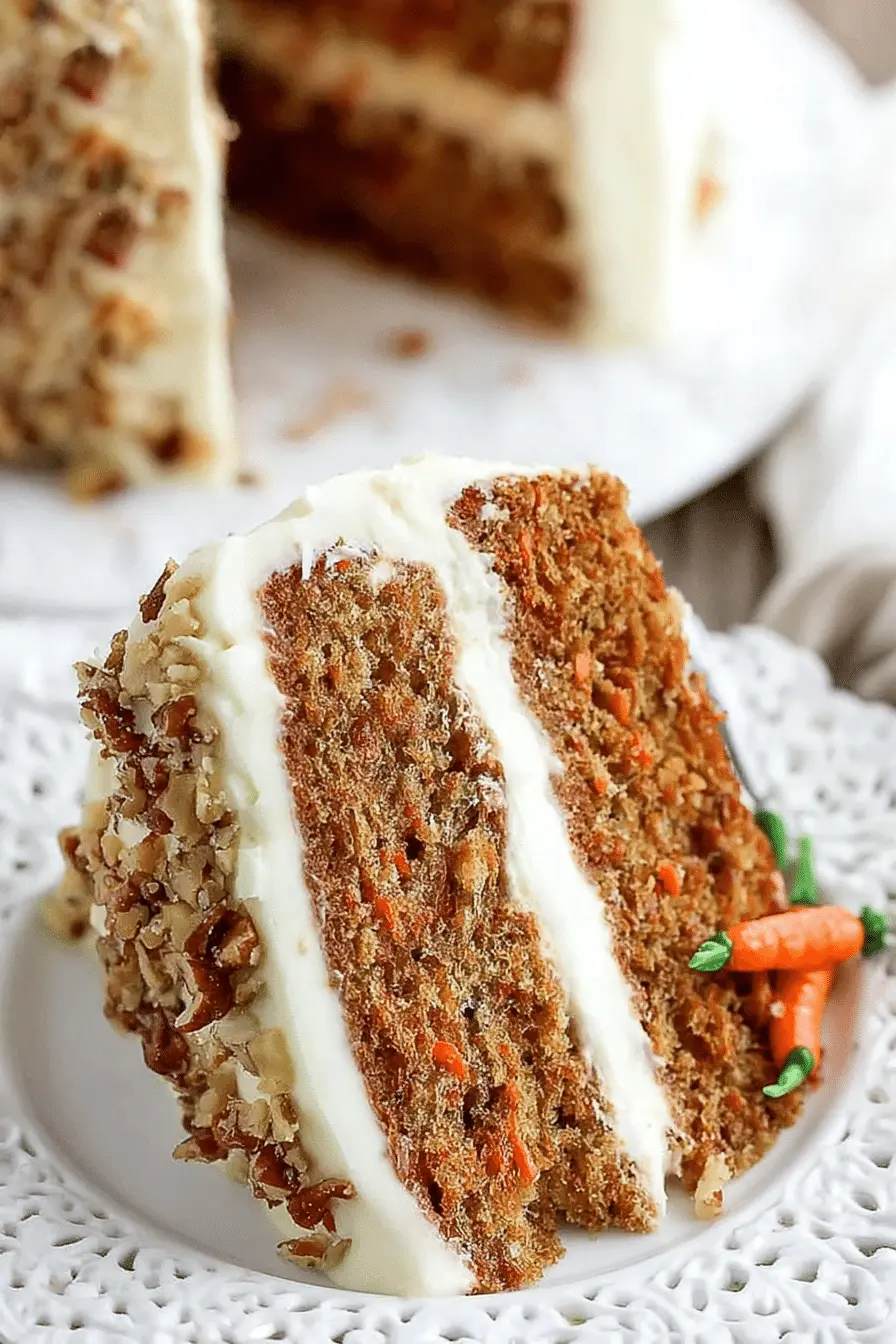
Sensory note: picture a golden-brown exterior, a moist orange-hued crumb studded with grated carrot, and the soft squeeze of cream cheese frosting. It looks festive, smells warmly spiced as it bakes, and slices beautifully for passing around at the table.
Everything You Need for The BEST Carrot Cake
- All-purpose flour – Provides structure; you can use a gluten-free blend if needed, but texture will vary.
- Baking powder & baking soda – Leavening to keep the cake light and tender.
- Cinnamon, ginger, nutmeg – The spice trio that gives carrot cake its cozy aroma; use fresh spices for best flavor.
- Salt – Balances sweetness and brightens flavors.
- Neutral oil – Keeps the crumb moist; it’s more reliable than butter for all-day softness.
- Eggs – Bind and add lift; room temperature eggs blend more smoothly into the batter.
- Brown and granulated sugars – Brown sugar adds depth and a subtle molasses note; granulated sugar helps with structure.
- Applesauce – Adds moisture without extra fat and helps keep slices tender the next day.
- Vanilla extract – Rounds and amplifies the other flavors.
- Carrots (fresh, grated) – Use freshly grated carrots for the best texture and bright color; pre-shredded can be drier and contain fillers.
- Cream cheese – The base for the frosting; brick-style cream cheese gives the richest texture.
- Butter (softened for frosting) – Smooths the frosting and mellows the tang of the cream cheese.
- Powdered sugar – Sweetens and stabilizes the frosting for a silky finish.
- Optional mix-ins (pecans, walnuts, coconut, raisins) – Add texture and variety; don’t overdo them or the cake may become dense.
Variations: For a gluten-free version try a cup-for-cup gluten-free flour blend and add a binder if your blend recommends it. For a vegan take, substitute a plant-based butter and cream cheese, and replace eggs with flax eggs. Both changes will alter texture slightly but still yield a delicious cake.
The Secret to a Super Moist Carrot Cake
Moisture comes from balancing fat, sugar, and moisture-rich ingredients, plus gentle handling. I rely on oil for long-lasting softness, brown sugar for depth and moisture retention, and applesauce to add body without extra fat. Freshly grated carrots release just enough moisture while keeping the crumb tender.
- Measure flour properly — spoon it into the measuring cup and level it off to avoid a dry cake.
- Combine wet and dry ingredients until just mixed; overmixing develops gluten and tightens the crumb.
- Bake until a toothpick comes out with a few moist crumbs, not bone-dry — carryover heat will finish the bake as it cools in the pans briefly.
- Wrap the cooled layers lightly in plastic while still slightly warm to trap steam and keep the crumb soft if you’re not frosting immediately.
Spices, Sugar, and Carrots: Balancing Flavor Quickly
The spices should support the carrots, not overwhelm them. Cinnamon is the backbone, ginger adds warmth, and a touch of nutmeg gives a faint, nutty complexity. Using both brown and granulated sugar gives the cake a rounded sweetness: brown sugar contributes moisture and caramel notes, while granulated sugar helps with lift.
Vanilla is the quiet partner that ties everything together — a small amount deepens the overall flavor without making it overtly vanilla-forward. The grated carrots bring natural sweetness and texture, and they give the cake that characteristic color and tender crumb.
Why Room-Temperature Eggs and Oven Heat Matter
Room-temperature eggs mix more evenly into batter, which helps emulsify the oil and liquids and traps air for a lighter crumb. Cold eggs can tighten the batter and make it harder to combine, which can lead to a denser cake.
- Take eggs out of the fridge about 30 minutes before you start, or place them in warm (not hot) water for a few minutes if you forgot to plan ahead.
- Preheat your oven fully so the cake begins baking at the right temperature — this ensures even rise and prevents over-browning before the center sets.
- Rotate pans halfway through baking if your oven has hot spots, and use an oven thermometer if you suspect your oven runs hot or cold.
How to Make This Carrot Cake with Cream Cheese Frosting (Step-by-Step)
- Preheat the oven and prepare two round cake pans by greasing and lining the bottoms with parchment.
- Whisk together the dry ingredients — flour, leaveners, spices, and salt — until evenly combined.
- In a separate bowl, whisk the oil, room-temperature eggs, brown and granulated sugars, applesauce, and vanilla until smooth.
- Fold the grated carrots into the wet mixture, then gently mix the wet ingredients into the dry until just combined; stop when you no longer see streaks of flour.
- Divide the batter evenly between the prepared pans and bake until the tops are set and a toothpick comes out clean or with a few moist crumbs.
- Let the cakes cool in the pans for a short while, then transfer to a wire rack to finish cooling completely before frosting.
- To make the frosting, beat softened cream cheese until smooth, add softened butter and beat briefly, then add powdered sugar and vanilla and mix until silky. Keep the bowl chilled if your kitchen is warm to prevent the frosting from getting too soft.
- Level the cake tops if needed, spread a generous layer of frosting between the layers, then frost the top and sides. Garnish with chopped nuts if you like.
If you love cream cheese frosting, you might also enjoy our Pumpkin Cake with Cream Cheese Frosting for a seasonal twist.
- Troubleshooting (quick checklist I use in my kitchen):
- If the cake is sinking in the center, it likely baked at too low a temperature or was underbaked — bake until a toothpick shows a few moist crumbs.
- If the cake is dry, you probably measured too much flour or overmixed the batter; try decreasing flour slightly by fluffing and spooning it into the cup or mixing more gently next time.
- If the frosting is runny, chill the bowl briefly and beat again, or add a little more powdered sugar to stabilize (but taste as you go).
Pro Tip for Carrot Cake: How to Avoid a Dry Slice Every Time
- Use oil instead of butter for a reliably moist crumb that stays tender for days.
- Grate carrots by hand or on the large holes of a box grater for the best texture — large shreds hold moisture and give good bite.
- Don’t overmix once you combine wet and dry ingredients; a few lumps are fine.
- Wrap cooled layers lightly in plastic if you’re not frosting right away to keep moisture locked in.
- Frost the cake on the day you plan to serve it for the freshest texture; chilled, frosted cake firms up and is easier to slice cleanly.
How to Store, Make-Ahead, and Serve This Carrot Cake
You can bake the layers a day ahead and keep them tightly wrapped in the refrigerator until you’re ready to frost. Once frosted, store the cake in the fridge — cream cheese frosting benefits from chilling and will firm up for neat slices. Bring slices to room temperature before serving so the frosting is soft and flavorful.
For longer storage, freeze unfrosted layers wrapped very well, then thaw in the fridge and frost the day you plan to serve. If you want ideas on longer-term storage and serving, check out our guide on storing and serving tips for carrot cake.
Serving suggestions: pair a slice with a strong coffee or a lightly spiced chai. A scoop of vanilla ice cream or a dollop of lightly whipped cream is lovely alongside a slice for extra indulgence.
Variations on the Classic Carrot Cake
- Nutty upgrade – Fold in chopped pecans or walnuts for crunch; toast them briefly for extra aroma.
- Coconut-addict – Stir in shredded coconut for chew and tropical sweetness.
- Raisin or dried fruit – Add plumped raisins or chopped dried apricots for bursts of concentrated sweetness.
- Gluten-free – Use a cup-for-cup gluten-free flour blend and follow the blend’s instructions for binders to maintain structure.
- Vegan – Replace eggs with flax or chia “eggs” and use plant-based butter and vegan cream cheese; results will be slightly different but still delicious.
- For a lighter, healthier take, try our Healthy Carrot Cake which trims calories while keeping flavor.
- Looking for a different format? Our Carrot Bars with Maple Frosting offer a portable alternative that’s perfect for brunch or potlucks.
Frequently Asked Questions
Can I use different types of flour for this carrot cake?
Yes, while all-purpose flour works best for this recipe, you can experiment with whole wheat flour or gluten-free flour blends. Keep in mind that the texture and flavor might change slightly.
How can I make this carrot cake ahead of time?
You can bake the cake layers a day in advance and store them in an airtight container in the refrigerator. Frost the cake on the day you plan to serve it for the freshest taste!
What can I use instead of cream cheese for frosting?
If you're looking for a non-dairy option, you can use a vegan cream cheese alternative or a whipped coconut cream. These will give you a similar texture, though the flavor may vary.
How do I prevent my carrot cake from being dry?
Make sure to measure your flour correctly, avoid overmixing the batter, and check the cake for doneness a little earlier than expected. These tips will help ensure a moist cake every time!
Can I add nuts or raisins to the carrot cake?
Absolutely! Chopped pecans or walnuts and raisins can be added to the batter for extra flavor and texture. Just be mindful not to overdo it to maintain the cake’s moisture.
Recipe Card
The Carrot Cake I Make for Every Celebration — Moist & Easy
- Prep
- 35 min
- Cook
- 35 min
- Total
- 90 min
- Serves
- 10
- Calories
- 350 kcal
- Carbs
- 45.00 g
Ingredients
- 2 cupsall-purpose flour
- 2 teaspoonsbaking powder
- 1 teaspoonbaking soda
- 1.5 teaspoonsground cinnamon
- 0.5 teaspoonground ginger
- 0.25 teaspoonground nutmeg
- 0.5 teaspoonsalt
- 0.75 cupcanola or vegetable oil
- 4 largeeggs (at room temperature)
- 1.5 cupspacked light brown sugar
- 0.5 cupgranulated sugar
- 0.5 cupunsweetened applesauce
- 1 teaspoonpure vanilla extract
- 3 cupslightly packed grated carrots
- 1 package (8-ounce)brick style cream cheese (softened)
- 0.5 cupunsalted butter (softened)
- 2 cupspowdered sugar
- 1 teaspoonpure vanilla extract
Instructions
- 1
Preheat the oven to 350°F (180°C). Spray two 9-inch round cake pans well with non stick cooking spray and line the bottom of each pan with a parchment paper circle.
- 2
In a large mixing bowl, whisk together the flour, baking powder, baking soda, cinnamon, ginger, nutmeg, and salt until well combined. Set aside.
- 3
In a separate large mixing bowl, whisk together the oil, eggs, brown sugar, granulated sugar, applesauce, and vanilla extract until fully combined. Add the grated carrots to the wet ingredients and mix until well combined.
- 4
Pour the wet ingredients into the dry ingredients and mix until just combined, being careful not to over mix.
- 5
Pour the cake batter evenly between both prepared cake pans. Bake for 30 to 35 minutes or until a toothpick inserted comes out clean.
- 6
Remove from the oven, cool in the pans for 20 to 25 minutes. Then transfer to a wire rack to cool completely.
- 7
To make the frosting, beat the cream cheese until smooth, then add the butter and mix until well combined.
- 8
Add in the powdered sugar and vanilla extract and mix until fully combined.
- 9
Level off the cakes, apply frosting between layers, and then frost the cake as desired.
You might also like
Reviews
Be the first to review this.