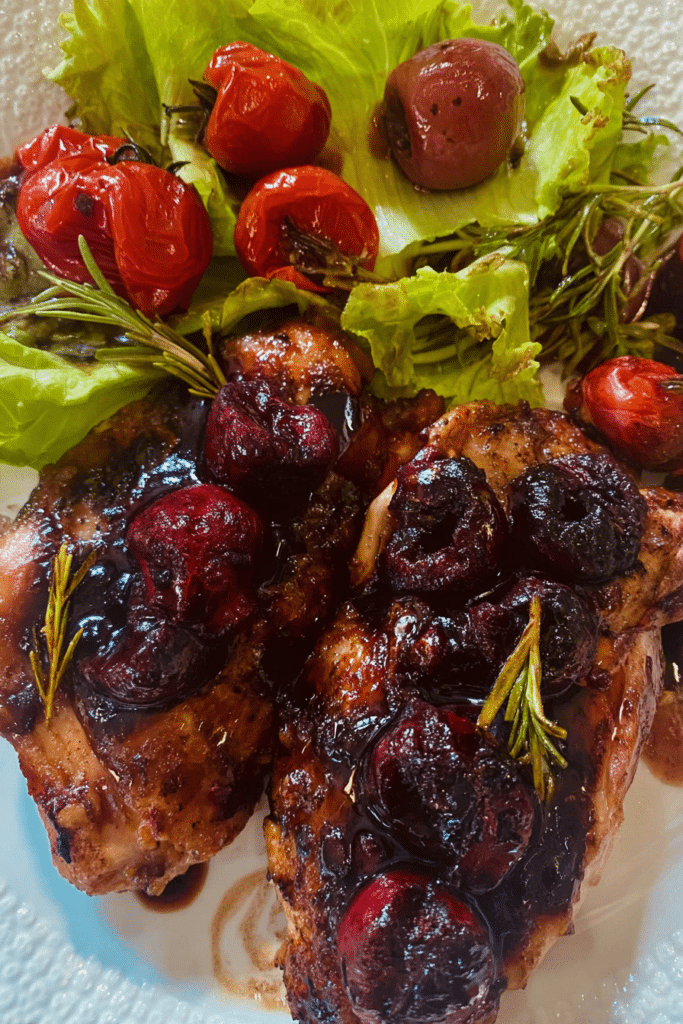
I fell in love with this dish the first time cherries came into season in my small city market. I remember carrying a fragrant paper bag of sun-warm fruit back to my kitchen, thinking the bright, tart flavor would pair beautifully with roast chicken—and rosemary seemed the obvious companion. Over several weekends of testing, I learned which cherries stand up to heat, how rosemary behaves under high oven temperatures, and where a touch of lemon is worth its weight in balance.
In my kitchen I tested different approaches: marinating, quick pan-searing, and finishing at very high heat. Each trial taught me something practical—how to coax a glossy, caramelized glaze without losing the chicken’s juice, and how to let the cherries soften without turning to jam. These are the small, repeatable habits I now use every time I make this dish.
I wrote this version to be both elegant and forgiving: it works for a relaxed weeknight dinner and scales up for a holiday roast. Read on for the precise techniques that will help you get the same glossy, savory-sweet result I now make whenever cherries are abundant.
Why This Cherry Chicken with Balsamic Rosemary Glaze Is Worth Mastering
This dish sings because of a few specific contrasts: the savory, browned chicken skin against bright, slightly tart cherries; the resinous bite of rosemary against a rounded touch of honey; and a finishing acid (here, a small amount of lemon) that keeps the sweetness from becoming cloying. Those contrasts create a compact, sophisticated plate that feels seasonal and special.
Cherries have a long seasonal role in many cuisines—used in sauces for meats, in compotes, and as a way to add a fresh, fruity note to the table. When you cook with them at their peak, you get that edge of floral acidity that elevates the whole dish.
The recipe is versatile: it reads as weeknight-friendly if you keep things simple, but the caramelized glaze and glossy cherries make it handsome enough for guests. The visual payoff—the deep red jewels of roasted cherries nestled beside golden chicken, rosemary sprigs peeking out—makes it worth the few extra steps.
Everything You Need for Cherry Chicken with Balsamic Rosemary Glaze
Below I describe the role of each main ingredient so you can shop with purpose. If you want a composed plate, pair your Cherry Chicken with sides like Honey Garlic Roasted Baby Carrots for color, texture, and a pleasing flavor echo.
- * Chicken (breasts or thighs) – The canvas for the glaze; breasts give a lean, elegant presentation, thighs add forgiving fat and flavor.
- * Sea salt – Brings out the savory notes and helps the skin brown; use a flaky finishing salt if you have it for texture.
- * Chicken broth plus lemon – This replaces balsamic in my adapted version; the broth adds savory depth while the lemon gives the necessary bright acidity.
- * Honey – Provides sugar that will caramelize with the cherries and give the glaze body; adjust for sweetness preference.
- * Olive oil – Promotes browning and carries aromatics into the meat; choose a fruity extra virgin for finishing, a more neutral oil for high-heat searing.
- * Shallot – Adds a sweet-allium base that softens when roasted and melds with the cherries.
- * Garlic – A small amount gives savory warmth without overpowering the fruit.
- * Fresh rosemary – The herb backbone; use sprigs for roasting and discard the woody stems before serving.
- * Cherries (fresh, pitted) – The star; choose firm, ripe fruit so they hold shape under heat and offer that bright-tart counterpoint.
- * Freshly ground black pepper – Finishes the dish with a touch of edge.
The Secret to Crispy Skin and Juicy Chicken
Achieving that textural contrast is about three focused actions: dry the skin, build a hot surface early in the cook, and protect the meat’s interior while you push for a deep exterior color. The result is golden-brown, glossy skin with a satisfying initial crunch and a moist interior.
- Pat the chicken completely dry before seasoning—moisture is the enemy of crisp skin.
- Sear or start at a high oven temperature so the surface browns quickly; then maintain heat without overcooking the interior.
- Baste once or twice with the pan juices to encourage an even, glossy finish; if the skin is not crisp enough, finish briefly under a broiler while watching constantly.
For additional tips on getting that delicious crispy skin, check out our Garlic Parmesan Crusted Chicken recipe.
Why Oven Temperature and Resting Time Matter
High heat is where the sugars from honey and cherries caramelize and build the complex, browned notes that make the glaze sing; too low and you’ll end up with gently steamed cherries and pale skin. Conversely, rushing to cut the chicken loses precious juices—resting allows the internal juices to redistribute so each slice stays moist.
- Use a thermometer to confirm doneness rather than relying solely on time—aim for the safe internal temperature recommended for the cut you use (check local guidelines).
- Start hot to encourage browning, then stabilize heat so the chicken reaches the proper internal temperature without drying.
- Rest the chicken loosely tented for several minutes before carving; the glaze will settle and the juices will redistribute, improving slice quality.
Understanding the importance of cooking techniques can greatly enhance your meals; explore more in our guide on Master the Art of Moist and Flavorful Chicken Every Time.
How to Balance Sweet Cherries and Tangy Glaze
Balancing sweetness and acidity is about small, deliberate adjustments. A touch of acid brightens and prevents saccharinity; a modest amount of honey binds the glaze and aids caramelization. The type of cherry changes the game: tart cherries will lean the sauce toward savory; sweet cherries will soften the overall profile.
- Add acid (lemon) sparingly—think of it as a fine-tuning tool that lifts the fruit rather than announcing itself.
- Adjust honey to taste—if cherries are very sweet, cut back. If cherries are underripe or tart, a little extra honey will round the edges.
- Consider the cherry variety: Bing for plush sweetness, Morello for focused acidity; mix varieties if you like layered fruit character.
How to Make Cherry Chicken with Balsamic Rosemary Glaze (Step-by-Step)
- Prepare the marinade by combining the broth-plus-lemon, honey, olive oil, shallot, and garlic. Season with salt and pepper. Put the chicken into the marinade and let it rest at room temperature for a short spell or refrigerate for a deeper flavor if you have time.
- Pit and halve the cherries and set them aside with rosemary sprigs so they’re ready to nestle around the chicken when you assemble the pan.
- Arrange the chicken in a single layer in a baking dish, pour the marinade over, and tuck cherries and rosemary between the pieces so they roast in contact with the meat.
- Bake until the chicken is nearly cooked through. Spoon pan juices over the pieces once or twice during cooking to build the glaze.
- Remove the dish briefly, spoon some concentrated pan sauce over the chicken, increase the oven heat, and return the dish for a short time to caramelize the glaze and deepen color—watch closely to prevent burning.
- Discard rosemary sprigs before serving, and spoon roasted cherries and any remaining glaze over the chicken for presentation.
Pro Tips for Cherry Chicken with Balsamic Rosemary Glaze
- Sear first: If you have a hot skillet, sear the skin-side down for a few minutes before baking to jump-start browning and add flavor.
- Use firm, ripe cherries so they retain shape; overripe fruit will break down too quickly.
- Reserve some fresh cherries to fold in at the end for a brighter, fresher fruit note in the glaze.
- Control sweetness with taste checks—add honey incrementally and taste the pan juices if you’re unsure.
- If broiling to finish, move the rack close to the element and watch constantly; sugars can go from caramelized to burned in seconds.
Troubleshooting
- Dry chicken: Reduce initial oven time or sear and finish at a lower temperature; always rest the meat before cutting.
- Clumpy glaze: Warm the pan juices and whisk in a little warm broth to loosen if the sauce sets too quickly.
- Fruit disintegrated: Use firmer cherries or add half the cherries later in the cook to preserve texture.
- Too sweet: Brighten with an extra squeeze of lemon or a pinch of salt to counterbalance.
Variations
- Use chicken thighs for a richer, more forgiving result—fat keeps the meat succulent during the high-heat finish.
- Grill the chicken and finish with the roasted cherry glaze in a skillet for a smoky note.
- Swap rosemary for thyme for a subtler herbaceous profile that lets the cherries play a larger role.
- Make a low-carb version by reducing honey and serving the chicken over roasted cauliflower or a green salad.
How to Store, Reheat, and Make-Ahead Cherry Chicken
Proper cooling and storage preserve both texture and flavor. Cool the dish to room temperature, then refrigerate in an airtight container. The chicken will keep well for a few days.
- Reheat gently in a moderate oven to avoid drying the meat; cover loosely to retain moisture and spoon pan juices over the pieces as they warm.
- To freeze, cool completely and pack into airtight containers; thaw in the refrigerator before reheating slowly.
- If making ahead, keep the glaze and roasted cherries separate and rewarm together to keep the fruit from over-softening during storage.
Dietary Adaptations: Making Cherry Chicken Accessible for All
This recipe adapts well for several dietary needs. For gluten-free, verify any pantry ingredients like stock are certified gluten-free. For low-carb, reduce the honey and pair the chicken with non-starchy vegetables. If you prefer grilling or slow-cooking, the flavor profile translates—adjust timing accordingly.
Nutritional Benefits of Cherries and Rosemary
Cherries are rich in antioxidants, particularly anthocyanins, which have been associated with reduced oxidative stress and a range of anti-inflammatory effects. They also provide vitamins, fiber, and a pleasant natural sweetness, which lets you use less added sugar in a glaze.
Rosemary contributes trace vitamins and may offer anti-inflammatory and circulation-supporting compounds. Together in this dish, they add both flavor complexity and a modest nutritional boost compared with heavier, cream-based alternatives.
Cultural Insights and Personal Stories Behind the Recipe
I grew up with relatives who paired fruit with meat for celebratory meals; fruit sauces felt like a statement that the season mattered. This recipe echoes those memories—fruits that arrive only at certain times of year make a roast feel purposeful, not routine.
When I want a fresh-fruit pairing that’s a little less expected, I reach for tart cherries and bright herbs. If you’d like other fruit-forward chicken ideas, try our Blackberry Balsamic Grilled Chicken Salad for a different sweet-and-tangy approach.
Serving Suggestions: Serve the chicken with a simple buttered grain like farro or a bed of roasted root vegetables to absorb the glaze. A crisp, acidic salad—young greens with a lemon vinaigrette—provides counterpoint and keeps the plate lively.
Frequently Asked Questions
Can I use chicken thighs instead of chicken breasts?
Absolutely! Chicken thighs work great in this recipe. Just remember to adjust the cooking time to 40 minutes.
What if I don’t have balsamic vinegar?
You can substitute balsamic vinegar with a mixture of chicken broth and 1 teaspoon of lemon juice for a similar tangy flavor.
How can I make the chicken skin crispy?
To achieve crispy skin, bake the chicken at a higher temperature and consider broiling it briefly at the end for extra crispiness.
Is this recipe suitable for people with dietary restrictions?
Yes! The recipe can be adapted for various dietary preferences; for instance, you can make it gluten-free by ensuring all ingredients are gluten-free.
How should I store leftovers?
Store any leftovers in an airtight container in the refrigerator for up to three days. Reheat gently in the oven or microwave.
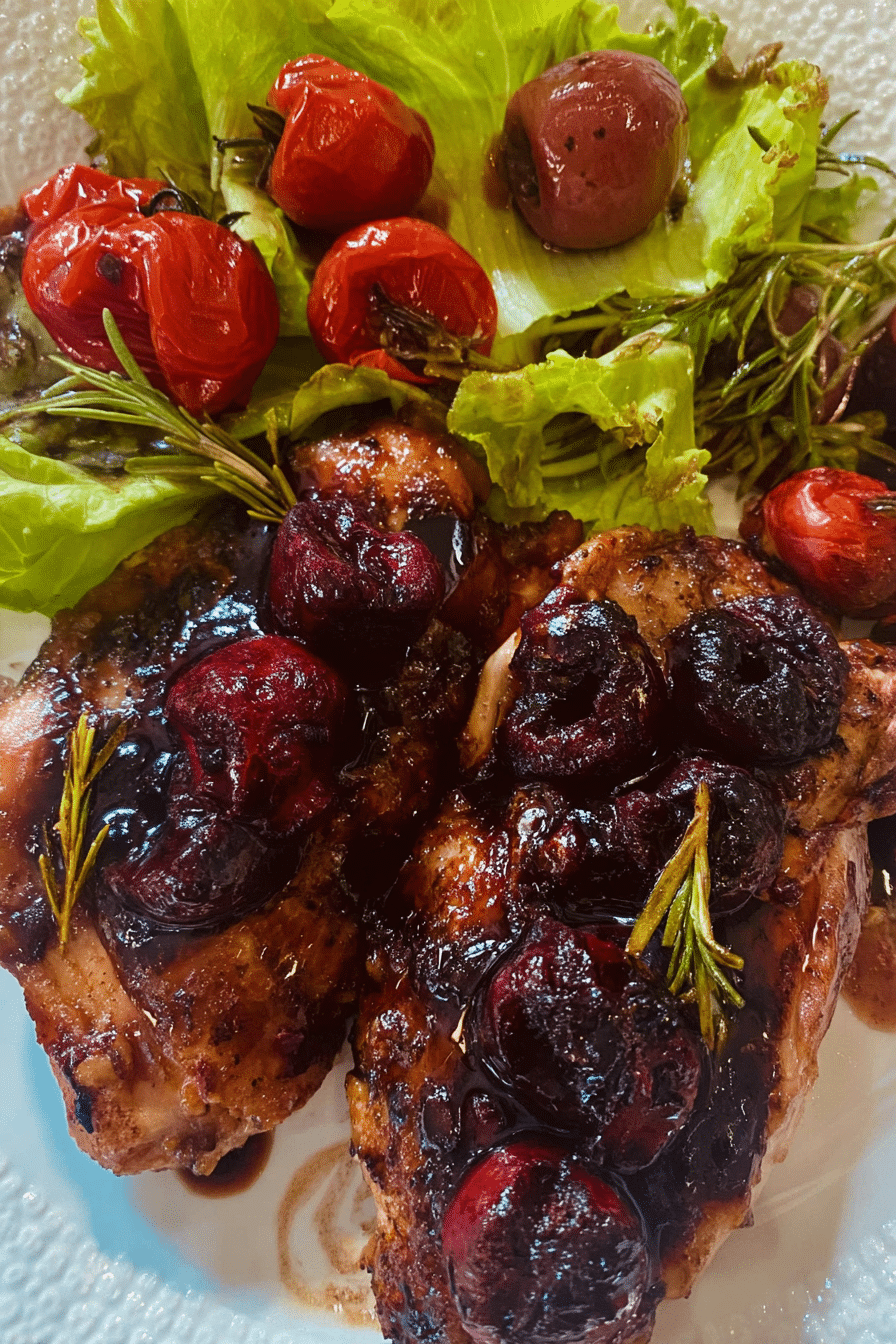
Cherry Chicken with Balsamic Rosemary Glaze
Ingredients
Method
- Preheat the oven to 400°F.
- In a small bowl, whisk together sea salt, chicken broth, honey, olive oil, shallots, and garlic.
- Place the chicken and marinade into a large ziplock bag. Let it rest at room temperature for about 30 minutes, or marinate in the refrigerator for several hours (or overnight).
- Pit and halve the cherries, set aside with the rosemary sprigs.
- Pour the chicken and marinade into a baking dish, spreading the chicken in an even layer.
- Tuck the cherries around the chicken and nestle the rosemary sprigs between the pieces.
- Bake for 20 minutes for chicken breasts. If using thighs, bake for 40 minutes, covering the dish with foil halfway through.
- Remove from the oven and spoon some of the pan sauce over the chicken. Increase heat to 450°F and bake an additional 10 minutes to caramelize the glaze.
- To serve, discard the rosemary sprigs and spoon the roasted cherries and glaze over the chicken.