- Prep
- 15 min
- Cook
- 60 min
- Total
- 75 min
- Serves
- 9
- Calories
- 281 kcal
- Carbs
- 23.00 g
Introduction
I make this clam chowder whenever company’s coming because it feels special without being fussy. There’s something about a big pot of creamy chowder steaming on the stove that immediately quiets a room—the smell of bacon and onions, a faint briny note of clams, and the warm, starchy comfort of potatoes. Over the years I’ve refined this into a version that looks beautiful in shallow bowls and holds its own against restaurant fare.
In my kitchen the trick has always been attention to small details: cooking the bacon low and slow so the fat renders cleanly, taking the time to cook the roux so it tastes nutty but not raw, and tempering the cream so it never separates. I like to let guests see the garnish—crumbled bacon and bright parsley—because it makes each bowl feel like a little celebration.
I’ve also learned to build in flexibility. This chowder is forgiving: you can swap ingredients for dietary needs, speed things up when you’re short on time, and still finish with a soup that’s silky, savory, and utterly crowd-pleasing. If you want to pair this with another seafood standout, try pairing it with a Lobster Chowder Recipe for a delightful seafood experience.
Read on for everything you need to make a showstopping pot, why a few precise techniques matter, and simple shortcuts for a quick weeknight version that still tastes indulgent.
Why This Clam Chowder Recipe Is Perfect for Dinner Parties
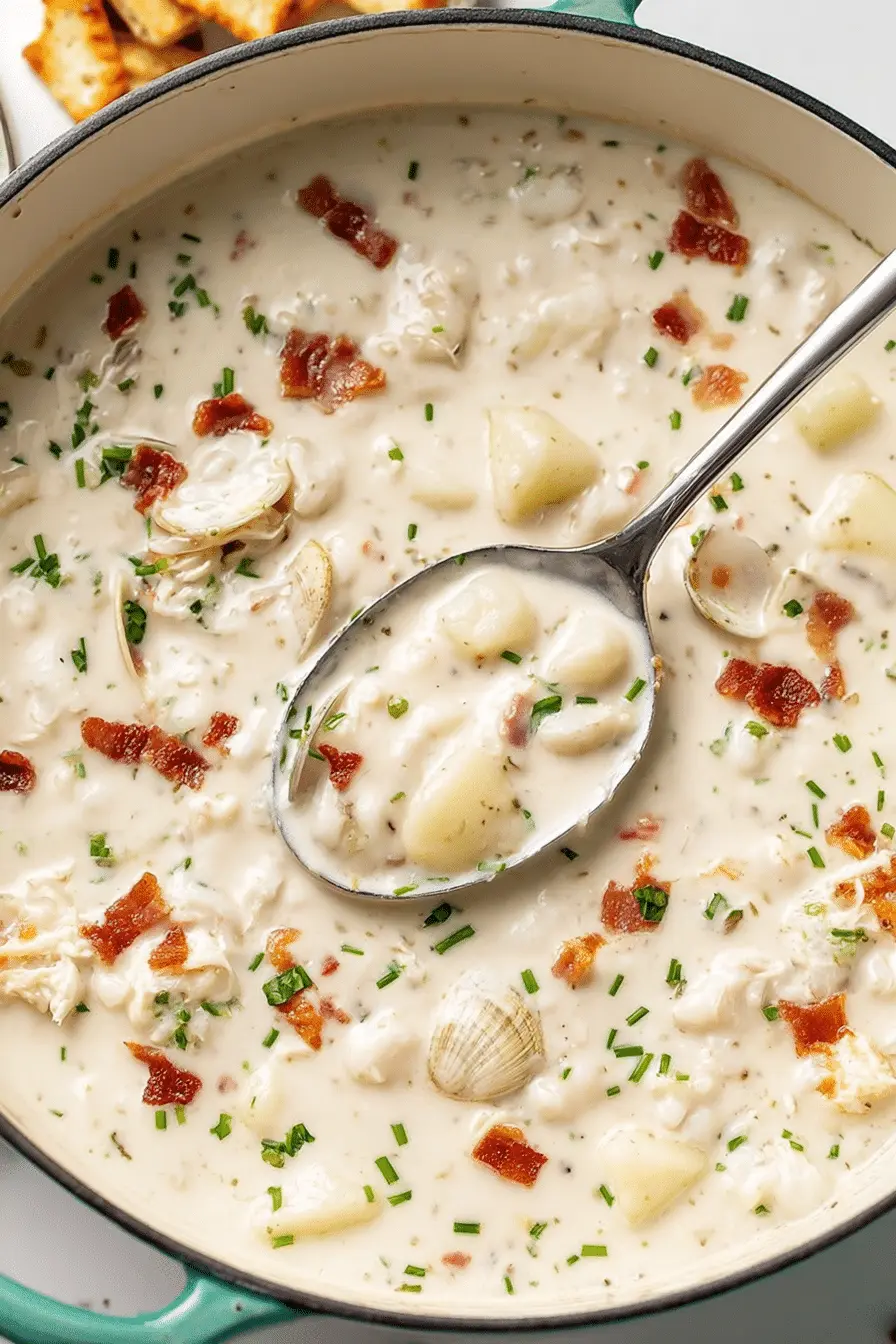
This chowder reads like comfort and celebration at once: creamy, savory, and substantial enough to serve as a centerpiece. The texture is rich but not heavy when you follow the method, and the visual contrast of crumbled bacon and chopped parsley makes each bowl photogenic—ideal for entertaining. The aroma alone will have guests lingering in the kitchen: smoky bacon, sweet onions, and the gentle brine of clams.
Pairing is flexible—bread, a crisp green salad, or a buttery potato side all work. If you want to expand the seafood theme, consider pairing this with a Lobster Chowder Recipe for a delightful seafood experience.
Practical point: this chowder scales well and can be held warm on low, making it simple to feed a crowd without frantic last-minute work. The garnish and presentation are the small extras that impress: a scattering of bacon, a shower of parsley, and a crack of fresh pepper make it feel like you’ve gone the extra mile.
Everything You Need for Clam Chowder
Below I’ll talk through the pantry and fresh items that matter and why they matter. I’ll also note simple swaps and healthier variations so you can tailor the pot to your guests.
- Bacon – Provides smoky fat and depth; can be swapped for salt pork, smoked turkey bacon for a lighter version, or omitted for a vegetarian-friendly stock base.
- Butter – Gives richness and helps the aromatics soften without drying out; use a plant-based margarine for dairy-free versions.
- Onion & Celery – The aromatic backbone; they soften and sweeten, balancing the briny clams. Leeks can be used in place of onion for a gentler, sweeter note.
- Garlic – Adds a savory lift; use roasted garlic for a mellower, slightly sweet character.
- Hot sauce & Worcestershire sauce – Small amounts bring complexity and umami; Worcestershire is the one ingredient that quietly changes the soup’s depth, and a splash of lemon at the end can add brightness if you prefer.
- Flour – Builds the roux to thicken the broth; for a gluten-free option, substitute with a gluten-free flour blend or cornstarch slurry.
- Broth & Bouillon – A neutral chicken or vegetable stock supports the clams without overpowering them; for a lighter version use low-sodium stock.
- Half-and-half or Cream – The key creamy element; for dairy-free chowder try coconut milk or a cashew cream substitute, adjusting seasoning to balance the sweetness.
- Clam Juice & Clams – The primary seafood flavor; fresh clams give a brighter shellfish note, while canned clams are reliable and convenient—either works, but treat fresh clams gently so they don’t overcook.
- Potatoes – Provide body and a silky mouthfeel when cooked through; waxy potatoes hold shape better, while starchy potatoes will soften and integrate more into the broth.
- Herbs & Spices – Bay leaf, dried herbs, smoked paprika and black pepper round out the flavor; finish with fresh parsley for color and a peppery lift.
Sensory note: imagine the pot with glossy bacon fat shimmering on the surface and the bright green of parsley waiting to be sprinkled on top—these visual and aromatic cues tell you a lot about how the final bowl will feel.
The Secret to the Perfect Texture
The texture comes down to three things: rendered fat, a well-cooked roux, and balanced liquid. I’ve found that rendering bacon over low heat keeps the fat clear and flavorful without charring the meat. When you cook the flour with the fat and aromatics until it loses its raw edge, the chowder becomes velvety rather than gritty.
Equally important is the ratio of liquid to solids. Too much stock and the chowder is thin; too little and it feels heavy and pasty. I pay attention as I add the broth and cream in small increments, stirring so the starches hydrate slowly and create a smooth body. The end result should coat a spoon, with a silkiness that slides across the palate.
Sensory focus: you want a mouthfeel that’s rich and satin-smooth, not grainy—when you stir the pot, the ladle should leave a clean trail through the surface.
Why Temperature Matters for Creamy Chowder
Temperature control is where good chowder becomes great. A rolling boil can make dairy separate and will overcook clams and potatoes unevenly; a gentle simmer lets flavors marry and produces tender potatoes without shock-cooking the seafood. I use low to medium heat once the cream is added and keep the pot at a barely perceptible bubble.
Different components need different temperatures: aromatics sweat at medium heat, roux develops at medium-low, potatoes simmer until tender, and clams only need to be heated through. For reliable results, use a food thermometer to check the liquid temperature—aim to keep the chowder below a hard boil when cream is involved.
Sensory focus: listen for a soft, steady whisper of simmering rather than a loud, aggressive boil; you should smell sweet caramelized onions and bacon without the sharpness of burned fond.
The One Ingredient That Changes Everything
Worcestershire sauce is the understated hero here. A small splash layers in umami, balancing the cream and the brine so the soup tastes rounder and more complex. If you prefer a brighter finish, finish with a squeeze of lemon to lift the flavor; both approaches work and can be chosen by season or mood.
Seasonal swaps: in spring add a handful of fresh chives or tarragon at the end; in autumn try a touch of smoked paprika or swap in roasted root vegetables for a heartier bowl. For those avoiding dairy, use a neutral plant-based cream and increase the umami with extra Worcestershire or a splash of mushroom stock.
Sensory focus: that subtle savory note changes the aroma from merely rich to intriguingly layered—there’s a rounded, slightly tangy depth that keeps the chowder from feeling one-dimensional.
How to Make Clam Chowder (Step-by-Step)
- Cook the bacon slowly over low heat until the fat renders and the bacon is crisp; drain and reserve most of the fat. Keep the browned bits in the pot for flavor.
- Add reserved bacon fat and a knob of butter to the pot over medium heat; sauté diced onions and celery until soft and translucent so they contribute sweetness without browning too much.
- Add minced garlic, hot sauce, Worcestershire, and dried herbs; cook briefly until fragrant so the aromatics bloom into the fat.
- Stir in flour and cook it for a couple of minutes, stirring constantly, until the raw flour smell disappears and the mixture smells toasty—this step prevents a pasty or gritty texture.
- Gradually add stock in small splashes while stirring, scraping the pot to dissolve any fond; then add the cream in the same slow manner so the roux hydrates evenly and no lumps form.
- Stir in clam juice and a bay leaf; bring the soup up to a gentle simmer and maintain that low simmer to meld flavors for about twenty minutes, partially covered.
- Add peeled, diced potatoes and return to a gentle bubble; simmer until potatoes are fork-tender, then turn the heat to low so they don’t break apart.
- Fold in the clams just to heat through, about five minutes for canned clams or a touch less for fresh clams; remove the bay leaf and taste for seasoning.
- Ladle into bowls and finish with chopped parsley, cracked black pepper, and the reserved crumbled bacon for texture and color.
- Quick 30-minute version: render bacon faster by starting in a hot skillet and drain excess fat, use pre-made low-sodium stock, quick-cook small diced potatoes, and use canned clams—follow the same order of steps but shorten simmering times. For another comforting dish, try our Creamy Seafood Chowder as part of your culinary repertoire.
Sensory focus: visualize the pot with creamy swirls and hear the gentle simmer as ingredients come together; the final bowl should steam and smell of bacon, onions, and the sea.
Pro Tip for clam chowder recipe: Substitutions & Timing
- Pro-Tips:
- Render bacon slowly for the cleanest fat—if you’re short on time, start hotter but skim off any dark bits before proceeding.
- Cook the roux until it smells nutty; that tiny extra minute keeps residual flour flavor from making the chowder chalky.
- When adding cream, temper it by ladling hot soup into the cream first, then return to the pot to avoid curdling.
- Troubleshooting (what I watch for in my kitchen):
- If the chowder looks grainy, it’s usually undercooked flour—simmer a few more minutes and whisk vigorously.
- If clams turn rubbery, I know I’ve overcooked them; always add clams at the end and only heat through.
- If the soup separates when reheating, I lower the heat and stir gently; a splash of broth can help bring it back together.
- Variations:
- Swap bacon for smoked turkey for a lighter version, or omit meat and use a robust vegetable stock to make it pescatarian-friendly.
- Use coconut milk or cashew cream for a dairy-free chowder—reduce any sweet notes with an extra dash of acid (lemon or vinegar) and more savory seasoning.
- For a heartier, vegetable-forward bowl, replace some clams with corn or diced carrots; for a potato-forward soup, use starchy potatoes to thicken as they break down.
- For a lighter option, consider clams with a Classic Potato Leek Soup-style base instead of heavy cream.
How to Store, Reheat, and Make-Ahead Clam Chowder
Proper storage keeps the texture and flavor intact so your leftovers taste as good as the first night. Cool the chowder quickly by transferring it to shallow containers and refrigerating within two hours. Seal tightly to prevent odors from other foods from creeping in.
- Reheating: Gently rewarm on the stove over low heat, stirring frequently. Avoid high heat or boiling—the cream can separate and clams will overcook.
- Freezing: Chowder with dairy can change texture when frozen; if you must freeze, do so without garnishes and expect slight separation. Thaw slowly in the refrigerator overnight and reheat gently, whisking to reincorporate.
- Make-ahead: Prepare the base to the point before adding potatoes and clams; cool and refrigerate. When ready to serve, bring the base back to a gentle simmer, add quickly-cooking diced potatoes or pre-cooked potatoes, then the clams to heat through.
- Serving suggestion: Pair leftovers with a simple roasted potato side like creamy garlic parmesan potatoes to complement the chowder’s richness.
Sensory focus: picture clear containers filled with creamy chowder, the surface still glossy—when reheated gently, the aroma will return without any breakdown in texture.
Frequently Asked Questions
What three ingredients must a chowder have to be considered a chowder?
Chowder is a type of thick soup that must include milk or cream, a roux, and seafood or vegetables.
What are common mistakes to avoid when making clam chowder?
Common mistakes include overcooking clams, which can make them rubbery, or not cooking the potatoes enough. Canned clams only need to be heated through, so avoid boiling them too long.
How can I achieve a creamy texture in my clam chowder?
To achieve the perfect creamy texture, be sure to cook the flour properly and slowly add your liquids while stirring continuously to avoid lumps.
Can I substitute any ingredients in this clam chowder recipe?
Absolutely! You can use different types of seafood, such as fresh clams or shrimp, and you can substitute the bacon with smoked turkey or omit it entirely for a lighter version.
What is the best way to store leftover clam chowder?
Store leftover clam chowder in an airtight container in the refrigerator for up to three days. When reheating, do so gently on the stove to maintain the creamy texture.
Recipe Card
The Clam Chowder I Make for Company — Rich, Bacon-Studded & Foolproof
- Prep
- 15 min
- Cook
- 60 min
- Total
- 75 min
- Serves
- 9
- Calories
- 281 kcal
- Carbs
- 23.00 g
Ingredients
- 6 stripsthick-cut bacon (can sub salt pork)
- 2 tablespoonsbutter
- 1 mediumyellow onion (diced)
- 2 ribscelery (diced)
- 3 clovesgarlic (minced)
- 1 teaspoonhot sauce (or ½ tsp tabasco sauce)
- 1 teaspoonWorcestershire sauce
- 1 third cupflour
- 1 cupchicken broth
- 3 cupsHalf and Half
- 8 ozclam juice
- 1 cubechicken bouillon
- 1.25 lbspotatoes (see notes)
- 3 canschopped clams ((6.5 oz. each, juices reserved))
- —Fresh parsley (for serving)
- —Freshly cracked pepper (for serving)
- 0.5 teaspoondried oregano
- 0.5 teaspoondried parsley
- 0.25 teaspoondried thyme
- 0.25 teaspoonsalt
- 0.125 teaspoonsmoked paprika
- 0.125 teaspoonpepper
Instructions
- 1
Cook the bacon in a 4.5-quart soup pot slowly over low heat. While the bacon cooks, measure out remaining ingredients. Once the bacon is cooked, set aside on a paper towel lined plate. Chop once cooled and reserve 2 tablespoons of bacon drippings.
- 2
Wipe any dark spots from the pot but leave as much bacon remnants as you can, as that will add flavor to the soup.
- 3
Add reserved bacon drippings and butter to the pot over medium heat and use a silicone spatula to 'clean' the bottom and sides of the pot. Add the diced onions and celery. Toss to coat and soften for 5-6 minutes. Add the garlic, hot sauce, Worcestershire sauce, and seasonings. Cook for 1 minute.
- 4
Add the flour and cook for 2 minutes stirring continuously until the raw flour smell is gone.
- 5
Add the chicken broth in small splashes, stirring continuously, and wiping the pan 'clean' again as you do so. Add the half and half in the same manner.
- 6
Stir in the chicken bouillon and add the bay leaf. Add the juice from the canned clams to the soup, but don’t add the clams yet. Stir in the additional clam juice.
- 7
Bring the soup to a gentle boil, then reduce to a simmer, so that it's just gently bubbling. Simmer for 20 minutes, partially covered. Stir occasionally as it cooks.
- 8
Peel and dice the potatoes and add them to the soup. Bring back to a very gentle bubble and let the potatoes cook through for 20-25 minutes, until fork tender. Reduce heat to low.
- 9
Stir in the clams and let them heat through, about 5 minutes. Remove bay leaf.
- 10
Ladle soup into serving bowls and garnish with roughly chopped parsley, freshly cracked pepper, and chopped bacon.
You might also like

Reviews
Be the first to review this.