- Prep
- 50 min
- Cook
- 30 min
- Total
- 80 min
- Serves
- 6
- Calories
- 403 kcal
- Carbs
- 36.60 g
Introduction
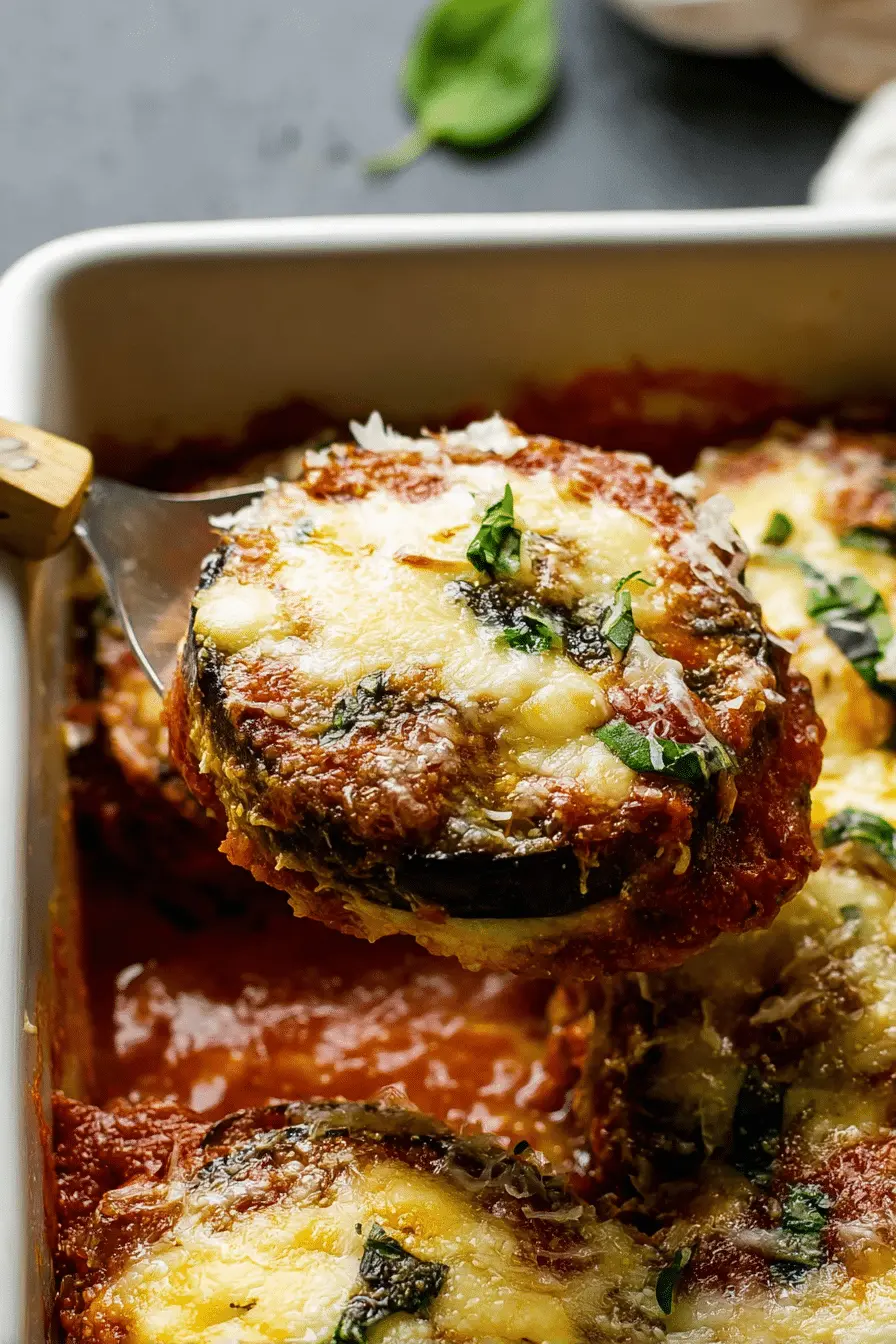
There are smells that instantly take me back to my childhood kitchen: a bubbling pot of tomato sauce, the warm, slightly nutty scent of browned breadcrumbs, and the bright green of torn basil scattered over molten cheese. I make this eggplant parmesan when I want the house to feel like home—when conversations slow down and everyone lingers at the table. Over the years I tested every shortcut and learned which steps matter and which just waste time.
I first learned to bread and fry eggplant from an aunt who treated salt like a secret ingredient rather than a measurement—she’d say, "Make it taste like you." I kept that instinct but added structure: how long to sweat slices, when to press them, which crumbs cling best. The result is a version that still tastes like family but behaves predictably in my kitchen.
I’ll walk you through the tools and choices—fresh eggplants at peak season, a food processor for quick breadcrumbs, and whether to fry, oven-roast, or use an air fryer. I promise practical tips that keep slices tender, cut bitterness, and deliver those comforting, cheese-studded layers that bring everyone to the table.
Before the step‑by‑step section, here’s everything you need to gather so the process moves smoothly. I’ve included adaptations if you need gluten-free or vegan options, plus pairing ideas to round out the meal.
Everything You Need for Classic Eggplant Parmesan
- Eggplant – Choose glossy, firm fruit without soft spots; smaller to medium ones are less seedy and cook up more tender. If you see lots of seeds, they can make the slice bitter.
- Breadcrumbs – Homemade crumbs toasted from bread give the best texture; you can use store-bought for convenience. For gluten-free, use gluten-free bread or panko made for GF diets.
- Cheeses – A melty cheese paired with a sharper grated cheese gives balance: the first for gooeyness, the second for savory punch. For vegan adaptations, use plant-based shredded cheese and a sprinkle of nutritional yeast or vegan parmesan.
- Marinara – A rich, slightly chunky tomato sauce grounds the layers; opt for a sauce with good acidity to cut the richness. You can use your favorite jarred sauce, or a homemade quick sauce if you have time.
- Eggs & Flour – These help breadcrumbs adhere. To keep things vegan, use a batter made from aquafaba or a plant milk and flour slurry as a binder.
- Seasonings – Garlic powder, dried Italian herbs, salt and pepper in the crumbs bring structure and aroma; fresh basil and oregano on the finished bake brighten the dish.
- Tools – A skillet for frying or a rimmed sheet for baking, a food processor for breadcrumbs, paper towels for pressing, and a casserole dish for assembling make the work easier and neater.
A Short History: How Eggplant Parmesan Became a Comfort Classic
Eggplant Parmesan traces its roots to southern Italy, where eggplant and tomatoes were layered with cheese to create simple, satisfying casseroles in peasant kitchens. Immigrants brought the idea to America, where the dish grew heartier—double layers of cheese, deeper sauces, and a place on family Sunday tables.
Across regions the recipe changed: some places keep it simple and rustic, others embellish with meats or baked gratins. Today, eggplant parmesan sits comfortably between its Italian origins and the generous, family-style casseroles of Italian-American homes—an easy dish to personalize, share, and pass down.
Why Sweating Eggplant Gives the Best Texture
- Sweating draws out excess moisture and any vegetal bitterness, leaving slices that brown rather than steam when cooked. The result is a firmer, more pleasant mouthfeel.
- Common methods: arrange slices in a single layer, sprinkle lightly with coarse salt, and let them sit for a short period; then pat dry thoroughly. You can also stack between paper towels and press gently to remove trapped moisture.
- After sweating, rinse or wipe off excess salt and pat completely dry—this is the touch that prevents soggy breading and helps the crust crisp up.
- Sensory cue: the eggplant should feel noticeably drier and a little firmer to the touch after sweating; the smell will be cleaner and less vegetable‑sharp.
Fry, Bake, or Air Fryer? Choosing the Best Method
- Pan-frying – Pros: best crisp, classic crust and rich flavor from the oil. Cons: more oil and attention. Choose this when you want traditional texture and don’t mind a bit of hands-on cooking.
- Baking – Pros: hands-off and lower in oil; consistent for large batches. Cons: crust will be less crisp than frying. Choose this when feeding a crowd or aiming for a lighter dish.
- Air fryer – Pros: crisp without much oil and faster than the oven for small batches. Cons: limited capacity; you may need several batches. Use the air fryer when you want a compromise between crisp and convenience.
- Flavor and texture note: frying brings a toasty, slightly nutty breadcrumb flavor and a thin, crackling crust; baking keeps the breading more tender and uniform; the air fryer yields a concentrated crisp on the surface while keeping the interior tender.
How to Make Classic Eggplant Parmesan (Step‑by‑Step)
- Slice the eggplant into even pieces—aim for uniform thickness so they cook at the same rate.
- Sweat the slices: lay them out, sprinkle lightly with coarse salt, and let them sit briefly to draw out moisture. Pat them dry and remove surface salt.
- Make breadcrumbs by toasting bread slices until golden and pulsing in a food processor; mix with dried herbs, garlic powder, and grated hard cheese. You can use store-bought crumbs instead if time is short.
- Set up a three‑station breading line: flour, beaten eggs (or a vegan binder), and the seasoned crumbs. Coat each slice first in flour, then in the binder, then press into the crumbs until well coated. If baking, place breaded slices on an oiled sheet pan as you go.
- If pan‑frying: heat oil in a skillet, fry breaded slices a few minutes per side until golden, and drain briefly on paper towels. If baking: arrange on an oiled sheet and bake until golden and set. If using an air fryer: arrange slices in a single layer and air fry until crisp, working in batches.
- Assemble the casserole: spread a layer of marinara on the bottom of your dish, add a layer of eggplant, top with shredded melty cheese, a spoonful of sauce, and a sprinkle of grated hard cheese. Repeat to build two good layers so every serving has crust, sauce, and cheese.
- Bake the assembled dish uncovered until the top is bubbling and golden, then let it rest briefly so the layers set. Finish with chopped fresh basil and oregano for aroma and color.
Pro Tip for classic eggplant parmesan: Reduce Bitterness & Keep Slices Tender
- I always salt and rest my eggplant briefly; it’s the easiest way to remove harshness without losing flavor.
- For especially bitter fruit, soak slices in cold water for a short time before salting, then pat dry—this draws out additional tannins.
- Slicing tip: for the most tender bite, slice a little thicker if you plan to bake; thinner slices crisp up more quickly when frying or air frying.
- When breading, press crumbs onto the slice rather than shaking them on; that gives a sturdy crust that survives assembly and baking.
Troubleshooting
- If the crust goes soggy after baking: make sure eggplant was well dried after sweating and that you didn’t use too much sauce between layers.
- If slices stay bitter: try a longer sweat or brief soak, and choose younger, firmer eggplants next time.
- If the cheese doesn’t melt evenly: cover with foil partway through baking to protect the top while the center warms through, then remove foil at the end to brown.
- If the middle is undercooked: allow a brief rest after baking; residual heat helps set the layers, or finish with a few extra minutes in the oven at a lower temperature.
Variations
- Make it gluten-free by using gluten-free breadcrumbs or crushed gluten-free crackers in the coating and ensuring any store-bought sauce is GF.
- For a vegan version, swap eggs for aquafaba or a plant milk-flour mix, use vegan cheese, and add a sprinkle of nutritional yeast for savory depth.
- Add a layer of wilted greens or roasted mushrooms for more texture and a vegetable-forward take—those mushrooms pair nicely as an extra side, too.
- Make a lighter lasagna-style version by layering thinner slices and more sauce for a softer, more delicate casserole.
What to Serve with Eggplant Parmesan (Wine, Sides & Presentation)
This is a communal dish: present it family‑style from the casserole and let people help themselves. A crisp green salad with a bright vinaigrette cuts through the richness, and simple garlic bread or toasted crostini rounds out the plate.
For a starter before the main, consider classic bruschetta to refresh the palate: classic Italian bruschetta. If you want to add a savory protein, pair with garlic parmesan chicken for contrast in textures and flavors: garlic parmesan chicken. For an extra side that echoes the cheese and herbs, creamy garlic parmesan mushrooms make a lovely companion: creamy garlic parmesan mushrooms.
Wine pairings: choose a medium-bodied red with good acidity—think Sangiovese, Chianti, or an unoaked Merlot—to match the tomato sauce and cut the dish’s richness. For a white option, a dry Vermentino or Pinot Grigio with herbal notes works well.
Presentation tip: finish with torn fresh basil and a light drizzle of good olive oil. Serve with a wide spoon so each plate gets a balance of crisp crust, bright tomato, and melted cheese.
How to Store, Reheat, and Make-Ahead
Leftovers keep well and often taste better the next day. Store covered in the refrigerator, and for longer storage freeze portions wrapped tightly.
- Reheating: for the best texture, reheat individual portions in an oven or toaster oven until warmed through and the top is crisp again. A quick pass in the air fryer also brings back crunch without drying the interior.
- Make‑ahead: you can assemble the casserole up to a day in advance and refrigerate it, then bake when you’re ready to serve. If you need to go further ahead, freeze the assembled dish and bake from frozen, adding extra time and covering with foil until heated through.
- For a make‑ahead side that pairs well, roast a pan of balsamic glazed vegetables the day before to reheat alongside your casserole: balsamic glazed roasted vegetables.
Frequently Asked Questions
Can I use store-bought breadcrumbs instead of making my own? Absolutely! Store-bought breadcrumbs can be a great time-saver. Just make sure to choose a good quality brand for the best flavor.
What is the purpose of sweating the eggplant? Sweating the eggplant helps to draw out excess moisture and bitterness, resulting in a firmer texture and a more flavorful dish.
Can I prepare eggplant parmesan in advance? Yes! You can assemble the eggplant parmesan ahead of time and refrigerate it. Just make sure to bake it right before serving for the best results.
What's the difference between frying, baking, and using an air fryer for the eggplant? Frying gives a crispy texture, baking uses less oil and is healthier, while an air fryer offers a balance of crispy without the need for much oil. Choose based on your preference!
What can I serve with eggplant parmesan? Eggplant parmesan pairs wonderfully with a green salad, pasta, or garlic bread. A nice red wine can also complement the dish perfectly!
Recipe Card
The Classic Eggplant Parmesan I Make for Family Dinners
- Prep
- 50 min
- Cook
- 30 min
- Total
- 80 min
- Serves
- 6
- Calories
- 403 kcal
- Carbs
- 36.60 g
Ingredients
- 2 medium to largeeggplants
- 1/2 cupall-purpose flour
- 3 largeeggs
- 1/4 cupolive oil
- 6 slicesbread
- 1/2 cupparmesan cheese, shredded
- 2 teaspoonsItalian herb blend
- 1 teaspoongarlic powder
- 1/2 teaspoonsalt
- 1/2 teaspoonblack pepper
- 1 1/2 cupsmarinara sauce
- 1 lbmozzarella cheese
- 1/3 cupparmesan cheese, shredded
- 1-2 tablespoonsfresh basil, chopped
- 1 teaspoonfresh oregano, chopped
Instructions
- 1
Slice eggplant: remove stem from eggplant then slice into 1/4-1/2 inch thick slices.
- 2
Sweat eggplant: arrange slices on a pan and sprinkle with a pinch of coarse salt on both sides. Let sit and 'sweat' excess moisture for 10 minutes. Pat firmly with paper towels to dry eggplant thoroughly.
- 3
Breadcrumbs: toast slices of bread. Then chop in food processor until consistency is crumbs. Mix breadcrumbs in a bowl with garlic powder, salt & pepper, Italian herbs, and shredded parmesan cheese.
- 4
Bread eggplant: coat each eggplant slice in flour, then dip into eggs, and finally into breadcrumbs.
- 5
Pan frying method: in a skillet, cook the breaded eggplant for 2-3 minutes on each side until golden brown. Alternatively, bake the eggplant at 350°F for 25 minutes on an oiled sheet pan.
- 6
Assemble: in a large casserole dish, layer marinara, eggplant, mozzarella, and parmesan. Repeat for additional layers.
- 7
Bake at 400°F uncovered for 30 minutes until cheese is browned and melted. Top with chopped fresh basil & oregano, and serve!
You might also like
Reviews
Be the first to review this.