- Prep
- 25 min
- Cook
- 45 min
- Total
- 70 min
- Serves
- 8
- Calories
- 369 kcal
- Carbs
- 49.30 g
Introduction
I grew up with rhubarb in the garden behind my grandmother's kitchen, and every spring the stalks were the first thing she sent me out to harvest. I still remember bringing in handfuls of red-and-green stalks, the sharp, green scent on my hands, and the way the house filled with a warm buttery smell when the crisp came out of the oven. For me this is not just a dessert; it is the small ritual that marks the change of seasons and gathers people around the table.
Rhubarb has a long history in springtime desserts—sturdy, tart, and insistently seasonal. When I make this classic rhubarb crisp, I think of family gatherings where a single baking dish could feed a crowd and conversations lasted as long as the steam rose from the pan. The contrast of the bright, tangy filling with a coarse, buttery oat topping has always been a comfort-food staple in my kitchen.
In my kitchen, the act of making a crisp is as important as the eating. I like the tactile work of rubbing dry ingredients together, the sound of grains falling into a bowl, and the visual of large golden lumps of streusel breaking into crunchy islands across the fruit. Serve it warm, and the aroma alone will draw everyone close; the first spoonful—soft fruit, crisp topping, a cool ribbon of ice cream—feels like a family memory in the making.
Everything You Need for Classic Rhubarb Crisp
Before you begin, gather a few simple tools and think about ingredient quality. Proper equipment helps the fruit cook evenly and the topping brown predictably. Fresh rhubarb is ideal, but frozen can work if drained well. The butter and oats you choose play a huge role in the final texture of the topping—good butter for flavor and old-fashioned oats for chew.
- Baking dish – A shallow square or oval dish helps the fruit bubble at the edges and the topping to bake crisply.
- Mixing bowls – One for the filling and one for the topping keeps things tidy and simple.
- Pastry cutter or fork – Useful for incorporating butter into dry ingredients if you prefer not to melt the butter.
- Spatula or wooden spoon – For gently folding the fruit with the sugar mixture.
- Fresh rhubarb – The backbone of this recipe; use the ripest stalks you can find for better color and flavor.
- Oats – Old-fashioned rolled oats give the topping chew and structure.
- Butter – Unsalted, real butter adds depth and helps create those golden clumps in the streusel.
- Sugar and thickener – Sugar balances tartness and a starch binds the juices so the filling isn’t runny.
Don’t forget to check out our brown sugar rhubarb cookies that can be a sweet companion to your crisp.
The Secret to a Crumbly, Not-Soggy Topping
The difference between a topping that stays pleasantly crumbly and one that collapses into soggy paste is all in technique and a few measured choices. Temperature of the butter, the ratio of oats to flour, and leaving substantial clumps in the streusel are the three things I focus on.
You should expect to feel a coarse, slightly greasy texture in the mix before baking—those larger lumps will brown and stay crisp, while smaller crumbs will fill gaps and toast to nutty notes.
- Butter temperature – Use melted but cooled butter or very cold butter cut into the dry mix; melted butter makes uniform clumps while cold butter yields flakier chunks. If the butter is too hot, the mixture will become greasy and won’t form clumps.
- Oats-to-flour balance – Oats provide chew and crunch, flour binds. Too much flour and the topping becomes cakey; too little and it won’t hold together. Aim for a balance that leaves visible oats in every bite.
- Make big clumps – Press some of the oat mixture together with your fingers or a spatula so you have golf-ball-size lumps and loose crumbs mixed. Those larger pieces will brown beautifully and give the crisp texture contrast you want.
I’ve learned a few troubleshooting habits that save the topping when it’s going sideways:
- If the topping feels greasy before baking, stir in a little more dry oats to absorb excess oil.
- If the topping is too powdery and won’t clump, add a touch more melted butter and press together to form lumps.
- If the topping browns too quickly before the filling is bubbling, tent the dish loosely with foil for the remaining bake time.
Choosing Rhubarb: Seasonality, Varieties, and Where to Buy
Rhubarb sings in early to mid-spring; the stalks are at their best then, both in flavor and color. Varieties range from deeply red to mostly green stalks—redder types are often milder and more visually striking, while greener stalks can be punchier in tartness. Seek out local farmers' markets or organic grocers for the freshest stalks and the best flavor.
Rhubarb is not only flavorful but also a good source of fiber and certain vitamins; while it’s mainly enjoyed as a sweetened treat, it brings a bit of nutritional value to the table too.
Look for firm, crisp stalks without wilting or soft spots, and imagine the spectrum of color from pale green to jewel-red as you choose. If you’d like a companion recipe using rhubarb in a different format, try our strawberry rhubarb pie for another way to enjoy the season.
How Lemon and Sugar Balance Rhubarb's Tartness
A little acid brightens rhubarb's natural tang and prevents the filling from tasting flat. Lemon juice works quietly—its acidity lifts and sharpens the fruit without making it sour. Sugar tames the tartness but the type of sugar you use alters both flavor and texture: granulated sugar gives straightforward sweetness, while brown sugars add molasses notes and a softer caramel tone to the filling.
Imagine the tangy lemon aroma meeting the warm, caramel whisper of brown sugar as the filling cooks—those scents mingle into something comforting and lively at once. Adjust sugar to taste, keeping in mind that added fruits will change how much sweetness you need.
How to Make Classic Rhubarb Crisp (Step-by-Step)
- 1. Preheat the oven and prepare your baking dish by buttering the bottom and sides so the crisp doesn’t stick.
- 2. In a bowl, toss your rhubarb with sugar and a starch until the pieces are evenly coated; this helps thicken the juices as the fruit cooks. Use lemon juice to add a bright, balancing acidity.
- 3. Transfer the fruit to the prepared dish and spread it into an even layer so it cooks uniformly.
- 4. In a clean bowl, combine oats, flour, salt, and any spices you like; add brown sugar for depth. Drizzle cooled melted butter over the mixture and stir until you see a mix of loose crumbs and large clumps.
- 5. Scatter the topping over the fruit, leaving some larger lumps intact to ensure a pleasing texture contrast.
- 6. Bake until the topping is golden and the filling is bubbling around the edges—if the topping browns too fast, tent it with foil for the final minutes.
- 7. Let the crisp rest for a short while before serving so the juices set slightly; use caution when checking the bubbling filling, as juices are very hot.
- Safety tip: When cutting rhubarb, use a stable board and a sharp knife; the stalks can be long and slippery, so steady the piece with your non-cutting hand well away from the blade.
Pro Tip for Classic Rhubarb Crisp: Make Big Streusel Clumps for Texture
- Press some of the oat-and-butter mixture together with your hands or a spatula to form sizeable clumps—these will brown and remain crunchy after baking.
- If you need a dairy-free swap, use a neutral oil or a vegan butter alternative; the texture will be slightly different, so increase the oats a touch to help bind clumps.
- For a nutty lift, fold in chopped toasted nuts into a portion of the topping and press into larger pieces for contrast.
- Scatter clumps unevenly rather than smoothing the topping; the uneven peaks and valleys give the crisp a rustic, inviting look.
What to Serve with Rhubarb Crisp — Pairings and Serving Suggestions
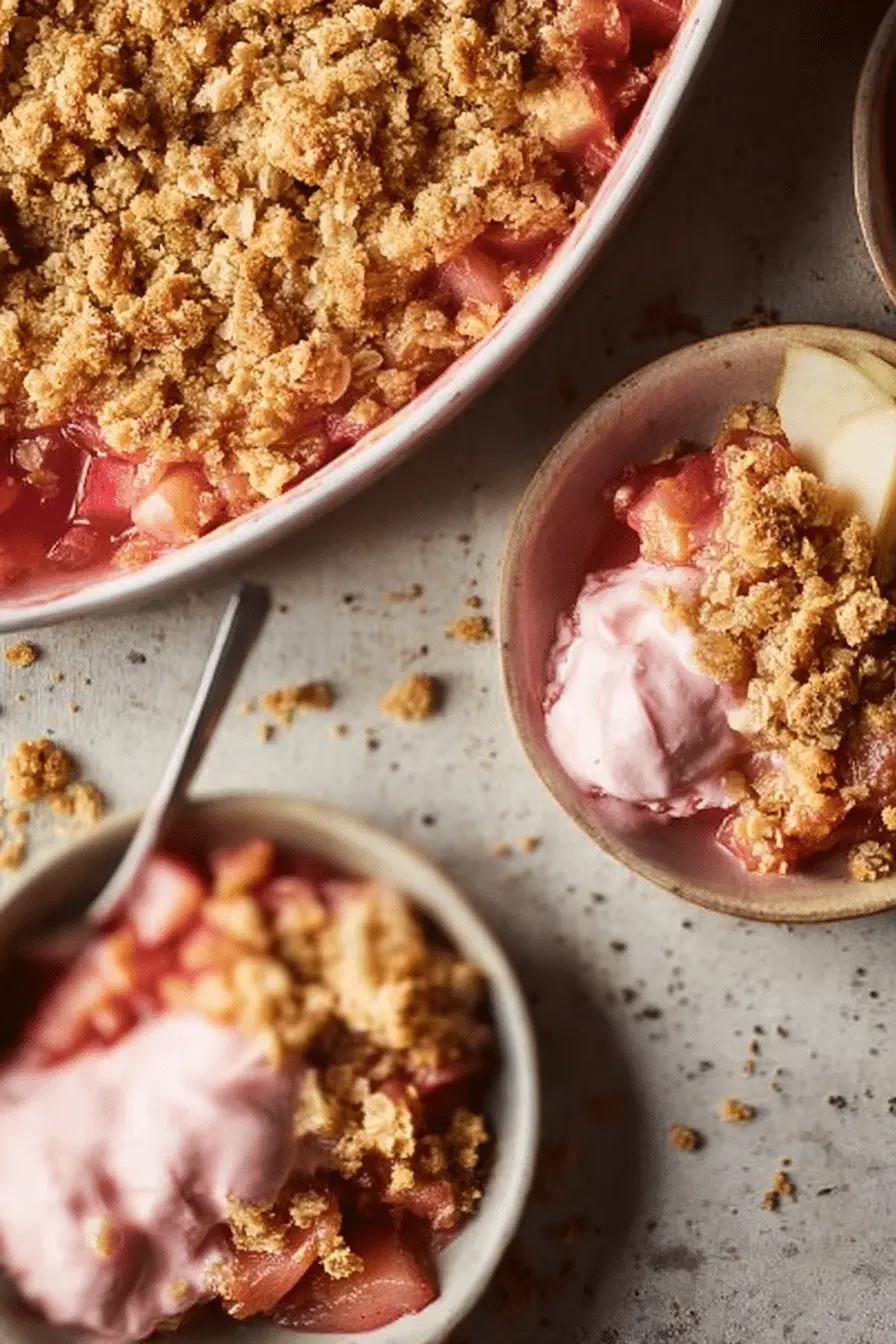
Traditional pairings like vanilla ice cream and freshly whipped cream are classic for a reason: the cool, creamy element tempers tart rhubarb and complements the buttery topping. For a lighter option, plain or vanilla yogurt offers tang and a softer sheen. Consider warm beverages such as strong tea or lightly sweetened coffee to ground the dessert in a homely setting.
Other flavor matches that work beautifully include vanilla, almond, and mild spices like cinnamon that echo the toasted notes of the streusel. If you’re presenting a spread, pair your rhubarb crisp with our old fashioned apple crisp for a double dessert delight this season.
How to Store, Reheat, and Try Vegan or Gluten-Free Variations
Store leftovers covered in the fridge to keep the filling fresh and the topping slightly crisp; for longer storage, freeze portions and reheat until warmed through. Reheating in the oven or a toaster oven revives the topping best—microwaving is faster but will soften the streusel.
- Storage: Cover and refrigerate for several days; for freezing, wrap tightly and freeze for up to a few months.
- Reheating: Warm in a low oven until hot and the topping crisps again; tent with foil if the top is browning too quickly.
- Vegan swap: Use vegan butter or coconut oil in the topping and a plant-based sweetener where needed; expect slight differences in flavor but similar structure if you maintain the oat proportion.
- Gluten-free option: Substitute certified gluten-free rolled oats and use a gluten-free all-purpose flour in place of regular flour for the topping.
- Make-ahead: Prepare the filling and topping separately, store them chilled, then assemble and bake when you’re ready to serve.
For a comforting dessert experience, consider making some pumpkin flan as an alternative to standard recipes.
Frequently Asked Questions
Can I use frozen rhubarb for this crisp? Yes, you can use frozen rhubarb. Just make sure to thaw and drain any excess liquid before using it in the recipe.
Can I substitute the oats in the topping? If you're looking for a gluten-free option, you can use gluten-free oats. Otherwise, to keep the crispy texture, it's best to stick with traditional oats.
What other fruits can I mix with rhubarb? You can mix in strawberries, apples, or blueberries for added flavor and sweetness! Just be sure to adjust the sugar based on the sweetness of the added fruits.
How do I know when the rhubarb crisp is done baking? The crisp is ready when the topping is golden brown and the rhubarb is bubbling. This usually takes about 35 to 45 minutes at 375°F.
Can I prepare the crisp ahead of time? Yes! You can prepare the filling and topping separately in advance. Store them in the fridge and then assemble and bake when you're ready.
Recipe Card
The Classic Rhubarb Crisp I Make Every Spring
- Prep
- 25 min
- Cook
- 45 min
- Total
- 70 min
- Serves
- 8
- Calories
- 369 kcal
- Carbs
- 49.30 g
Ingredients
- 1/2 cupgranulated sugar
- 2 tablespoonscornstarch
- 2 poundsfresh rhubarb, leaves removed and discarded, stalks cut into 1-inch pieces ((about 6 cups))
- 1 tablespoonfreshly squeezed lemon juice
- 1 1/2 cupsold-fashioned rolled oats
- 1/2 cupall-purpose flour
- 1/2 cuppacked light brown sugar
- 1/2 teaspoonkosher salt
- 1/2 teaspoonground cinnamon (optional)
- 12 tablespoonsunsalted butter, melted and cooled, plus more for the baking dish
- —Vanilla ice cream or whipped cream, for serving (optional)
Instructions
- 1
Arrange a rack in the middle of the oven and heat the oven to 375°F. Coat an 8 or 9-inch square baking pan (or 2- to 2 1/2-quart baking dish) with some melted butter; set aside.
- 2
Whisk 1/2 cup granulated sugar and 2 tablespoons cornstarch together in a large bowl until lump-free. Add 2 pounds fresh rhubarb pieces and 1 tablespoon freshly squeezed lemon juice and toss gently to coat. Transfer to the prepared baking dish.
- 3
Wipe out the bowl. Add 1 1/2 cups old-fashioned rolled oats, 1/2 cup all-purpose flour, 1/2 cup packed light brown sugar, 1/2 teaspoon kosher salt, and 1/2 teaspoon ground cinnamon, if using, and stir until combined. Drizzle 12 tablespoons melted unsalted butter over the oat mixture and stir until evenly moistened. Scatter the crisp topping evenly over the fruit mixture, leaving large clumps intact.
- 4
Bake until the fruit juices are bubbling around the edges of the baking dish and the topping is golden and firm to the touch, 35 to 45 minutes. Let the crisp cool on a wire rack for at least 15 minutes before serving. Serve with vanilla ice cream or freshly whipped cream, if desired.
You might also like
Reviews
Be the first to review this.