- Prep
- 25 min
- Cook
- 25 min
- Total
- 50 min
- Serves
- 4
- Calories
- 482 kcal
- Carbs
- 31.00 g
Introduction
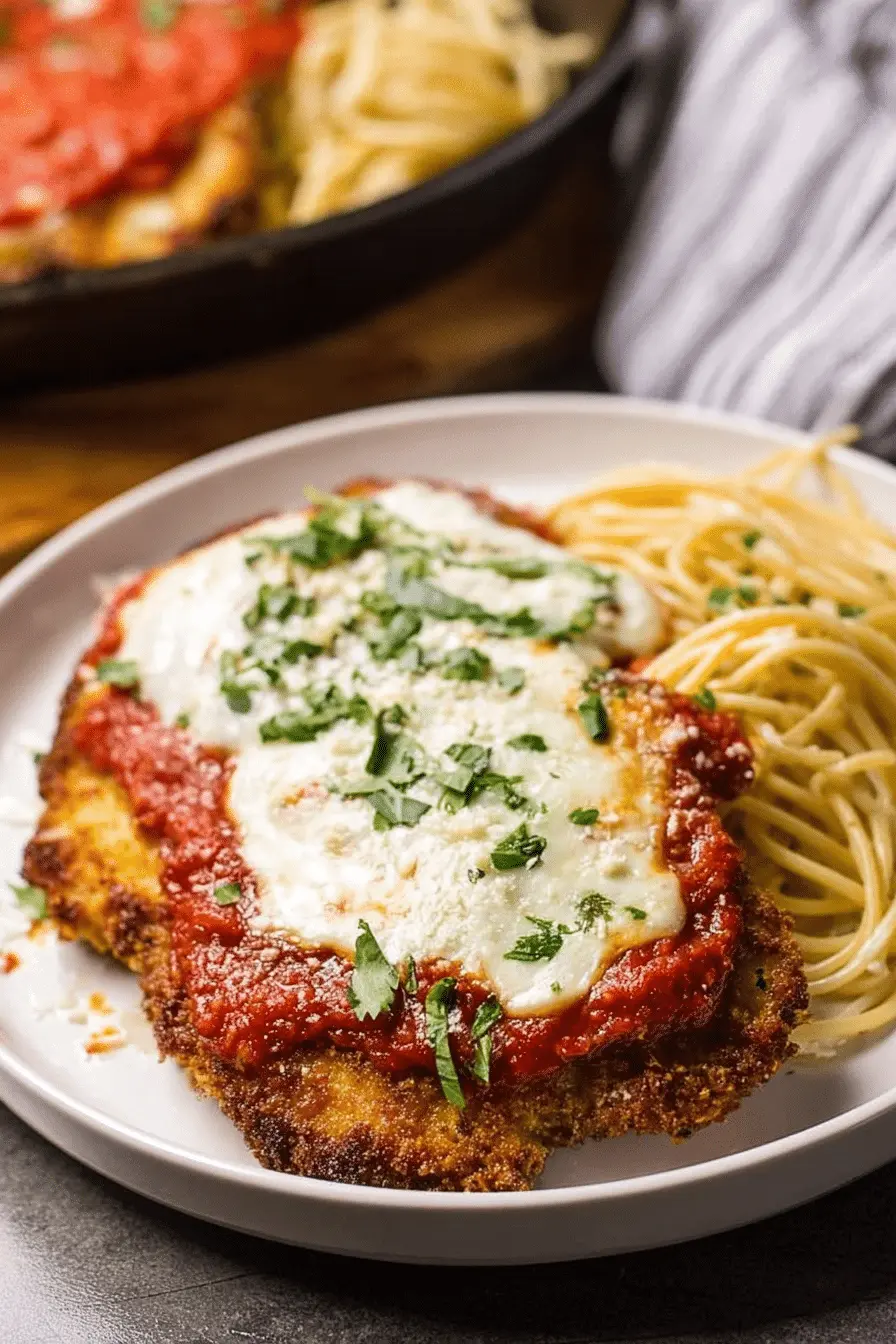
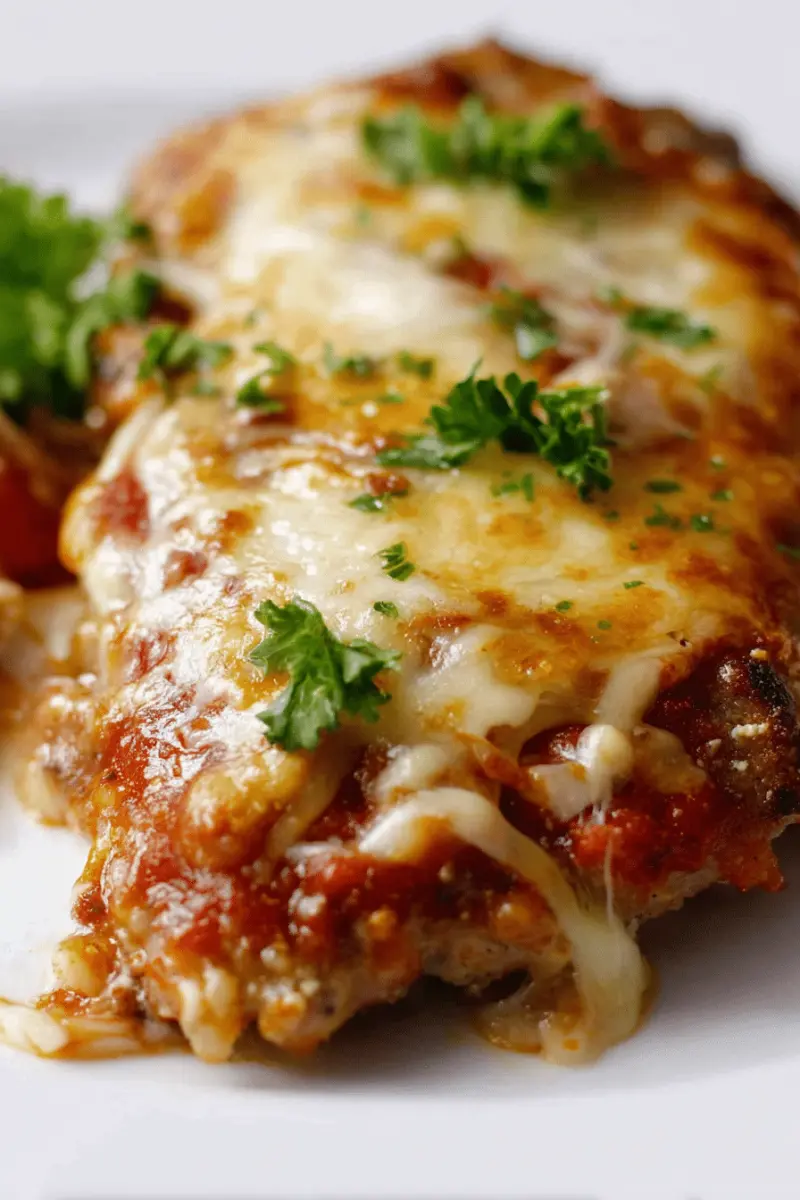
Veal Parmesan is one of those dishes that instantly reads like Sunday at my house — the kitchen warms up, a pot of sauce simmers, and there’s the smell of browned, breadcrumbed cutlets that makes everyone drift toward the table. I make this version when I want something comforting but a little special: crispy, cheesy, and saucy without being fussy. It serves about four and comes together in roughly fifty minutes from start to finish. When I pull the pan out of the oven, the mozzarella has that perfect bubble-and-gold edge, and the smell mixes tangy tomato with warm, toasty breadcrumbs and nutty Parmesan. The cutlet beneath stays tender because the veal is very thin — think almost paper-thin — and that contrast between crisp crust and soft interior is the whole point. I’ll walk you through the exact steps I use, the little mistakes I’ve learned to avoid, and options if you don’t have veal on hand.Ingredients Overview
- Veal cutlets – the star: thin, tender, and quick-cooking; you can use scallopini or pounded cutlets.
- Breadcrumbs – provide the crispy crust; plain or Italian-style both work, or try panko for extra crunch.
- Parmesan cheese – adds salty, nutty depth to the breading and a savory finish when sprinkled on top.
- Mozzarella – gives that gooey, melty topping; fresh slices melt differently than pre-shredded—both are fine.
- Flour – for the first dredge to help the egg adhere and build a sturdy crust.
- Eggs – whisked, they bind the breadcrumbs to the veal.
- Olive oil – for pan-frying the cutlets to a golden crust; a neutral oil with a high smoke point can also be used.
- Pasta sauce (marinara) – bright tomato flavor and moisture; jarred is perfectly fine, or use a slow-simmered sauce for deeper flavor.
- Salt & pepper – essential: a pinch or two to season the veal and balance the flavors.
- Dried herbs & seasoning – things like garlic powder, dried basil, and parsley flakes bring background flavor to the crumbs.
Step-by-Step Instructions
- Prepare the veal: If you’re starting with veal cutlets, place each one between two sheets of plastic wrap and pound gently with the flat side of a meat mallet until it’s about 1/8–1/4 inch thick. The goal is an even thickness so each piece cooks at the same rate. I keep a kitchen towel under the board so the motion doesn’t slide — it’s a small trick that saves splatter and frustration.
- Season the veal lightly on both sides with kosher salt and freshly ground black pepper. Because the cutlets are thin, a little seasoning goes a long way; over-salting will make the finished dish flat.
- Set up a classic breading station: one shallow bowl with flour, one with beaten eggs, and one with the breadcrumbs mixed with about half of your shredded Parmesan and your dried herbs (parsley flakes, garlic powder, dried basil). Press the crumbs onto each cutlet so they adhere well — you should feel a firm, even coating. If the crumbs feel loose and sandy, press a little harder and let them sit for a minute before frying.
- Heat a skillet over medium heat and add enough olive oil to coat the bottom — you want a thin layer that shimmers. The oil needs to be hot so the crust seals immediately; test it by dropping a few breadcrumbs in: they should sizzle and turn golden in a few seconds. If the oil smokes, the pan is too hot — reduce the heat slightly.
- Fry the cutlets for about 2–3 minutes per side until golden and crisp. Don’t crowd the pan; work in batches if needed. I flip once, and if the crust sticks, it usually means it wasn’t ready to flip yet — give it another 30 seconds and try again. Transfer browned cutlets to a lightly greased baking dish.
- Preheat the oven to 375°F. While it comes up to temperature, spoon a thin layer of warm marinara over each cutlet (use warmed sauce so it won’t cool the cutlets or make the crust soggy), sprinkle the remaining Parmesan over the top, and finish with a slice of fresh mozzarella or a generous handful of shredded mozzarella.
- Bake for about 15 minutes, until the cheese is melted and just starting to brown around the edges. If you want the cheese more golden, switch to broil for the last 1–2 minutes while watching carefully — broilers can go from perfect to burned in seconds. The internal veal temperature will be quickly reached because it’s so thin; you’re just aiming to melt and set the cheese.
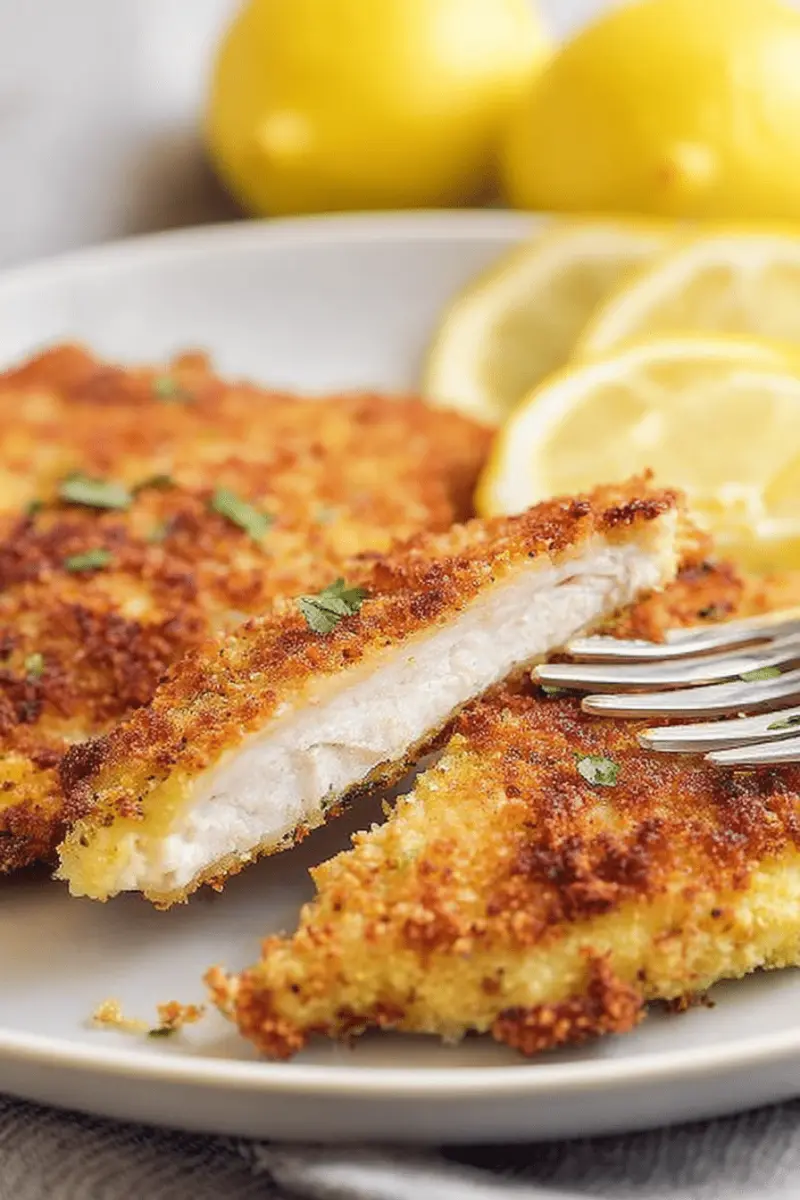
- Let the dish rest for 3–5 minutes before serving. This helps the cheese set slightly and keeps the crust from getting steamy. Serve with a simple pasta, or a crisp salad and lemon wedges for brightness.
Tips for Perfect Veal Parmesan
- Make sure the oil is hot enough before adding cutlets — hot oil seals the crust and prevents sogginess. Breadcrumbs should sizzle on contact.
- Press the breadcrumbs firmly into the veal. Lightly coated cutlets shed crumbs in the pan and lose crispness when sauced.
- Warm the sauce before spooning it over the cutlets. Cold sauce shocks the crust and can make it limp.
- Use a mix of cheeses: Parmesan for nuttiness and mozzarella for melt. Fresh mozzarella gives a creamier mouthfeel; shredded melts more evenly.
- Don’t over-sauce. A couple of spoonfuls per cutlet is usually enough — you want the crust to still be noticeable under the cheese.
- Watch the oven carefully if you broil at the end — the cheese can go from bubbling to burnt very quickly.
- If your breading slides off while frying, the flour stage was likely skipped or the cutlet was too wet. Pat the meat dry and re-dredge if necessary.
- Let the assembled cutlets rest briefly on a wire rack if you have one — it keeps the bottom from steaming and preserves texture.
Healthy Alternatives to Veal Parmesan
If you want a lighter or more budget-friendly swap, try our Italian chicken parmesan as a delicious alternative to veal.- Chicken or turkey cutlets – leaner and widely available; cook the same way but watch closely so they don’t dry out.
- Eggplant – slice, salt briefly to draw moisture, pat dry, then bread and bake or fry; it soaks up sauce beautifully and gives a vegetal, silky interior.
- Tofu – use firm tofu, press it to remove excess water, then slice and bread; it’s a good vegetarian option that benefits from bold seasoning.
- Baking instead of frying – brush breaded cutlets with oil and bake on a rack to reduce fat while keeping some crunch.
- Whole wheat or panko breadcrumbs – swap for more fiber or extra crispness; combine for best texture.
- Lower-fat cheeses – part-skim mozzarella or a smaller amount of Parmesan cuts calories with minimal flavor loss.
- Homemade marinara – using fresh tomatoes or a simple simmered sauce reduces sugar and gives you control over salt and oil.
Pairing Suggestions for a Complete Meal
Veal Parmesan is rich, so balance it with sides that add acidity, bitterness, or brightness.- Pasta – a simple spaghetti tossed in marinara or with olive oil and garlic complements the dish without competing.
- Green salad – peppery arugula with lemon and shaved Parmesan cuts through the richness.
- Roasted vegetables – caramelized Brussels sprouts, roasted asparagus, or sautéed spinach add texture and earthiness.
The History of Veal Parmesan
Veal Parmesan, or veal parmigiana, is an example of regional Italian techniques meeting New World tastes. It borrows from the southern Italian tradition of parmigiana-style dishes — layered or breaded vegetables and meats finished with tomato sauce and cheese. When Italian immigrants arrived in America, affordable veal cutlets and readily available tomatoes and cheeses turned into the family favorite we know today. Over time, variations emerged: some regions favor a thicker sauce, others a double-cheese finish, and in many American homes the dish became synonymous with celebratory Sunday meals. I always say veal parm is more of a template than a strict recipe — the idea of breadcrumbed, sauced, and cheesed is what matters. In Italy, you’ll find similar dishes using eggplant or different local cheeses; in America, chicken parm became popular because of cost and availability. The history is less about a single origin and more about adaptation and comforting repetition at family tables.Frequently Asked Questions
- What cut of veal should I use and how thin should I pound it? Use veal cutlets or scallopini. Pound cutlets to about 1/8–1/4 inch thick so they cook quickly and stay tender.
- Can I substitute chicken, eggplant, or a vegetarian option for veal? Yes. Thin boneless chicken cutlets cook like veal; eggplant slices or firm tofu are great vegetarian swaps (slice, salt briefly, pat dry, then bread and bake or fry). Adjust cooking times — eggplant may need a bit longer to soften.
- How do I keep the breading crispy and avoid a soggy crust? Make sure oil is hot enough and brown cutlets 2–3 minutes per side before baking. Press breadcrumbs firmly so they adhere, avoid over-saucing (warm sauce before spooning on), and bake just until cheese melts. Resting briefly on a wire rack helps maintain crispness.
- How should I store and reheat leftovers? Refrigerate leftovers in an airtight container for up to 3 days. Reheat in a 350°F (175°C) oven for 10–15 minutes or until heated through to preserve crispness; a toaster oven works well for single servings.
- Can I prepare Veal Parmesan ahead of time or freeze it? Yes. You can bread and partially cook the cutlets ahead, then assemble and bake when ready. For freezing, assemble (without fully baking) and freeze in a freezer-safe dish; thaw overnight and bake until heated through and cheese is melted.
Conclusion and Serving Ideas
Classic Veal Parmesan is one of those dependable recipes that looks impressive but is straightforward to make. From the tactile act of pounding the cutlets to the audible sizzle when they hit the pan and the bubbly finish under the broiler, it’s a dish that engages the senses. Expect tender meat, a crisp, golden crust, bright tomato notes, and a creamy cheese finish. Serve this at family dinners or for a small gathering — it’s forgiving, feeds a crowd, and pairs beautifully with simple sides. Try it with a green salad and some crusty bread, or go classic with spaghetti and a glass of Chianti. If you try any of the substitutions or make-ahead tips, tell me how it went — I love hearing which tweaks became new staples in other kitchens.Recipe Card
Classic Veal Parmesan Recipe – Easy & Authentic Italian Comfort
- Prep
- 25 min
- Cook
- 25 min
- Total
- 50 min
- Serves
- 4
- Calories
- 482 kcal
- Carbs
- 31.00 g
Ingredients
- 1 lbveal cutlets or scallopini ((about 4 cutlets))
- —Kosher salt and pepper
- 1/2 cupflour
- 2 largeeggs
- 3/4 cupbread crumbs
- 1 cupshredded Parmesan cheese ((divided))
- 1 teaspoonparsley flakes
- 1 teaspoongarlic powder
- 1 teaspoondried basil
- 2 Tablespoonsolive oil
- 1 cupjarred pasta sauce
- 4 slicesfresh mozzarella cheese ((thick slices))
Instructions
- 1
If you're using cutlets, place them between two slices of saran wrap and pound them until they're about an 1/8-1/4 inch thick. If you're using scallopini, proceed to step 2.
- 2
Season the veal with Kosher salt and pepper on both sides.
- 3
Set out 3 bowls to bread the veal. Add the flour to one and the eggs to another. Give the eggs a quick whisk.
- 4
In the third bowl, whisk together the breadcrumbs, 1/4 cup Parmesan cheese, parsley flakes, garlic powder, and basil.
- 5
Pick up one veal scallopini and dip it in the flour, coating it on both sides. Dip in the egg, then press into the breadcrumbs, making sure they're evenly distributed. Transfer to a plate and repeat with remaining veal.
- 6
Preheat the oven to 375 degrees.
- 7
Heat the olive oil in a large skillet over medium heat. Add the cutlets and cook for 2-3 minutes per side, or until browned and crispy. Transfer to a greased baking dish. Repeat with any remaining cutlets.
- 8
Top each cutlet with the remaining Parmesan. Spoon the spaghetti sauce over top, followed by a slice of mozzarella cheese. Bake for 15 minutes.
- 9
Serve the Veal Parmesan with a side of pasta or your favorite vegetable.
You might also like
Reviews
Be the first to review this.