- Prep
- 90 min
- Cook
- 20 min
- Total
- 110 min
- Serves
- 12
- Calories
- 402 kcal
- Protein
- 6.00 g
- Carbs
- 60.00 g
- Fat
- 16.00 g
Introduction
I make coffee rolls at least once every few months when I want something indulgent for a slow weekend breakfast or to bring to a breakfast potluck. They started out as an experiment in my kitchen the year I realized coffee and cinnamon were flirting with each other in my morning cup — and they’ve been a regular ever since. The idea is simple: take the soft, pillowy texture of a classic cinnamon roll and fold in instant coffee so every bite smells and tastes like the coffee you poured with your mug. There isn’t one single origin story for coffee rolls — variations show up wherever sweet yeasted buns are beloved. In Scandinavian and Northern European baking, coffee and cardamom buns sit alongside cinnamon treats; in more modern American kitchens we borrowed the structure of cinnamon rolls and dialed up the coffee. I’ve tested this recipe multiple times to balance the coffee strength against sugar and cinnamon so the rolls are unmistakably coffee-forward without being bitter.Ingredients Needed for Coffee Rolls
Below I list the main ingredients conversationally — think of these as your shopping/idea list. Full measurements and exact steps are in the instructions section that follows.- All-purpose flour – the structure builder for the dough; choose a good-quality, unbleached flour for best texture.
- Instant coffee granules – adds concentrated coffee flavor to both the dough/filling and the frosting; instant dissolves cleanly.
- Granulated sugar – for gentle sweetness in the dough and to help the yeast feed during the rise.
- Dark brown sugar – the filling’s base; its molasses notes deepen the coffee and cinnamon flavors.
- Yeast (instant) – makes the dough rise; instant yeast is convenient and forgiving.
- Whole milk – brings tenderness and richness; you can swap for a plant milk if needed.
- Egg – enriches the dough and gives a softer crumb; use room temperature for best incorporation.
- Unsalted butter – used in the dough, the filling, and the frosting; soft but not melted for dough work.
- Salt – balances sweetness and enhances flavor; a small amount goes a long way.
- Cinnamon – the classic partner to coffee; freshly ground tastes brighter.
- Cream cheese – for the coffee cream cheese frosting; it makes the glaze tangy and lush.
- Powdered sugar – smooth sweetener for the frosting so it spreads silky and not grainy.
- Heavy cream – thins and adds richness to the frosting; can be swapped with milk for a lighter texture.
- Water – used for the tangzhong (a cooked flour starter) which keeps the rolls extra tender.
Step-by-Step Instructions
I always walk through this recipe slowly the first time you make it; the dough is forgiving but small adjustments during kneading and proofing make a big difference. Below are the exact steps I followed when I tested this batch — I include pro tips right after steps where I often see readers trip up.- Make the tangzhong: In a small saucepan, whisk together 1/4 cup all-purpose flour and 3/4 cup water. Cook over medium heat, whisking constantly, for 4–5 minutes until the mixture turns into a paste-like slurry and thickens. It should be smooth and shiny. Scrape it into a bowl and set aside to cool slightly. (This is what keeps the rolls soft even the next day.)
- Mix dry ingredients: In a stand mixing bowl, whisk together 3 1/2 cups all-purpose flour, 1/3 cup granulated sugar, 2 teaspoons instant yeast, and 3/4 teaspoon fine sea salt until well combined.
- Warm the milk and dissolve coffee: Slightly warm 1/2 cup whole milk (it should feel like warm bath water — about 100–110°F). Stir in 1 teaspoon instant coffee granules until dissolved. This warms the dough without killing yeast and gives a subtle coffee base.
- Combine wet ingredients with dry: Add the warm milk with dissolved coffee, 1 large room-temperature egg, 1/2 teaspoon vanilla extract, and the tangzhong to the bowl. Using the dough hook, knead on low speed for 2 minutes until the mixture forms a shaggy dough ball.
- Incorporate butter: With the mixer running on low, add 4 tablespoons unsalted butter (room temperature) one tablespoon at a time, letting each tablespoon fully incorporate before adding the next. The dough will look glossy as the fat blends in.
- Knead to smooth and elastic: Continue kneading for another 8–10 minutes until the dough looks smooth and elastic. The dough should be slightly tacky and may cling to the bottom of the bowl. If it’s sticking to the sides a lot, add flour one tablespoon at a time; if it feels dry and cracks, add milk half a tablespoon at a time. The final dough should pass the windowpane test (stretch a small piece thin without tearing) if you want to be precise.
- First rise: Shape the dough into a smooth round with lightly buttered hands, place seam side down in a buttered bowl, cover tightly with plastic wrap, and let rise in a warm spot until doubled, about 45–60 minutes. My oven with just the light on is a perfect proofing spot — I learned that the hard way after leaving dough in a cold kitchen and waiting twice as long.
- Make the filling: In a small bowl, combine 5 tablespoons unsalted butter (softened), 2/3 cup dark brown sugar, 2 teaspoons ground cinnamon, and 1 1/2 teaspoons instant coffee granules until smooth and spreadable. Taste the filling — it should be sweet and coffee-forward but not bitter. If the coffee flavor seems too strong, a pinch more brown sugar calms it.
- Roll and fill the dough: Roll the risen dough out on a lightly floured surface into a 14x18-inch rectangle, with the long side closest to you. Spread the coffee-cinnamon filling over the dough all the way to the edges except leave a 1/4-inch top edge clean so the roll seals neatly. When I roll, I lightly score one edge with a knife to guide my final seal — small tricks like that keep the rolls tidy.
- Cut and shape: Cut the dough into twelve 1 1/2-inch strips (I use a bench scraper for clean cuts). Roll each strip away from you, pinching the clean end to seal. If your filling oozes while you roll, chill the filled sheet briefly (10 minutes) so butter firms and cutting is neater.
- Second rise: Transfer the rolls to a prepared baking pan, cover with plastic wrap, and let rise until doubled, about 45–60 minutes. Meanwhile, preheat the oven to 325°F (163°C). A correctly proofed roll will look puffy and jiggle slightly when you move the pan — not dense or collapsed.
- Bake: Bake the rolls for 20–23 minutes or until the tops are golden brown. The center should be set and the internal temperature around 190–200°F if you use an instant-read thermometer. Overbaking dries them; underbaking leaves the centers gummy. When I bake, I start checking at 18 minutes because oven variances are real.
- Make the coffee cream cheese frosting: While the rolls cool on a wire rack, combine 2 ounces softened cream cheese and 4 tablespoons softened unsalted butter until smooth. Mix in 1 cup powdered sugar. Whisk in 4 tablespoons heavy cream and 3/4 teaspoon instant coffee granules until the frosting is glossy and spreadable. If it’s too thick, add a teaspoon of cream at a time; too thin, add a touch more powdered sugar.
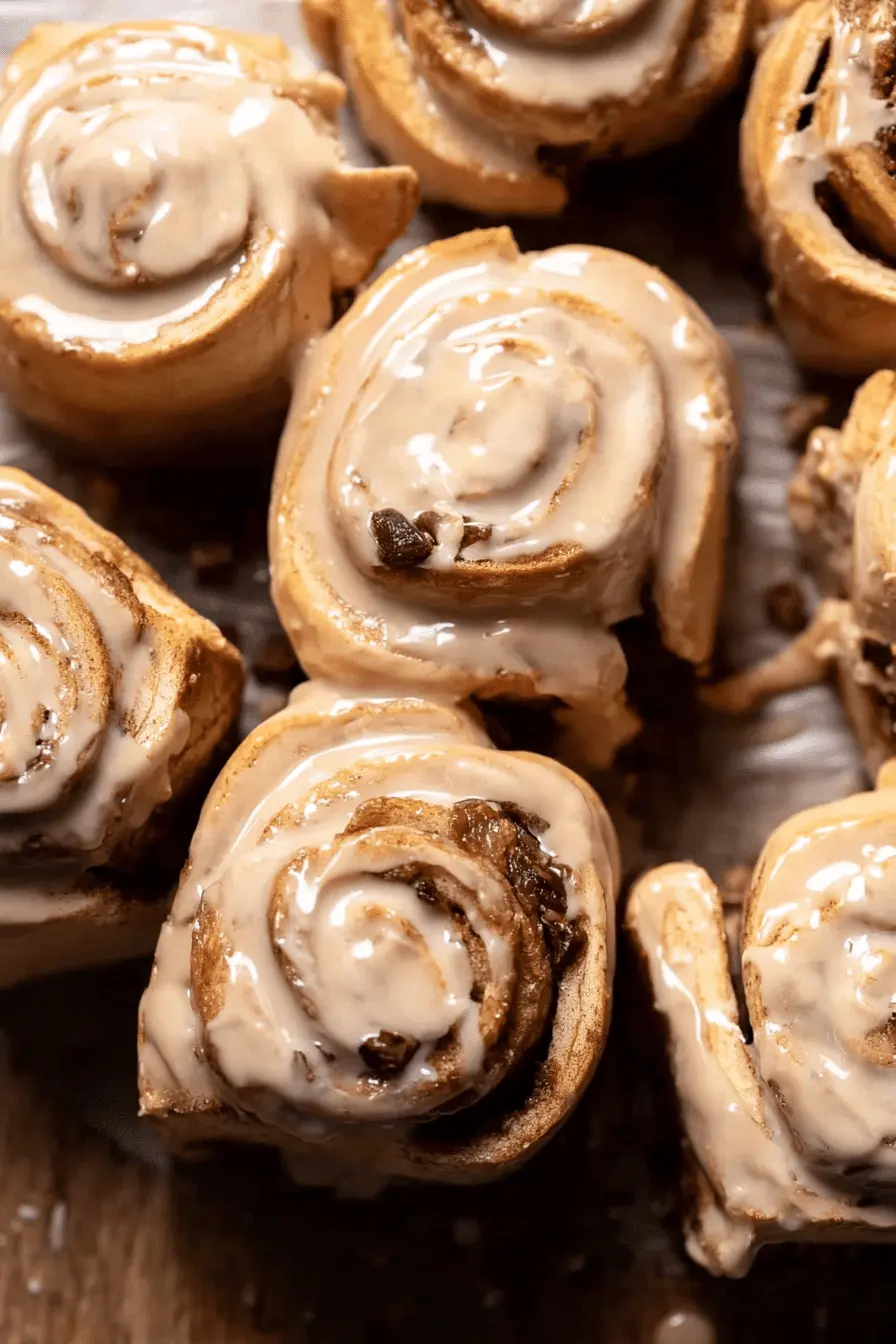
- Finish and serve: Spread the frosting over warm (not piping hot) rolls so it melts into crevices. Serve warm with fresh coffee and expect the filling to be soft and slightly gooey — that’s how I like them.
Tips for Perfect Coffee Rolls
Over the years I’ve learned a handful of steps that save the whole batch — these are the things I tell friends before they make these for the first time.- Dough consistency: Aim for a slightly tacky dough that doesn’t cling to your palms. Too dry and the crumb will be tight; too wet and it won’t hold shape. Add flour or milk sparingly.
- Temperature control: Warm liquids help yeast wake up, but don’t exceed 120°F or you risk killing the yeast. Room-temperature eggs incorporate better and prevent the dough from seizing.
- Proofing cues: Look for doubling, a visible jiggle, and thumb indentation that slowly springs back. If your kitchen is cold, use your oven with only the light on as a proofing box.
- Filling spreadability: If the filling is too loose and slides while rolling, place the spread dough in the fridge for 10–15 minutes to firm the butter.
- Checking doneness: Tops should be golden but not overly dark; centers should read near 190–200°F. If the outer edges brown too fast, tent loosely with foil for the last 5–8 minutes.
Flavor Variations and Add-Ins
This recipe is a lovely blank canvas. I’ve tested several variations to satisfy different cravings — some are subtle, others are bold.- Pumpkin spice coffee rolls – swap part of the milk for pumpkin purée and add a warming spice mix (nutmeg, ginger, cloves) to the filling for fall vibes.
- Mocha chocolate chip – fold mini dark chocolate chips into the filling for pockets of melty chocolate that play off the coffee.
- Nutty crunch – sprinkle toasted chopped pecans or hazelnuts over the filling before rolling for texture contrast.
- Cardamom-vanilla – swap some of the cinnamon for ground cardamom and increase vanilla for a Nordic-inspired twist.
- Vegan version – use plant-based butter, almond or oat milk, and a flax ‘egg’ (1 tbsp ground flax + 3 tbsp water) to replace the egg; cream cheese can be swapped for a vegan cream cheese alternative in the frosting.
Pairing Suggestions with Coffee
These rolls are rich and sweet, so I like pairing them with coffees that either complement or cut through that richness. Consider pairing your coffee rolls with a slice of pumpkin cheesecake for a delightful dessert experience. A warm slice of chocolate chip banana bread complements coffee rolls wonderfully. For coffee choices: a light or medium roast with bright acidity highlights the cinnamon and coffee notes in the roll. A dark roast adds a richer, bittersweet contrast. Flavored coffees like hazelnut or vanilla pair nicely if you want a sweeter, dessert-forward cup.Cultural Significance of Coffee Rolls
Coffee and sweet buns belong together in many traditions. From Scandinavian fika (coffee break) to American brunch tables, warm yeasted pastries often accompany coffee rituals. I think the coffee roll fits into that space as a bridge between classic cinnamon rolls and more regionally coffee-focused pastries. In my family, we adopted a Saturday morning ritual of baking something new, then sipping coffee while the neighborhood woke up — these rolls became one of those ritual items. They’re not formal; they’re meant for sharing and conversation. Explore how pumpkin lentil soup can be a comforting side dish in cultural coffee traditions.Common Questions about Coffee Rolls
Below are the most frequent problems and questions I see when people try this recipe for the first time. Short, practical answers to help you succeed.- What is a coffee roll? Coffee rolls are light and fluffy cinnamon rolls with a delicious coffee-flavored twist, perfect for any coffee lover!
- Are coffee rolls the same as cinnamon rolls? While they share similarities, coffee rolls include the addition of instant coffee granules in the filling, giving them a unique coffee flavor compared to traditional cinnamon rolls.
- Can I make coffee rolls vegan? Yes! You can substitute the butter with a plant-based alternative, use almond or oat milk instead of whole milk, and replace the egg with a flax egg or applesauce.
- How can I store leftover coffee rolls? Store any leftovers in an airtight container at room temperature for up to 2 days, or in the refrigerator for up to a week. You can also freeze them for longer storage.
- What types of coffee pair well with coffee rolls? Light or medium roast coffees, as well as flavored coffees like hazelnut or vanilla, complement the sweetness of coffee rolls beautifully!
FAQ: Troubleshooting & Practical Tips
- My dough didn’t rise — what went wrong? A few things: your yeast could be old, liquids may have been too hot or too cold, or the kitchen is too cold. Always check yeast freshness and use warm (not hot) milk. If dough is slow, give it more time — the taste usually isn’t affected.
- The filling oozed during rolling — how to fix? Chill the filled rectangle in the fridge for 10–15 minutes so the butter firms up; then cut and roll. Also, avoid spreading filling too close to the open edge.
- Rolls are dense — what to do next time? Knead until elastic and allow a full rise. Under-kneading or under-proofing leaves a tight crumb. The windowpane test or a gentle poke that springs back slowly helps confirm readiness.
- Frosting is runny — how to thicken? Whisk in a little more powdered sugar a tablespoon at a time and chill briefly. If it’s too stiff, thin with a little cream.
Make-Ahead and Storage Notes
I often prepare the rolls through the shaping step, then refrigerate the tray (well-covered) overnight. In the morning, let them come to room temperature and finish the second rise for 45–60 minutes, then bake as directed. This is a lifesaver for hosting. Leftovers keep well at room temperature for a day; for longer storage, refrigerate up to a week or freeze individual rolls for up to 3 months. Reheat gently in a low oven or microwave for a few seconds so the filling loosens and the frosting softens.Conclusion and Final Thoughts
I love these coffee rolls because they’re an honest, comforting treat that tastes like a cozy morning. They’re forgiving to make, adaptable to seasons, and reward a little patience with buttery, coffee-kissed layers. I usually make a batch for friends and save one pan for our Sunday morning — they don’t last long. If you try this recipe, tell me how you flavored yours or what coffee you paired with the rolls. Leave a note about any adjustments that worked for you — I always change one small thing each time and I’m curious to learn from your tweaks. If you bake these for a crowd, plan to double the recipe; they’re popular, trust me. Try these coffee rolls this weekend. Start the tangzhong early, let the dough rise like it wants to, and don’t be afraid to adjust the coffee level to your taste. If you enjoyed this, consider subscribing for more recipes where I test, tweak, and write down what actually worked in my kitchen.Recipe Card
Delicious Coffee Rolls: A Comforting Twist on Cinnamon Rolls
- Prep
- 90 min
- Cook
- 20 min
- Total
- 110 min
- Serves
- 12
- Calories
- 402 kcal
- Protein
- 6.00 g
- Carbs
- 60.00 g
- Fat
- 16.00 g
Ingredients
- ¼ cupall-purpose flour
- ¾ cupwater
- 3 ½ cupsall-purpose flour (*see notes for measuring below*)
- ⅓ cupgranulated sugar
- 2 teaspoonsinstant yeast
- ¾ teaspoonfine sea salt
- ½ cupwhole milk (slightly warmed)
- 1 teaspooninstant coffee granules
- 1 largeegg (room temperature)
- 1/2 teaspoonvanilla extract
- 4 tablespoonsunsalted butter (room temperature)
- 5 tablespoonsunsalted butter (room temperature)
- 2/3 cupdark brown sugar (or light brown sugar)
- 2 teaspoonsground cinnamon
- 1 ½ teaspoonsinstant coffee granules
- 2 ozcream cheese (softened)
- 4 tablespoonsunsalted butter (softened)
- 1 cuppowdered sugar
- 4 tablespoonsheavy cream
- ¾ teaspooninstant coffee granules
Instructions
- 1
In a small saucepan, whisk together the water and all-purpose flour. Cook over medium heat, whisking constantly, for 4-5 minutes until the mixture is a paste-like slurry. Scrape it into a bowl and set it aside until ready to use.
- 2
In a stand mixing bowl, mix together the all-purpose flour, sugar, yeast, and salt until combined.
- 3
Slightly warm the milk, then stir in the instant coffee until dissolved.
- 4
Add the egg, milk, vanilla extract, and tangzhong to the bowl. Knead on low speed with the dough hook for 2 minutes until it starts to form a shaggy dough ball.
- 5
With the mixer running on low, add the softened butter 1 tablespoon at a time, letting it fully incorporate into the dough before adding more.
- 6
Once all the butter is added, continue kneading the dough for another 8-10 minutes or until the dough looks smooth and elastic. The dough should be sticking to the bottom of the bowl. If it seems too wet and is sticking to the sides of the bowl, add flour one tablespoon at a time. If the dough seems dry, add half a tablespoon of milk at a time.
- 7
With lightly buttered hands, pull the sides of the dough down into the bottom center, to create a smooth round ball. Place it seam side down into a buttered bowl and cover the top with plastic wrap. Let it rise in a warm spot until doubled in size, about 45-60 minutes.
- 8
In a small bowl, combine the softened butter, brown sugar, cinnamon, and instant coffee until smooth.
- 9
Roll the dough out on a lightly floured surface into a 14x18 rectangle, with the long side closest to you. Then spread the coffee cinnamon filling over the dough all the way to the edges, leaving a 1/4 inch edge at the top clean.
- 10
Cut the dough into twelve, 1 ½-inch strips. Roll each strip away from you, pinching the clean end to the roll. Transfer them to the prepared baking pan and cover the top with plastic wrap. Let it rise in a warm spot until doubled, about 45-60 minutes. Meanwhile, preheat the oven to 325 F/163 C.
- 11
Bake for 20-23 minutes, or until the tops are golden brown. Then remove the pan and let cool on a wire rack while you make the frosting.
- 12
Combine the softened cream cheese and butter. Then mix in the powdered sugar. Once combined, whisk in the cream and instant coffee until smooth.
- 13
Spread over the coffee rolls and enjoy!
You might also like
Reviews
Be the first to review this.