- Prep
- 10 min
- Cook
- 20 min
- Total
- 30 min
- Serves
- 4
- Calories
- 310 kcal
- Carbs
- 12.00 g
On this page13 quick jumps
TOC
13 quick jumps
Introduction
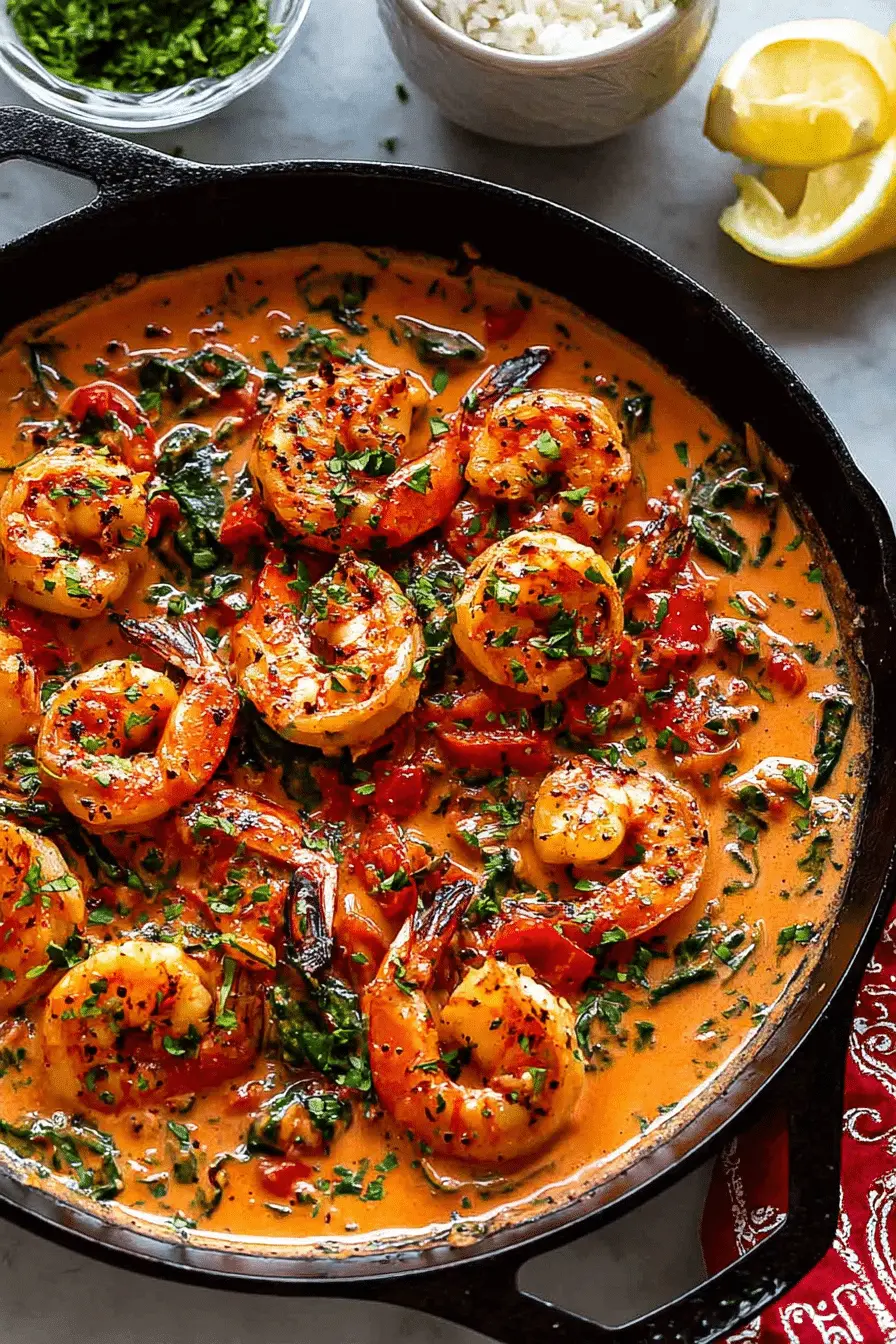
I make this creamy garlic-paprika shrimp skillet all the time when I want something fast, flavorful, and forgiving. The first thing that hits you is the smell — warm garlic, a smoky whisper of paprika, and that bright squeeze of lemon at the end. The sauce is the real star: glossy and thick enough to coat a fork but still spoonable, with spinach wilted into it and little pops of sweet red pepper. It’s a weeknight staple for me because it comes together in about 30 minutes and cleans up with a single pan. This version is built around pan-seared shrimp that I briefly cook and remove, then build the sauce in the same skillet so every spoonful tastes of those fond bits. You’ll see why searing first and finishing later matters: the shrimp stay tender and the sauce has depth from the browned tomato paste and shallots. I’ve tested this one with different creams and broths; the balance of salt, lemon, and paprika is what keeps the dish lively rather than heavy.Ingredients You'll Need
- Shrimp – peeled and deveined; the recipe works best with raw shrimp so you can quickly sear them and control doneness.
- Sea salt & black pepper – simple seasoning to bring out the shrimp’s flavor; adjust if you use pre-salted stock or salted butter.
- Extra-virgin olive oil – for searing and softening aromatics; a drizzle gives the pan the high heat it needs without smoking too fast.
- Shallot – finely chopped for a sweeter, more delicate onion base than yellow onion.
- Red bell pepper – adds sweetness and color; you can swap with roasted red pepper if you prefer a milder texture.
- Garlic – minced for pungent, aromatic flavor; it mellows and sweetens when cooked briefly with tomato paste.
- Tomato paste – a small spoonful caramelizes and gives the sauce a deep, umami backbone.
- Crushed red pepper flakes – optional heat; adjust to your tolerance or skip for family-friendly spice.
- Lower-sodium vegetable or chicken broth – used to deglaze and thin the sauce; choose lower-sodium to control final salt levels.
- Paprika – smoky or sweet paprika defines the dish; smoked paprika gives it a campfire note.
- Baby spinach – wilts into the sauce for color, texture, and nutrition; you can substitute kale if you like more chew.
- Heavy cream – brings the silky mouthfeel; can be swapped with coconut milk for dairy-free cooking (see variations).
- Lemon juice – a splash at the end brightens and balances the cream and paprika.
- Fresh parsley – chopped for garnish and a fresh herbal lift.
- Extras to serve – cooked orzo, rice, or crusty bread for dipping; they soak up the sauce beautifully.
Step-by-Step Instructions
I follow the original timings below; they’re tight for shrimp, so have everything prepped and within arm’s reach. Prep (peeling, deveining, chopping) takes the longest, then the pan moves fast.- Pat and season the shrimp — Pat the raw shrimp very dry with paper towels; moisture prevents a good sear. Season evenly with about half the salt and pepper. I usually do this over a sheet of parchment so the counter stays tidy. (Time: 3–5 minutes)
- Heat the skillet — Heat a large skillet over medium-high heat and add most of the olive oil. You want the oil hot but not smoking. Test with a pinch of chopped shallot: it should sizzle. High-ish heat is important so the shrimp sear rather than steam. (Time: 1–2 minutes)
- Sear the shrimp — Arrange shrimp in a single layer without crowding. Cook for about 3 minutes on the first side; they’ll start to curl and the edges turn pink. Flip and cook ~1 minute more until just opaque and firm to the touch — not rubbery. Transfer to a plate; they’ll finish in the sauce later. If your pan feels crowded, sear in two batches. (Time: 4 minutes per batch)
- Softly cook shallot and pepper — Reduce heat to medium, add the remaining oil, then the shallot and red pepper. Cook until soft and fragrant, about 3–4 minutes. Watch that the shallot doesn’t brown too quickly — you want sweetness, not bitterness. (Time: 3–4 minutes)
- Add garlic, tomato paste, and red pepper flakes — Stir in minced garlic and a couple tablespoons of tomato paste. Cook 2–3 minutes, stirring, until the garlic is aromatic and the tomato paste darkens slightly — that caramelization adds backbone to the sauce. (Time: 2–3 minutes)
- Deglaze with broth — Pour in the broth and use a wooden spoon to scrape any browned bits off the bottom (that’s pure flavor). Simmer until reduced by about half, roughly 5 minutes. This concentrates flavor and prevents the final sauce from being watery. (Time: ~5 minutes)
- Season and wilt the greens — Stir in the paprika and the spinach; cook 1–2 minutes until just wilted. Taste and correct seasoning — if it tastes flat, try a tiny pinch more salt rather than sugar. (Time: 1–2 minutes)
- Finish with cream and lemon — Lower heat to medium-low, then stir in the heavy cream and a splash of fresh lemon juice. Simmer a minute to meld the flavors. Add the remaining salt and pepper to taste. The sauce will thicken slightly as it cools. (Time: 1–2 minutes)
- Return shrimp and serve — Nestle the cooked shrimp back into the skillet just to warm through — this avoids overcooking. Garnish with chopped parsley and serve over orzo, rice, or with crusty bread for dipping. (Time: 1–2 minutes)
Cooking Tips for Perfect Shrimp Texture
Tender shrimp are all about timing and pan technique. A few things I learned the hard way and now always follow:- Pat the shrimp very dry before seasoning. Moisture = steam, and steamed shrimp don’t get that thin sear and flavor.
- Don’t overcrowd the pan. If shrimp are touching, they’ll steam instead of sear. Give them space to form a little crust.
- Use medium-high heat for the initial sear, then drop to medium for the sauce. High heat gives color fast; too high will over-brown the garlic and tomato paste and make the sauce bitter.
- Shrimp cook quickly: about 3 minutes on the first side, 1 minute after flipping for medium-size shrimp. They’re done when opaque and just firm with a slight spring — not rigid. If they look glassy in the center, they need another 20–30 seconds.
- If your sauce tastes flat, it usually needs salt or acid rather than sweetness. A squeeze more lemon brightens everything.
Nutritional Information (per serving)
Below are the key nutrients per serving based on the original recipe yield (about 4 servings). These are estimates meant to guide choices; exact values will vary a bit by brands and portion sizes.- Calories: ~310 kcal
- Protein: ~17 g
- Fat: ~24 g (largely from the cream and olive oil)
- Carbohydrates: ~12 g (from bell pepper, tomato paste, and any starch if served with rice or orzo)
Serving Suggestions with Side Dishes
This skillet is versatile. The sauce is the draw, so I usually plan for something that soaks it up or balances the creaminess.- Cooked orzo or rice — classic choices; the tiny pasta or rice soaks the sauce and makes this hearty.
- Crusty bread — great for dipping; I love tearing a warm roll right into the skillet for the last bite.
- Quinoa — if you want something with a nutty bite and more fiber.
- Zucchini noodles (zoodles) — for a low-carb option; toss the zoodles briefly in a pan and spoon the shrimp sauce on top so they don’t become watery.
- A crisp green salad or steamed broccoli — a clean, fresh side to cut the richness; a vinaigrette with lemon or red wine vinegar is a nice foil.
Variations for Dietary Restrictions
I often tweak this skillet depending on what’s in the fridge and who’s eating. Here are tested swaps that keep the spirit of the dish while fitting dietary needs.- Dairy-free: Substitute full-fat coconut milk for the heavy cream. It gives a slightly coconutty note but keeps the sauce silky. Thicken with a little arrowroot slurry if needed.
- Lower-fat: Use a light coconut milk or reduce the cream and increase the broth and lemon for brightness. The sauce will be thinner but still flavorful.
- Gluten-free: The base recipe is naturally gluten-free; just serve over rice, quinoa, or gluten-free pasta.
- Low-carb / Keto: Skip the rice and serve over zucchini noodles, cauliflower rice, or a bed of sautéed greens.
- More paprika heat: Swap sweet paprika for smoked or a mix of smoked and hot paprika for deeper flavor and a smoky finish.
User Reviews and Feedback
Over the seasons I’ve shared this recipe, readers have sent delightful notes and small adjustments that worked for them. Here are some recurring themes I see in feedback:- People appreciate the quick cook time and that it’s weeknight-friendly — many report making it when they need a fast dinner that still feels special.
- Several readers swap coconut milk for cream with success and enjoy the subtle tropical undertone it adds.
- Home cooks who were nervous about overcooking shrimp found the timing guidance (3 minutes then 1 minute) very helpful; a few suggested searing in batches if making a larger portion.
- Some comments note that using smoked paprika gave the dish a deeper flavor; others preferred sweet paprika for a more straightforward profile.
Storage, Make-Ahead Notes, and Realistic Expectations
Honest talk: shrimp don’t freeze and reheat well in terms of texture. If you must store leftovers, keep a few guidelines in mind:- Refrigerate in an airtight container for up to 2 days. The sauce will thicken; add a splash of broth or cream when reheating over low heat to loosen it.
- Avoid freezing the fully assembled dish — the shrimp will get rubbery. If you want to prep ahead, make the sauce (without shrimp) and freeze it; add fresh or thawed shrimp when reheating.
- For make-ahead entertaining, sear the shrimp and refrigerate them separately; reheat gently by warming the sauce and nestling the shrimp back in at the end for just a minute to finish.
FAQ
How can I prevent the shrimp from overcooking? Pat shrimp very dry, cook over medium-high heat without overcrowding, and follow the recipe timing (about 3 minutes on the first side, 1 minute after flipping). Shrimp are done when opaque and just firm with a slight spring. Remove them from the pan and add back at the end to avoid carryover overcooking. Can I make this recipe dairy-free or lower in fat? Yes. For dairy-free, substitute full-fat coconut milk or a creamy cashew sauce for the heavy cream. For lower fat, use a light coconut milk or reduce the cream and add a bit more broth and lemon for flavor. Note: yogurt can curdle, so avoid unless tempered carefully. Can I use frozen shrimp, and do I need to thaw them first? You can use frozen shrimp, but thaw them completely first (in the fridge or under cold running water), then pat very dry to remove excess moisture. Excess water will steam the shrimp and prevent proper searing. What are the best sides to serve with creamy garlic-paprika shrimp skillet? Great options include cooked orzo, rice, quinoa, crusty bread for dipping, or zucchini noodles for a low-carb option. A simple green salad or steamed veggies also balance the rich, creamy sauce. How should I store and reheat leftovers? Store leftovers in an airtight container in the refrigerator for up to 2 days. Reheat gently on the stovetop over low heat, adding a splash of broth or cream to loosen the sauce. Avoid long storage or freezing with shrimp, as their texture can worsen; you can freeze the sauce separately if desired.Conclusion and Final Thoughts
This creamy garlic-paprika shrimp skillet is one of those recipes I come back to when I want dinner that’s fast, comforting, and bright at the same time. The technique—sear the shrimp, build a caramelized garlic-tomato base, deglaze, and finish with cream and lemon—keeps the shrimp tender and gives the sauce complexity without fuss. Try the variations if you need dairy-free or low-carb, and don’t be shy with the lemon at the end; it’s the finishing note that ties the flavors together. If you make it, tell me how you adapted it — did you go smoky with smoked paprika, swap in coconut milk, or serve it over zoodles? I read every comment and love hearing which small tweak became your new habit in the kitchen.Ingredients
- 1 lb.peeled and deveined raw shrimp
- 1 tsp.sea salt (divided (reduce to 3/4 tsp. if using fine table salt))
- 3/4 tsp.cracked black pepper (divided)
- 3 Tbsp.extra-virgin olive oil
- 1 largeshallot (finely chopped (about 1/2 cup))
- 1/2 cupfinely chopped red bell pepper
- 4 clovesgarlic (minced)
- 2 Tbsp.tomato paste
- 1/2 tsp.crushed red pepper flakes
- 3/4 cuplower-sodium vegetable or chicken broth
- 2 tsp.paprika
- 2 handfulsfresh baby spinach
- 1/2 cupheavy cream
- 1-2 Tbsp.fresh lemon juice ((from 1 lemon))
- 2 Tbsp.chopped fresh parsley leaves
- —Cooked orzo or rice, or crusty bread (for dipping)
Instructions
- 1
Pat shrimp dry with a paper towel, and season evenly with 1/2 tsp. each of salt and black pepper. Heat 2 Tbsp. of the oil in a large skillet over medium-high. Once hot, arrange shrimp in pan, avoiding any overlap (if possible), and cook 3 minutes. Flip, and cook 1 more minute, until the shrimp are firm to the touch and no longer opaque. Transfer to a plate.
- 2
Reduce heat to medium. Add remaining 1 Tbsp. oil to pan, along with shallots and red bell pepper. Cook 3 to 4 minutes, until soft. Add garlic, tomato paste, and red pepper flakes; cook 2 to 3 minutes, until garlic is aromatic and tomato paste is caramelized. Pour in broth to deglaze pan; simmer 5 minutes, or until liquid is reduced by about half. Stir in paprika and spinach; cook 1 to 2 minutes, until spinach is wilted. Finally, stir in heavy cream and lemon juice, and season with remaining 1/2 tsp. sea salt and 1/4 tsp. black pepper. Nestle cooked shrimp back into skillet and garnish with fresh parsley. Serve over rice or orzo, or enjoy with crusty bread.
Recipe Card
Creamy Garlic-Paprika Shrimp Skillet: A Quick & Family-Friendly Dinner
Keep it handy for later, send it to someone cooking with you, or open the clean print view.
- Prep
- 10 min
- Total
- 30 min
- Serves
- 4
You might also like
The 30-Minute Chili-Lime Tofu and Peach Skewers for Busy Summer Grills
May 14, 2026
How I Make Summer Skewers with Shrimp, Jalapeño & Plums
May 14, 2026
The Summer Peach Spinach Salad I Make Almost Every Week
May 14, 2026
The Summer Quinoa Salad I Make Almost Every Week
May 13, 2026
Reviews
Be the first to review this.