- Prep
- 5 min
- Cook
- 15 min
- Total
- 20 min
- Serves
- 4
- Calories
- 505 kcal
- Carbs
- 12.00 g
Introduction
I first made this creamy spring salmon on a blustery April evening when the farmers' market was stacked with young asparagus and the first tiny heads of dill were begging to be used. The dish is delicate but full of flavor — the coconut milk gives you that silky, spoonable sauce without any dairy, and bright lemon and fresh herbs keep it feeling like spring. It’s exactly the kind of dinner I pull together when I want something that looks a little special but doesn’t take forever to cook. When you cook the salmon, you’ll notice that first sizzle as the fillet hits the hot pan — that sound always makes me slow down and pay attention. The aroma shifts from raw fish to toasty, nutty edges in minutes. Then, once the shallot and garlic hit the pan, the whole kitchen smells sweet and savory, which is usually the moment my partner wanders in asking what’s for dinner.Why Choose a Dairy-Free Recipe?
Dairy-free cooking has moved well beyond simply avoiding milk products; it’s about finding alternatives that actually improve texture and flavor for some dishes. For this creamy spring salmon, unsweetened full-fat coconut milk or cashew cream creates a lush, glossy sauce that clings to the fish and vegetables without the heaviness of dairy cream. This is great if you’re dealing with lactose intolerance, following a dairy-free lifestyle, or just keeping things lighter. Dairy-free choices also often bring healthy fats to the plate — think medium-chain triglycerides from coconut and heart-healthy oils from the fish itself. If you want to explore more dairy-free, flavor-forward salmon ideas, try our coconut curry salmon with coconut quinoa for a different take.Ingredients Overview
- Salmon – the star: rich, flaky, and full of omega-3s; choose fresh, firm fillets or properly thawed frozen fish.
- Kosher salt & black pepper – simple seasoning that brings out the salmon’s flavor; don’t skip a proper seasoning before searing.
- Extra-virgin olive oil – for a quick sear; it gives a nutty note and helps build that golden crust.
- Garlic – provides an aromatic backbone; it mellows when sautéed and lends sweetness.
- Shallot – softer and sweeter than onion; it dissolves into the sauce and adds subtle depth.
- Dijon mustard – brings a tangy, emulsifying lift to the sauce so it holds together.
- Dry white wine – deglazes the pan and adds acidity; it reduces quickly to concentrate flavor (can be swapped for low-sodium broth).
- Full‑fat coconut milk – the dairy-free cream: silky, glossy, and stable when simmered gently; cashew cream is a great alternative.
- Lemon (zest & juice) – brightens the dish and cuts through the richness; zest adds aroma, juice adds acidity.
- Chives, dill, tarragon – fresh spring herbs that give lift and complexity; chop finely so they melt into the sauce.
- Asparagus or peas (seasonal veg) – add crunch and sweetness; they make the meal feel distinctly springtime.
Step-by-Step Cooking Instructions
Below I’m sharing the tested method I use in my kitchen. These steps reproduce the original recipe’s timing and yield but include extra tips I’ve learned from repeating this dish dozens of times.- Pat and season the salmon. Using paper towels, pat each fillet dry — this makes a big difference for browning. Season both sides evenly with kosher salt and freshly ground black pepper. If the fish is too moist, it won’t sear properly; dry it well and you’ll get a better crust.
- Sear the salmon. Heat a large non-stick or heavy skillet over medium-high heat and add a drizzle of olive oil. When the oil shimmers, add the salmon and cook for about 2 to 3 minutes on the first side without moving it — that stillness helps develop a golden crust. Flip and cook another 2 to 3 minutes until the second side is golden. Remove the salmon and set aside. If your pan smokes, lower the heat slightly; olive oil has a moderate smoke point. For skin-on fillets, start skin-side down and press gently to ensure even contact with the pan.
- Make the flavor base. Reduce the heat to medium and add minced garlic and thinly sliced shallot to the skillet. Sauté gently for about 1 minute — you want them soft and fragrant, not browned. Add Dijon mustard and pour in the dry white wine, whisking to combine. Let the wine reduce by half, roughly 2 minutes; this concentrates acidity and removes the raw alcohol flavor.
- Add the coconut milk and simmer. While whisking, slowly pour in the unsweetened full‑fat coconut milk so it incorporates smoothly with the mustard and wine. Bring the sauce to a rapid simmer, then lower to a gentle simmer (medium‑low). A common mistake is letting the sauce boil hard — that can separate coconut milk. Gentle simmering keeps the sauce glossy and smooth.
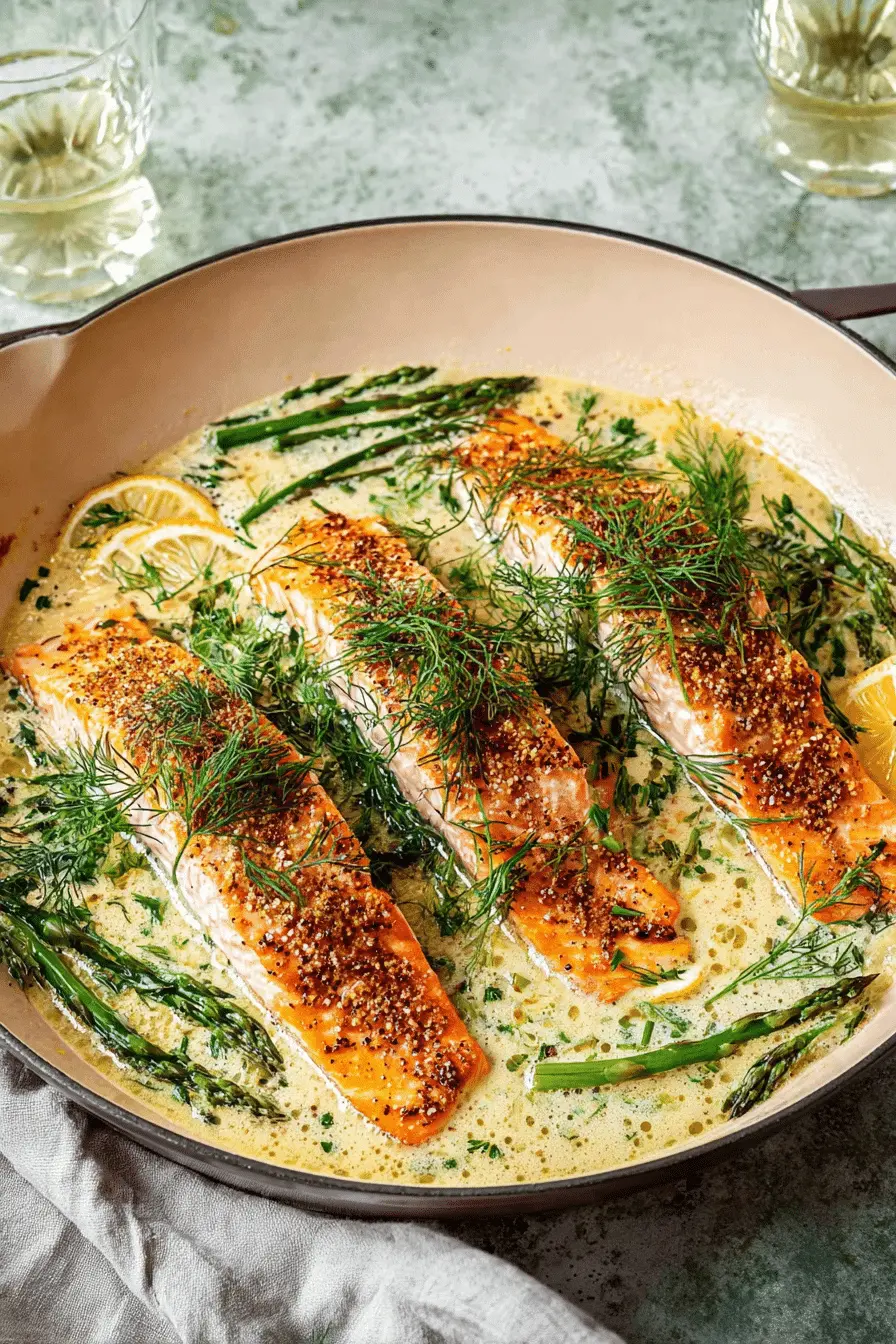
- Finish the sauce and return the salmon to the pan. Stir in lemon zest, freshly squeezed lemon juice, chopped chives, dill, tarragon, and a small pinch of salt and pepper. Taste and adjust: if the sauce tastes flat, a pinch more salt is usually the fix; if it’s too rich, add a touch more lemon juice or a splash of wine. Nestle the seared salmon back into the sauce and cook uncovered until the salmon reaches your desired doneness — about 3 to 5 minutes (depending on thickness). I aim for 125–130°F (52–54°C) for medium; the fish will continue to cook a bit off the heat.
- Serve. Spoon extra sauce and herbs over the salmon and garnish with more fresh herbs and a wedge of lemon. I usually serve with roasted asparagus tossed into the pan for the last minute or two so it picks up some sauce flavor.
Variations and Cooking Methods
- Pan-seared (method above) – fastest and gives the best crust; watch the heat so the coconut milk doesn’t break.
- Oven-finished – sear for 1–2 minutes per side, then transfer the whole skillet to a hot oven (400°F) for 4–6 minutes to finish gently if you prefer more even doneness.
- Grilled – brush fillets with oil and grill skinless fillets over medium heat for 3–4 minutes per side. Make the sauce in a skillet separately and pour over grilled salmon just before serving.
- Herb swaps – if you don’t have tarragon, more dill or some chopped parsley works; for a peppery lift try a little finely chopped chive or lemon zest extra.
Meal Prep Tips for Busy Weeknights
I make this dish a lot on weeknights, so I keep a few habits that save time:- Prep herbs ahead: Chop chives, dill, and tarragon and store them in an airtight container lined with a paper towel for up to 2 days.
- Sauce ahead: You can make the coconut-based sauce up to 48 hours ahead and reheat gently; when ready to serve, nestle in freshly seared salmon to warm through for a quick finish.
- Frozen salmon: Thaw completely in the fridge overnight. Pat very dry before searing to avoid steaming and to get a proper crust.
- One-pan trick: Roast asparagus on a sheet pan while you make the sauce — both will be ready around the same time and you’ll keep clean-up minimal.
- Use pre-sliced shallots or jarred minced garlic sparingly: they save time but check for extra moisture or intense flavor; you may need to reduce the white wine a bit longer to concentrate flavors.
Perfect Pairings: Side Dishes for Salmon
This creamy spring salmon works beautifully with simple, bright sides. Here are my favorite pairings:- Roasted asparagus – its slight char and snap balance the silky sauce.
- Orzo or short pasta – toss with a little lemon and olive oil and let the sauce mingle with the pasta for a heartier meal.
- Quinoa salad – a lemony, herby grain salad cools and contrasts the warm salmon. Pair your creamy spring salmon with a light grain like our lemon‑herb salmon and avocado quinoa bowl for a balanced, spring-ready meal.
- Steamed new potatoes – their starchy, soft texture soaks up the sauce nicely.
- Simple green salad – peppery arugula with a quick vinaigrette keeps the plate bright.
Nutritional Benefits of Ingredients
This dish is a strong pick for healthy eating. Salmon is a top source of omega‑3 fatty acids (EPA and DHA), which support heart and brain health. It’s also packed with high-quality protein and B vitamins. The vegetables — asparagus or peas — add fiber, vitamins A and C, and a pleasant textural contrast. The coconut milk contributes healthy fats and a creamy mouthfeel without dairy; combined with olive oil and the salmon’s natural oils, you get a balance of fats that keep you satisfied. These components together deliver clear nutritional benefits for a well-rounded meal.Seasonal Fresh Herbs to Use
Fresh herbs make or break this dish. In spring, I lean on:- Dill – light and slightly grassy, it pairs with fish beautifully and adds that classic salmon flavor.
- Tarragon – a hint of anise-like sweetness that lifts the sauce; use sparingly if you’re new to it.
- Chives – mild onion notes that add freshness without overpowering the fish.
- Parsley or mint – good backups: parsley lends herbaceousness, mint brightens the sauce for a spring twist.
Storage, Make-Ahead Notes, and Food Safety
- Sauce storage: The coconut-based sauce keeps well for up to 2 days refrigerated. Rewarm gently on low heat and whisk to re-emulsify before adding cooked salmon.
- Cooked salmon: Refrigerate in an airtight container and consume within 2–3 days. To reheat, warm the sauce and nestle the salmon in it until just warm — brief reheating prevents drying.
- Make-ahead: You can prep herbs, slice shallots, and measure spices the day before so dinner comes together in 10–15 minutes.
- Food safety: If using frozen fish, thaw in the fridge and use within 24 hours. Use an instant-read thermometer for precise doneness if you’re unsure.
Common Problems & Troubleshooting
- Sauce separates or looks curdled: That usually means it boiled too hard. Turn the heat down and whisk in a splash of warm water or extra coconut milk while off heat to smooth it out.
- Salmon didn’t get a crust: The pan or oil wasn’t hot enough, or the fish was too wet. Pat it dry and give the pan a minute or two longer to heat before adding the fillets.
- Too bland: Often a salt issue. Add a pinch of kosher salt and a squeeze of lemon; acid brightens flavors quickly.
- Too tangy: A little extra coconut milk or a tiny drizzle of olive oil will mellow sharpness.
FAQ
- Can I substitute regular dairy (cream or half-and-half) for the coconut milk?Yes. You can use heavy cream or half-and-half instead of coconut milk for a more traditional creamy flavor. Cook gently to avoid curdling and reduce simmer time if needed. For a dairy-free alternative, cashew cream also works well.
- How do I know when the salmon is cooked?Use an instant-read thermometer: 125–130°F (52–54°C) for medium, or 145°F (63°C) for well-done per USDA. Visually, the fish should flake easily with a fork and be opaque through most of the fillet. Follow the recipe timing as a guide: 2–3 minutes per side to sear, then 3–5 minutes in the sauce.
- Can I use frozen salmon or skin-on fillets?Yes. Thaw frozen salmon completely before cooking for even results. For skin-on fillets, sear skin-side down first until crisp and adjust searing time slightly longer; then finish in the sauce as directed.
- How long can I make this ahead and how should I reheat it?You can make the sauce up to 2 days ahead and store it in the fridge. Cooked salmon keeps 2–3 days refrigerated. To reheat, gently warm the sauce over low heat and nestle the salmon into the sauce until just warmed through to avoid overcooking.
- Is this recipe gluten-free or suitable for other dietary needs?Yes — as written the recipe is dairy-free and naturally gluten-free (confirm your white wine is gluten-free). It's also easy to adapt for other diets—use dairy cream if not avoiding dairy, or swap herbs and sides to meet preferences.
Conclusion and Serving Suggestions
This creamy spring salmon is the kind of recipe I come back to because it’s fast, forgiving, and always tastes like spring. You’ll get a silky coconut-based sauce, bright lemon, and fragrant herbs that pair with the salmon’s natural richness. Expect a glossy, spoonable sauce and salmon that’s tender and flaky when done right. Serve it over orzo or with roasted asparagus, add a lemon wedge, and don’t forget extra herbs on top for brightness. If you try a variation — swapping in cashew cream or grilling the fillets — let me know how it turned out. I tweak the herbs depending on what’s in the market, and honestly, half the joy is discovering which herb combo you prefer. Enjoy, and happy cooking!Recipe Card
Creamy Spring Salmon: An Easy & Flavorful Weeknight Dinner
- Prep
- 5 min
- Cook
- 15 min
- Total
- 20 min
- Serves
- 4
- Calories
- 505 kcal
- Carbs
- 12.00 g
Ingredients
- 4 piecesskinless salmon fillets
- 2 teaspoonskosher salt
- 1 teaspoonfreshly ground black pepper
- 2 tablespoonsextra-virgin olive oil
- 2 clovesgarlic (minced)
- 1/2 cupshallot (thinly sliced)
- 1 tablespoonDijon mustard
- 1/2 cupdry white wine
- 1 cupunsweetened full-fat coconut milk
- 1/2 pieceslemon zest
- 1 tablespoonfreshly squeezed lemon juice
- 2 tablespoonsfresh chives (finely chopped, plus more for garnish)
- 2 tablespoonsfresh dill (finely chopped, plus more for garnish)
- 2 tablespoonsfresh tarragon (finely chopped, plus more for garnish)
- 1/4 teaspoonkosher salt (plus more to taste)
- 1/4 teaspoonfreshly ground black pepper
Instructions
- 1
Pat the salmon dry with a paper towel then season both sides evenly with salt and pepper.
- 2
In a large non-stick skillet, heat the oil over medium-high heat. Add the salmon and cook for 2 to 3 minutes. Flip and continue to cook until golden brown, another 2 to 3 minutes. Remove from skillet and set aside.
- 3
Reduce heat to medium and add the garlic and shallot. Gently sauté being careful not to burn, about 1 minute. Add the Dijon and pour in the white wine. Whisk until smooth and cook until the wine has reduced by half, about 2 minutes.
- 4
While whisking, slowly pour in the coconut milk until well incorporated and bring to a rapid simmer. Once simmering, reduce the heat so the sauce is lightly simmering, about medium-low heat.
- 5
Add the lemon zest, lemon juice, chives, dill, tarragon, salt, and pepper and stir to combine. Nestle the salmon back into the sauce and cook, uncovered, until the salmon is cooked to your desired doneness, 3 to 5 more minutes.
- 6
Top with more fresh herbs and serve! I like to serve with roasted asparagus and serve over a short pasta, like orzo.
You might also like
Reviews
Be the first to review this.