- Prep
- 10 min
- Total
- 30 min
- Serves
- 4
- Calories
- 104 kcal
- Carbs
- 7.00 g
Introduction
I make this cucumber tomato salad all summer long. In my kitchen it’s the quick, cooling side I reach for when the weather is hot and hunger is low-effort but high-reward. Over the years I’ve learned which little moves keep the crunch and which mistakes make the salad limp, so I usually make a batch knowing it will be bright, crisp and utterly simple to serve.
I remember the first time I salted cucumbers before tossing everything together—suddenly the salad tasted cleaner and stayed firmer for longer. I also learned that cutting tomatoes too small can turn them into a sauce in the bowl; leaving them slightly chunky keeps the texture contrast with the cucumbers. These small habits are the difference between an average side and one I want to eat two helpings of.
There’s also something about the colors and aromas that keeps me coming back: pale emerald cucumber slices against ruby tomatoes, and the fresh lift of herbs. I make it when I need a healthy, fast option to go with grilled proteins, sandwiches, or a spread of chilled sides for guests.
Below I walk through what I keep on hand, how I slice and season for the best results, a few dressing variations, and practical make-ahead and storage tips so you can serve it perfectly every time.
A Quick, Cooling Side: Why This Cucumber Tomato Salad Works
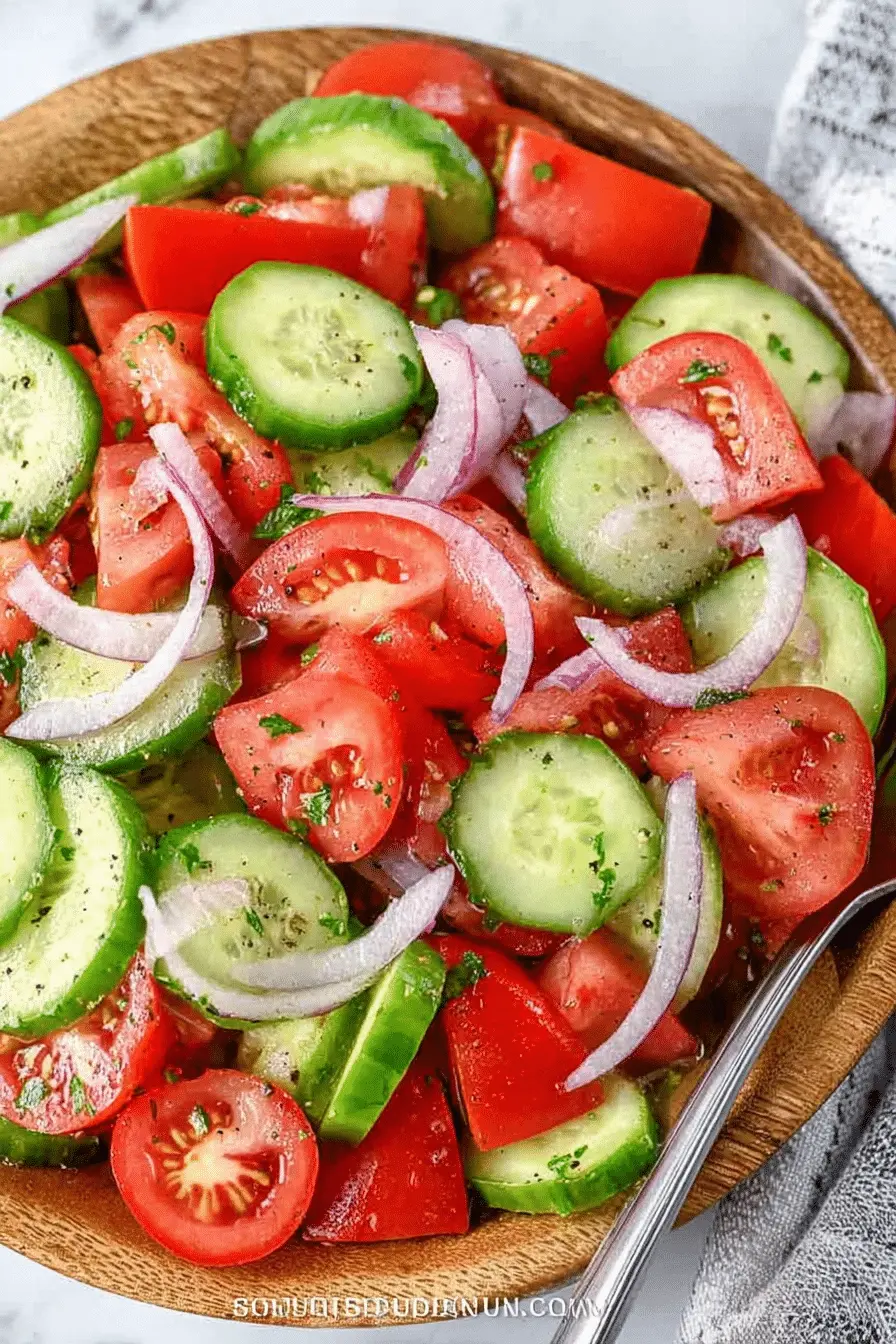
This salad is built on a very simple idea: contrast. Crisp cucumbers give a cool crunch; ripe tomatoes add juicy sweetness; a little onion adds bite; and a touch of acid and fat ties it together. When those components are balanced the salad feels fresh and light rather than one-note.
It’s also a nutrient-forward side: cucumbers are hydrating, tomatoes supply vitamins and bright flavor, and olive oil contributes heart-healthy fats. The whole thing comes together in minutes, which makes it perfect for busy evenings or casual summer gatherings where you don’t want to fuss.
When you picture it, think of each bite as a cool, crunchy counterpoint to hot main dishes—a real refresher on the plate that keeps the meal feeling seasonal and satisfying.
Everything You Need for Cucumber Tomato Salad
Below I talk through the ingredients and what each one brings to the bowl. You can keep it basic or add one or two boosts to make it more filling or nutrient-dense.
- Cucumber (English or seedless) – Provides the main crunch and cooling mouthfeel; English cucumbers have thinner skin and fewer seeds, which helps keep the salad from getting watery.
- Tomatoes (ripe) – Add sweetness, acidity and juiciness; choose a variety that smells ripe and feels slightly tender to the touch.
- Red onion (or shallot/green onions) – Gives bright sharpness; soak briefly in cold water if you want milder onion flavor.
- Fresh herbs (parsley, basil, dill) – Lift the aroma and freshness; use one or a mix for complexity.
- Olive oil – The fat that carries flavor and softens acidity; extra virgin adds fruity notes.
- Red wine vinegar (or lemon) – Balances the fat with acidity and brightens the vegetables.
- Salt and black pepper – Basic seasoning to make the flavors pop; add to taste.
- Nutrient boosters (optional) – Things like chopped avocado, cooked chickpeas, toasted seeds, or a handful of baby spinach add healthy fats, protein or texture if you want a heartier side.
If you love cucumber dishes, try this Old Fashioned Cucumber Salad, which pairs perfectly with summer meals.
The Secret to Crisp Cucumbers (No Soggy Salad)
- Choose the right cucumber: pick an English or seedless cucumber when you can; their thinner skin and smaller seed cavity mean less water released into the bowl.
- Remove excess water: halve cucumbers lengthwise and use a spoon to scoop seeds if they’re watery, or slice and lay on paper towels to blot surface moisture briefly.
- Salt strategically: if cucumbers are very watery, sprinkle them lightly with salt and let sit in a colander for a short time, then pat dry—this draws out excess liquid while preserving crunch.
- Slice for structure: thicker, even slices or half-moons hold up better than very thin ribbons; for a more substantial bite, cut into coins or chunky half-moons.
- Delay the dressing if you need storage life: keep cucumbers and dressing separate until the last moment to avoid sogginess.
Choosing and Preparing Ripe Tomatoes for Maximum Flavor
- Look for aroma and slight give: tomatoes that smell sweet at the stem and yield ever so slightly to pressure are the most flavorful.
- Pick the right variety: vine-ripe or heirloom types are sweeter and more complex; grape or cherry tomatoes work well too and keep their shape when halved.
- Dice for uniformity: cut tomatoes into even pieces so they release juice more predictably—leave them a bit chunkier than you might for a sauce so the salad retains texture.
- Drain if necessary: if a tomato is very juicy, scoop out some seeds before dicing to avoid turning the salad into a broth.
Simple Dressings: From Classic Vinaigrette to Creamy Variations
A good dressing for this salad balances acid and fat so the vegetables stay bright. Fresh herbs folded into the dressing add aromatic notes that change the character with almost no extra effort.
- Classic herb vinaigrette – Olive oil, red wine vinegar (or lemon), chopped fresh herbs, salt and pepper. Use more acid for a sharper edge, or a touch more oil for silkiness.
- Fresh herb mix – Stir chopped basil and parsley into the vinaigrette for a green, aromatic lift that smells as good as it tastes.
- Creamy variation – Stir plain yogurt with lemon, garlic and chopped dill or cucumber for a lighter creamy finish that complements the salad’s cooling elements.
- Protein-rich option – Mix a bit of mashed avocado into the dressing for creamy texture plus healthy fats and extra staying power.
For a refreshing twist, add homemade tzatziki sauce to your salad.
How to Make Cucumber Tomato Salad (Step-by-Step)
- Wash and dry all produce so the dressing clings without diluting the bowl.
- Slice cucumbers into even rounds or half-moons depending on your preference; remove seeds if they’re watery.
- Dice or halve tomatoes into pieces similar in size to the cucumber slices for balanced bites.
- Thinly slice red onion or shallot; if you want a milder taste, soak the slices in cold water briefly and drain.
- Combine vegetables in a bowl, add chopped fresh herbs, drizzle with olive oil and vinegar, and season with salt and pepper—toss gently to coat.
- Refrigerate briefly if you like the flavors to meld; taste and adjust seasoning just before serving.
Pro Tip for cucumber tomato salad: Make-Ahead Texture Hacks
Pro-Tips, Troubleshooting, and Variations are presented as bulleted lists for easy scanning.
- Prep vegetables separately: slice cucumbers and tomatoes and store them in separate containers; toss with dressing only at serving time.
- Dry thoroughly: after rinsing, make sure produce is well drained or patted dry to preserve crunch.
- Revive wilted veggies: plunge slightly limp veggies into ice water for a few minutes to restore firmness, then drain well.
- Hold acidic dressings: if you must dress ahead, use a lighter amount of acid and keep extra oil or dressing on the side to freshen before serving.
How to Store, Serve and Try Easy Variations
Store the salad in a sealed container in the refrigerator; if dressed, it will keep best for a day before textures start to soften. For longer storage, keep components separate and assemble just before serving.
- Storage tips – Keep in an airtight container in the coldest part of the fridge; if you prepped cucumbers, lay a paper towel over them to absorb excess moisture.
- Serving ideas – Serve chilled alongside grilled chicken or fish, or pile on top of greens as a light lunch.
- Hearty variations – Add cooked chickpeas or quinoa to make the salad more filling and add plant-based protein.
- Creamy pairing – Serve with a dollop of creamy dill potato salad for a comforting summer spread: Creamy Dill Potato Salad.
- Mediterranean mix – Add olives, crumbled feta and a squeeze of lemon, or pair alongside a Mediterranean Chickpea Salad for a colorful plate.
- Cultural takes – Think of this as a base you can adapt: dress it with olive oil and lemon for an Israeli-style salad, add yogurt and cucumber for a tzatziki-inspired feel, or keep it simple with chili and cilantro for an Indian kachumber-like twist.
I usually keep a batch of chopped herbs and a small jar of vinaigrette in my fridge so I can throw this together faster than boiling water for pasta. It’s flexible, healthy and reliably seasonal.
Frequently Asked Questions
How do I prevent my cucumber tomato salad from becoming soggy?
To keep your salad crisp, make sure to slice the cucumbers and tomatoes just before serving. You can also remove the seeds from the cucumbers and let them drain for a bit on paper towels to minimize excess water.
Can I make cucumber tomato salad in advance?
Yes! You can prepare the salad a few hours ahead of time. Just remember to hold off on adding the dressing until you're ready to serve for the best texture.
What kind of dressing works well with cucumber tomato salad?
A simple herb vinaigrette is perfect! A mix of olive oil, red wine vinegar, salt, and pepper enhances the fresh flavors without overpowering them.
What can I substitute for red onion in the salad?
If you don't have red onion, you can use green onions or shallots. Both will add a nice flavor without being too overpowering.
How do I choose ripe tomatoes for my salad?
Look for tomatoes that are firm but slightly tender when you press them, with a rich red color. Avoid any with blemishes or overly soft spots.
Recipe Card
The Cucumber Tomato Salad I Make Every Summer
- Prep
- 10 min
- Total
- 30 min
- Serves
- 4
- Calories
- 104 kcal
- Carbs
- 7.00 g
Ingredients
- 1 eachEnglish cucumber (sliced)
- 2 to 3 eachlarge ripe tomatoes (diced)
- ½ eachmedium red onion (thinly sliced)
- 1 tablespoonfresh herbs (any combination of parsley, basil and/or dill, optional)
- 2 tablespoonsolive oil
- 1 tablespoonred wine vinegar
- —salt and black pepper (to taste)
Instructions
- 1
Combine all ingredients in a bowl and toss well.
- 2
Refrigerate at least 20 minutes before serving.
You might also like

Reviews
Be the first to review this.