- Prep
- 20 min
- Cook
- 12 min
- Total
- 32 min
- Serves
- 8
- Calories
- 239 kcal
- Carbs
- 27.00 g
Introduction
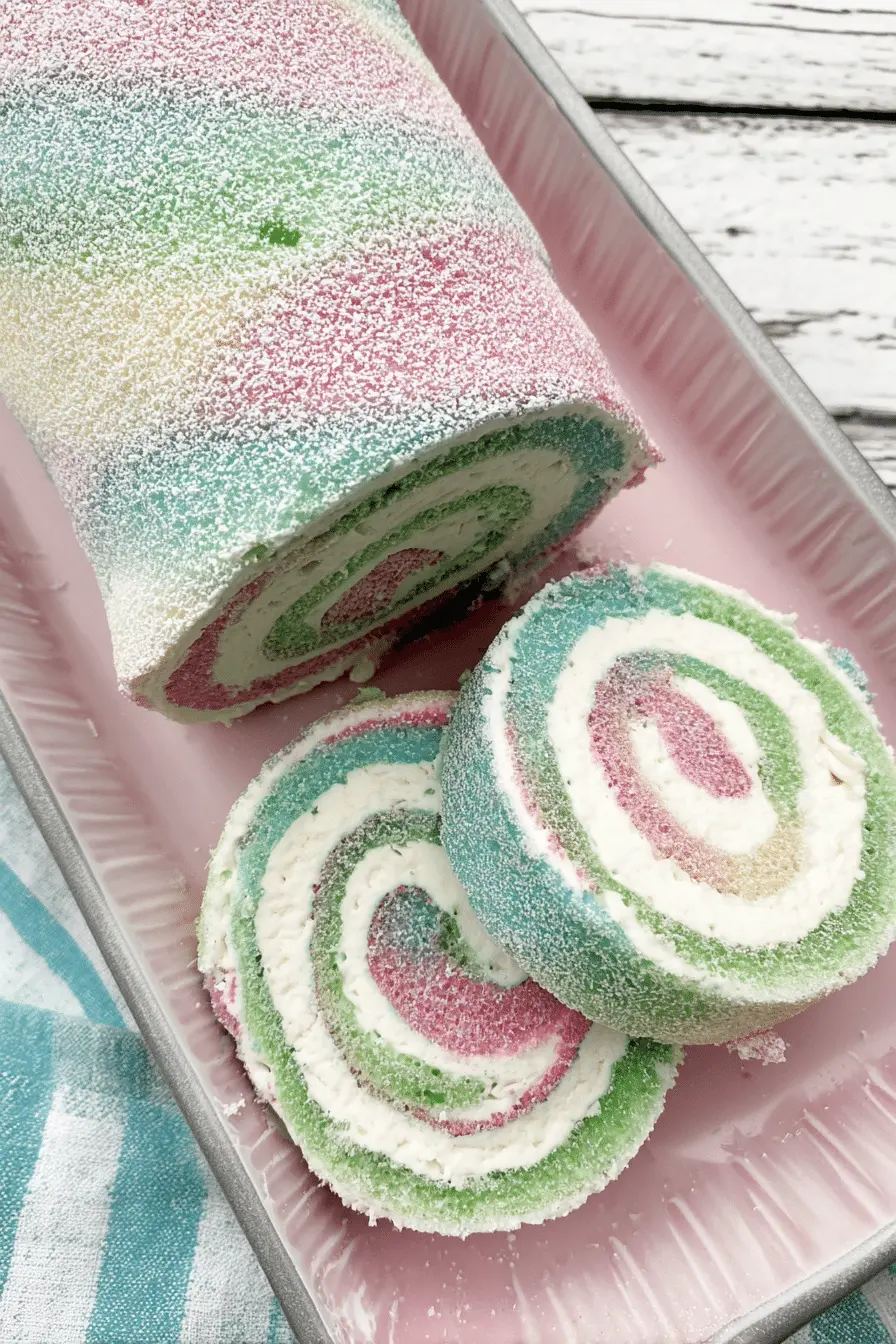
I love a dessert that looks like a celebration but doesn’t eat my whole afternoon. In my kitchen this pastel cake roll has become my go-to when I want something cheerful on the table without a ton of fuss. I’ve tested the timing and temperaments of this sponge more than once—there’s a sweet spot where the cake is flexible, light, and forgiving when you roll it up. What I enjoy most is the hands-on part—dolloping tiny puddles of pastel batter, dragging a spatula to make soft swirls, and watching the oven coax the thin sponge into something pillowy and bendable. The first time I tried a rainbow pattern I overworked the batter and ended up with muted colors; now I add color slowly and let the batter keep its air. Make this with kids or invite a friend over for the frosting; it’s the kind of recipe that turns into a little family project. The payoff is the moment you unroll a perfectly swirled cake and the room goes quiet for the first slice—soft, slightly tangy cream cheese, and that powdered-sugar dusting that makes it feel like a holiday.Bring Easter to the Table Fast: This Cake Roll Is Easy, Colorful, and Stress‑Free
This recipe is about quick wins: a short mixing time, a brief bake, and a relaxed rolling step that you can do with confidence. The whole process fits neatly into a single afternoon if you’re efficient, or you can spread it across two days by chilling the rolled cake overnight. Visually, the pastel swirls make a simple dessert feel special—bright without being over the top. Sensory notes: you’ll see the sponge lightly browned around the edges, smell the faint tang of whipped egg whites and lemon, and feel the cake’s delicate spring when you press it lightly. I recommend having your spatulas and a clean sheet of parchment ready before you start—little prep makes the fun part go smoothly.Everything You Need for Easter Cake Roll
Before you begin, gather your tools: a rimmed baking sheet lined with parchment, a reliable whisk or stand mixer with a whisk attachment, a flat spatula for spreading, and a kitchen towel or another piece of parchment for rolling. Keep an extra sheet of parchment nearby to flip the cake onto when it comes out of the oven. Ingredients in this recipe are straightforward and easy to find. Use room-temperature egg whites so they beat up lighter, and choose cake flour if you want the silkiest, most tender sponge; if you use all-purpose flour you’ll still get a good result but the texture will be a touch denser. Unsalted butter in the frosting gives you better control of sweetness and salt balance.- Egg whites – Provide the lift and airy structure; bring them to room temperature for best volume.
- Lemon juice – A small acid stabilizer to help the egg whites hold peaks.
- Cake flour – Keeps the sponge tender; swap for all-purpose if needed but expect a firmer crumb.
- Gel or liquid food coloring – Use a little at a time to get pastel shades; gels give brighter color with less liquid.
- Cream cheese & butter – Make the frosting creamy and slightly tangy; soften both before you mix.
- Powdered sugar – Sweetens and stabilizes the frosting; dust the finished roll for a pretty finish.
The Secret to a Light, Fluffy Cake Roll
The key is gentle handling. When you whip egg whites you’re trapping air; treat that foam like gold. Stop at soft peaks if the recipe calls for them, and fold dry ingredients in with a wide spatula using slow, deliberate turns. Overmixing pushes air out and yields a denser cake.- Whisk the egg whites until they form soft peaks—when you lift the whisk, the peak should curl over slightly.
- Add sugar gradually while whisking so it dissolves into the foam without deflating it.
- When folding in flour, cut the center of the batter with your spatula, lift, and fold over—rotate the bowl and repeat rather than stirring in circles.
- If you’re adding colors, divide the batter and fold color in gently; a few strokes are enough to get an even hue without losing volume.
Why Temperature and Egg Whites Matter (and How to Get Them Right)
Room-temperature egg whites whip up more quickly and to a greater volume because the proteins relax and form a more elastic network. If you crack eggs straight from the fridge, you’ll notice they take longer to foam and don’t reach the same height. Practical tip: if you forgot to warm eggs, set them in a bowl of warm (not hot) water for 10–15 minutes while you preheat the oven and line the pan. Cold bowls or utensils can slow your whisking too—use a clean, dry bowl at room temperature for the best results. Sensory focus: when the whites are ready they’ll look glossy and feel airy when you lift the whisk; the batter will spread easily but still hold delicate peaks.Pro Tip for Easter Cake Roll: Nutrition Info and Easy Dietary Swaps
I like having the numbers handy when I plan a menu: one slice of this cake roll is roughly 239 kcal with about 13 g of fat, 27 g of carbs, and 4 g of protein. Those figures help when you’re serving a crowd and want to balance richer items on the table.- Gluten-free swap – Use a 1:1 gluten-free cake flour blend designed for baking; expect a slightly different crumb but keep handling gentle.
- Dairy-free & vegan frosting – Use a dairy-free cream cheese or whipped coconut cream; chill the filling so it holds its shape when you roll.
- Lower sugar – Reduce powdered sugar in the frosting slightly and add a touch more vanilla or lemon zest to keep the flavor bright.
- Protein boost – Fold a small amount of plain Greek yogurt into the filling in place of some cream cheese for a tangy lift (not for strict dairy-free).
How to Make Easter Cake Roll (Step‑by‑Step)
- Preheat the oven and prepare a rimmed baking sheet with parchment so the sponge has a clean nonstick surface.
- Whisk egg whites with a small amount of acid until foamy, then add sugar gradually and beat to soft peaks; the mixture should look glossy and hold a gentle peak.
- Gently fold in the flour until the batter is smooth but still airy; divide the batter and tint each portion with a few drops of color to reach pastel shades.
- Drop dollops of the colored batters onto the lined sheet and use a flat spatula to spread into an even thin layer, taking care not to overwork the batter.
- Bake until the sponge springs back lightly when you touch it at the center; remove and let cool briefly—just a few minutes—before flipping onto fresh parchment.
- Peel off the top parchment and roll the cake up tightly while it’s still warm, using the parchment or a towel to guide it; chill in the fridge to set the shape.
- Make the filling by beating cream cheese, softened butter, powdered sugar, and vanilla until smooth; once the cake is chilled, unroll gently and spread an even layer of filling, then re-roll snugly.
- Dust the roll with powdered sugar just before serving and slice with a serrated knife for clean edges.
- I’ve found that if the cake cracks while rolling, it was probably too cool—try rolling it while slightly warm next time and be gentler when unrolling for filling.
- If the sponge seems dense, check that your egg whites reached enough volume; give them a few more seconds at low speed rather than speeding through the process.
- If colors bleed together, use less liquid food coloring or switch to gel colors; fold in color with minimal strokes to keep edges crisp.
- When slices look ragged, chill the whole roll for a bit longer before slicing so the filling firms up and the knife glides through cleanly.
Simple Decoration Tips to Make It Look Stunning
Decorating a cake roll should be approachable—small accents go a long way. A dusting of powdered sugar, a scattering of sugared citrus peel, or a few edible flowers make the cake feel celebratory without demanding piping skills.- Use fresh berries or sliced strawberries down the center of the roll as you slice for a pop of color and freshness.
- Pipe a few modest rosettes of extra frosting at the ends and top with pastel sprinkles for a kid-friendly finish.
- For a rustic look, give the roll a light brush of melted white chocolate and scatter chopped pistachios for crunch and green contrast.
- Personal anecdote: I once left a simple powdered-sugar finish and a cluster of edible pansies on the plate—and it became my mother’s favorite presentation because it felt like spring on a fork.
How to Store, Make‑Ahead & Vary This Cake Roll
You can make this cake a day ahead: roll it, chill it, then wrap tightly in plastic wrap and refrigerate. For longer storage, wrap well and freeze for up to a month—thaw overnight in the fridge before serving. Slices keep best in an airtight container and will stay fresh for 3–4 days in the refrigerator.- Make-ahead – Prepare the sponge and filling a day ahead, roll tightly, and chill; add any fresh decorations just before serving.
- Freezing – Wrap the whole roll in two layers of plastic and a layer of foil; thaw slowly in the fridge to avoid condensation on the cake surface.
- Serving – Use a serrated knife dipped in hot water and wiped dry between slices for neat cuts.
- Chocolate sponge with a mascarpone filling for a richer, darker roll.
- Swirl in a fruit curd layer (like passionfruit or lemon) under the cream cheese for bright acidity.
- Replace cream cheese with stabilized whipped coconut cream for a dairy-free option that’s light and fluffy.
Frequently Asked Questions
Can I make the cake roll in advance? Yes! You can prepare the cake roll a day ahead and then store it in the refrigerator. Just be sure to cover it tightly to keep it fresh. What if I don't have pastel gel food coloring? No problem! You can use regular food coloring, but ensure to mix just a few drops at a time to achieve your desired pastel shades. How do I ensure my cake roll doesn't crack? To prevent cracking, it's essential to roll the cake while it's still warm and to do it tightly but gently. Allow it to cool completely before unrolling it for frosting. Can I substitute the cream cheese in the frosting? Yes! You can use Greek yogurt or a dairy-free alternative like coconut cream for a lighter or vegan swap. What is the best way to store leftover cake roll? Store any leftovers in an airtight container in the fridge. It should stay fresh for up to 3-4 days!Recipe Card
How I Finally Nailed the Easter Cake Roll — Quick, Colorful & Easy
- Prep
- 20 min
- Cook
- 12 min
- Total
- 32 min
- Serves
- 8
- Calories
- 239 kcal
- Carbs
- 27.00 g
Ingredients
- 6 largeegg whites (room temperature)
- 1 tsplemon juice (freshly squeezed)
- 0.25 tspkosher salt
- 0.25 cupsugar
- 0.5 cupcake flour ((+ 1 tbsp))
- —pastel gel food coloring
- 1 8 ozcream cheese (softened)
- 0.5 cupbutter (unsalted, softened)
- 1 cuppowdered sugar
- 1 tsppure vanilla extract
- —powdered sugar (for dusting)
Instructions
- 1
Preheat your oven to 350 degrees, spray with baking spray, and line a 13x18 baking sheet with parchment paper. Using a standing mixer with the whisk attachment, beat the egg whites, lemon juice, and salt until foamy. Gradually whisk in the sugar. Continue to beat until the mixture forms soft peaks. Gently fold in the cake flour until combined and smooth.
- 2
Divide the cake batter into 4 bowls and mix in a few drops of each color to get a nice vibrant shade. Mix in a few more drops to get the shade that you prefer. Alternate between all 4 colors, and drop dollops of the batters onto the parchment paper. Using a flat spatula, spread evenly.
- 3
Bake in the oven for 12 minutes or until it springs back at you! Remove and let the cake cool for 5 minutes before flipping the pan over onto another sheet of parchment paper. Remove the top layer of parchment paper and tightly roll the cake into a spiral. Place into the fridge and allow to cool for a few hours.
- 4
Using the standing mixer, beat the cream cheese, butter, powdered sugar, and vanilla until combined and smooth. Once the cake is chilled enough, carefully unroll the cake and frost the entire top of the cake in the cream cheese frosting, ensuring to spread it evenly. Carefully re-roll the cake. When ready to serve, dust the entire cake in powdered sugar. Enjoy!
You might also like


Reviews
Be the first to review this.