
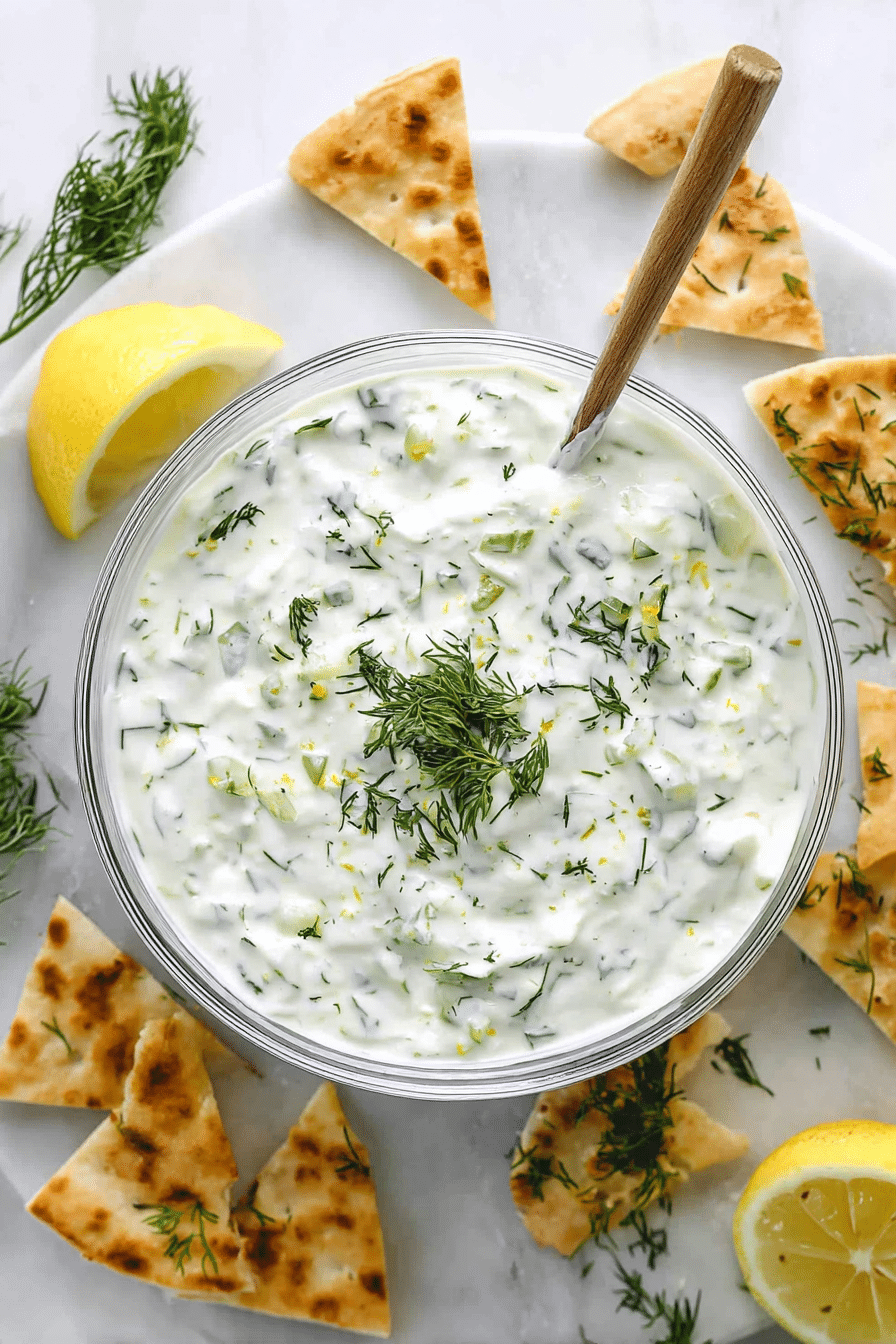
I make tzatziki all the time — it’s the kind of thing I keep in the fridge for last-minute lunches, a quick snack, or to brighten a weeknight dinner. This easy 10 minute healthy tzatziki sauce is one of those recipes that feels fancy but takes almost no effort: cool, garlicky, and tangy, with a bright lemon lift and soft herby notes. It’s thick enough to scoop but still silky. The first time I tried salting and draining the cucumber properly, the difference was night and day — no watery sauce and every bite stayed creamy.
When I say 10 minutes, I mean it — if you have a grater and a bowl, you can be dipping in under the time it takes to set the table. In this post I’ll walk you through the origins of tzatziki, show you exactly how I make it (with the little tweaks that stopped my sauce from going watery), and give you serving ideas, variations, and storage notes so you can make it ahead for the week.
What is Tzatziki Sauce?
Tzatziki is a cooling yogurt-and-cucumber sauce that originates from Greece and is found throughout the Mediterranean and parts of the Middle East. Traditional tzatziki is a simple, rustic sauce — Greek yogurt, cucumber, garlic, lemon, olive oil, and fresh herbs are the core components. It’s traditionally served with grilled meats, piled into gyros, or offered as a dip alongside warm pita.
Tzatziki is meant to be fresh and bright, not overworked. The cucumber gives a watery, crisp contrast to the creamy yogurt, while garlic and lemon provide the savory backbone. Different regions tweak it — some add mint instead of dill, others use a little vinegar instead of lemon, and some use strained yogurt for extra thickness.
Tzatziki is a classic accompaniment to dishes like Mediterranean Chicken Gyros in Mediterranean cuisine.
Ingredients Needed
- Greek yogurt – the creamy base; pick a thick, strained yogurt for the best texture or use a plant-based alternative for a vegan version.
- Cucumber – gives crunch and freshness; an English cucumber has fewer seeds and less water, so it’s my go-to.
- Garlic – adds pungent depth; mince finely so it blends smoothly and doesn’t make big bites of raw garlic.
- Lemon – both juice and zest brighten the sauce and cut through the richness of the yogurt.
- Olive oil – a small drizzle enriches and rounds the flavor.
- Dill or mint – fresh herbs are key; dill is classic, but mint gives a different, refreshing lift.
- Salt and pepper – a pinch of salt wakes up the flavors; black pepper adds a gentle bite.
- Optional extras – a touch of cucumber seeds removed or a splash of yogurt left to strain for extra thickness.
Note: In the recipe I use regular nonfat plain Greek yogurt. For a vegan tzatziki, use a thick coconut or soy-based yogurt and skip the lemon zest if the plant yogurt already has a tangy profile — taste as you go.
Step-by-Step Instructions
This is the exact method I use in my kitchen. I start by handling the cucumber properly — that’s the trick that keeps the sauce from getting runny. The timing below adds up to the 10-minute prep time, but if you let the cucumber drain a little longer you’ll have a firmer sauce.
- Prep the cucumber: Grate or finely dice about half an English cucumber (roughly the amount called for in the recipe). If you grate it, the sauce will become smoother; if you dice it, you’ll get small bursts of cucumber in each bite. Place the grated/diced cucumber in a strainer set over a bowl and sprinkle with a little salt to help draw out moisture. Let it sit for 2–5 minutes, then press or pat the cucumber firmly with a clean paper towel or your hands to remove excess liquid. This step prevents a watery tzatziki — I’ve skipped it before and regretted it every time.
- Combine the base: In a medium bowl, add one cup of plain Greek yogurt. To the yogurt add the drained cucumber, a drizzle of olive oil, and fresh lemon juice. I use both lemon juice and a bit of lemon zest — the zest gives a bright citrus perfume that complements the yogurt without making it sour.
- Add aromatics and herbs: Stir in minced garlic (I use the amount written in the recipe; if you’re garlic-shy start with less because raw garlic can be quite sharp), chopped fresh dill (or mint), kosher salt, and freshly ground black pepper. Mix until everything is evenly distributed. At this point, taste and adjust: if it tastes flat, add a tiny pinch more salt; if it’s too sharp from garlic, let it sit in the fridge for 10–20 minutes — the flavors round out.
- Finish and serve: Give it a final stir and top with a small drizzle of olive oil and a sprig of fresh dill if you like. This tzatziki is best served cold straight from the fridge, with pita, veggies, or as a sauce for grilled meats.
Yield: about 2 cups. Prep time: roughly 10 minutes — most of that is passive while the cucumber drains. This recipe intentionally keeps measurements simple in the ingredient discussion, but follow the amounts above if you want consistent results.
Nutritional Benefits of Tzatziki
Tzatziki is a surprisingly healthy condiment. The yogurt provides protein and probiotics (if you use live-culture yogurt), while cucumber adds hydration and a bit of fiber. Garlic has immune-supportive compounds, and olive oil gives heart-healthy monounsaturated fats. Overall, this sauce is low in calories and adds plenty of flavor without heaviness — I often use it to replace mayo-based dressings.
Enhance the nutritional value of your meals by pairing tzatziki with dishes like Cucumber Dill Chicken Salad.
Practical nutrition notes: the calorie and macronutrient numbers depend on the yogurt you choose — full-fat yogurt will raise the calorie and fat content, while nonfat yogurt keeps it lower. If you’re watching sodium, reduce the added salt and rely on fresh lemon and herbs for flavor.
Serving Suggestions and Pairings
Tzatziki is endlessly versatile. I usually serve it with warm pita and sliced cucumbers for an effortless snack. It’s also brilliant on grilled chicken or lamb — the cool sauce offers a lovely contrast to smoky meat.
For a complete Mediterranean meal, pair your tzatziki with Greek Chicken Meatballs with Tzatziki.
This tzatziki sauce is perfect for dipping grilled chicken skewers to elevate your meal.
Other ideas I use when entertaining: smear tzatziki on a flatbread with roasted vegetables; use it as a salad dressing thinned with a little water or olive oil; dollop it on baked potatoes or baked fish. In summer, I spoon it over a cold grain bowl — barley or farro — with tomatoes and olives for a quick lunch.
Tips for Variations
I tinker with this sauce depending on what I have and who I’m feeding. Here are tested variations that actually work:
- Mint tzatziki – swap dill for chopped fresh mint for a brighter, more herbaceous version that pairs beautifully with lamb.
- Spicy tzatziki – add a small pinch of red pepper flakes or a dash of smoked paprika for a background warmth; don’t go heavy, or you’ll lose the refreshing quality.
- Avocado tzatziki – mash in a bit of ripe avocado for extra creaminess; great if you want a dairy-free-esque mouthfeel (reduce the yogurt slightly).
- Chunky vs smooth – grate the cucumber for a smoother sauce; dice it for more texture. Strained yogurt leads to a thicker, spoonable dip ideal for toppings.
- Less garlic – if raw garlic is too assertive for you, grate it finely and let the sauce rest in the fridge for 30 minutes to mellow the flavor.
What can go wrong? The main issue is watery tzatziki — you fix this by draining and pressing the cucumber well, or by using thicker yogurt. If the sauce becomes too thick, whisk in a teaspoon or two of lemon juice or olive oil until you reach the desired consistency.
Storage Instructions
I keep tzatziki in the fridge in an airtight container. It keeps well for up to 1 week, though in my house it rarely lasts that long — it’s usually gone in 3–4 days.
Practical tips:
- Use an airtight container to prevent the sauce from absorbing other fridge odors.
- If the sauce separates a little after sitting (a thin liquid may pool on top), just stir it back together — it’s normal and not a sign of spoilage.
- Signs of spoilage: sour, off smell (not the bright lemony smell you expect), any visible mold, or an unusually slimy texture. When in doubt, toss it.
FAQ
How long does it take to make tzatziki sauce?
It only takes about 10 minutes to whip up this delicious tzatziki sauce. Perfect for a quick and healthy addition to your meals!
Can I make tzatziki sauce vegan?
Absolutely! You can use plant-based yogurt as a substitute for Greek yogurt to make vegan tzatziki.
What can I serve with tzatziki sauce?
Tzatziki is great served with pita chips, fresh vegetables, grilled meats, or even as a dressing for salads. Get creative!
How should I store leftover tzatziki?
Store leftover tzatziki in an airtight container in the refrigerator. It can last up to a week, but be sure to check for freshness before using.
Is tzatziki sauce healthy?
Yes! Tzatziki is low in calories, provides probiotics from yogurt, and is packed with vitamins and minerals from its fresh ingredients.
If you try this recipe, leave a note about which variation you liked best — I always adjust the herb ratio depending on the season and love hearing what readers do differently. Happy dipping!
Conclusion
Tzatziki is one of those kitchen staples that rewards a small bit of attention — salt and drain the cucumber, use good yogurt, and don’t be afraid to taste and tweak. It’s quick, healthy, and flexible: perfect to make ahead for lunches, brightening dinners, or adding an easy, fresh element to a party spread. Give it a go — try the basic version first, then experiment with mint, avocado, or a touch of heat depending on what you love.
Easy 10 Minute Healthy Tzatziki Sauce
This healthy tzatziki sauce is wonderfully creamy and tangy, making it the best healthy dip with chips or veggies. Perfect for meal prep!
- 1 cup plain Greek Yogurt (nonfat)
- 1/2 cup English cucumber (seeds removed, diced)
- 2 teaspoons olive oil
- 3 tablespoons fresh lemon juice
- 1 tablespoon fresh lemon zest
- 1 tablespoon minced garlic (about 1 clove)
- 1/4 cup fresh chopped dill
- 1/2 teaspoon kosher salt
- 1/4 teaspoon ground black pepper
- Place the diced cucumber in a strainer over a bowl and sprinkle it with some salt. Let it sit for a few minutes to extract any excess moisture, then pat it lightly with a clean paper towel.
- Add the Greek yogurt, cucumber, and the rest of the ingredients to a medium-sized bowl and mix until combined into a creamy sauce.
- Top with more fresh dill, ground black pepper, and a drizzle of olive oil.
- Serve cold with pita chips, naan, or fresh chopped veggies.
This sauce can be made ahead of time and stored for several days.