- Prep
- 120 min
- Cook
- 20 min
- Total
- 140 min
- Serves
- 12
- Calories
- 326 kcal
- Protein
- 9.00 g
- Carbs
- 58.00 g
- Fat
- 7.00 g
Introduction
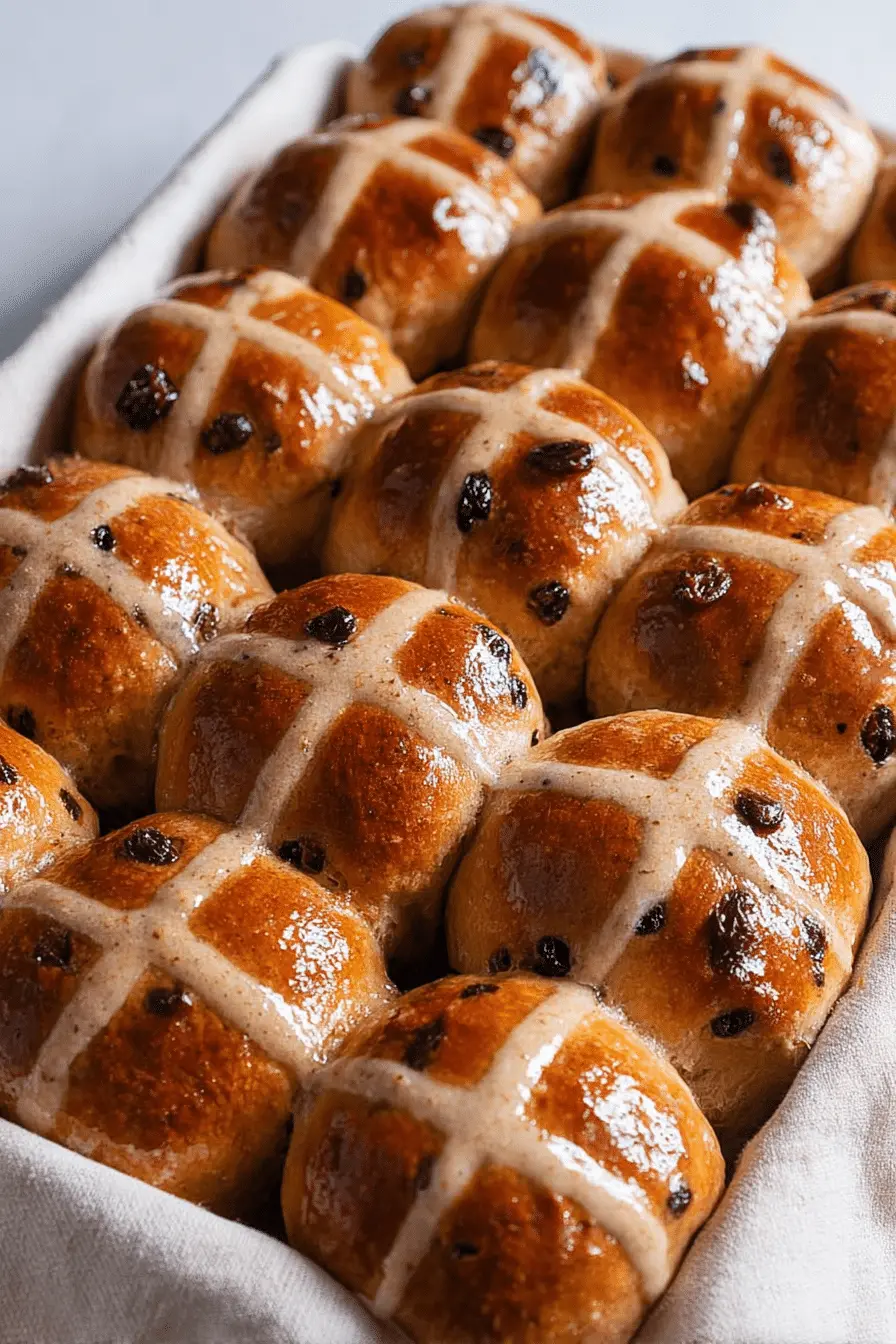
Whenever Easter rolls around, I find myself baking hot cross buns because the aroma alone makes the house feel like a holiday. I remember the first time I tried this recipe: the dough felt sticky at first, then as I learned a few simple tweaks it turned into pillowy buns that everyone fought over. That warm, spicy smell rising from the oven is the whole point — it turns a normal morning into something cozy and celebratory.
I like to keep this version intentionally simple. I’ve pared back the steps so you don’t need fancy equipment or a bakery timetable — just a few reliable techniques and the right temperatures. In my kitchen these become a weekend ritual: mix, rest, shape, rise, and bake. The short list of pantry-friendly ingredients means you can make them on short notice or plan ahead.
Over the years I made the usual mistakes — over-flouring the dough, using liquids that were too hot, and rushing the rises — and I’ll point out which little habits to avoid. Follow a couple of the tweaks I use and you’ll get soft, evenly baked buns every time. They freeze beautifully, too, so you can enjoy fresh-tasting buns across the holiday without all the morning work.
If you want a hands-off option for busy mornings, I include overnight and no-knead notes later on. I also suggest simple swaps for vegan and gluten-free versions so everyone at the table can have a warm bun with their tea.
Everything You Need for Easy Hot Cross Buns
Gathering ingredients and a couple of basic tools makes the process painless. Freshness matters: fresh yeast (or a reliable instant yeast), freshly ground spices, and soft butter or the dairy-free alternative all make a difference in flavor. Here’s a conversational breakdown of what each ingredient does and how to swap things if you need to.
- * Flour – The structure builder. Bread flour gives more chew and lift; all-purpose keeps them tender. For gluten-free, use a high-quality gluten-free blend designed for yeast breads and add a binder like xanthan gum if it’s not already included.
- * Yeast – The leavener. Fresh active yeast gives a lively rise; instant/rapid-rise works too. Always check it’s not past its best for a reliable proof.
- * Milk – Enriches the crumb and helps the crust brown. Use plant-based milk if you need a dairy-free bun.
- * Butter – Adds tenderness and flavor. Replace with a firm vegan margarine or coconut oil for a vegan version.
- * Sugar – Feeds the yeast and seasons the dough. Brown sugar adds warmth and depth; you can use white sugar in a pinch.
- * Egg – For enrichment and color. For vegan buns, use a mashed banana or commercial egg replacer to help bind and brown.
- * Spices – Cinnamon and mixed spice (or a pumpkin-pie-like blend) give signature flavor. If you don’t have mixed spice, combine cinnamon with a pinch of nutmeg and allspice.
- * Dried fruit or mix-ins – Sultanas, raisins, dried cranberries or chocolate chips provide texture and bursts of sweetness. Toast nuts lightly for a crunchy twist.
- * Flour + Water paste – For the cross marking on top. A simple paste of flour and water pipes cleanly and bakes matte-white.
- * Maple syrup or sugar syrup – Brushed on at the end for shine and a touch of sweetness. Use agave or a neutral syrup for vegan-friendly glaze.
- * Tools – A mixing bowl (or stand mixer), dough hook if you have one, a thermometer to check liquid temperatures, a baking tray or casserole dish for snug buns, and a piping bag or small zip-top bag for the crosses.
Nutritionally these buns provide quick energy from the carbs, a bit of protein from milk and egg, and small amounts of fats from butter. Adding nuts or seeds can boost the protein and healthy fats if you want a slightly more substantial bite.
The Secret to Soft, Fluffy Buns (No Fancy Skills Needed)
Softness comes down to gluten development, moisture, and gentle handling. You don’t need expert kneading, but you do need to treat the dough kindly. Here are practical tips that replaced guesswork for me and make every batch reliably tender:
- Knead to develop, not exhaust – Aim for a smooth, slightly tacky dough that springs back when pressed. Over-flouring while kneading is the fastest way to a dry bun.
- Use warm liquids – Liquids that are hand-warm activate yeast without damaging it. Too hot and the yeast weakens; too cold and the rise slows dramatically.
- Rest times matter – A short bulk rise develops flavor and structure. Let the dough double in a warm, draft-free spot rather than rushing it under high heat.
- Handle gently when shaping – Turn edges under and pinch at the bottom to create surface tension on each ball; that tension helps lift and keeps the interior fluffy.
- Final proof is a patient one – The buns should look noticeably puffed and close to doubled, but not overproofed. If they collapse easily when touched, they’ve gone too far.
Why Temperature Matters When Making Hot Cross Buns
Temperature controls yeast activity and final texture. Get it right and the dough behaves predictably; get it wrong and you’ll be troubleshooting odd issues. Focus on three places temperature matters most:
- Liquid temperature for activating yeast – Aim for pleasantly warm, like a warm cup of tea. I test with my wrist: comfortable, not hot.
- Room temperature during rises – A warm, draft-free space helps the dough double in a reasonable time. If your kitchen is cool, use an oven warmed briefly then turned off, or let the dough rise near a warm appliance.
- Oven temperature – Start on the hotter side to give the buns an initial oven spring, then ensure they brown without burning. A consistent oven gives even color and a fully-cooked interior.
How to Make Easy Hot Cross Buns (Step-by-Step)
Follow these steps in order — they’re written so you can read through and then work through each part without flipping around. I include troubleshooting notes in the second list so you can fix common problems on the fly.
- Warm the milk and water until they feel comfortably warm to the touch, then stir in a small amount of sugar and the yeast to bloom. Wait a couple of minutes until bubbly or foamy.
- Mix melted butter, the remaining sugar, the egg, salt, spices, vanilla, and your chosen mix-ins in a separate bowl so flavors are evenly distributed.
- Combine the yeast mixture with part of the flour, let it rest for a short sponge (about half an hour) to deepen flavor, then mix in the remaining flour and the butter-spice mixture. Add a little liquid or flour only if the dough’s texture needs balancing.
- Knead until smooth and elastic, either by hand for about 10 minutes or with a dough hook a little shorter. Aim for a dough that’s soft and slightly tacky but not sticking to your hands.
- Divide and shape into even balls by turning edges under and pinching the base, then place snugly in a greased dish about a fingertip apart so they rise into one another.
- Make a paste of flour and water for the crosses and fit into a piping bag. Allow the buns to rise until noticeably puffy, then pipe crosses about 20 minutes before baking.
- Bake until golden and cooked through. While they bake, warm a little syrup (maple or sugar-based) and brush it over the hot buns as soon as they come out of the oven for a glossy finish.
- Troubleshooting (from my kitchen) — I noticed the dough felt too sticky: add a tablespoon of flour at a time while kneading and test elasticity. If the dough barely rises: your yeast may have been too old or the liquids too hot; start again with fresh yeast and lukewarm liquid. If the tops brown too quickly: tent with foil for the last few minutes of baking so the interior finishes cooking without burning the crust.
Pro Tip for easy hot cross buns: Overnight and No-Knead Options
When I want the flavour to deepen without morning rush, I slow-prove the dough in the fridge overnight. This develops a gentler tang and richer aroma that you can’t get from a quick rise. If you prefer a no-knead approach, the dough should be wetter and given more time to build structure; I find a long, cool fermentation works well for that texture.
- I often mix the dough the night before, cover it, and let it rest in the fridge. In the morning, shape, proof briefly at room temperature, pipe the crosses, and bake.
- No-knead option: mix until combined, then let the dough rest longer for gluten to form on its own. Turn the dough a couple of times during the first hour, then let it sit overnight in the fridge.
- Reduce final proofing time after an overnight chill — the dough is already relaxed and will finish faster at room temperature.
If you want to prepare ahead, explore these overnight breakfast options that make your mornings easier.
Quick Variations to Suit Dietary Needs and New Flavors
Varying the mix-ins and a few ingredient swaps opens up a world of new buns without changing the method. Keep the dough handling the same and play with flavors.
- Gluten-free version – Use a yeast-friendly gluten-free flour blend and add a binder if required. Expect a slightly different crumb; gentle handling and a wetter dough help mimic softness.
- Vegan version – Replace milk with a plant-based alternative, swap butter for vegan margarine, and use an egg replacer or mashed banana to bind.
- Chocolate chip twist – Substitute chocolate chips for the dried fruit for a crowd-pleasing change.
- Orange and cranberry – Use orange zest and dried cranberries for a fresh, bright variation that pairs well with the warm spices.
- Savoury twist – Omit the sugar, add grated cheese, and fold in herbs for a non-sweet bun that’s great with soup or salad.
- Spice experiments – Try cardamom or star anise in small amounts for an aromatic lift beyond the classic cinnamon-and-mixed-spice profile.
If you're looking for more variations, try these fluffy donut muffins for a sweet twist on your baking.
How to Store, Freeze, and Reheat Hot Cross Buns
Proper cooling and storage keep the buns soft for days. Freeze extras for a reliable stash that warms up beautifully whenever you want a warm bun.
- Cool completely on a rack before storing to avoid soggy tops from trapped steam.
- Store at room temperature in an airtight container for up to three days; add a sheet of parchment between layers if stacking.
- Freeze individually wrapped buns in a single layer, then transfer to a freezer bag for up to three months. Reheat from frozen at moderate oven temperature, loosely covered with foil, until warmed through.
- For quick reheating, slice and toast gently or heat in a microwave wrapped in a slightly damp paper towel for a few seconds to restore softness.
For best results, learn about storing your baked goods to maintain freshness long after baking day.
Best Drinks and Meals to Pair with Your Hot Cross Buns
These buns are versatile at the table. Here are pairing ideas that bring out their warmth and spice or turn them into a more substantial part of a meal.
- Classic pairing – A strong black tea or milky tea complements the spice without overpowering it.
- For coffee lovers – A medium roast coffee or a mild latte balances the sweetness and is a cozy brunch choice.
- Brunch ideas – Serve with soft cheese and fruit, or transform a bun into a French-toast-like treat by slicing and frying lightly with butter and syrup.
- Seasonal pairings – A citrusy marmalade or cream cheese spread brightens the spices, while a bowl of warm fruit compote makes a comforting dessert-style pairing.
Enhance your hot cross buns experience with these pairing options for hot cross buns that are simply delightful.
Make these buns your Easter morning shorthand: a little planning the night before and an hour in the morning yields warm, fragrant buns that feel like a small celebration. With the options above you can adapt for diets and flavor preferences, and the freezer-friendly nature means you can enjoy them beyond just one morning.
Frequently Asked Questions
Can I make these hot cross buns in advance?
Absolutely! You can prepare the dough the night before and let it rise in the fridge. Just shape the buns and let them rise again in the morning before baking.
What if I don't have mixed spice or pumpkin pie spice?
No worries! You can use just cinnamon or a combination of cinnamon and nutmeg as a substitute to get that warm flavor.
How should I store leftover hot cross buns?
Store them in an airtight container at room temperature for up to three days. If you want to keep them longer, consider freezing them!
Can I use whole wheat flour instead of bread flour?
Yes, you can use whole wheat flour, but the buns may be denser. You might want to mix it with all-purpose flour for lighter buns.
What can I use instead of sultanas?
You can substitute sultanas with chocolate chips, raisins, or even dried cranberries for a fun twist!
Recipe Card
How I Make Easy Hot Cross Buns Fast — Soft, No-Fuss Easter Buns
- Prep
- 120 min
- Cook
- 20 min
- Total
- 140 min
- Serves
- 12
- Calories
- 326 kcal
- Protein
- 9.00 g
- Carbs
- 58.00 g
- Fat
- 7.00 g
Ingredients
- 1/2 cupwarm water
- 1/2 cupwarm milk
- 1/2 cuplight brown sugar (plus 1 tbsp)
- 4 tspactive dried yeast
- 1/3 cupbutter (melted)
- 1egg
- 1 tspsalt
- 4 cupsbread flour or plain flour
- 1 tbspmixed spice or pumpkin pie spice
- 1 tbspcinnamon
- 1 tspvanilla extract
- 1 cupsultanas or mixed fruit
- 1/4 cupflour
- 2 tbspwater (for crosses)
- 1 tbspwater (for glaze)
- 1 tbspmaple syrup
Instructions
- 1
Add warm milk, water, one tablespoon of brown sugar and yeast in a large mixing bowl or the bowl of your stand mixer. Leave the yeast to activate for 2 minutes.
- 2
In another bowl, mix the melted butter and remaining brown sugar together. Beat in the egg, then add the salt, cinnamon, mixed spice, vanilla and sultanas.
- 3
Mix the yeast and spice mixture together along with the remaining flour. Knead the dough by hand for 10 minutes.
- 4
Divide the dough into pieces and shape them into small balls. Leave them to rise for 30 minutes to an hour.
- 5
Mix the flour and water for the crosses and pipe the mixture onto the buns. Bake for 15-20 minutes.
- 6
Brush the tops with maple syrup glaze after baking.
You might also like

Reviews
Be the first to review this.