- Prep
- 15 min
- Cook
- 45 min
- Total
- 60 min
- Serves
- 8
- Calories
- 316 kcal
- Carbs
- 24.00 g
Introduction
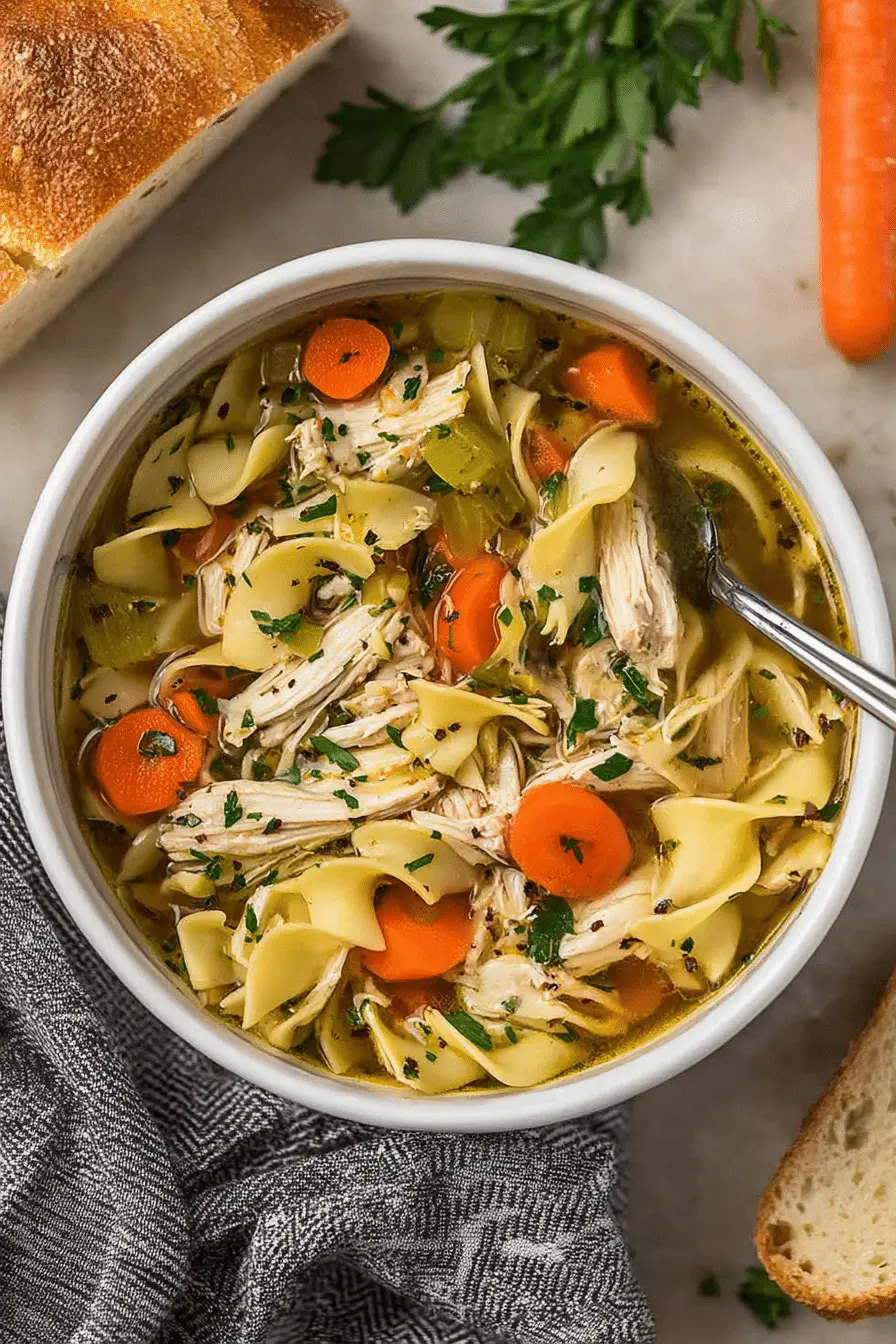
There’s something about the smell of simmering chicken broth, carrots, and onion that rewinds me to rainy afternoons and the kind of kitchen that feels like a hug. I make this easy rotisserie chicken noodle soup whenever I need comfort fast — but not the short-cut, thin kind of fast. Using a rotisserie chicken lets you get deep, roasted chicken flavor without hours of hands-on stock-making, and the result is a bowl that’s thick, hearty, and spoonable. In my house this recipe lives between busy weeknights and lazy weekends. I’ll grab a rotisserie chicken on the way home from the grocery store, jot down a few quick notes on the back of a shopping list, and fifteen minutes later the stove smells like a restaurant. This soup has weight — thick broth, tender shredded chicken, soft carrots — but it’s also forgiving. I’ll tell you what to watch for and how to rescue it if something goes sideways. If you love comforting soups, try our Hearty Hamburger Noodle Soup that warms you up on chilly days.Benefits of Using Rotisserie Chicken
Rotisserie chicken is a secret weapon for busy cooks. The bird is already roasted and seasoned, so it contributes both meat and depth of flavor that boxed broth alone can’t match. I use the whole chicken (meat for the soup and the carcass for simmering) because that roasted fat and browned skin add richness without extra work. Using a rotisserie chicken cuts prep time drastically: no long oven-roasting, no poking at raw poultry. It’s especially handy when you want homemade flavor but don’t have the time or patience to babysit a stock. I often make a pot on a weeknight — it feels like a treat but comes together almost as quickly as takeout. Another great choice for busy nights is Creamy Chicken and Broccoli Pasta, which also benefits from rotisserie chicken.Ingredients You’ll Need
- Rotisserie chicken – the hero here; provides cooked meat and, if you simmer the carcass, an instant flavor boost for the broth.
- Chicken broth – forms the soup base; choose low-sodium if you plan to season later.
- Carrots – add sweetness and texture when sliced; they soften and sweeten as they simmer.
- Celery – gives subtle aromatic backbone and a pleasant mouthfeel.
- Onion – the aromatics backbone; sweat until translucent to release natural sweetness.
- Garlic powder – provides savory depth without the chance of burning fresh garlic while sautéing.
- Herbs (parsley, oregano, thyme) – dried herbs add complexity; fresh parsley stirred in at the end brightens the soup.
- Bay leaf – small but mighty; it lends a rounded savory note while simmering.
- Pasta – egg noodles or any dry pasta; they soak up broth and make the soup satisfying.
- Cornstarch or arrowroot – used to thicken slightly; whisk with hot liquid first to avoid lumps.
- Olive oil – for sautéing the vegetables and coaxing out flavor without browning too hard.
- 1 rotisserie chicken (fully cooked, approx. 2 1/2 pounds) (still on bone optional)
- 12 cups chicken broth
- 4 celery stalks, chopped
- 4–5 carrots, sliced
- 1 onion, diced
- 1 tsp garlic powder
- 2 tsp dried parsley
- 1 tsp dried oregano
- 1/2 tsp dried thyme
- 1 bay leaf
- 1/2 tsp sea salt (adjust at the end)
- 1 tsp cracked pepper
- 2 cups dry pasta
- 1/4 cup corn starch (or arrowroot)
- 1 tbsp olive oil (for stovetop)
Step-by-Step Instructions
- Prep the chicken and vegetables: Pull the rotisserie chicken out of its packaging. Strip the breast meat off the bones and shred or roughly chop it — I like a mix of bite-size shreds and small chunks so every spoonful has texture. Keep the bones and carcass for the pot — they add a roasted backbone to the broth. Chop the carrots, celery, and dice the onion. Having everything ready before the pan is hot makes the whole process calm and fast.
- Heat the pot: Add a drizzle of olive oil to a large stockpot and warm it over medium-high heat. When the oil shimmers, add the chopped celery, carrots, and onion. You’re looking for the onions to become translucent and the edges of the carrots to soften — about 5–7 minutes. Stir occasionally; the sound changes from quick sizzling to a gentler bubble when the vegetables are properly sweating.
- Add broth, aromatics, and the carcass: Pour in the chicken broth, then add the bay leaf, garlic powder, dried parsley, oregano, thyme, salt, and cracked pepper. Nestle the rotisserie carcass into the pot. If the chicken meat you pulled off is already shredded, add that too — the cooked meat will simply warm through. Turn the heat to medium so the pot comes to a gentle boil, then lower to a steady simmer.
- Simmer to deepen flavor: Let the soup simmer uncovered for about 30 minutes, or until the carrots are tender and the broth tastes rounded and savory. This is where the broth picks up richness from the roasted bones and the roasted skin — you’ll notice the smell deepen and the liquid look slightly darker and glossy. Taste halfway through and adjust seasoning; if it tastes flat, add a little salt rather than sugar.
- Remove bones and add pasta: Use tongs to carefully fish out the carcass and any large bone pieces. If you want a richer broth, skim a little fat off the top with a spoon; I usually leave a bit for mouthfeel. Add the dry pasta directly to the pot and simmer for 10–15 minutes until the pasta is al dente — the timing depends on the pasta shape.
- Thicken slightly: Before you add the cornstarch, ladle 1 1/2–2 cups of hot broth into a heatproof bowl and whisk in the cornstarch until completely dissolved. Tempering like this prevents clumps. Pour the slurry back into the soup and stir; the soup will thicken in a minute or two and become glossy. If it becomes too thick, thin with a splash of broth. If it’s too thin, whisk another teaspoon of cornstarch into a small amount of broth and repeat.
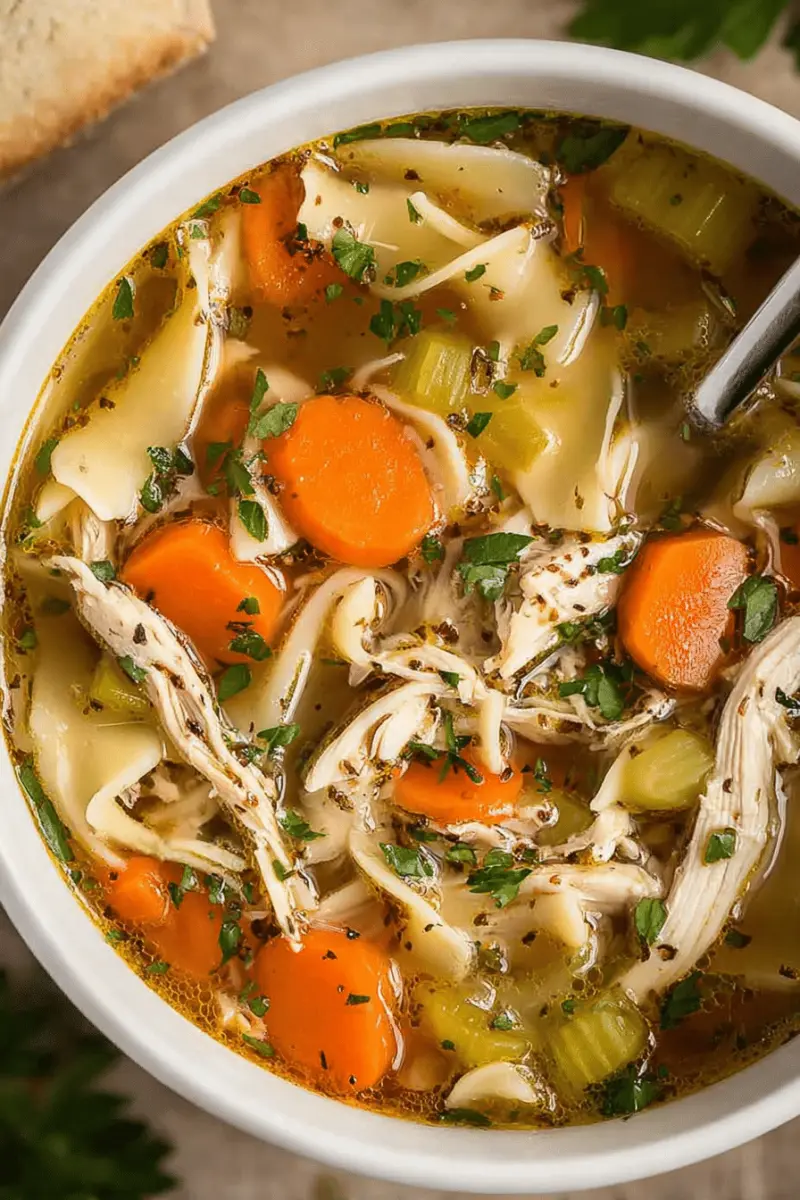
- Final warm-through and serve: Taste and adjust seasoning with salt and pepper. If you like freshness, stir in a handful of chopped fresh parsley off the heat. Serve hot in deep bowls. Expect the broth to be thick and spoon-coating rather than watery — that’s intentional.
- Notes on timing: The original recipe timings add to a total of about 75 minutes (15 minutes prep + ~45 minutes cooking including simmer and pasta time). You can shorten active time by using pre-chopped vegetables or quick-cooking pasta; the simmer is where flavor builds, so if you rush it you’ll lose depth.
Tips for Customizing Your Soup
- To make it richer: Stir in a splash of heavy cream or a spoonful of Greek yogurt just before serving for silkiness.
- To brighten flavors: A squeeze of lemon or a tablespoon of apple cider vinegar added at the end wakes up the broth.
- If your soup tastes flat: Add a bit more salt. Salt is the quickest way to lift flavors; add sparingly, taste, and repeat.
- To keep pasta from getting mushy: Cook pasta separately and add to bowls when serving, or add pasta at the last possible moment and watch it closely.
- To add heat: Crushed red pepper, a pinch of cayenne, or a drizzle of chili oil gives a warming kick.
- For extra veggies: Toss in peas, chopped green beans, or baby spinach in the last 2–3 minutes of cooking for color and nutrition.
- Make it heartier: Add diced potatoes or a can of drained white beans for more body and fiber.
Storage and Reheating Suggestions
Leftover soup stores well but changes texture: the pasta absorbs liquid and swells, and the broth thickens as it cools. If you want leftovers that resemble day-one soup, store the pasta separately from the broth and chicken when possible. If you have leftovers, consider saving them like in our Crockpot Chicken and Dumplings, ensuring they stay delicious for your next meal.- Refrigerator: Keep in an airtight container for up to 3 days. Expect the pasta to soak up broth — you can loosen it with hot broth or a splash of water when reheating.
- Freezer: Freeze soup without pasta for up to 3 months. Freeze in meal-sized containers; when reheating, bring to a simmer on the stovetop and then add fresh pasta (or thawed pasta if you froze it).
- Microwave reheating: Heat in 60–90 second bursts, stirring between intervals. Add a splash of broth or water if it looks too thick.
- Stovetop reheating: Warm gently over medium-low, stirring frequently. If the pasta is very soft, simmer broth separately and add fresh pasta to bowls before ladling the hot broth and chicken over.
Nutritional Information
The recipe yields about 8 servings. Per serving (approximate, based on the tested version):- Calories: 316 kcal
- Protein: 43 g
- Fat: 6 g
- Carbohydrates: 24 g
Variations and Dietary Options
- Gluten-free: Use gluten-free pasta or rice noodles and ensure your broth is gluten-free.
- Low-sodium: Start with low-sodium chicken broth and taste before adding salt. Rotisserie chickens can be quite salty, so adjust accordingly.
- Vegetarian: Omit chicken and use vegetable broth, roasted mushrooms, and white beans for body. For a “roast” flavor, roast a halved eggplant or portobello and add it to the pot.
- Dairy-free/creamier options: Skip dairy or use canned coconut milk for richness; stir it in at the end and warm through gently.
- Kid-friendly: Keep the herbs simple and noodles small; reserve the pepper or spicy additions until after serving to each adult bowl.
Common Problems and How to Fix Them
- Broth tastes weak: Simmer longer with the carcass or add a bit more salt and a squeeze of lemon to brighten flavors.
- Soup is too salty: Add peeled, raw potato chunks and simmer 10 minutes to absorb some salt (remove potato before serving), or add unsalted broth and a splash of water or cream.
- Pasta too soft: Next time cook pasta separately and add at service, or reduce pasta cooking time by a few minutes.
- Broth cloudy: That’s normal when using a rotisserie carcass — gentle simmering instead of vigorous boiling helps keep it clearer.
FAQ
Can you use rotisserie chicken for chicken noodle soup? Absolutely! Rotisserie chicken is perfect for chicken noodle soup as it adds richness and flavor while saving you time on preparation. Can I use leftover rotisserie chicken to make chicken broth? Yes! You can use the bones and skin from a rotisserie chicken to create your own chicken broth by simmering them in water for several hours. What type of noodles work best in this soup? You can use any dry pasta you like! Egg noodles, rotini, or even gluten-free options are great choices for this soup. How can I make the soup creamier? To make the soup creamier, you can add a splash of heavy cream or stir in some cream cheese just before serving. What vegetables can I add to customize my soup? You can get creative with vegetables! Try adding peas, green beans, or spinach for extra nutrition and flavor.Conclusion: Enjoy Your Cozy Meal
This easy rotisserie chicken noodle soup is one of those recipes I come back to because it balances real, roasted chicken flavor with the convenience of a store-bought bird. It’s forgiving, adaptable, and reliably comforting — exactly the kind of recipe you want in your weeknight rotation. Make it your own: tweak the herbs, the pasta, and the vegetables to suit your family, and you’ll have a bowl that feels like home every time. For more cozy meals, check out our Chicken Pot Pie Soup that combines all the comforting flavors you love in one bowl. Happy cooking — and if you try this, tell me how you made it your own. I test this version frequently and always appreciate hearing what other cooks changed and why.Recipe Card
Easy Rotisserie Chicken Noodle Soup: A Cozy 30-Minute Recipe
- Prep
- 15 min
- Cook
- 45 min
- Total
- 60 min
- Serves
- 8
- Calories
- 316 kcal
- Carbs
- 24.00 g
Ingredients
- 1 wholerotisserie chicken (fully cooked, approx. 2 1/2 pounds) ((still on bone, optional))
- 12 cupschicken broth
- 4 stalkscelery, chopped
- 4-5 mediumcarrots, sliced
- 1 mediumonion, diced
- 1 teaspoongarlic powder
- 2 teaspoonsparsley (dried)
- 1 teaspoonoregano
- ½ teaspoonthyme
- 1 leafbay leaf
- ½ teaspoonsea salt
- 1 teaspooncracked pepper
- 2 cupsdry pasta
- ¼ cupcorn starch ((can use arrow root powder))
- 1 tablespoonolive oil (for stove top)
Instructions
- 1
Chop vegetables. Pull off the chicken breast meat and shred if desired. Heat olive oil over medium high heat in a large pot. Add celery, carrots and onion and saute until onions become translucent. Add in broth, salt, pepper, garlic, bay leaf, thyme, oregano, parsley, and chicken (including the whole chicken carcass).
- 2
Turn heat to medium and allow soup to come to a low boil for about 30 minutes or until carrots are fully softened. At this time, it is easiest to remove the chicken bones.
- 3
When bones are removed, add in dry pasta and allow to cook for about 10-15 minutes, or until al dente. Pour about 1 1/2-2 cups of the soup into a small bowl and whisk in the corn starch until dissolved. Add this mixture back into the soup and stir to fully combine.
- 4
Enjoy! Store leftovers in an airtight container in the fridge.
You might also like


Reviews
Be the first to review this.