- Prep
- 15 min
- Cook
- 45 min
- Total
- 60 min
- Serves
- 8
- Calories
- 316 kcal
- Protein
- 43.00 g
- Carbs
- 24.00 g
- Fat
- 6.00 g
Introduction
I make this rotisserie chicken noodle soup on nights when time is tight but comfort is non-negotiable. I love how a store-bought cooked chicken does the heavy lifting: the meat is already roasted and seasoned, and the carcass gives a boost of richness while the pot simmers for a short time. In my kitchen this recipe is honest, forgiving, and always hits the spot. On a rushed evening I appreciate how the kitchen fills with the smell of simmering broth, softened carrots, and onion — that warm, homey aroma that tells everyone dinner will be ready soon. I often keep a cooked chicken in the fridge for exactly this purpose. It lets me get a deep-flavored soup without a full day of stock-making. One-pot cleanup is another reason this recipe lives in my weeknight rotation. You sauté, simmer, shred, and finish right in the same pot. If you want another quick, cozy soup idea to rotate through your weeknight lineup, try our Chicken Taco Soup — same fast approach, different flavors. I’ll walk you through why this version works so well, how to make the broth thick and satisfying, and simple swaps for dietary needs. Everything is geared toward speed and reliability so you can get dinner on the table with minimal fuss.Why this easy rotisserie chicken noodle soup is perfect for busy weeknights
This soup is built for speed without sacrificing comfort. Using a precooked rotisserie chicken saves time on prep and gives you both shredded meat and an optional carcass for quick simmering that boosts depth of flavor. Because you simmer only long enough to extract flavor and soften vegetables, the whole process stays short — great on weeknights.
The aroma of onions, carrots, and warm broth filling the kitchen makes the house feel cozy even when you barely have time to cook. And because most of the work happens in a single pot, the cleanup is tiny compared with multi-dish dinners. If you like easy meal swaps, pairing this with a quick side can stretch the plan; another fast option I recommend is Chicken Taco Soup for a different flavor profile.
Everything You Need for Easy Rotisserie Chicken Noodle Soup
Below I talk through the ingredients conversationally so you know why each one matters and what to swap when time or dietary needs demand it. Remember: I use what’s handy in my kitchen and adjust on the fly.
- Rotisserie chicken – The star for quick, flavorful shredded meat; keep the carcass to simmer for extra broth depth.
- Chicken broth – A good-quality broth lifts the whole soup; use low-sodium if you prefer to control seasoning.
- Carrots, celery, onion – The aromatic trio that creates the classic chicken noodle base; swap or add root vegetables as you like.
- Pasta – Any small pasta or egg noodles works; see the noodle section for gluten-free swaps.
- Cornstarch (or arrowroot) – For thickening the broth quickly at the end; arrowroot is a great gluten-free alternative.
- Dried herbs – Dried parsley, oregano, and thyme add steady background flavor; fresh herb options are listed below.
- Salt and pepper – Basic seasoning; adjust to taste and the sodium level of your broth.
- Olive oil – For sautéing the vegetables; butter is an option for a richer finish, dairy permitting.
The Secret to a Thick, Hearty Broth
I like a broth that feels substantial without being gloopy. Two techniques give that thick, comforting mouthfeel quickly: simmering with the chicken carcass, and finishing with a starch-based slurry.
- Simmer briefly with the chicken carcass: Even a 30-minute gentle simmer pulls flavor, gelatin, and body from the bones into the broth. It adds that deep-simmered scent you associate with homemade stock.
- Cornstarch slurry: Mixing a starch with a small amount of cold liquid and stirring it into hot broth thickens the soup fast and predictably. It produces a glossy, velvety texture.
- Alternatives: Arrowroot works similarly and is gluten-free; reducing the broth by simmering longer concentrates flavor without added starch if you prefer a more concentrated taste. Using a quality bone broth as your base will boost nutrition and an already hearty mouthfeel.
Choosing Noodles (and Gluten-Free Substitutes)
The right noodle shapes and cook times matter because you want noodles that finish just as the vegetables and meat are ready. Think about how quickly you’ll be serving and whether you’ll be storing leftovers.
- Egg noodles and small pasta shapes (like shells or ditalini) cook quickly and have a tender bite that pairs well with the soft vegetables.
- Gluten-free pasta options (brown rice, quinoa blends, or lentil pasta) are great swaps. Be aware they often soften faster and can become mushy if stored in soup for long stretches; you may prefer to cook and add them at serving time.
- Cooking technique: If you plan to freeze the soup, consider undercooking the pasta slightly before adding it to the pot, or cook the gluten-free noodles separately and add when reheating to preserve texture.
Boost Flavor: Fresh Herbs, Spices, and Better Broth Choices
Fresh herbs and small seasoning tweaks are the fastest way to lift this simple soup from good to great. A handful of fresh parsley or a sprig of thyme stirred in near the end brightens the bowl and adds a fresh aroma.
- Fresh vs. dried: Use fresh herbs at the end of cooking for a bright finish; dried herbs are best added earlier so they have time to rehydrate and blend into the broth.
- Seasoning strategies: Taste the broth before adding salt, especially if your broth is store-bought. Add pepper and a squeeze of lemon or a splash of vinegar at the end if the broth needs brightness.
- Broth upgrades: Swap plain broth for a good bone broth if you want more body and nutrition without extra cooking time.
- Optional spices: A bay leaf while simmering, a pinch of smoked paprika for warmth, or a small dash of crushed red pepper for heat can personalize the soup.
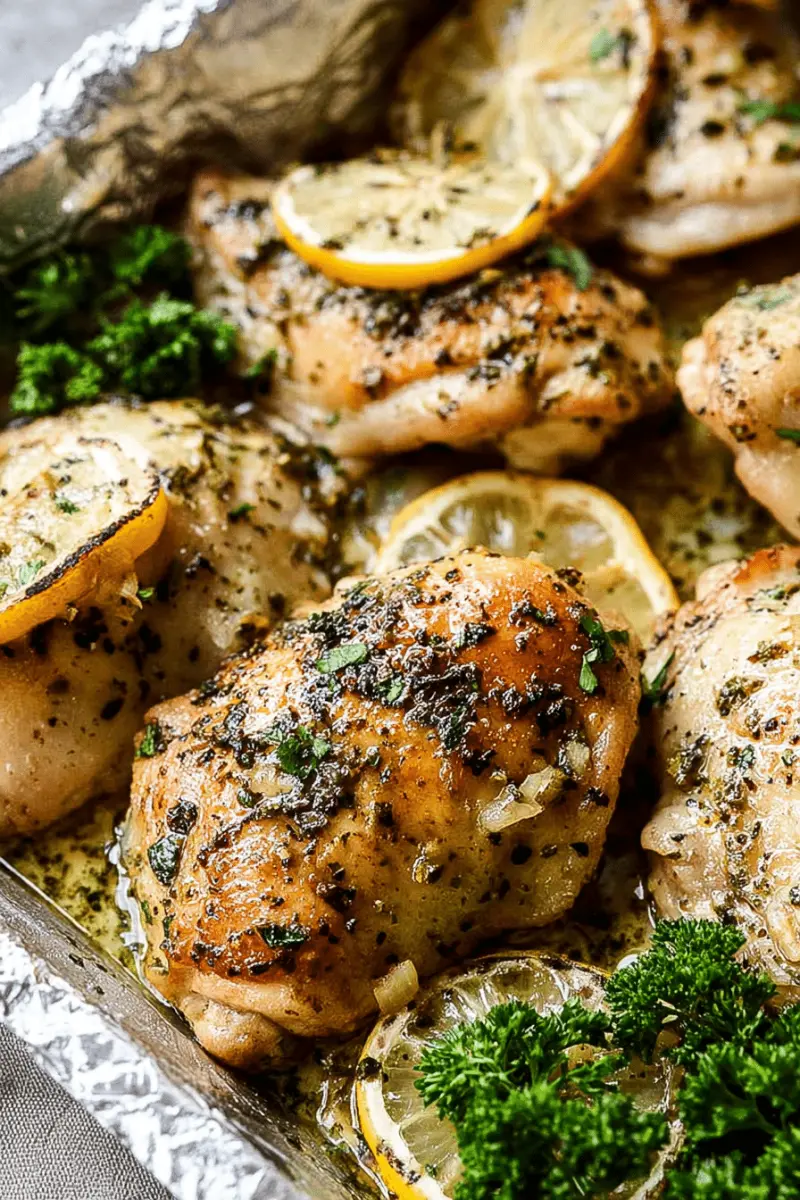
For a complementary weeknight main, consider serving this with a simple chicken dinner like Creamy Garlic Parmesan Chicken to mix up flavors across the week.
How to Make Easy Rotisserie Chicken Noodle Soup (Step-by-Step)
- Prep your vegetables and shred the rotisserie chicken; keep the bones if you’ll simmer them for extra flavor. If short on time, skip the simmer with bones and use a high-quality broth instead.
- Heat oil in a large pot and sauté the onion, carrots, and celery until the onion is translucent and the vegetables start to soften, stirring occasionally so they don’t brown.
- Add broth, herbs, seasonings, and the chicken (including the carcass if using). Bring the pot to a gentle simmer.
- Simmer on medium-low for about 20–30 minutes until the carrots are tender and the broth smells rich; remove the chicken bones and shred any remaining meat.
- Add your dry pasta and cook until al dente. If cooking gluten-free pasta, watch closely to prevent overcooking and consider cooking it separately if freezing.
- To thicken: whisk a small amount of cold soup with cornstarch or arrowroot until smooth, then stir it into the hot soup and simmer a minute or two until the broth slightly thickens.
- Taste and adjust salt and pepper. Stir in fresh herbs at the end for brightness, and serve hot with crusty bread or a simple green salad.
If you prefer hands-off cooking, this recipe adapts well to a slow cooker. For another slow-cooker comfort option, try Slow Cooker Chicken and Dumplings for inspiration on low-and-slow weeknight meals.
Pro Tip for easy rotisserie chicken noodle soup: Freeze, Reheat, and Allergy Swaps
Note to the writer: present the Pro-Tips, Troubleshooting, and Variations sections as bulleted lists for quick scanning.
- Freezing tips – Cool completely before transferring to airtight freezer-safe containers. Freeze without cooked pasta for best texture; add cooked or freshly cooked pasta when reheating. Frozen soup keeps well for up to three months.
- Reheating – Thaw overnight in the fridge if frozen. Reheat gently on the stovetop over medium-low heat so the broth warms evenly; add a splash of water or broth if it has thickened too much, and add pasta near the end.
- Allergy swaps – For gluten-free: use gluten-free broth and gluten-free pasta or replace pasta with rice or diced potatoes. For dairy-free: skip butter (use olive oil) and avoid finishing with dairy-based garnishes.
- Vegetarian variation – Use a hearty vegetable broth, omit chicken, add extra mushrooms and root vegetables, and toss in a plant-based shredded chicken substitute if desired.
How to Store, Reheat, and Freeze This Soup for Quick Meals
- Storage containers: Use airtight containers or heavy-duty freezer bags. Label with date and contents for quick weekday choices.
- Fridge timing: Store in the refrigerator for up to 3–4 days. If you’ve added cooked pasta, aim to eat within that window to avoid soggy noodles.
- Freezing method: Freeze soup without the pasta when possible; portion into meal-sized containers so you can thaw only what you need.
- Reheating best practices: Reheat slowly on the stove and add fresh cooked or leftover pasta near the end. If reheating from frozen, thaw overnight then reheat, or simmer gently from frozen adding extra liquid as needed.
For more make-ahead soup ideas you can store like this, check out our Classic Potato Leek Soup, which follows similar storage and reheating rules.
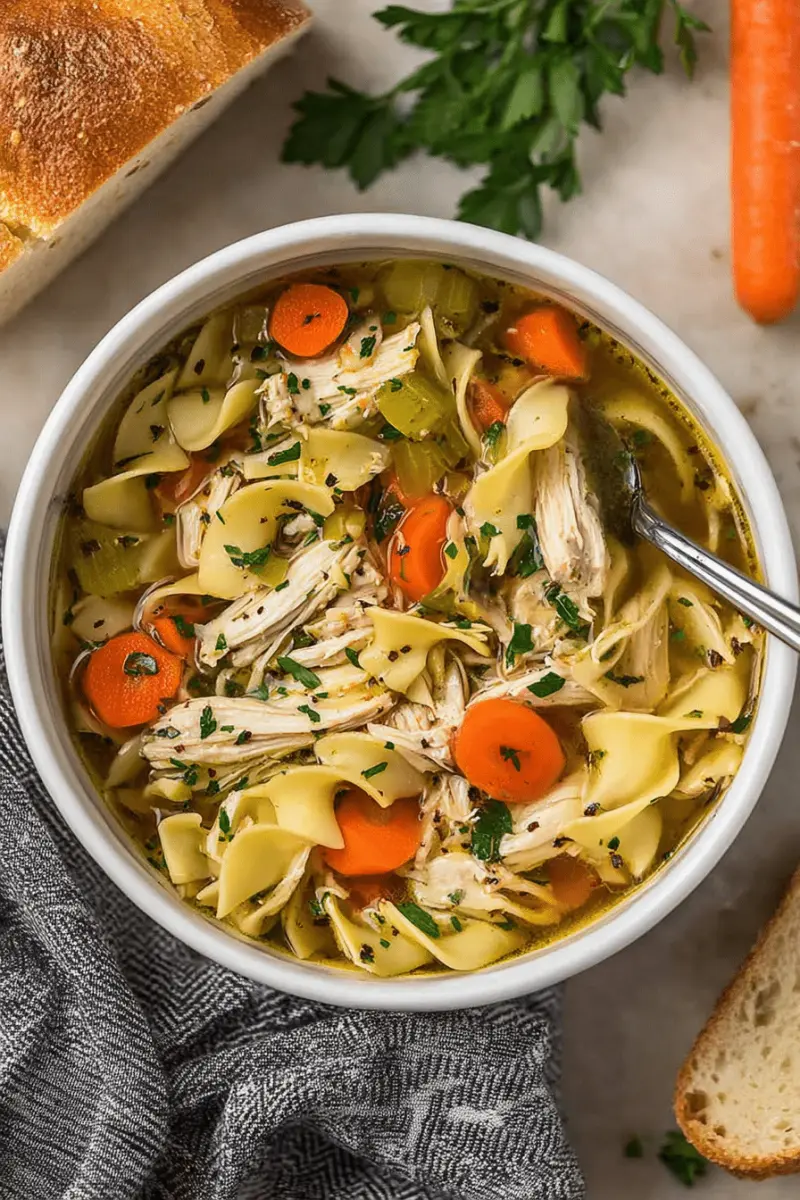
Serving suggestion: finish bowls with a sprinkle of fresh parsley and a grind of black pepper. This soup is forgiving, quick, and perfect for the nights when you want homemade comfort without a long cook time. I keep a batch in the freezer or fridge regularly so dinner is always easy.
Frequently Asked Questions
Can I use store-bought chicken broth for this soup?
Absolutely! Store-bought chicken broth is a great option to save time. Just make sure to choose a flavorful one for the best results.
How can I make this soup gluten-free?
You can easily make this soup gluten-free by using gluten-free pasta instead of regular pasta. Additionally, check the chicken broth to ensure it’s gluten-free.
Can I freeze the leftover soup?
Yes, this soup freezes well! Just make sure to let it cool completely before transferring it to an airtight container. It can be stored in the freezer for up to 3 months.
What type of noodles work best in this soup?
Egg noodles are a popular choice for chicken noodle soup, but you can use any pasta you like. Just be mindful of cooking times as different pasta types can have various cooking durations.
How long can I store the soup in the fridge?
You can store the soup in an airtight container in the fridge for up to 3-4 days. Reheat on the stove or in the microwave when ready to enjoy!
Recipe Card
The Easy Rotisserie Chicken Noodle Soup I Make Every Weeknight
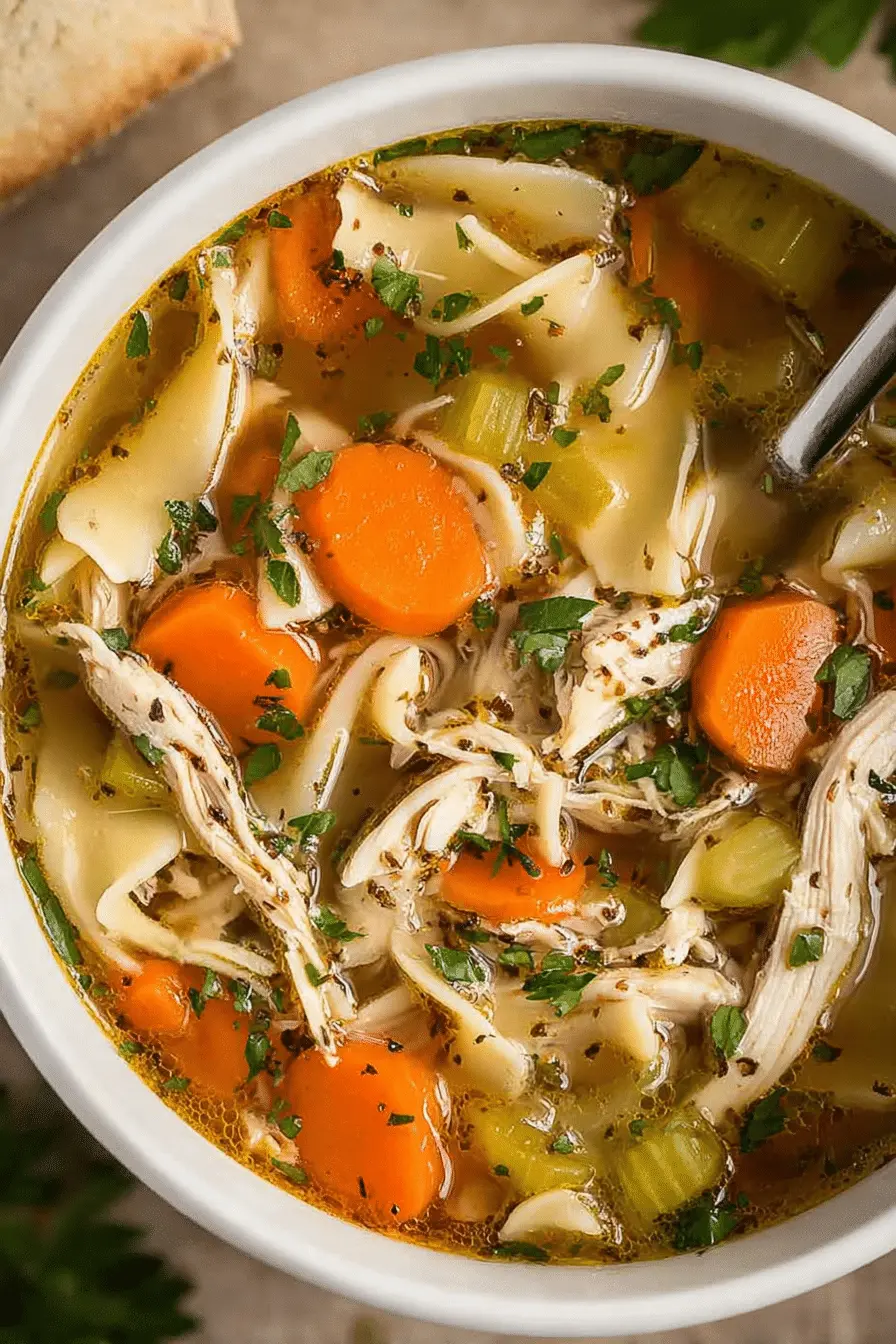
- Prep
- 15 min
- Cook
- 45 min
- Total
- 60 min
- Serves
- 8
- Calories
- 316 kcal
- Protein
- 43.00 g
- Carbs
- 24.00 g
- Fat
- 6.00 g
Ingredients
- 1 wholerotisserie chicken (fully cooked, approx. 2 1/2 pounds)
- 12 cupschicken broth
- 4 stalkscelery, chopped
- 4-5 piecescarrots, sliced
- 1 wholeonion, diced
- 1 teaspoongarlic powder
- 2 teaspoonsparsley (dried)
- 1 teaspoonoregano
- 0.5 teaspoonthyme
- 1 leafbay leaf
- 0.5 teaspoonsea salt
- 1 teaspooncracked pepper
- 2 cupsdry pasta
- 0.25 cupcorn starch
- 1 tablespoonolive oil (for stove top)
Instructions
- 1
Chop vegetables. Pull off the chicken breast meat and shred if desired. Heat olive oil over medium high heat in a large pot. Add celery, carrots and onion and sauté until onions become translucent. Add in broth, salt, pepper, garlic, bay leaf, thyme, oregano, parsley, and chicken (including the whole chicken carcass).
- 2
Turn heat to medium and allow soup to come to a low boil for about 30 minutes or until carrots are fully softened. At this time, it is easiest to remove the chicken bones.
- 3
When bones are removed, add in dry pasta and allow to cook for about 10-15 minutes, or until al dente. Pour about 1 1/2-2 cups of the soup into a small bowl and whisk in the corn starch until dissolved. Add this mixture back into the soup and stir to fully combine.
- 4
Enjoy! Store leftovers in an airtight container in the fridge.
- 5
Add all ingredients into the slow cooker except the pasta and the corn starch.
- 6
Cook on low for 6-8 hours or high for 4-6 hours. Remove the bones before adding the pasta. Add dry pasta and allow to cook until al dente, about 15-20 minutes.
- 7
Pour about 1 1/2 - 2 cups of the soup into a small bowl and whisk in the corn starch until dissolved. Add this mixture back into the soup and stir to fully combine.
- 8
Enjoy! Store leftovers in an airtight container in the fridge.
You might also like

Reviews
Be the first to review this.