- Prep
- 10 min
- Cook
- 30 min
- Total
- 40 min
- Serves
- 8
- Calories
- 382 kcal
- Carbs
- 48.00 g
Introduction
I make this French toast casserole when mornings are chaotic but I still want something that feels special. I love that I can assemble most of it the night before, sleep through the usual scramble, and then pop it in the oven with a single timer. The house fills with warm cinnamon and brown-sugar aromas — it’s the kind of smell that makes everyone find the table a little earlier than they planned.
Over the years I’ve learned a few simple habits that take this from “good” to “can’t stop eating.” Little things matter: using day-old bread so the custard soaks in without turning soggy, and pouring a glossy butter-and-brown-sugar layer into the pan first so you get a caramel kiss on the bottom. These are the tweaks I reach for when I want impressive results with minimal morning effort.
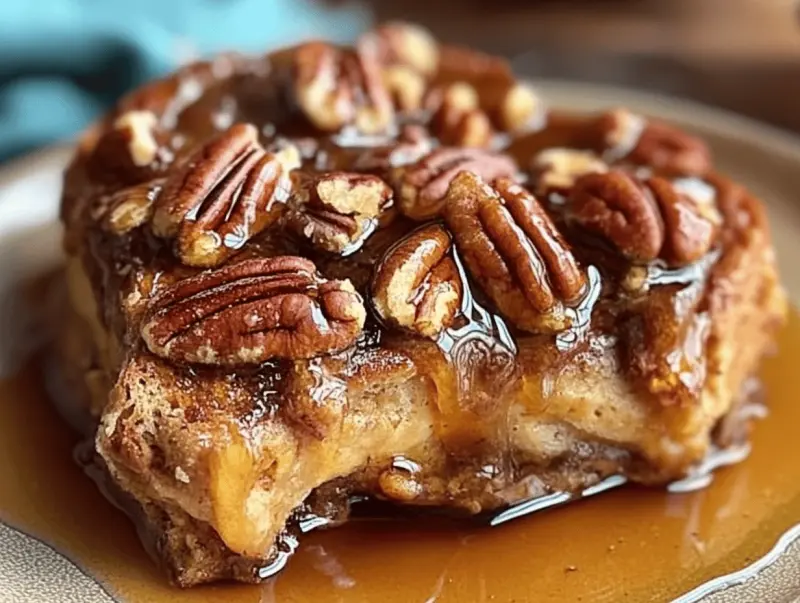
I also rely on the make-ahead trick constantly. Assemble the casserole in the evening, refrigerate, and it’s practically a hands-off breakfast the next day. For a twist that leans more on nuts and autumn flavors, I sometimes make a Pecan Pie French Toast Casserole — it’s a fun variation for holidays or guests who want something richer.
If you're a fan of sweet breakfast dishes, try our Pecan Pie French Toast Casserole for a delightful twist.
Why this French Toast Casserole is perfect for busy mornings
This recipe is baked, not pan-fried, which means you do the prep once and the oven does the rest. It feeds a crowd easily, so it’s great for families or a casual brunch with friends. If you assemble it the night before, mornings become a simple bake-and-serve routine.
- Less morning juggling — assemble ahead and bake when you’re ready.
- Feeds multiple people without standing over a skillet.
- Flexible: you can make it richer or lighter depending on the bread and toppings you choose.
Everything You Need for French Toast Casserole
Use fresh ingredients where they matter most: good eggs, whole milk (or a swap below), and a flavorful loaf of bread. The right tools keep the process simple: a sturdy baking dish, a whisk or fork, and a small saucepan for the butter-sugar base. Optional add-ins let you customize without complicating things.
- French bread or a sturdy loaf – Provides a firm crumb that soaks custard without falling apart.
- Butter – Makes the caramel layer and adds richness; use a neutral oil if needed.
- Brown sugar – For depth and caramel notes; swap for coconut sugar for a different flavor.
- Eggs – The binding custard; a source of structure and silkiness.
- Milk – Adds creaminess; dairy-free milks work but change texture slightly.
- Vanilla – Simple flavor lift; use vanilla bean paste or extract.
- Cinnamon – Warm spice that pairs with the brown sugar base; try nutmeg or pumpkin pie spice for a seasonal shift.
- Optional toppings (fruit, nuts, syrup) – Add texture and brightness at the end.
- Tools – 9x13 baking dish, whisk, small saucepan, and a spatula make the job easy.
If you like a nutty or richer version, try swapping in elements from a pecan-focused casserole:
If you're a fan of sweet breakfast dishes, try our Pecan Pie French Toast Casserole for a delightful twist.
The Secret to the Best Texture: Day-Old Bread & Soak Time
The magic is in the bread and how long you let it mingle with the custard. Day-old bread has lost some surface moisture, which lets it drink the egg-milk mixture without collapsing. The goal is a custardy interior and a lightly set top — think creamy center with a slight chew.
- Use bread that’s at least a day old; if fresh, briefly toast it to remove surface moisture.
- Cut the loaf into bite-sized cubes so the custard reaches every nook and cranny.
- Pour the custard evenly and press the bread down gently so it soaks. If you assemble ahead, refrigerate to allow a deeper soak — the texture will be more uniform after an overnight rest.
- A short bake at a higher temperature sets the top and creates a golden crust while keeping the middle tender and custardy.
Best Breads to Use for Flavor and Texture
Different loaves bring different personalities. A rich, eggy bread becomes more luxurious; a country loaf gives you pleasant chew and toasty edges. I like to buy from small bakeries when I can — the crust-to-crumb ratio is often better and the flavor is more complex.
- Brioche – Ultra-rich and buttery; yields a very tender, indulgent casserole.
- Challah – Slightly sweet and eggy; a classic choice for a plush interior.
- French bread / country loaf – Firmer crumb and crusty exterior; more texture contrast.
- Whole wheat or multigrain – Adds nuttiness and a heartier bite; pairs well with fruit and nuts.
- Gluten-free loaves – Use a dense, sturdy variety so it holds up during soaking.
For a fall-themed twist that pairs beautifully with many breads, try a pumpkin-forward version:
For a seasonal variation, check out our Pumpkin French Toast recipe, which pairs beautifully with various breads.
Toppings and Mix-Ins to Make It Your Own
Toppings are where you can have fun without changing the core recipe. Fresh berries add brightness, toasted nuts add crunch, and a drizzle of maple keeps things classic. Mix small amounts of add-ins into the custard if you want an even distribution, or sprinkle them on top so they caramelize slightly while baking.
- Fresh fruit (sliced apples, berries, bananas) for freshness and color.
- Toasted nuts (pecans, walnuts, almonds) for crunch and toasty flavor.
- Chocolate chips or chopped chocolate for a sweeter, more indulgent turn.
- Spice blends (extra cinnamon, nutmeg, or a pinch of cardamom) to shift the aroma profile.
- Syrups and compotes (maple syrup, berry compote) added after baking for shine and moisture.
Looking for more topping ideas inspired by easy baked treats?
Looking for more fun ideas? Try adding toppings inspired by our Baked French Toast Muffins.
How to Make French Toast Casserole (Step-by-Step)
- Preheat your oven to a high temperature so the top browns while the center sets.
- Butter your baking dish and melt butter with brown sugar in a small saucepan to make a glossy base; pour it into the pan and spread it evenly.
- Add the cubed bread to the pan, distributing it so the sugar-butter layer is covered evenly.
- Whisk together eggs, milk, vanilla, and cinnamon until smooth, then pour the custard over the bread, pressing gently so the cubes are saturated.
- Sprinkle a little extra cinnamon and a bit of brown sugar on top for a caramelized finish.
- Bake until the top is golden and the center is set but still tender — timing varies slightly by oven and how long you let it soak first.
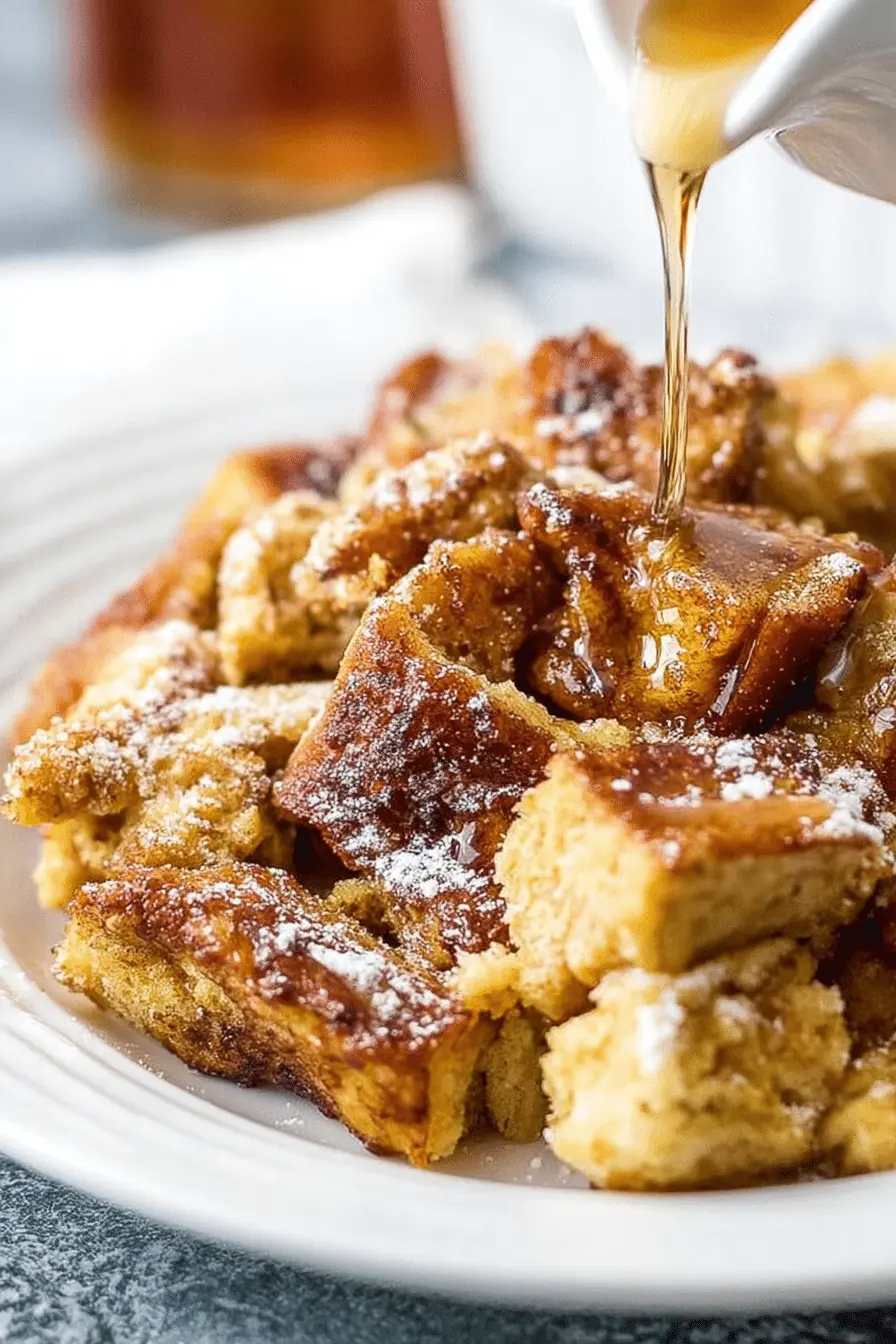
- Let the casserole rest briefly before serving; dust with powdered sugar or drizzle with syrup if you like.
Common pitfalls and timing tips:
- Don’t over-soak if you’re using a very soft bread — it can go mushy. Press and check the texture before baking.
- If you assemble overnight, add a few extra minutes to the bake time so the center reaches the right temperature.
- Watch the top during the last few minutes — a too-dark top can happen quickly; tent with foil if needed.
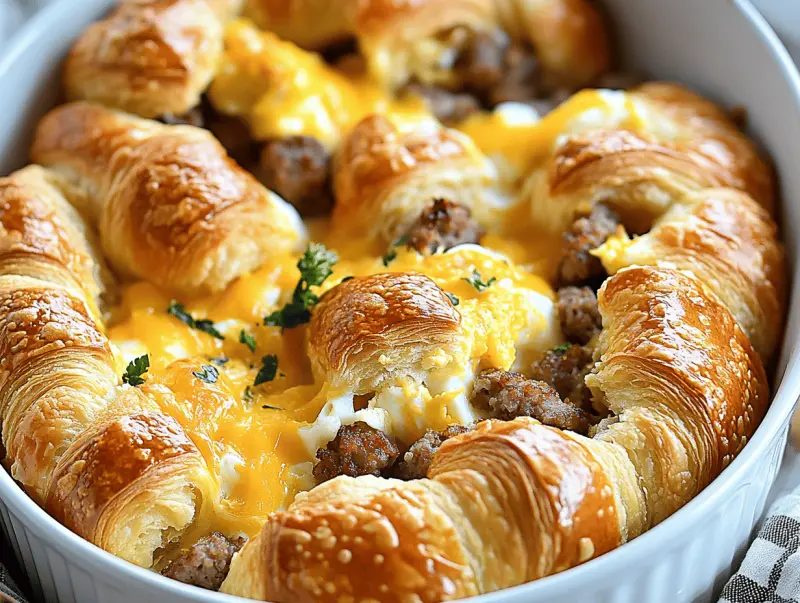
- For a flakier, richer take, try a version using croissants; it’s a lovely alternative for a special brunch.
For another easy and indulgent breakfast option, try our Overnight Croissant Breakfast Casserole.
Troubleshooting
- If the center is still too jiggly after the suggested bake time, return it to the oven for short increments, covering the top if it’s already browned.
- If the bottom caramel is sticking when you serve, let the casserole sit a few minutes so the sugar firms up slightly for cleaner slices.
- If your bread is too dry even after soaking, reduce the cubing size next time so more surface area contacts the custard.
- I’ve found that using a metal pan gives a crisper bottom than a ceramic dish — choose the pan that matches the texture you prefer.
Note: Pro-Tips, Troubleshooting, and Variations are shown as bulleted lists for easy scanning.
Pro Tip for french toast casserole: Low-Sugar & Gluten-Free Swaps
- I prefer to cut sugar by reducing the brown sugar in the base and relying on naturally sweet toppings like fruit — you still get caramel notes without as much added sugar.
- For a low-sugar option, use a sugar substitute suitable for baking or reduce the brown sugar and lean on spices for aromatic sweetness.
- To go gluten-free, choose a sturdy gluten-free loaf that’s not overly soft; you want a crumb that holds up when soaked.
- Swap dairy milk for almond, oat, or soy milk; expect a slightly different texture but still delicious results.
- Keep texture in mind: denser breads and higher-structure gluten-free options absorb custard more predictably than very airy loaves.
Variations
- Pumpkin-spiced: stir a little pumpkin puree and spice into the custard for autumn mornings.
- Pecan-pecan: fold toasted pecans into the custard and use pecans on top for crunch.
- Chocolate-happy: sprinkle chocolate chips between layers of bread for melty pockets of chocolate.
- Berry-laced: fold fresh or thawed berries into the top layer for bursts of brightness.
How to Store, Reheat, and Make-Ahead French Toast Casserole
Proper handling keeps leftovers tasty and safe. I typically refrigerate any cooled leftovers in an airtight container and reheat single portions as needed. If you plan to make this ahead, assemble and refrigerate overnight, then add a few extra bake minutes.
- Store leftovers in the refrigerator in an airtight container for up to three days.
- Reheat individual portions in the microwave for a quick serve, or reheat in a moderate oven to restore some crispness.
- To freeze, cut into portions and wrap tightly; thaw overnight in the refrigerator before reheating.
- When assembling ahead, cover the unbaked dish and refrigerate; bring to room temperature briefly before baking if your oven requires it, and add a few extra minutes to the bake time.
Frequently Asked Questions
Can I use stale bread for French toast casserole?
Absolutely! Day-old bread is actually preferred because it absorbs the custard better without becoming mushy.
How do I store leftovers of this casserole?
Store any leftovers in an airtight container in the refrigerator for up to 3 days. You can reheat individual portions in the microwave.
Can I make French toast casserole ahead of time?
Yes! You can assemble the casserole the night before, cover it, and refrigerate it. Just add a few extra minutes to the baking time.
What toppings can I add to my French toast casserole?
You can personalize it with toppings like fruit, nuts, chocolate chips, or even a drizzle of maple syrup!
Is there a way to make this recipe gluten-free?
Yes! Simply use gluten-free bread in the recipe, and you can still enjoy a delicious casserole.
Recipe Card
The French Toast Casserole I Make Every Busy Weekend Morning
- Prep
- 10 min
- Cook
- 30 min
- Total
- 40 min
- Serves
- 8
- Calories
- 382 kcal
- Carbs
- 48.00 g
Ingredients
- ½ loafFrench bread ((about 8 oz) cut into cubes)
- ½ cupbutter
- 1 cuppacked brown sugar
- 6eggs
- 2 cupsmilk
- 2 teaspoonsvanilla extract
- 2 teaspoonscinnamon ((divided))
- 1 Tablespoonbrown sugar ((for topping))
- —powdered sugar ((for topping, optional))
Instructions
- 1
Preheat oven to 425 degrees. Butter a 13x9 inch baking pan and set aside.
- 2
In a small sauce pan, melt butter over medium heat. Stir in brown sugar until dissolved and smooth. Pour into the bottom of the pan and spread evenly.
- 3
Add bread cubes to the pan, spreading over the top of the brown sugar/butter mixture.
- 4
In a medium bowl, whisk together eggs, milk, vanilla, and 1 tsp of cinnamon. Pour over bread cubes, ensuring all are saturated. Sprinkle with remaining cinnamon and brown sugar.
- 5
Bake for 25-30 minutes until golden brown. Remove and sprinkle with powdered sugar if desired. Enjoy!
You might also like


Reviews
Be the first to review this.