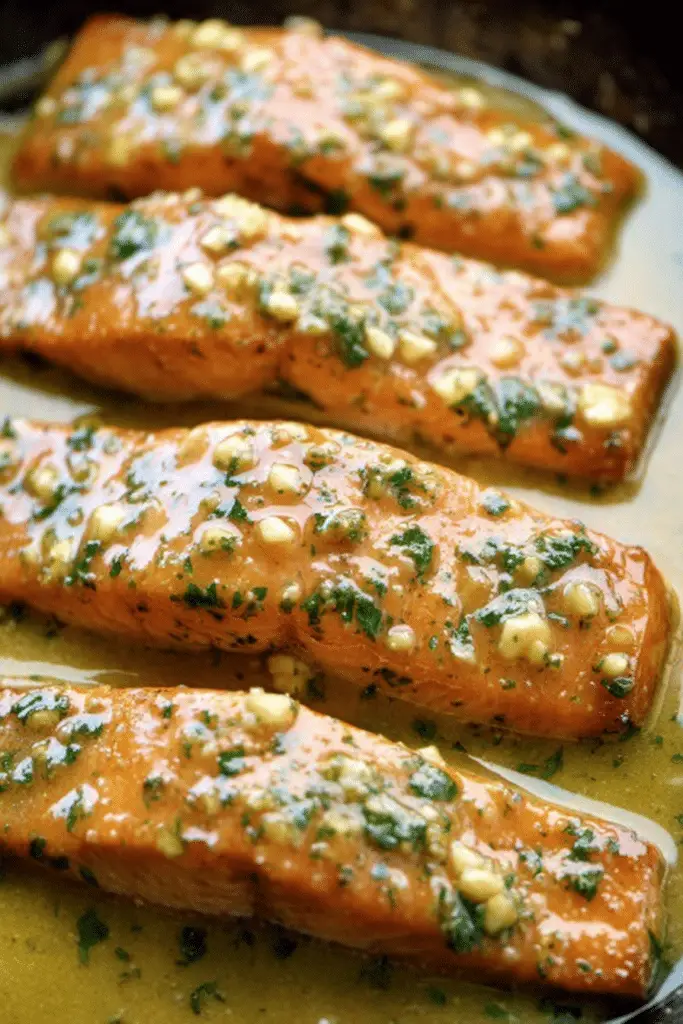
I learned to make this garlic butter salmon on a rainy Thursday when I needed dinner that felt like comfort food but didn’t demand babysitting the oven. The first time I made it I thought, “Can something this simple actually taste so rich?” — and then the kitchen filled with that warm, garlicky scent and a rim of butter browned at the edge of the pan convinced me it could. The fillets get a quick sear that gives a faintly crisp edge, and the sauce finishes them off glossy, salty, and bright with lemon. It’s the kind of dish I reach for when I want something fast but a little luxurious, and it fits nicely into keto or low-carb meal plans because the carbs are minimal and the fats are satisfying.
I usually have this on my weeknight rotation. It’s done in under 30 minutes from start to finish — prep time, a quick sear, and a glossy garlic butter pan sauce. Four servings are easy to hit with a typical pack of salmon fillets, and it scales without drama. Below I walk through what I used, why each step matters, what went wrong the first few times I tested it, and how I fixed it. If you like food that smells like comfort and looks like you spent longer than you did, you’re in the right place.
Ingredients Needed
- Salmon fillets – the star of the show; fresh is ideal but thawed frozen fillets work well if dried and patted before cooking.
- Plain flour – light dusting to give the exterior a golden, slightly crispy crust that helps the sauce cling.
- Garlic powder – a background flavor in the coating that layers with fresh garlic in the sauce.
- Salt – brings out the salmon’s natural flavor; add more to taste once the sauce is finished.
- Black pepper – a gentle bite that balances the butter’s richness.
- Olive oil – used to get a hot sear without burning the butter; a drizzle is enough.
- Unsalted butter – builds the sauce. Using unsalted lets you control the seasoning; plant-based butter works for dairy-free versions.
- Fresh garlic – minced and cooked briefly to sweeten the flavor; don’t let it burn or it’ll taste bitter.
- Vegetable stock – deglazes the pan and becomes the body of the sauce; chicken stock works as well.
- Fresh parsley – scattered at the end for color and a fresh lift; dill is a good substitute.
- Lemon – for a squeeze at the end to brighten the whole dish.
- Vegan alternatives – plant-based butter and firm tofu can mimic the texture and buttery garlic flavor if you avoid fish or dairy.
Step-by-Step Cooking Instructions
- Prep the salmon and dredge: Pat four boneless, skinless salmon fillets completely dry with paper towels. I can’t overstate this: moisture is the enemy of a good sear. In a shallow dish, stir together the plain flour, a teaspoon of garlic powder, a teaspoon of salt, and a half-teaspoon of black pepper. Press each fillet lightly into the flour mixture and shake off the excess so you have only a thin coating. This light dredge gives you the golden crust without turning the fish bready.
- Sear the fillets: Heat a large non-stick or heavy skillet over medium-high heat and add about half a tablespoon of olive oil. When the oil shimmers and moves easily in the pan, add the fillets presentation-side down (the side you’ll serve up first). You should hear a clean sizzle — if it crackles loudly, your pan is too hot. Cook for around 3 minutes without moving them: that undisturbed contact makes the crust. Flip and cook the other side for about 2 minutes until a good golden crust forms. Add one tablespoon of butter to the pan and tilt it to baste the fillets for a minute; that basting finish keeps the exterior glossy and helps them approach doneness without drying out. At this point they’ll be just about cooked through — firm at the edges and slightly translucent in the center.
- Remove the salmon briefly: Transfer the fillets to a warm plate and lower the heat to medium. Removing the fish while you make the sauce prevents overcooking and frees up the pan to build flavor from the browned bits left behind.
- Make the garlic butter sauce: Add the minced garlic to the same pan and cook it for just 20–30 seconds until it begins to take on color — you’ll smell that sharp garlic soften and become almost sweet. Scrape up any browned bits with a wooden spoon; that’s where the flavor hides. Pour in about 120 milliliters (a half cup) of vegetable stock and let it come to a simmer so it loosens the fond off the bottom of the pan. Add the remaining butter (there are six tablespoons total used across the recipe; I add them in chunks so the sauce emulsifies nicely) and whisk or swirl until the butter melts and the sauce looks cloudy and slightly thickened. Stir in a tablespoon of finely diced parsley and taste for salt and pepper — small adjustments here make a big difference.
- Finish and baste: Lower the heat and simmer the sauce for a few minutes, stirring as it reduces; you’ll notice it coat the back of a spoon when it’s ready. Slide the salmon back into the pan briefly and spoon the sauce over each fillet so they warm through and get glossy. Finish with a squeeze of lemon right before serving — the acid brightens everything and cuts the butteriness.
- Serve: Plate the salmon with more sauce spooned over the top and a lemon wedge on the side. Expect the sauce to thicken further as it cools; if it gets too thick, a splash of stock or water will loosen it without losing flavor.
Note on cook times and doneness: I aim for an internal temperature of 145°F (63°C) for firm, flakey fish, but many cooks prefer to stop a hair earlier for a silkier center — about 130–135°F. If you’re unsure, check with a kitchen thermometer at the thickest part. If the fish flakes easily and the flesh feels slightly springy, it’s done.
Nutritional Information
Per serving (one fillet): approximately 343 kcal, 24.33 g fat, 4.79 g carbohydrates, 25.51 g protein. Salmon is a powerhouse of nutrition — it’s rich in omega-3 fatty acids (good for heart and brain health), high-quality protein, and vitamin D. Because this recipe is low in carbs and higher in healthy fats, it’s friendly to keto and low-carb diets. If you want to reduce calories or fat, cut the butter by half and add a splash more stock and lemon to maintain flavor; the dish will still be rich, just lighter.
Serving Suggestions
I like to serve this with bright, textural sides that balance the buttery sauce. Think something crisp or slightly acidic to contrast the salmon’s richness — a simple green salad with lemon vinaigrette, roasted asparagus, or mashed cauliflower for a low-carb plate. For dinner parties, I’ll sometimes lay the fillet on a smear of herbed yogurt or dollop a lemony gremolata on top so each bite hits hot, cool, and acidic notes.
This dish pairs wonderfully with baked garlic parmesan chicken for a complete meal.
Portioning: one fillet per person is standard for an entree. For smaller eaters or when serving multiple sides, the fillets can be halved. For a show-off plate, place the fillet slightly off-center, spoon the sauce beside it so it pools, and finish with a finely chopped sprinkle of parsley and a lemon wedge.
Pairing Ideas: Sides & Wine
- Asparagus, roasted or blanched — the stalks add a mild bitterness that cuts through the butter.
- Mashed cauliflower — creamy and comforting while keeping the meal low-carb.
- Light mixed greens with vinaigrette — a bright, acidic counterpoint.
- Herb-roasted baby potatoes — if you want a sturdier, downto-earth side.
For wine: a crisp white like Sauvignon Blanc or a lightly oaked Chardonnay complements the buttery sauce without overwhelming the salmon. If you prefer red, choose a light-bodied Pinot Noir with bright acidity that pairs well with salmon’s flavor profile.
Elevate your meal with a side of creamy garlic butter lobster tails for an exquisite seafood experience.
Tips for Perfect Salmon Every Time
- Always pat the fish dry: this is the easiest way to get a good sear and prevent steaming.
- Don’t overcrowd the pan: give fillets room so they brown rather than steam.
- Control the heat: medium-high for the sear, then medium to medium-low for the sauce; too high and the butter and garlic will burn.
- Use unsalted butter so you can season at the end; otherwise the dish can get overly salty.
- Check doneness with a thermometer: 145°F (63°C) is the USDA recommendation, but many prefer slightly less for a moister center.
Consider incorporating creamy sauce ideas for pasta to complement your garlic butter salmon.
Reader interaction: I love when people tell me their adjustments — some readers add a pinch of smoked paprika to the flour for a subtle smoky note, others swap dill for parsley. If you try a tweak, note how it changed the texture or balance so others can learn from your experience.
Potential Variations and Alternatives
If you like a garlickier version, brown the garlic longer and add an extra clove, but watch carefully — burnt garlic turns bitter fast. For a creamier, richer sauce, stir in a splash of cream at the end and warm through gently. If you prefer a lighter sauce, use more stock and less butter, finishing with lemon to keep it lively.
If you’re a fan of shrimp, try adding garlic butter shrimp for a delightful twist on this recipe.
Grilling variation: brush fillets with oil, season lightly, and grill skin-side down for most of the cook time; then finish with the pan sauce spooned on top. Air-fryer: lightly oil and cook at 400°F for about 8–10 minutes depending on thickness, then briefly baste with the warmed butter sauce.
Plant-based alternative: pan-sear firm tofu pressed and sliced into fillet shapes, dusted with a little flour and garlic powder, then finish in the same garlic butter (or plant-based butter) sauce. It won’t be fish, but it captures the spirit and texture pairing.
FAQ
Can I use frozen salmon for this recipe?
Absolutely! Just make sure to fully thaw the salmon before cooking to ensure even cooking and better texture.
What can I substitute for butter if I want a dairy-free option?
You can use plant-based butter or olive oil as a great alternative to keep the garlic butter flavor while making it dairy-free.
How can I tell when the salmon is done cooking?
Salmon is cooked when it flakes easily with a fork and the internal temperature reaches 145°F (63°C). A kitchen thermometer can help with accuracy!
Are there any side dishes that pair well with garlic butter salmon?
Yes! It pairs wonderfully with sides like asparagus, mashed cauliflower, or a fresh salad for a balanced meal.
Can I modify the recipe to use other fish?
Definitely! You can use other types of fish like trout or sea bass, just adjust the cooking time as needed based on the thickness of the fillets.
Conclusion: Why You’ll Love This Recipe
Garlic butter salmon is a reliable weeknight winner: quick to make, full of flavor, and flexible enough to dress up for guests or simplify for a busy night. I keep the ingredients simple because each one plays a clear role — the flour for a light crust, the butter for richness, the stock to lift the fond, and lemon to cut the fat. After a few tests I landed on the timing and butter method you see here because it gives the best texture and glossy sauce every time.
Try it as written the first time, then experiment: swap herbs, try smoking the pepper, or grill and finish with the sauce. If you make it, take a photo — I always learn from seeing how other home cooks plate and serve it. Share your version and any handy tweaks you discovered; I read every comment and I’ll often reply with small adjustments that helped me on nights when timing or ingredients went sideways.
Enjoy — this dish is simple, forgiving, and genuinely delicious. It’s the kind of recipe that becomes a habit because it tastes like care but only takes a little of your day.
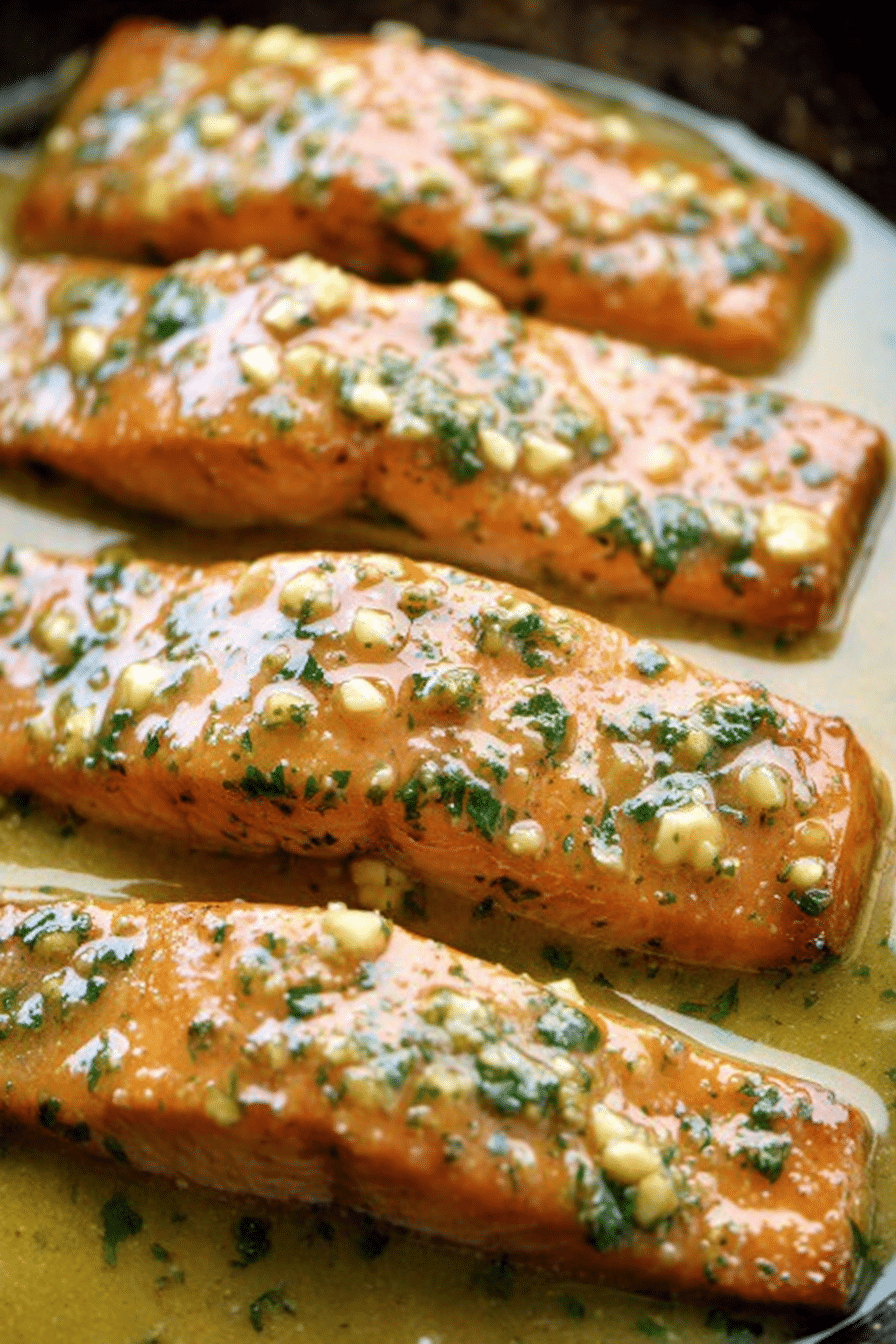
Garlic Butter Salmon
Ingredients
Method
- In a large shallow dish combine flour, garlic powder, salt and black pepper. Coat each salmon fillet, giving them a shake before placing to one side.
- Add the olive oil to a large non-stick pan over medium-high heat. Once hot, add the fillets and fry for around 3 mins, or until they build up a golden crust on the bottom. Carefully flip them over and fry for another 2 mins, or until golden on the other side.
- Add in 1 tbsp butter and baste the fillets for a minute or so, or until they're just about cooked through. Remove from pan and lower heat to medium.
- Add the garlic and fry until it just begins to take on colour. Pour in the stock and scrape any flavour off the pan.
- Add the remaining butter and whisk until it binds with the stock and turns it cloudy. Add parsley and a pinch of salt & pepper if desired.
- Simmer for a few mins, stirring as you go, until the sauce begins to thicken. Turn heat to low and add the salmon back in. Baste in the sauce to warm it through, then serve with more sauce and a squeeze of lemon juice.