- Prep
- 15 min
- Cook
- 55 min
- Total
- 70 min
- Serves
- 6
- Calories
- 250 kcal
- Carbs
- 30.00 g
Introduction
Avgolemono — literally "egg-lemon" — is one of those sauces-soups that feels like being wrapped in a warm kitchen memory. It’s a Greek classic: bright lemon, glossy egg, and the gentle comfort of a homemade chicken broth carrying it all. I make this soup when I’m under the weather, when I want something gentle for dinner, and when the house needs that citrus-y steam drifting through the rooms. The first time I learned to temper the eggs for avgolemono, I almost ruined an entire pot by rushing it; since then the tempering step is sacred in my kitchen. The smell is what hits you first — citrus cut through warm chicken — and when the shredded chicken hits the spoon it’s soft, warm and almost pulled-apart, soaking up the lemony broth. Avgolemono has roots in Greek home cooking and celebratory tables alike — a flexible technique turned into many regional and family variations. The heart of the technique is simple: eggs and lemon become a silky emulsion when tempered with hot broth. The result is bright, velvety, and utterly comforting.Ingredients You'll Need
- Chicken thighs (skin-on, bone-in) – make a rich, flavored broth and tender shredded meat; the recipe uses six pieces, but you can substitute boneless thighs or a whole chicken if preferred.
- Red onion – adds savory depth to the stock; use a halved onion to simmer with the chicken for a cleaner, sweeter broth.
- Carrots – chopped carrots lend sweetness and body to the broth and a little texture to the finished soup.
- Water – the cooking liquid (about 5 cups in the original recipe) becomes your base; you can use low-sodium chicken stock for a deeper flavor.
- Orzo – small rice-shaped pasta that cooks quickly and makes the soup filling (the recipe calls for roughly 120 g / 4 oz); substitute short-grain rice or gluten-free small pasta if needed.
- Eggs – the thickening agent for avgolemono; whisk until frothy before adding lemon and tempered hot broth.
- Lemon – fresh lemon juice brightens the soup; one large lemon’s juice is typical, but taste and adjust — lemons vary in intensity.
- Fresh dill – stirred in at the end for an herby finish; parsley also works if dill isn’t your thing.
- Salt and freshly ground pepper – essential seasoning; adjust at several stages because the broth concentrates and the orzo can absorb salt.
Step-by-Step Cooking Instructions
I follow this approach every time I make avgolemono. It’s the version I’ve tested and come back to: simmer, shred, cook orzo, temper the eggs, and finish gently. Below is a detailed walkthrough with what to watch for at each stage. For building a rich, flavorful broth before making avgolemono, see our tips on homemade chicken broth and soup techniques.- Start the broth: Place the chicken thighs into a large pot with the halved red onion and chopped carrots. Season well with salt and a few grinds of pepper and pour in enough water to cover the pieces (the recipe uses about 5 cups). Put the pot over high heat and bring the liquid to a boil, skimming any foam that rises. That gray foam tastes bitter if left in — pull it off with a slotted spoon so the broth stays clear. Once the broth reaches a boil, reduce to low, cover, and simmer for about 30 minutes. The chicken should be tender and the aromas in your kitchen will change from raw to gently sweet and savory; the onion scent will soften and the broth will smell homey and citrus-ready.
- Remove and cool the chicken: Take the thighs out and set them aside to cool enough to handle. At this point I usually remove the skins — they’ve released fat into the stock and you don’t need the skins in the finished soup. Shred the meat off the bones; I like to tear it into bite-sized pieces by hand so it keeps those little strands that cling to spoonfuls of broth. Leave the bones in the pot for extra flavor while you continue. If you’re using boneless chicken, just shred and proceed.
- Check seasoning and add the orzo: Taste the broth and adjust salt and pepper now — soup concentrates as it simmers and the orzo will soak up sodium. Turn the heat to medium and stir the orzo into the simmering stock. Cook, covered, for about 15 minutes or until the pasta is just tender. Orzo tends to go from al dente to soft quickly; give it a stir halfway to avoid sticking. The texture should be tender but not mushy — lightly chewy in the center at first, then yielding.
- Prepare to temper the eggs: Once the orzo is tender, use a slotted spoon or sieve to remove and discard the bones and the large pieces of onion. Ladle 3–4 cups of hot soup into a heatproof jug or bowl and set a sieve nearby to catch any bits if needed. You want hot, not boiling, liquid for tempering: the surface should have steam and gentle movement.
- Make the avgolemono: Whisk the eggs in a bowl until just frothy, then add the lemon juice and whisk to combine. Now temper: while whisking constantly, pour a very slow stream of the hot broth into the egg-lemon mixture — start with a tablespoon at a time, increase as the eggs warm. This step avoids scrambling. The mixture should lighten and become glossy and loose, not soupy. If it looks like it’s thickening oddly or forming strings, stop adding hot liquid momentarily and whisk faster; you may be adding heat too quickly. Once the egg-lemon mixture is warmed through and loose, slowly whisk it back into the soup pot in a thin stream. Keep the pot on the stove at low heat; do not let the soup boil after the eggs are in, or it will curdle. I usually take the pot off the heat a minute before and add the emulsion while stirring — residual heat is enough to integrate it.
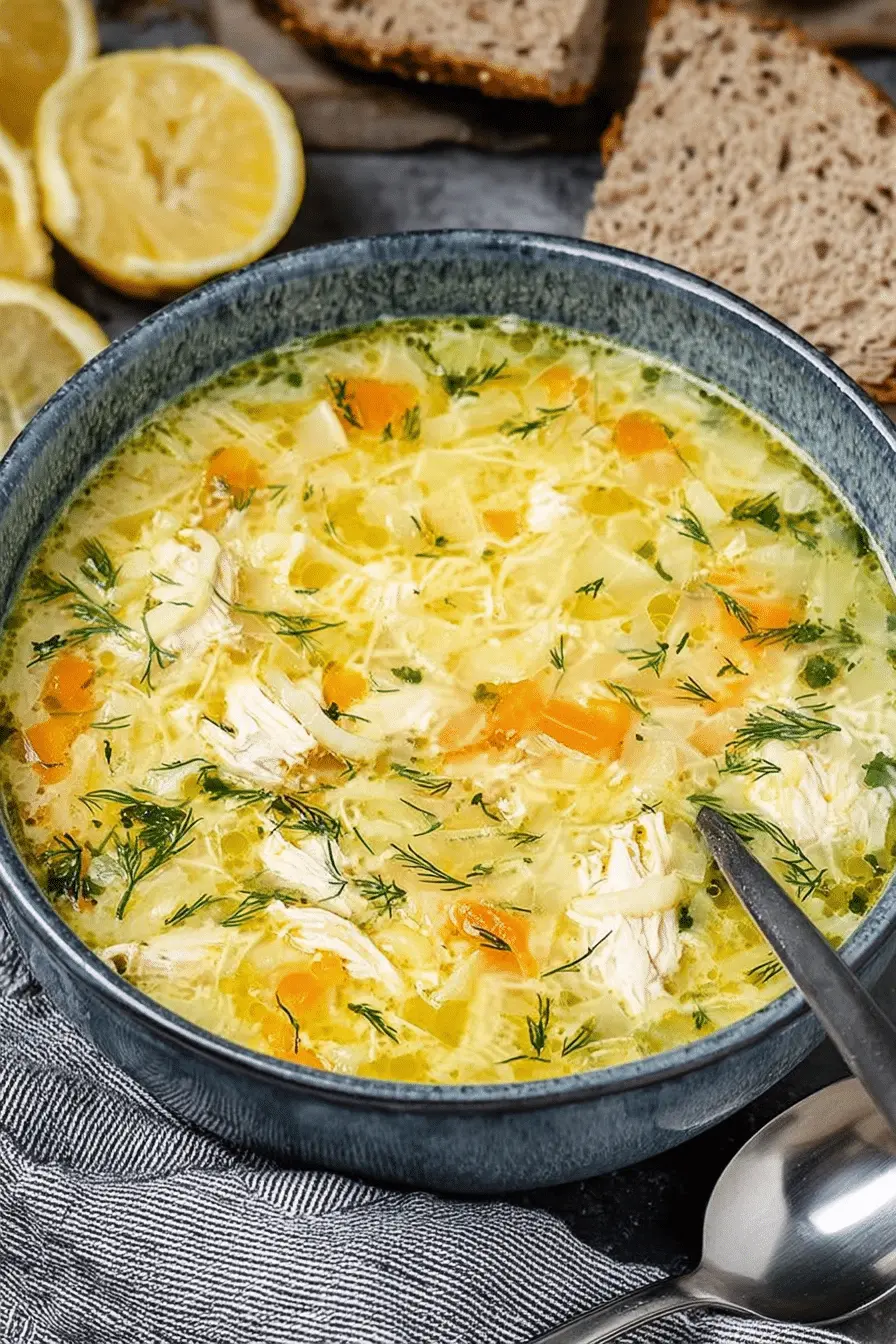
- Finish and serve: Return the shredded chicken to the pot and gently warm it through on very low heat — you’re only bringing it up to serving temperature, not cooking the eggs further. Add chopped fresh dill and taste for final seasoning. The finished soup should be glossy, a bit thickened but still spoonable (not like a stew). The mouthfeel is silky and slightly viscous from the eggs, with little bursts of orzo and tender chicken.
Tips for Customization and Variations
Avgolemono is wonderfully adaptable. Over the years I’ve tweaked it for holidays, weeknights, and what’s in the fridge. Below are tested ideas that work in my kitchen:- Turkey instead of chicken – leftover roast turkey works great. Use leftover juices as part of the broth and reduce simmer time since the meat is already cooked.If you'd like to make a turkey version instead of chicken, our hearty turkey wild rice soup explains adjustments for poultry substitutions and timing.
- Vegetarian version – swap the chicken for a rich vegetable stock and add hearty vegetables like white beans, mushrooms, or roasted butternut. Use the same avgolemono tempering method with eggs to keep the classic finish.
- Gluten-free option – replace orzo with short-grain rice (like arborio) or certified gluten-free small pasta. Rice will need more liquid and slightly longer cooking time.
- Extra vegetables – add diced celery, leeks, or spinach at the end (spinach wilts quickly when stirred in off-heat). Root vegetables add body; delicate greens should be added at the final warm stage.
- Herb swaps – dill is traditional and bright, but parsley and chervil are gentle options. For a more assertive riff, add a touch of mint in very small amounts.
- Acidity tuning – lemons vary. Start with one lemon and taste; if the soup tastes flat, add salt rather than more lemon first — acidity without enough salt can seem weak.
Pairing Suggestions for Sides and Salads
Rendering avgolemono as the centerpiece of a Mediterranean-style meal is easy. These pairings have been my go-tos when I host a small dinner:- Greek salad – crisp romaine or mixed greens with cucumber, tomato, red onion, and a light olive oil-oregano dressing adds textural contrast.
- Tzatziki – cool yogurt, cucumber, and garlic dip balances the lemon brightness of the soup.Pair avgolemono with cool Mediterranean sides like homemade tzatziki to balance the soup's bright lemon flavor.
- Warm pita or crusty bread – for sopping up the broth; if you want crunchy contrast, lightly toast the bread with a drizzle of olive oil and oregano.
- Light white wines – a dry, citrusy white (like Assyrtiko or a crisp Sauvignon Blanc) echoes the lemony notes without overpowering the soup.
Nutritional Information
Exact numbers depend on the chicken cut, whether you use stock versus water, and the orzo portion. The recipe yields about six portions. Rather than invent precise values, here are reasonable estimates and nutritional highlights so you know what to expect:- Calories: Roughly 300–450 kcal per serving, depending on how much chicken (dark meat raises calories) and how much orzo you include.
- Protein: A hearty source — expect 20–35 g of protein per serving from the chicken and eggs.
- Fat: Moderate fat content, especially if you simmered with skin-on thighs (some fat renders into the broth). Removing the skin reduces saturated fat.
- Carbohydrates: Mostly from the orzo — plan on 25–40 g carbs per serving depending on portion size.
- Micronutrients: Good source of vitamin C (from lemon), B vitamins and selenium (from chicken), and potassium from carrots and stock. Fresh dill adds small amounts of vitamin A and antioxidants.
Cultural Significance of Avgolemono
Avgolemono is more than a recipe in Greece — it’s a technique that surfaces at family tables, on holiday menus, and in everyday bowls. Historically, the method of thickening with eggs and lemon likely evolved out of pantry-stable elements: citrus and eggs were readily available and provided a luxurious texture without cream. In many Greek families, avgolemono appears at Easter alongside roast lamb and in winter as a restorative soup. Regional differences exist: some households use rice instead of orzo, others fold in more herbs or include potatoes. Some versions are thicker (near a stew) and others are a clear, brothy soup with a silky finish. The recipe you end up with often tells a story: which kind of lemon your family prefers, whether your grandmother used more dill or parsley, and even whether you salt early or late. That’s what I love about it — it’s an easy canvas for personal and regional expression.Frequently Asked Questions
- Can I use rice instead of orzo?Yes — traditional avgolemono often uses rice. Use a short-grain rice (like arborio) and allow more cooking time and liquid, since rice absorbs more than orzo.
- How do I prevent the eggs from curdling when making the avgolemono sauce?Temper the eggs: whisk hot broth slowly into the beaten eggs and lemon while whisking constantly to warm them, then slowly pour the mixture back into the pot. Keep the heat low and avoid boiling after adding the eggs.
- Can I make this recipe gluten-free or vegetarian?For gluten-free, swap orzo for gluten-free pasta or use rice. For a vegetarian version, use rich vegetable broth and add hearty vegetables or beans in place of chicken.
- How should I store and reheat leftovers?Refrigerate in an airtight container for up to 3 days. Orzo can absorb broth — add extra hot stock or water when reheating. To freeze, omit orzo (freeze the soup and add cooked orzo when reheating) for best texture.
- Can I use turkey or different chicken cuts for this soup?Yes — turkey (especially leftover roast) works well, as do boneless chicken breasts or thighs. Adjust simmering time based on the cut and always shred and return cooked meat to the soup.
Conclusion and Serving Suggestions
Making avgolemono at home is one of those small rituals that pays back comfort tenfold. Expect a glossy, lemon-bright soup with tender shredded chicken and little pockets of orzo; it should be warm and spoonable, not thick like a chowder. When I serve this, I sprinkle extra dill and sometimes a little lemon zest for an aromatic finish — the zest amplifies the lemon without adding acidity. Leftovers mellow and can be even more cohesive the next day, though you may need to loosen with hot water or stock. Try this recipe on a chilly evening or when you need something gentle and nourishing. And if you make changes — swap in turkey, add beans, or try rice instead of orzo — tell me how it turns out. Recipes like avgolemono evolve in family kitchens; consider this version a foundation rather than a rulebook. Final serving tips: ladle into warmed bowls, garnish with a little extra chopped dill and a thin lemon slice, and serve alongside a crisp green salad or warm bread. This is soup that comforts, brightens, and carries the sense of a home kitchen — and if you temper the eggs slowly and patiently, it will reward you every time.Recipe Card
Discover the Comfort of Greek Lemon Chicken Soup with Orzo
- Prep
- 15 min
- Cook
- 55 min
- Total
- 70 min
- Serves
- 6
- Calories
- 250 kcal
- Carbs
- 30.00 g
Ingredients
- 6skin on bone in chicken thighs
- 1 largered onion
- 2carrots
- —salt and freshly ground pepper
- 5 cupswater ((1.2 L))
- 120 gorzo ((4 oz))
- 2 largeeggs
- 1 juicedlemon
- small handfulfresh dill, roughly chopped
Instructions
- 1
Place the chicken thighs in a large pot with the red onion and carrots. Season and add water; bring to the boil, reduce heat, and simmer for 30 minutes.
- 2
Remove chicken, check seasoning, add orzo, and cook for another 15 minutes until tender.
- 3
Once cool, discard skins, shred the meat, and return bones to the pot.
- 4
Remove bones and onion, ladle soup into a jug, then whisk eggs and lemon juice together, adding hot soup slowly until creamy.
- 5
Whisk egg mixture back into the pot, return shredded chicken, check seasoning, and stir in chopped dill before serving.
You might also like


Reviews
Be the first to review this.