- Prep
- 15 min
- Cook
- 10 min
- Total
- 25 min
- Serves
- 6
- Calories
- 18 kcal
- Carbs
- 4.00 g
Introduction
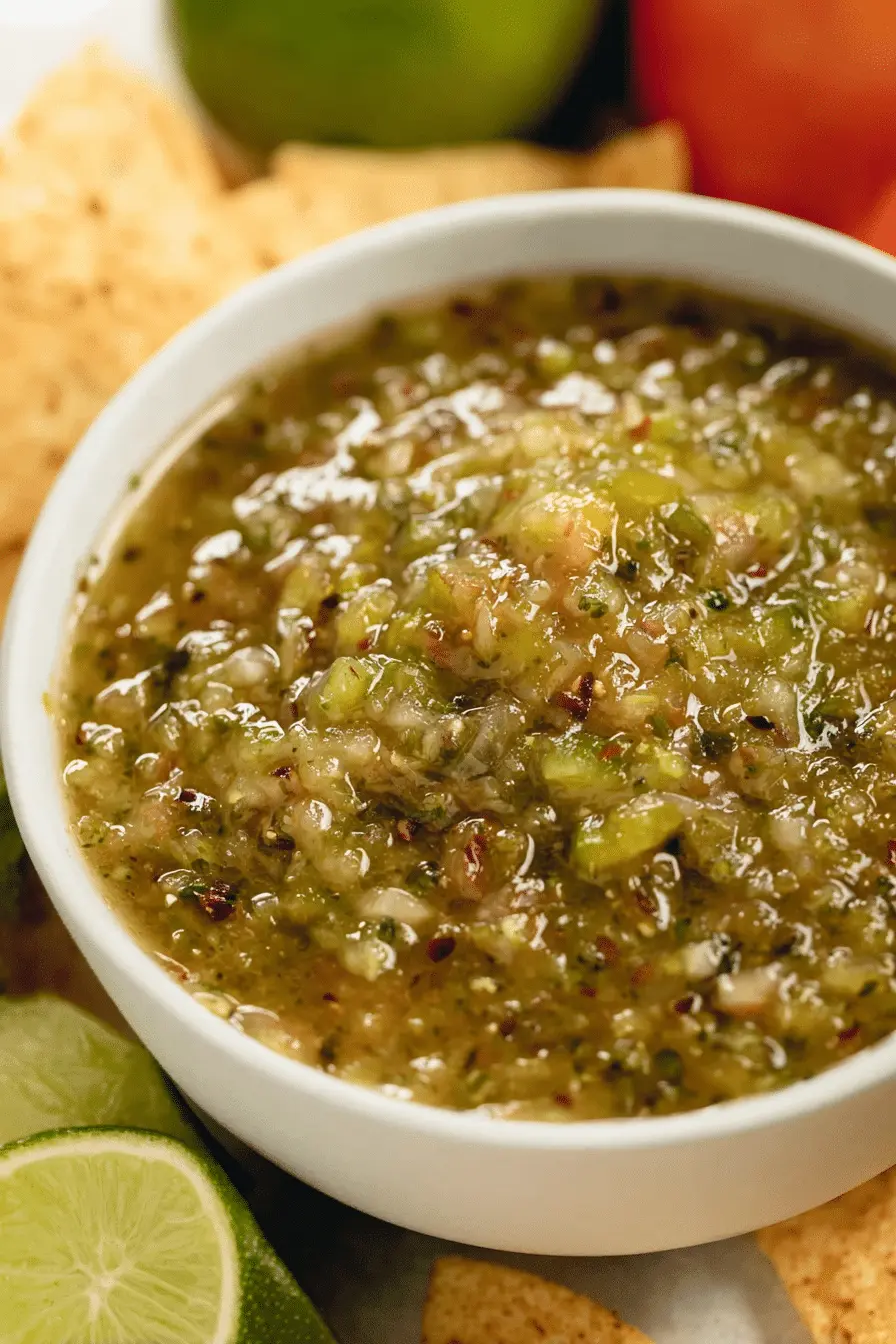
I make this green tomato salsa whenever I want a quick, tangy hit to brighten dinner without fuss. In my kitchen it’s become the go-to when tomatoes are still firm on the vine and I want something with zip and texture. The broiler does most of the work — a few minutes of high heat and the tomatoes and peppers develop a little char while keeping that lively green bite.
I love how fast it comes together: about 15 minutes of prep and a short roast. The aroma as the garlic and peppers char is addictive — sharp, smoky, and very fresh. I usually finish the salsa in the food processor so I can match the texture to whatever I’m serving that night.
Over the years I’ve kept this recipe flexible so it fits busy schedules. You can make it ahead and chill it, toss it into a jar for quick snacks, or can it for longer storage with safe, tested methods. I’ll walk you through choices for heat, texture, and preserving so you can tailor the salsa to your pantry and palate.
Why This Green Tomato Salsa Is Perfect for Busy Cooks
This salsa is built for speed and flavor. You only need a few fresh ingredients and a hot broiler — no complicated technique or slow simmering. The quick roast brings out sweetness while keeping the tomatoes bright and tart, and the whole recipe can be finished in the time it takes to set the table.
It’s also a great make-ahead: it chills well and actually improves in flavor after a few hours as the acid and herbs mingle. That makes it ideal for meal prep, impromptu guests, or packing for a picnic.
- Prep in about 15 minutes, roast under the broiler for a total of roughly 8–10 minutes.
- Roasting enhances flavor with minimal hands-on time — no babysitting a stovetop pot.
- Versatile: use as a dip, taco garnish, or condiment for grilled meats and seafood.
Everything You Need for Green Tomato Salsa
Before you start, gather fresh produce and a sharp food processor or blender. Here’s a conversational ingredient rundown — I won’t list measurements here so you can scale as you like.
- Green Tomatoes – The backbone of the salsa; choose firm, bright tomatoes. Heirloom green varieties have more complex flavor and texture if you can find them at farmers’ markets.
- Serrano or Jalapeño Peppers – Serranos give more heat; jalapeños are milder. Save seeds if you want to add extra kick later.
- Fresh Garlic – Roasted with the tomatoes it softens and adds a sweet, mellow garlic note.
- Fresh Cilantro – Bright herb lift; chop it fresh and add toward the end so it stays vibrant.
- Lime Juice – Acidity rounds out the salsa and wakes the flavors; add to taste.
- Salt – Essential for balancing the tang and bringing out sweetness.
- Optional Fruits or Veg – If you want to play with flavor, add diced green apple or green mango for a fruity twist.
Tip on sourcing: if you can get heirloom green tomatoes, pick ones that are firm but not rock-hard — they’ll roast and soften nicely while keeping flavor. Farmers’ markets and local CSAs often have the best selections late summer through fall.
Why Roasting Green Tomatoes Locks in Bright, Tangy Flavor
Roasting concentrates flavor in a short time. The broiler’s high heat caramelizes the tomato sugars on the surface while the interior stays tangy and fresh, which creates a lively sweet-tart balance. That light charring also introduces a subtle smokiness that plays beautifully against the cilantro and lime.
Scientifically, heat drives Maillard reactions and sugar caramelization at the surface, which increases perceived sweetness and complexity. At the same time, the acid in the tomato is mellowed just enough to round the edges without losing brightness. The roasted garlic becomes buttery and less sharp, which smooths the salsa overall.
- Listen for a faint sizzle when the tomatoes hit high heat — that’s flavor building.
- Watch for tiny blackened spots; that light char gives pleasant smoky notes without making the salsa bitter.
- Flip the pieces once during roasting so they brown evenly and keep their fresh interior bite.
How to Get the Perfect Salsa Texture — Chunky or Smooth
- Chunky salsa: Pulse the roasted ingredients briefly in the processor until you see distinct tomato and pepper pieces. Stop early and scrape down the sides to assess texture.
- Smooth salsa: Process longer, scraping occasionally until the mixture is homogeneous and slightly saucy. If it’s too thick, a splash of fresh lime juice or a little reserved tomato water will loosen it.
- If you want an in-between texture, pulse to desired consistency and finish by hand-chopping a few of the roasted tomatoes to fold in for extra bite.
- Adding more roasted tomatoes will naturally thicken and bulk the salsa; adding raw tomatoes will lighten the texture and introduce extra freshness.
How to Tame or Amp the Heat: Serrano vs. Jalapeño
Serranos are noticeably hotter than jalapeños and are a good choice when you want true heat. Jalapeños are milder and let the tomato flavor shine through. If you’re unsure, start with half the pepper and taste — you can always add more.
Seeds and ribs hold much of the capsaicin (the compound that gives heat). Leaving them in will increase heat; removing them will tame it. For a smoky, deeper heat without extra burn, roast the peppers whole and add as you go.
- For milder salsa: use jalapeño, remove seeds and ribs, or use only half a pepper at first.
- For medium heat: use a whole serrano or a jalapeño with seeds left in.
- For hot salsa: add remaining peppers and toss in some seeds from the trimmed peppers.
- Non-spicy option: substitute roasted poblano or green bell pepper for a smoky, no-heat version.
How to Make Green Tomato Salsa (Step-by-Step)
- Preheat your broiler and position the oven rack so the ingredients will sit about 8–10 inches from the heating element.
- Trim stems, ribs, and seeds from the peppers if you want less heat; reserve seeds if you plan to add them later.
- Quarter large green tomatoes (leave small tomatoes whole) and place them with the peppers and peeled garlic on a rimmed baking sheet.
- Broil until the skins begin to blacken, about 4–5 minutes, then carefully flip and broil an additional 4–5 minutes until charred in spots and softened.
- Transfer half the peppers (or less, to start) and all roasted tomatoes and garlic to a food processor.
- Add chopped cilantro, salt, and fresh lime juice to the processor. Pulse or process until you reach the desired texture.
- Taste and adjust: add more salt, lime, or peppers (or seeds) for heat. If the salsa tastes flat, a little extra acid brightens it immediately.
- Chill or serve at room temperature. The flavors meld as it rests — I often make it a few hours ahead for best results.
Pro Tip for green tomato salsa recipe: Canning, Pairings & Nutrition
Pro-tips always help when you want consistent results; I use these regularly in my kitchen.
- I like to roast on a single layer so everything browns evenly — crowding the pan steams the veggies and reduces char.
- When tasting for seasoning, I taste chilled salsa and room-temperature salsa; cold dulls flavors slightly, so adjust salt and acid if you’ll serve chilled.
- If you plan to can, follow tested, low-acid canning methods. Add bottled lemon or lime juice to reach safe acidity and use a water-bath canner for small-batch preserves. I always follow USDA or university extension canning guidelines for time and jar preparation to ensure safety.
Pairings: this salsa is fantastic on tacos, grilled fish, roasted chicken, scrambled eggs, and as a tangy topping for grain bowls. The bright green color makes it visually striking alongside smoky or rich dishes.
Nutrition: this is a low-calorie, low-fat condiment rich in vitamin C from the tomatoes and lime, and it provides modest amounts of vitamin K from cilantro. Using fresh ingredients keeps sodium controllable — adjust salt to taste or reduce for lower-sodium needs.
How to Store and Use Green Tomato Salsa — Make‑Ahead & Canning Tips
Proper storage keeps your salsa tasting fresh and safe.
- Refrigerator: Store in an airtight container; it keeps well for up to a week but is best within the first 3–4 days for brightest flavor.
- Freezing: Freeze in airtight containers for up to three months. Texture may change slightly after thawing but flavor remains vibrant — great for cooking with later.
- Canning (safety-focused): Sterilize jars and lids, add measured bottled lemon or lime juice per jar to ensure acidity, pack hot salsa into hot jars leaving recommended headspace, wipe rims, apply lids, and process in a water-bath canner for the tested time based on jar size and altitude. I always check seals after cooling and store sealed jars in a cool, dark place. If a jar fails to seal or looks off, refrigerate and use promptly.
Variations and Creative Uses for Green Tomato Salsa
- Green Mango Salsa: Add diced green mango for a sweet-tart tropical twist that pairs beautifully with grilled shrimp.
- Avocado Fold-In: Stir in diced avocado just before serving for creaminess that mellows the heat.
- Salsa Marinade: Use as a quick marinade for chicken or pork — the acid tenderizes and the roasted flavors add depth.
- Breakfast Boost: Spoon over scrambled eggs or an omelet for a bright, tangy morning topping.
- Green Salsa Verde Style: Blend until smooth and toss with cooked pasta or grains for a vibrant, herby sauce.
These variations keep the core technique but switch one or two elements to create new dishes — experiment with textures and added ingredients to suit your meals.
Dietary Swaps for Green Tomato Salsa
- Low-sodium: Reduce added salt and boost acidity with a touch more lime to keep flavors lively.
- No cilantro preference: Substitute chopped parsley or basil for a green herb note without cilantro’s distinct flavor.
- Heat-free: Use roasted green bell pepper or poblano instead of serrano/jalapeño.
- Allergy-friendly: This recipe is naturally gluten-free and vegan; avoid cross-contamination if packing into prepared foods for others.
Troubleshooting
- If the salsa tastes flat — I add a bit more lime juice or a pinch more salt; acid brightens flavors instantly.
- If it’s too spicy — I scoop out some of the mixture and blend in more tomatoes or a touch of sugar, or add diced avocado to soften the heat.
- If your salsa is watery after processing — I strain briefly through a fine sieve, or stir in a few extra roasted tomato pieces to thicken the texture.
- If the flavor seems too smoky or bitter from over-charring — I mix in a few fresh, raw tomato pieces or a squeeze more lime to balance it.
Pro-Tips, Troubleshooting, and Variations above are formatted as bulleted lists for easy scanning and quick reference while you cook.
Frequently Asked Questions
Are green tomatoes good for salsa?
Absolutely! Green tomatoes make a delicious salsa that tastes similar to salsa verde. They're a fantastic substitute for tomatillos!
What's the secret to a good green salsa?
The key is to use fresh ingredients! Choose ripe green tomatoes and peppers, as older produce can alter the flavor negatively.
Do I need to peel green tomatoes for salsa?
Nope! One of the great benefits of using green tomatoes is that you generally don't need to peel the skins. They blend well and add flavor to your salsa.
Can I adjust the heat level in this salsa recipe?
Definitely! You can manage the spice by using fewer serrano peppers or jalapeños, and even leave out the seeds for a milder flavor.
How should I store leftover green tomato salsa?
Store your salsa in an airtight container in the refrigerator. It can last for up to a week, but it's best enjoyed fresh!
Recipe Card
The Green Tomato Salsa Recipe I Make for Taco Night
- Prep
- 15 min
- Cook
- 10 min
- Total
- 25 min
- Serves
- 6
- Calories
- 18 kcal
- Carbs
- 4.00 g
Ingredients
- 1-2 wholeserrano peppers or jalapeño pepper
- 1 poundgreen tomatoes (approximately 3 large green tomatoes)
- 3 clovesfresh garlic (peeled)
- ½ cupchopped fresh cilantro
- 1 teaspoonsalt (plus more to taste)
- 1 tablespoonfresh lime juice (plus more to taste)
Instructions
- 1
Set broiler to high. Place oven rack approximately 8 to 10 inches below heating element.
- 2
Remove stem, ribs, and seeds from 1-2 whole serrano peppers (or jalapeño pepper). Save seeds for hot salsa if desired.
- 3
Quarter 1 pound green tomatoes if tomatoes are large. If tomatoes are small, leave tomatoes whole.
- 4
Arrange peppers, tomatoes, and 3 cloves fresh garlic on large baking sheet. Place baking sheet under broiler.
- 5
Broil ingredients 4 to 5 minutes or until ingredients just begin to blacken.
- 6
Once ingredients begin to blacken, carefully flip ingredients over. Return baking sheet to broiler. Broil ingredients 4 to 5 minutes more.
- 7
Carefully remove baking sheet from broiler. Transfer ingredients to bowl of food processor, using only half of serrano peppers (or jalapeño) to start.
- 8
Add ½ cup chopped fresh cilantro, 1 teaspoon salt, and 1 tablespoon fresh lime juice to food processor. Secure lid on appliance and process ingredients until desired consistency is achieved.
- 9
Taste mixture. Adjust salt and lime juice as desired. For hotter salsa, add remaining pepper(s) and/or seeds from pepper(s).
- 10
When satisfied with flavor and consistency of salsa, transfer salsa to serving container. Let salsa cool to room temperature or refrigerate salsa until chilled. Serve as desired.
You might also like
Reviews
Be the first to review this.