- Prep
- 10 min
- Cook
- 15 min
- Total
- 25 min
- Serves
- 60
- Calories
- 2 kcal
- Protein
- 1.00 g
- Carbs
- 1.00 g
- Fat
- 1.00 g
Introduction
I still remember the first time I tried making a small jar of homemade Tabasco sauce in my cramped city kitchen — the counters sticky with pepper juice, a little cloud of chilli-scented steam when I simmered the mash, and the impatient wait for the ferment to calm down. Tabasco sauce has a long, simple history: it began as a small-batch pepper mash fermented into a thin, vinegary hot sauce and became a global pantry staple. Making a version of it at home feels like joining that long tradition — simple, honest ingredients and a process that rewards patience. You get to control the heat, the tang, and the aroma, and the result is far more personal than anything from a bottle. In this post I’ll walk through both the fermented and quick (non-fermented) methods, share the things I learned the hard way, and give you practical tips so your batch comes out bright, spicy, and balanced. This isn’t a lab report — it’s kitchen-tested, smelled, tasted, and bottled. Let’s get into it.The Benefits of Fermentation
Fermentation is what gives classic Tabasco-style sauces that layered tang. At its heart, fermentation is the work of good bacteria turning sugar in the peppers into acids and subtle flavor compounds. The brine turns cloudy, bubbles form, and a bright, tangy aroma develops — that’s the sound of complexity arriving. Why ferment? A few reasons I keep coming back to it:- Flavor depth: fermentation adds savory, slightly funky notes that vinegar alone can’t supply. A freshly fermented mash has a rounded mouthfeel that feels richer than a straight vinegar-only sauce.
- Preservation: the acid and salt produced during fermentation help preserve the mash, letting you keep it for weeks to months under the right conditions.
- Digestive friendly: while not every fermented pepper mash will be a probiotic powerhouse, the process encourages beneficial microbes and can be gentler on digestion for some people.
Ingredients Needed for Tabasco Sauce
- Tabasco peppers – the classic choice; they bring bright, sharp heat and a fruity pepper flavor. If you don’t have them, other small red chiles work.
- Sea salt – used for the fermentation brine and to season the finished sauce; quality salt helps the microbes and balances flavor.
- Unchlorinated water – necessary for a healthy ferment; chlorine can slow or stop fermentation, so use filtered or bottled water.
- White wine vinegar – gives the sauce its tang and keeps the final product shelf-stable; you can substitute other clear vinegars if you want different notes.
- Optional extra peppers – jalapeño, serrano, or habanero if you want to tweak heat and flavor; mix-and-match for complexity.
Step-by-Step Instructions for Making Tabasco Sauce
Below is the method I use, combining the fermented approach that gives the best flavor with a clear timeline. I’ve been careful to keep the measurements and times that work reliably in my test batches.- Prep the peppers. Wash and roughly chop about 5 ounces of Tabasco peppers. I usually leave seeds in — they add heat and body. Use gloves if your hands are sensitive. Pack them into a clean, wide-mouth jar leaving about an inch of headspace; the mash can expand a bit while fermenting.
- Make the brine. Mix 1 quart (about 1 liter) of unchlorinated water with 2 tablespoons sea salt — this is roughly a 4% brine. Pour just enough brine over the peppers to cover them completely, pressing them down so no pepper floats above the liquid. This is crucial to prevent mold.
- Ferment. Screw the lid on loosely (or use an airlock) and set the jar out of direct sunlight at 55–75°F (13–24°C). Fermentation is most active in the first 1–2 weeks: expect bubbling and cloudy brine. “Burp” the jar once or twice a day in the active phase to release gases if you’re using a regular lid. Taste the brine after a week — it should be pleasantly acidic and tangy. I typically ferment 1–2 weeks depending on activity and flavor.
- Cook the mash. When fermentation slows, pour the peppers and their brine into a small pot with about 1 cup of white wine vinegar. You can also strain and discard some brine if you want a thicker sauce; keep in mind more brine = saltier result. Bring to a quick boil, then reduce heat and simmer for 15 minutes. You’ll notice the pepper aroma change during the simmer — it mellows and becomes more integrated with the vinegar.
- Blend and strain. Cool slightly, then blitz the mixture in a food processor until smooth. I always strain the mash through a fine-mesh sieve or chinois to remove seeds and skins; the resulting liquid should be thin, bright, and pourable. If it’s too thick, thin with a splash more vinegar or water. Adjust with a pinch (about 1/4 teaspoon) of salt if needed.
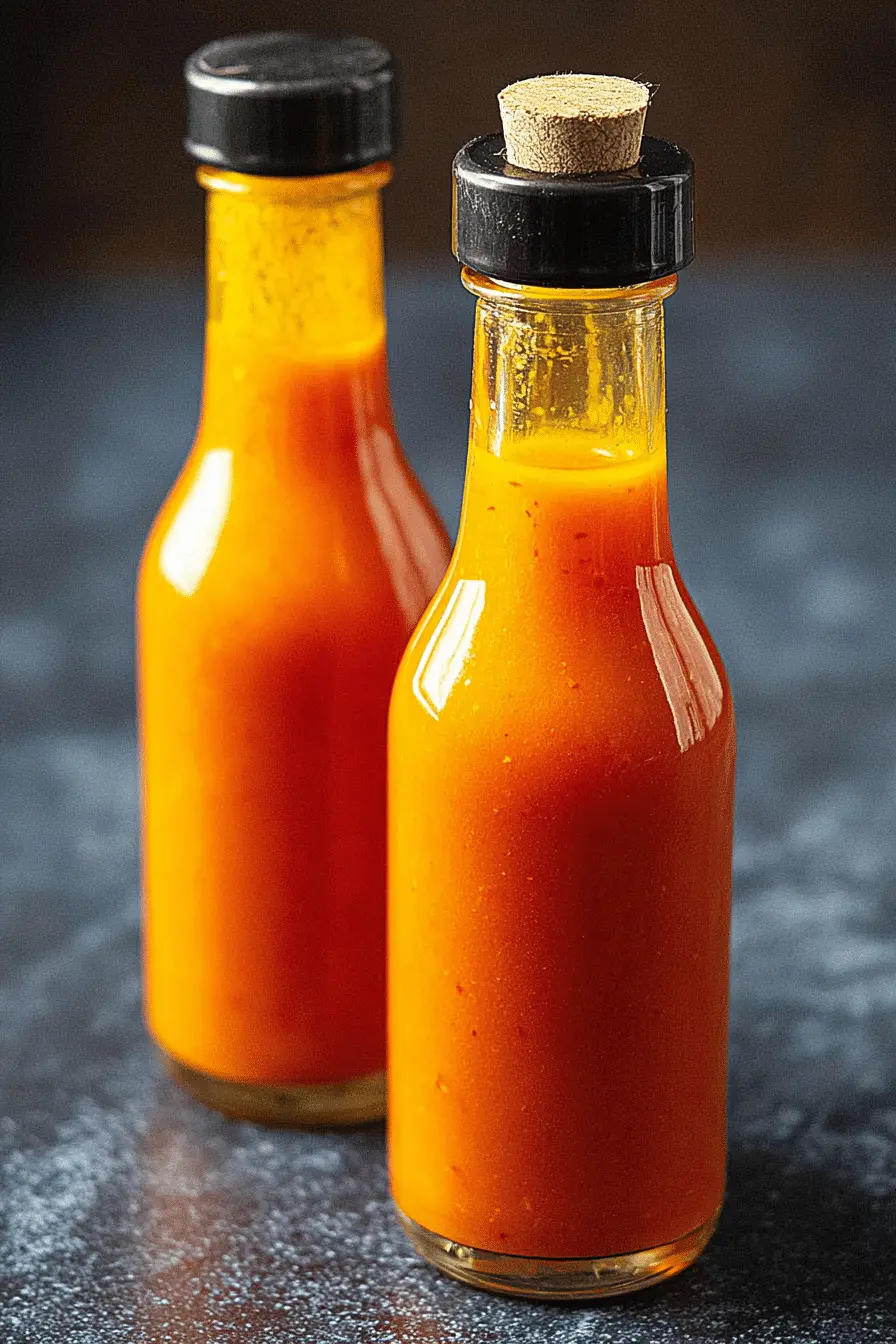
- Bottle and store. Pour your sauce into sterilized hot sauce bottles or a jar. This recipe yields roughly 60 teaspoons. Refrigerate and let the flavors marry for a few days; the sauce develops more depth after a week in the fridge. If you prefer a non-fermented quick version, skip the ferment step: cook fresh chopped peppers with vinegar and salt, simmer 15 minutes, blend, and strain.
Tips for Perfect Fermentation
- Sanitation matters: Wash your jar and tools with hot, soapy water. You don’t need to sterilize like a canner, but avoid obvious dirt or food residue that invites unwanted microbes.
- Keep peppers submerged: Floating peppers risk mold. I use a small glass weight or a folded piece of clean parchment to keep the mash down.
- Temperature control: Fermentation is happiest between 55–75°F. Too warm and it can go quickly and funky; too cool and it’ll crawl along. My kitchen sits at about 68°F most of the year, which is ideal.
- Watch the smell: A healthy ferment smells tangy and slightly yeasty — not rotten. If you get a putrid, sulfurous odor, toss it and start over.
- Patience pays: The first week is noisy (bubbles and brine activity). After two weeks the action calms and the flavor is deeper. You can ferment longer for more pronounced complexity, but taste regularly.
- Fixes: If the mash tastes flat, add a splash more vinegar and a touch more salt. If it’s too salty, add more vinegar or dilute with water and re-simmer to rebalance.
Exploring Different Pepper Varieties
Changing the peppers changes everything — not just heat but aroma and fruitiness. Here are a few options and what they bring:- Tabasco – bright, vinegary heat with a clean pepper note; the canonical choice.
- Jalapeño – milder, vegetal and green; good mixed with Tabascos to mellow the heat.
- Serrano – sharper and a bit more earthy, great for added kick without losing brightness.
- Habanero – tropical and fruity with real heat; use sparingly or blend with cooler peppers.
- Mixed small chiles – combining types yields complex, layered heat and flavor.
Ways to Use Your Homemade Tabasco Sauce
Once you have a bottle of this sauce, it becomes a kitchen workhorse. Here are ideas I use all the time:- Classic: a few drops on eggs or in a Bloody Mary.
- Finishing: splash over grilled fish or roasted vegetables for brightness.
- Mix into mayo or sour cream for an instant spicy dip.
- Stir into stews, chilis, or marinades to add a bright acidic heat.
Nutritional Comparison: Homemade vs Store-bought
From a nutrition standpoint, homemade Tabasco sauce gives you control. Commercial sauces often contain stabilizers, preservatives, or added sugar to maintain consistent flavor at scale. When you make it at home, you control the salt level and the type of vinegar — and you can skip additives entirely. The simple homemade version is mostly peppers, salt, water, and vinegar, so calories are negligible and there’s little to no fat or added sugar. If you’re watching sodium, taste as you go and dilute or reduce brine proportions; homemade sauces are flexible in ways store-bought ones aren’t.Storage, Yield, and Real-World Notes
This recipe yields about 60 teaspoons — enough to keep on your counter and hand out to friends. After bottling, store the sauce in the refrigerator; it keeps best there and continues to mellow for several weeks. I’ve kept bottles for three months with no problem; the flavor remains bright and the acid preserves it well. If you prefer room-temperature storage, ensure your bottles are well sealed and that the sauce is properly acidic (vinegar level) — otherwise, refrigeration is the safest bet. If you make a large batch, freezing in small portions or canning under proper canning protocols (follow reliable canning guidelines) are options. I usually make small jars so I can tweak the next batch based on what I like.Common Problems and How to Fix Them
- Mold on the surface: if only a small amount of surface mold appears, scoop it out and ensure the mash is submerged. If in doubt, discard — safety first.
- Too salty: dilute with more vinegar or water and re-simmer; you can also add a few fresh peppers and blend to rebalance.
- Not tangy enough: add more vinegar to taste. Vinegar brightens the sauce immediately.
- Too hot: strain out some of the seeds/skins, dilute with vinegar or roasted tomatoes, or mix with a milder pepper mash next time.
FAQ
How long does it take to make homemade Tabasco sauce? The entire process takes about 25 minutes of active preparation and cooking, but fermentation can take 1-2 weeks depending on your environment. So, plan for about a week for the peppers to ferment! What type of vinegar should I use for my homemade Tabasco sauce? You can use white wine vinegar for a more traditional flavor, but feel free to experiment with other types of vinegar based on your taste preferences! Can I use other types of peppers instead of Tabasco peppers? Absolutely! While Tabasco peppers give the authentic taste, you can mix in other varieties like jalapeño or habanero for different heat levels and flavors. How do I know if my fermentation is going well? Look for bubbling or frothing in the jar and a cloudy brine, which are signs of healthy fermentation. Don’t forget to check the smell; it should be pleasantly tangy. Can I adjust the heat level of my sauce? Yes! You can control the heat by using different types of peppers or adjusting the amount of salt and vinegar in the final sauce to balance the flavors.Conclusion and Personal Variations
I make this at least a couple of times each growing season. Sometimes I lean into pure Tabasco peppers for that classic bite; other times I mix in a few habaneros for fruity heat or toss in a green jalapeño for a fresher tone. My fridge always has a small bottle tucked behind the mustard — it’s a habit now. Try different ferment lengths, try alternate vinegars, or add a clove of garlic to the simmer for an extra savory note. Share what you make: I love hearing how people tweak brine, heat, and vinegar to match their kitchens. Drop a note about your favorite pairing or variation.Recipe Card
Homemade Tabasco Sauce Recipe: A Zesty Guide to Spicy Perfection
- Prep
- 10 min
- Cook
- 15 min
- Total
- 25 min
- Serves
- 60
- Calories
- 2 kcal
- Protein
- 1.00 g
- Carbs
- 1.00 g
- Fat
- 1.00 g
Ingredients
- 5 ouncestabasco peppers (roughly chopped)
- 2 tablespoonssea salt ((0.67 ounce - 19 grams))
- 1 quartuncchlorinated water
- 1 cupwhite wine vinegar (or more as desired)
- 1/4 teaspoonsalt
Instructions
- 1
First, ferment the tabasco peppers. Process and pack them into a jar, leaving 1 inch of head space.
- 2
Mix unchlorinated water with sea salt and pour over the peppers to cover.
- 3
Screw on the lid and set the jar to ferment in a dark place for at least 1 week.
- 4
After fermentation, pour the mixture into a pot and add vinegar.
- 5
Bring to a boil, then simmer for 15 minutes.
- 6
Cool slightly and process until smooth, then strain the mixture.
- 7
Pour into hot sauce bottles and enjoy.
You might also like
Reviews
Be the first to review this.