Tags
- Prep
- 10 min
- Cook
- 600 min
- Total
- 610 min
- Serves
- 4
- Calories
- 400 kcal
- Carbs
- 30.00 g
Introduction
I grew up believing corned beef and cabbage always had to be cooked with beer; that was the way my family did it and it was part of how we marked holidays and Sunday dinners. Over the years I pushed past that assumption in my own kitchen and learned that the comforting spice, long simmer, and the right cut of brisket are what truly make the dish sing — not the beer. In my house the pot fills the room with warm, spiced steam and everyone drifts in to see what's for dinner. When I make this version without beer I still get the same sense of occasion: the brisket browning, the pickling spices blooming in the pot, the potatoes and carrots joining in for a tender finish. I like to involve the family — someone peels vegetables, another watches the clock — because those small tasks make memories that last longer than any single meal. I write this recipe for families who want the comfort of a classic table — the slow-simmered meat, the fragrant bay leaves, the satisfying fork-tender slices — while keeping the dish approachable for cooks who prefer not to use alcohol. It keeps the tradition intact and brings people together around the same timeless flavors.Why This Irresistible Corned Beef and Cabbage Without Beer Works for Families
This is a dish built for shared time. Corned beef and cabbage has long been part of family gatherings: the pot simmers for hours, the kitchen fills with a warm, spiced aroma, and everyone gathers when the table is set. That ritual — passing bowls, trimming slices, tasting the broth — is what I mean when I say it brings families together. The traditional recipe often includes beer because it adds malted sweetness and depth. In this version, gentle acidity and a well-balanced pickling spice do the same work: they deepen the meat's flavor and coax collagen into that tender, shreddable texture. The end result is the same emotional satisfaction — comforting, communal, familiar — without the alcohol. When you cook this with your family, you’re giving more than a meal. You’re handing down a routine: small jobs for kids, simple but meaningful conversation, and a shared plate that everyone remembers. The aroma of cloves, peppercorns, and bay leaves is what people will recall long after the last slice is gone.Everything You Need for Irresistible Corned Beef and Cabbage
Gathering ingredients and the right tools ahead of time makes the afternoon run smoothly and keeps the family involved without frantic scrambling. Fresh vegetables give you bright color and texture; a brisket with good fat keeps slices juicy; simple kitchen tools make the process easy.- Corned beef brisket – Choose a piece with visible marbling; the fat renders during the long cook and keeps the meat juicy. Avoid overly lean cuts if you want melt-in-your-mouth slices.
- Onion – Adds savory sweetness as it simmers and rounds out the broth.
- Garlic – Smashed to release oils and deepen the savory base.
- Bay leaves – Classic aromatic that layers into the broth without overpowering it.
- Water or low-sodium beef broth – Use broth if you want extra meaty depth without alcohol; water keeps the flavor clean and lets the pickling spices shine.
- Apple cider vinegar – A small splash brightens the meat and helps with tenderizing.
- Black pepper – Freshly cracked for a gentle heat and aroma.
- Potatoes – Choose waxy varieties if you like them hold shape; starchy potatoes will break down more and thicken the braising liquid.
- Carrots – Sweetness and color that balance the savory brisket.
- Cabbage – Adds texture and a slightly sweet, vegetal finish when simmered until just tender.
The Secret to Tender Corned Beef (No Beer Needed)
Tenderness is about time and temperature more than any single ingredient. I’ve learned that a patient low simmer lets tough connective tissue turn into gelatin, which yields that silky texture you want in every slice.- Simmer low and slow so collagen breaks down without forcing the meat to toughen; maintain a barely bubbling surface rather than a rolling boil.
- Use a little apple cider vinegar in the braising liquid to help the meat fibers relax and to brighten the broth. It won’t make the dish taste vinegary—think of it as a gentle tenderizer.
- Resist the urge to rush the cook time; brief high-heat methods will not convert collagen fully and can make the brisket chewy.
- Dietary accommodations: for low-carb or paleo versions, skip any added sugars or starchy sides and pair the brisket with extra cabbage and roasted root vegetables.
Choosing the Right Brisket: Fat, Size, and Pickling Spice
Picking the brisket is an important choice. Look for noticeable fat across the surface and some marbling; that fat melts during cooking and keeps slices glossy and flavorful. Size matters too — a larger brisket feeds more and benefits from a longer carryover rest before slicing.- Fat content – A moderate fat cap protects the meat during the long simmer and contributes to mouthfeel; trim it according to your preference but don’t remove it entirely.
- Size – Smaller briskets cook more quickly but are less forgiving. Larger cuts take longer but yield more tender results when given enough time. Adjust your simmer time to the weight.
- Pickling spice variations – Use a classic blend of peppercorns, mustard seed, coriander, and bay leaf, and add whole cloves or juniper for a deeper aroma. For a lighter, health-conscious profile, reduce mustard seed and increase cracked pepper and bay leaves.
Timing and Temperature: How Long to Simmer and Why It Matters
Here’s the timeline I use in my kitchen so you know what to expect. Start by bringing the pot to a gentle simmer, then keep it at a low simmer for several hours; this allows the connective tissue to convert slowly. You’ll want to check the liquid level occasionally and skim any foam from the surface early on.- Initial sear (optional) – Brown the brisket briefly on both sides to add color and flavor before adding liquid.
- Long simmer – Maintain a low simmer for the bulk of the cooking time so the collagen breaks down fully and the meat becomes fork-tender.
- Vegetable timing – Add potatoes and carrots in the last portion of the cook so they become tender but don’t disintegrate. Add cabbage toward the end so it keeps some texture and bright color.
- Resting – After the pot comes off the heat, allow the brisket to rest in the cooking liquid for a short period, then remove and rest before slicing against the grain for the most tender results.
How to Make Irresistible Corned Beef and Cabbage Without Beer (Step-by-Step)
Follow these clear steps to guide you through the stove-top method. If you’re cooking with family, assign simple tasks — one person chops vegetables while another watches the pot and times additions.- Prepare the brisket by rinsing briefly if it’s very salty, then pat it dry; trim excess fat if desired but keep some for flavor.
- Place the brisket in a wide pot or Dutch oven and add the onion, smashed garlic, bay leaves, pickling spice, and enough liquid to come partway up the side of the meat; add a splash of apple cider vinegar for brightness.
- Bring the pot to a gentle simmer, then reduce heat to maintain a low simmer; skim any foam that rises during the first 20–30 minutes.
- Simmer slowly until the brisket is fork-tender; check periodically and add water or broth if the liquid level drops too low.
- When the meat is nearly tender, add the potatoes and carrots and simmer until they are just tender.
- Add the cabbage toward the end and cook until it is bright and tender but not mushy.
- Transfer the brisket to a cutting board and let it rest briefly in the warm liquid; slice against the grain for the best texture and serve with the vegetables and some of the braising liquid spooned over.
- If the meat is still tough after long simmering, continue to cook at low heat — collagen converts slowly; cutting into smaller pieces can speed things up if you’re short on time.
- If the broth tastes too salty, add more water or unsalted broth and a peeled potato to absorb some salt during the remaining cook time.
- If vegetables are overcooked, remove them with a slotted spoon and keep warm while the meat finishes.
- If the surface liquid is cloudy, skim gently at the start; this keeps the broth clear and the flavors clean.
Pro Tip for irresistible corned beef and cabbage without beer: Prep in Under Two Hours
I often get asked how to make this dish when time is tight. With a few shortcuts you can have most of the work done in under two hours and finish the dish with a short simmer or in a pressure cooker.- Trim and prep vegetables while the brisket begins to simmer so you’re ready to add them at the right times.
- Use pre-measured spice packs or a jarred pickling spice blend to save measuring and keep flavors consistent.
- Partially cook the potatoes in the microwave or parboil them to reduce final simmer time without sacrificing texture.
- If you’re short on time, slice the brisket after a shorter simmer and return slices to the pot to finish cooking with the vegetables, which helps the meat stay moist.
How to Store, Reheat, and Make-Ahead + Slow Cooker & Instant Pot Variations
Leftovers keep well and often taste better the next day after the flavors have had time to mingle. Store the meat and vegetables together with some of the cooking liquid to keep everything moist.- Storage – Cool to room temperature, then refrigerate in airtight containers; properly stored, leftovers will keep for a few days.
- Reheating – Rewarm gently in a pot with a splash of broth or water over low heat so the meat heats evenly and stays tender; avoid high heat which can dry slices out.
- Make-ahead – You can cook the brisket a day in advance and reheat slowly the next day; this often improves flavor as the spices deepen overnight.
- Slow cooker variation – Place brisket, aromatics, spices, and liquid in the slow cooker and cook on low until fork-tender; add vegetables during the last few hours so they don’t overcook.
- Instant Pot variation – Use the pressure-cook setting for a much shorter hands-on time; add vegetables after releasing pressure and simmer briefly if needed to reach desired tenderness.
Frequently Asked Questions
What can I use instead of beer in corned beef and cabbage? If you prefer, you can use low-sodium beef broth instead of beer for added depth of flavor. How do I know if my corned beef is tender? The corned beef is tender when it easily pulls apart with a fork and has a juicy texture. Simmering for the right amount of time is crucial. What's the best way to cut corned beef? Always cut corned beef against the grain to ensure each slice is tender. Can I make this dish in a slow cooker? Yes. You can adapt this recipe for a slow cooker. Cook on low for several hours until the brisket is fork-tender for a delicious result. How long can leftovers be stored? Leftovers can be stored in the refrigerator for up to 3–4 days in an airtight container.Recipe Card
How I Finally Nailed Irresistible Corned Beef and Cabbage Without Beer
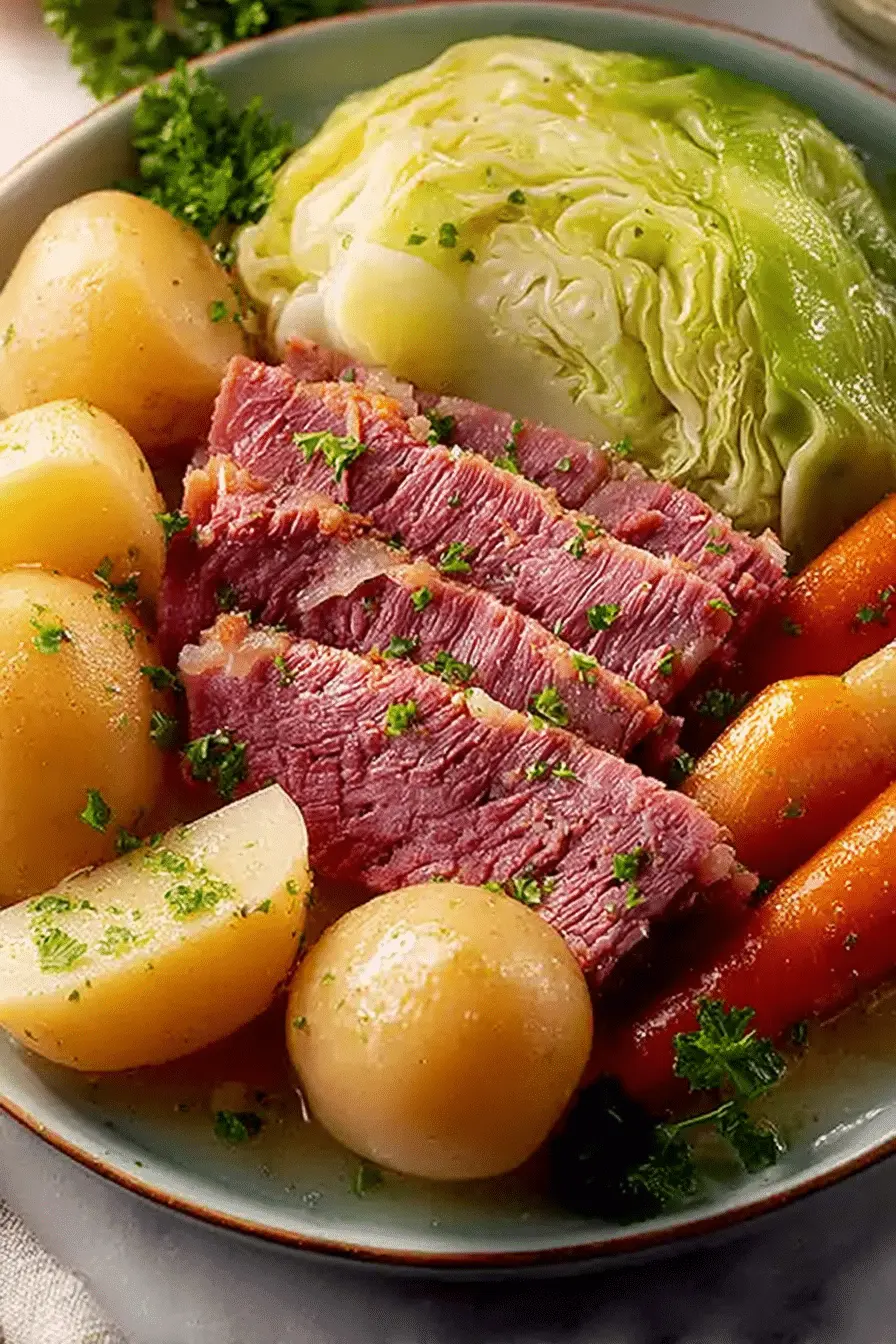
- Prep
- 10 min
- Cook
- 600 min
- Total
- 610 min
- Serves
- 4
- Calories
- 400 kcal
- Carbs
- 30.00 g
Ingredients
- 4 lbcorned beef brisket (I use Libby's for the best fat-to-meat ratio)
- 1 largeonion (cut into 1/2-inch thick wedges)
- 4 largegarlic cloves (smashed to release oils and flavor)
- 3bay leaves
- 3.5 cupswater
- 1 tablespoonsapple cider vinegar
- 1/2 teaspoonblack pepper
- 2 lbpotatoes (I prefer Ore-Ida for consistent texture when boiling)
- 3carrots (peeled and cut into 2-inch chunks)
- 1green cabbage
Instructions
- 1
Place the corned beef brisket in a large pot.
- 2
Add onion, garlic, bay leaves, water, apple cider vinegar, and black pepper.
- 3
Bring to a boil, then reduce heat to low and cover.
- 4
Cook for approximately 10 hours.
- 5
Add potatoes, carrots, and cabbage in the last hour of cooking.
You might also like
Reviews
Be the first to review this.