- Prep
- 5 min
- Cook
- 20 min
- Total
- 25 min
- Serves
- 4
- Calories
- 301 kcal
- Protein
- 15.00 g
- Carbs
- 22.00 g
- Fat
- 16.00 g
Introduction
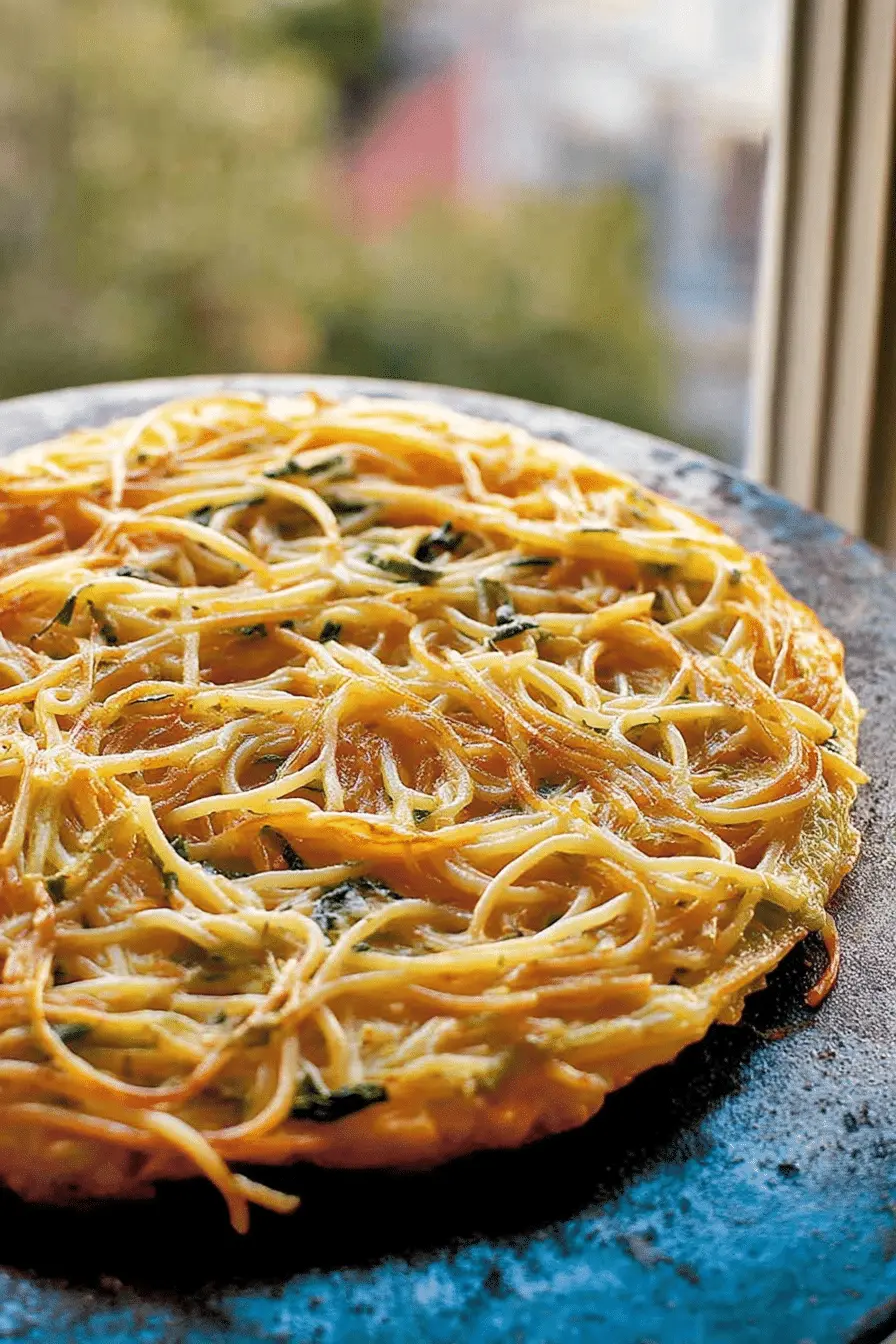
I cook a lot on weeknights, and one thing I rely on when time is short is this leftover pasta frittata. In my kitchen it’s the quick rescue meal that requires almost no thinking: eggs, some cheese, and whatever pasta is hanging out in the fridge. I like that it feels a little celebratory without the fuss—golden edges, a tender center, and the comfort of pasta tucked into every slice.
I’ve made this in a dozen different ways depending on what’s available. Sometimes I’ve used sauced spaghetti straight from a week-old container; other times plain pasta gets crisped in butter until it develops a nutty edge. Each version teaches you something about texture and timing—little adjustments that turn a simple scramble into something you actually look forward to eating.
I’ll present Pro-Tips, Troubleshooting, and Variations as bulleted lists so they’re easy to scan while you’re cooking. Read these once and you’ll save time the next time the fridge looks like a jumble of leftovers. And yes: this is a cheap meal that still tastes thoughtful—perfect for anyone balancing work, kids, or a short evening free of obligations.
Why Leftover Pasta Frittata Is the Busy Cook's Best Friend
This dish wins on three fronts for busy cooks: customization, speed, and thrift. You can swap in whatever cheese, herbs, or vegetables you have on hand, so it almost never requires a trip to the store. Prep is minimal—whisk, mix, and cook—so a hot dinner is on the table quickly. And using leftover pasta means you’re turning what would otherwise be food waste into something satisfying and new.
Imagine the aroma of butter or olive oil warming in a skillet, the soft hiss as egg hits a hot surface, and the sight of the frittata edges turning deep golden while the center stays pillowy. That contrast of crunchy rim and tender interior is what makes this feel special even on a rushed night.
Everything You Need for Leftover Pasta Frittata
Below I talk through the basic ingredients and tools you’ll want on hand. No exact measurements here—this section is about purpose and substitutions so you can adapt based on what you actually have.
- * Eggs – The backbone of the dish; they bind the pasta and produce that fluffy interior.
- * Grated hard cheese (Parmesan or pecorino) – Adds savory salt and a hint of nuttiness; swap in a sharper or milder cheese depending on taste.
- * Olive oil or butter – For cooking and creating a crisp, golden bottom; butter gives richness, oil helps prevent sticking.
- * Salt and black pepper – Simple seasoning to lift the eggs and pasta.
- * Leftover pasta (sauced or plain) – The star ingredient; sauced pasta brings flavor, plain pasta gives extra crispness when fried first.
- * Nonstick skillet – This makes flipping and sliding the frittata far easier; a 10- to 12-inch skillet is ideal for a family portion.
- * Optional add-ins (fresh herbs, cooked vegetables, cooked meats) – Throw in what needs using up—pre-cooked vegetables or proteins integrate well.
If you want an easy side or something to round the meal, don’t forget to check out our easy turkey bacon ranch stuffed bread, which pairs wonderfully with the frittata.
The Secret to a Crispy Bottom and a Tender Center
Getting the texture right is about three things: heat control, timing, and a little patience. Start on moderate heat to warm the pasta or crisp plain noodles, then reduce to low once you add the egg so the center cooks slowly while the bottom browns. If the heat is too high, the rim will char before the middle sets; too low and nothing browns.
Visually, you’re aiming for a deep-golden rim and a center that still jiggles slightly when you nudge the pan. To check doneness, run a thin knife around the edge and peek under the bottom—if it’s golden and the top is mostly set, it’s time to flip or finish in the pan. That balance is what gives you crunch without dryness.
Sauced vs. Plain Pasta: How to Use What You Have
Sauced pasta brings instant flavor: tomato, pesto, or olive-tangy puttanesca all change the character of the frittata. If your spaghetti is already coated in a sauce, heat it briefly with a little water so it loosens, drain any extra, and fold it straight into the eggs. I like this when I want a richer, more complex bite without adding extra ingredients.
Plain pasta behaves differently: when fried first it crisps, adds texture, and gives you distinct crunchy bits inside the frittata. If you’re chasing contrast, fry plain noodles in butter or oil until browned before lowering the heat and adding the egg mixture.
If you're looking for inspiration, try pairing it with our garlic shrimp pasta for a delicious meal—use leftovers from that dish to give the frittata a seafood twist.
How to Make Leftover Pasta Frittata (Step-by-Step)
- Whisk the eggs until uniform in color; stir in grated cheese, a drizzle of oil, salt, and freshly ground pepper. This ensures the eggs cook evenly and the cheese distributes through the mixture.
- If your pasta is sauced: warm it briefly in a large nonstick skillet over medium-high with a splash of water to loosen the sauce. When warm, drain any excess liquid and fold the pasta into the egg mixture so the sauce lightly coats the noodles.
- If your pasta is plain: heat oil or butter in a nonstick skillet over medium to medium-high heat, add the pasta, and press down gently with a spatula to help form a browned base. Let it brown without stirring too often—this creates those delightful crisp bits.
- Wipe the skillet clean if you used it to heat sauced pasta (or keep it as-is if you’ve just browned plain pasta) and reduce heat to medium-low. Add a little oil or butter to coat the pan, then pour in the egg-and-pasta mixture, spreading the pasta evenly so there aren’t big clumps.
- Lower the heat to low. Rotate the pan occasionally so the heat distributes evenly around the edges; cooking slowly prevents the outside from overcooking while the center finishes.
- When the edge looks set and the center still has a slight wobble—about 6–10 minutes depending on thickness—run a knife around the edge and slide a thin spatula under the frittata to loosen the bottom.
- Invert a plate over the skillet, using one hand to hold the plate and the other to steady the skillet handle, then flip the skillet so the frittata lands on the plate. Add a little more oil or butter to the skillet and slide the frittata back in, uncooked side down, for another several minutes until cooked through.
- Make a small crack in the center to confirm doneness; the eggs should be set all the way through but still tender. Slide onto a serving plate, let it rest briefly, then cut into wedges or strips.
Pro Tip for Leftover Pasta Frittata: Use Sauced Pasta for Big Flavor, Plain for Extra Crisp
- Use a splash of water to loosen heavily sauced pasta before combining with eggs so the sauce spreads evenly rather than clumping.
- For maximum crust, brown plain pasta in butter first—press it down and resist stirring so it forms a compact base.
- Choose your fat to match the mood: olive oil for brightness, butter for richness, or a mix of both for the best of each.
- Add fresh herbs at the end rather than in the raw egg mixture for a brighter finish; sturdier herbs (like thyme) can go in earlier.
- For a touch of luxury, pair your frittata with our creamy garlic butter lobster tails for an unforgettable meal.
Troubleshooting
- My frittata stuck to the pan: I make sure to coat the skillet well and use a good nonstick pan. If it still clings, brown the pasta in more fat next time or lower the heat earlier.
- The center is still runny while the edges are brown: Lower the heat sooner and give it more time; finishing on the stovetop with the lid on for a few minutes can help set the center without burning the edge.
- The frittata is dry after reheating: I slice it and reheat gently in a skillet over low heat with a tiny splash of water, covered, to steam it back to tenderness instead of microwaving on high.
- The pasta clumped in the egg mixture: Warm sauced pasta first so it loosens, and use a fork to separate noodles before folding into the eggs.
How to Store, Reheat, and Make-Ahead Leftover Pasta Frittata
Store cooled slices in an airtight container in the refrigerator; they stay good for a few days. For longer storage, wrap tightly and freeze—slices reheat best from thawed rather than frozen solid.
Reheat gently: a brief stint in a nonstick skillet over low heat with a lid will warm the frittata through without drying it out. Microwaving works for convenience; warm shorter bursts and check frequently to avoid rubbery eggs.
To make ahead: cook the frittata fully, cool, and store. You can reheat whole or slice for grab-and-go breakfasts, lunches, or dinners. This makes it ideal for meal prep since each slice travels well and tastes great cold or warm.
How to Enhance Your Frittata with Seasonal Veggies
Adding vegetables is an easy way to boost flavor, color, and nutrition. Prep any firm vegetables—like potatoes, carrots, or squash—by sautéing or roasting first so they’re tender before they meet the eggs. Tender greens, mushrooms, and roasted tomatoes can go in near the end of assembly so they keep texture and color.
- Spring: sautéed asparagus tips, peas, or fresh herbs for a bright, green bite.
- Summer: roasted cherry tomatoes, zucchini ribbons, or charred peppers for color and sweet acidity.
- Fall/Winter: caramelized onions, roasted root vegetables, or sautéed mushrooms for warming, savory notes.
Consider adding leftovers from a spinach artichoke chicken casserole to your frittata for extra flavor.
Variations
- Vegetarian: omit any meat and add sautéed mushrooms, spinach, and a sharp cheese to boost umami.
- Gluten-free: use gluten-free pasta leftovers or spiralized vegetables in place of noodles for the same method.
- Protein-forward: fold in chopped cooked sausage, shredded chicken, or bits of ham for heartier slices.
- Herb-forward: mix chopped dill, parsley, or chives in just before serving for fresh brightness.
Cultural Variations of Leftover Pasta Frittata
Many cultures have dishes that repurpose leftovers into egg-based dishes; the idea of combining starches and eggs is a universal, practical approach to stretching food. In Italy, frittatas are often simple and focused on a few strong flavors, while other traditions pair eggs with rice, noodles, or potatoes to make complete, comforting meals. Experiment with spice profiles and sauces from different cuisines—tomato-and-basil, pesto, or even a touch of soy and sesame for an Asian-leaning take.
Whatever route you take, the technique remains the same: gentle heat, a good nonstick pan, and thoughtful timing. This is why the pasta frittata is one of my go-to solutions when life gets busy—practical, adaptable, and reliably satisfying.
Frequently Asked Questions
Can I use any type of pasta for this frittata?
Yes! You can use any type of leftover pasta, whether it's sauced or plain. Just adjust the cooking method slightly depending on the sauce to achieve the best texture!
How do I prevent the frittata from sticking to the pan?
Make sure to coat the skillet with enough oil or butter before pouring in the egg mixture. A nonstick skillet is also recommended for the best results!
Can I add vegetables to the frittata?
Absolutely! You can enhance your frittata by adding seasonal veggies for extra flavor and nutrition. Just make sure to pre-cook any firm vegetables before mixing them in.
What is the best way to store leftover frittata?
Store the leftover frittata in an airtight container in the fridge. It should last for 3-4 days. You can reheat it in the microwave or on the stovetop.
How can I make this recipe ahead of time?
You can prepare the frittata ahead of time and reheat it when needed. Just let it cool completely before storing it in the fridge!
Recipe Card
The Leftover Pasta Frittata I Make on Busy Weeknights
- Prep
- 5 min
- Cook
- 20 min
- Total
- 25 min
- Serves
- 4
- Calories
- 301 kcal
- Protein
- 15.00 g
- Carbs
- 22.00 g
- Fat
- 16.00 g
Ingredients
- 6 largeeggs
- 1/4 cupgrated Parmesan or pecorino cheese
- 2 tablespoonsolive oil (plus oil or butter for the skillet)
- 1/8 teaspoonsalt
- —freshly ground black pepper
- 4 ouncescold leftover spaghetti
Instructions
- 1
Crack the eggs into a bowl and whisk very well, until streaks no longer appear. Mix in the cheese, oil, salt, and a grind of pepper.
- 2
If you have sauced spaghetti, heat it in a skillet with water until warm, then mix in with the egg mixture. For plain spaghetti, crisp it in the skillet before adding the egg mixture.
- 3
Turn the heat to low and rotate the skillet occasionally. Cook until the perimeter looks set and the center is still somewhat liquid, about 8 minutes.
- 4
Flip the frittata onto a plate and then slide it back into the skillet. Keep cooking on low heat for about 7 more minutes.
- 5
Check if the egg is set by making a crack in the middle with a spatula. Slice and serve once cooled.
You might also like

Reviews
Be the first to review this.