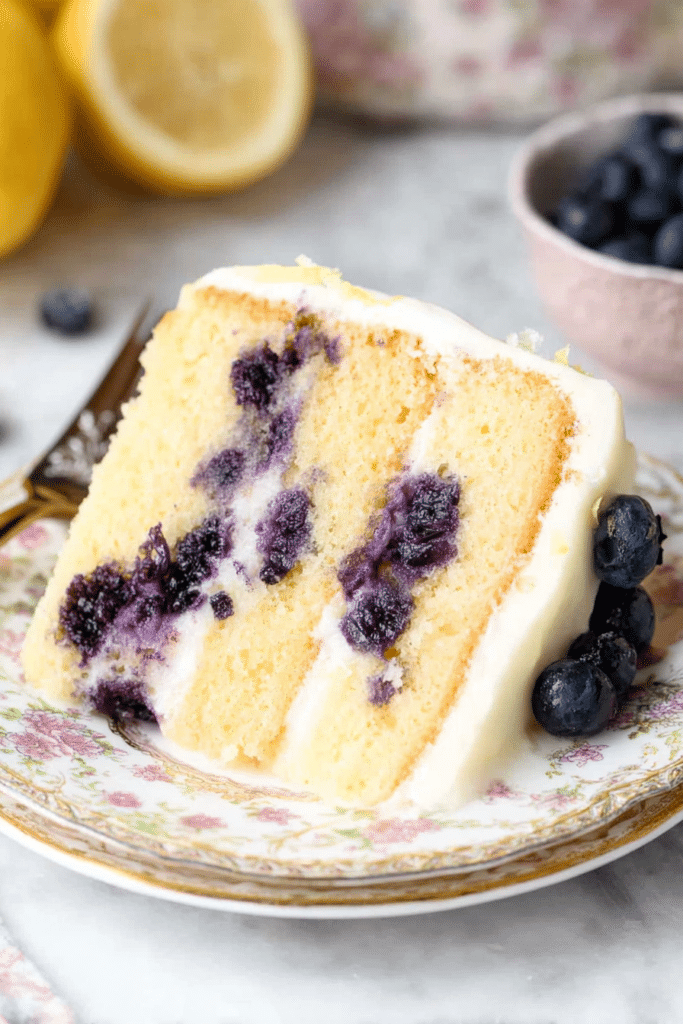
I still remember the first time I brought this lemon blueberry cake to a summer backyard party — the way the sun caught the glossy berries on top and the whole porch filled with a bright citrus scent made people line up for seconds. I baked it because I wanted something that looked celebratory without being fussy, and it became the cake I reach for whenever friends come over.
I love how the lemon brightens the blueberries and how the cream cheese frosting adds a gentle tang that keeps the sweetness from feeling heavy. In my kitchen this cake is a showpiece — deep blue berries peeking through a pale yellow crumb, dotted with lemon slices or a few extra berries on top when I want it to look extra festive.
Because parties are about making people feel special, this cake is designed to be impressive but forgiving. It’s a reliably moist, tender cake that holds up well on a dessert table, and it pairs beautifully with simple additions like fresh herbs or a scoop of lemon sorbet.
Why this Lemon Blueberry Cake is perfect for summer parties
This cake captures summer in both flavor and appearance — the citrus lifts the sweetness and the blueberries give bright pops of color that look gorgeous on any dessert table. The aroma of fresh lemon while it bakes is instantly inviting, and the contrast between tender cake and juicy berries makes each bite memorable.
Presentation is effortless: a lightly swirled cream cheese frosting, a scatter of fresh blueberries, and a few thin lemon slices make it feel celebratory without extra fuss. If you love this combo, pair it with other summer treats for a full spread — for another take on lemon and blueberries, try this Lemon Blueberry Zucchini Cake for something heartier on the table.
The crowd-pleasing nature of this cake comes from its balance — not too sweet, refreshingly tangy, and visually striking. It works for backyard barbecues, bridal showers, and casual brunches alike, and it travels well if you need to bring it to a potluck.
Everything You Need for Lemon Blueberry Cake
Before you start, set up your workspace so everything is within reach. Room temperature ingredients mix into the smoothest, most even batter, and the right pan and parchment make assembly foolproof.
- Tools – A medium mixing bowl, electric mixer or sturdy whisk, spatula, a 9×13 pan or cake pans for layers, parchment paper, and a fine grater for lemon zest. Having a bowl for tossing blueberries keeps them from clumping.
Ingredients (purpose and swaps):
- Cake flour – Gives a soft, tender crumb; for a looser swap, a low-protein all-purpose blend will work, or use a gluten-free all-purpose blend with xanthan gum for gluten-free versions.
- Baking powder & baking soda – Leaveners that give lift; keep them fresh for best rise.
- Buttermilk – Adds acidity and tenderness; if you don’t have buttermilk, use Greek yogurt diluted with a splash of milk or make a quick vinegar/lemon milk soak.
- Fresh lemon juice & zest – The heart of the flavor; zest gives aromatics while juice brightens the batter.
- Butter – For richness and structure; you can substitute part with unsweetened applesauce for a lighter cake but expect a slightly different crumb.
- Sugar – Sweetness and structure; for reduced-sugar options, try a baking-friendly sugar substitute in the cake and a powdered alternative in the frosting.
- Eggs – Bind and give lift; use room-temperature eggs so they emulsify better.
- Blueberries – Fresh are preferred for texture and visual appeal; frozen can be used with technique adjustments (see troubleshooting).
- Cream cheese & butter for frosting – Gives tang and a silky finish; full-fat brick-style cream cheese yields the creamiest frosting, while lighter versions or a dairy-free cream cheese can be used for dietary swaps.
If you want to experiment with other forms of lemon-blueberry desserts, the Lemon Blueberry Tart is a lovely alternative that highlights the same flavors with a different texture.
The secret to a moist, tender lemon cake
Moisture and tenderness come from technique more than a single ingredient. I teach bakers to read the batter and feel the stages rather than rely solely on time, and it makes all the difference.
- Proper creaming – Beat butter and sugar until pale and fluffy; this traps tiny air pockets that help the cake rise and stay light. Pause and scrape the bowl so everything emulsifies evenly.
- Acid interaction – Lemon juice works with baking soda and buttermilk to create a tender crumb. The acid slightly tenderizes the gluten and adds bright flavor without drying the cake.
- Buttermilk’s role – The acidity plus fat in buttermilk keeps the crumb soft and moist; it also balances the lemon so the cake never feels flatly sweet.
- Gentle handling – Add dry and wet ingredients alternately and mix just until combined. Overmixing develops gluten and leads to a dense cake instead of a tender one.
How to keep blueberries evenly distributed (no sinking)
Seeing pocketed blueberries spread evenly through the cake is one of the most satisfying sights. The goal is to give those berries a little help so gravity doesn’t pull them to the bottom.
- Toss berries in a small amount of flour to create a thin coating; this gives them traction and helps them stay suspended as the cake bakes.
- Use a slightly thicker batter — not stiff, but dense enough that berries don’t glide through it. If your batter looks very runny, fold the berries in more gently and bake immediately.
- Fold the berries in carefully with a spatula to avoid bursting them. Over-stirring breaks the berries and can color the batter blue and change the bake.
Troubleshooting tips:
- If frozen berries sink, add them straight from the freezer and increase their flour toss slightly; thawed berries often bleed and release moisture that makes sinking more likely.
- If berries cluster in one spot, spread them over the batter and gently press them down rather than dumping them in a heap.
- Too many berries can weigh down the batter — reduce the amount slightly if you notice sinkage during tests.
Why temperature and mixing order make a difference
Temperature and order are the quiet rules that separate a cake that’s pleasant from one that’s remarkable. In my kitchen I always take a moment to set ingredients on the counter — it’s a small step that prevents big problems.
- Room temperature ingredients – Butter, eggs, and dairy mix together smoothly when warm; cold ingredients can break the batter and cause a curdled texture that bakes unevenly.
- Alternate additions – Adding dry and wet ingredients in alternating intervals creates an emulsion and reduces overworking the batter. Start and end with dry for the best texture.
- Avoid overmixing – Mixing too long develops gluten and yields a tougher crumb. Mix until elements are just combined and no dry streaks remain.
- Visual cues – Look for a homogeneous batter that pours slowly and holds some shape. This indicates the right balance between aeration and structure for a tender rise.
How to Make Lemon Blueberry Cake (Step-by-Step)
Follow these clear steps in order and you’ll have a cake that looks like it came from a bakery but was made at home. Read through once, gather your tools, and then begin — timing and order matter more than speed.
- Preheat your oven and prepare your pan(s) with grease and parchment so the cake releases cleanly after baking.
- Sift or whisk together the dry ingredients to evenly distribute leaveners and salt; set aside so they’re ready when you alternate additions.
- Combine the buttermilk (or substitute) with freshly squeezed lemon juice and let it rest briefly; this creates a slightly thickened, tangy liquid to fold into the batter.
- Cream the softened butter with the sugar and lemon zest until the mixture is pale and fluffy; scrape the bowl so everything incorporates evenly.
- Add the vanilla and beat in eggs one at a time, turning the mixer off to scrape the bowl between additions so the mixture stays uniform.
- With the mixer on low, add about a third of the dry mix, then half the milk-lemon mixture, scrape, and repeat — finish with the last of the dry mix. Stop as soon as everything is combined.
- Toss blueberries with a bit of flour and fold them in gently so they’re evenly distributed without breaking.
- Pour the batter into your prepared pan, smooth the surface, and bake until the top is set and a toothpick comes out clean or with a few moist crumbs; avoid overbaking to keep the cake tender.
- Cool in the pan briefly, then transfer to a wire rack to cool completely before frosting; if making layers, chill the layers first for easier assembly and leveling.
- For frosting, beat butter until soft, add cream cheese and lemon juice, and gradually beat in sifted powdered sugar until smooth. If too thick, thin with a little cream; if too loose, chill briefly and rewhip.
- Frost a cooled cake, decorate with extra berries and lemon slices, and serve at room temperature so the frosting is creamy but stable.
Pro Tip for Lemon Blueberry Cake: Healthy swaps & flavor boosts
Pro-Tips, Troubleshooting, and Variations are formatted as bulleted lists below for quick scanning.
- Healthy swaps – Use Greek yogurt in place of buttermilk for more protein and a slightly denser, tangy crumb; replace part of the butter with mashed banana or applesauce for reduced fat (expect a moister, slightly different texture). For the frosting, consider a powdered erythritol blend or reduced-sugar cream cheese options to cut sugar without losing structure.
- Flavor boosts – Fold a small amount of lemon curd into the frosting for an extra lemon punch, or add a splash of almond extract for warmth. Fresh mint or finely chopped basil folded into whipped cream adds an herbaceous lift at serving.
- Variations – For a gluten-free version, swap in a trusted gluten-free all-purpose blend; for a lighter summer option, turn this into cupcakes. If you prefer a dairy-free cake, use a dairy-free butter and cream-cheese alternative designed for frosting stability.
For a healthier handheld option that still hits the blueberry-lemon groove, try our Healthy Blueberry Oat Bars as a complementary treat on the dessert table.
How to Store, Make-Ahead, and Freeze Lemon Blueberry Cake
Plan ahead so you can enjoy the party instead of doing last-minute baking. This cake is forgiving when stored correctly.
- Short-term storage – Keep frosted cake covered in the refrigerator in an airtight container for up to five days. Bring to room temperature before serving to let the frosting soften and flavors bloom.
- Make-ahead – You can bake the layers a day or two ahead, wrap them tightly in plastic, and refrigerate. Chill slightly before leveling and assembling to make handling easier.
- Freezing – Freeze unfrosted, well-wrapped cake layers flat to avoid damage. When ready to use, thaw in the refrigerator overnight, then bring to room temperature before frosting.
- Thawing & reheating – Thaw frozen cake in the fridge first, then sit at room temperature to soften. Avoid microwaving frosted slices; instead, serve chilled or at room temperature for the best texture.
Serving ideas and pairings to wow your guests
Think seasonal, light, and colorful when you plate this cake. Presentation makes a difference: a few glossy berries, thin lemon wheels, and a scattering of mint or basil leaves turn a simple cake into a centerpiece.
- Beverage pairings – I serve iced tea with lemon, sparkling water with a lemon twist, or chilled Prosecco for a festive touch; for a kid-friendly table, lemonade or berry-infused water are lovely.
- Light sides – A scoop of lemon sorbet or vanilla ice cream complements the cake, and lightly sweetened whipped cream with chopped mint adds a soft, fresh note.
- Display ideas – Arrange the cake on a simple stand, surround it with small bowls of extra berries and lemon slices, or offer mini lemon blueberry cupcakes alongside for variety — guests love a mixed dessert spread.
If you want a matching mini dessert to serve, consider offering Lemon Blueberry Cupcakes alongside your cake for a playful, crowd-pleasing presentation.
Frequently Asked Questions
Can I use frozen blueberries instead of fresh? Yes, you can use frozen blueberries, but make sure to add them directly from the freezer to prevent them from sinking in the batter. There’s no need to thaw them first!
What can I substitute for buttermilk? You can make a simple substitute for buttermilk by mixing 3/4 cup of milk with 1 tablespoon of lemon juice or vinegar. Let it sit for about 5 minutes before using.
How long can I store the Lemon Blueberry Cake? The cake can be stored in an airtight container in the refrigerator for up to 5 days. If you want to keep it longer, consider freezing it.
Can I make this cake gluten-free? Yes! You can substitute the cake flour with a gluten-free all-purpose flour blend. Just make sure the blend contains xanthan gum for the best texture.
How do I prevent my cake from drying out? To keep your cake moist, avoid overbaking, and make sure to let it cool in the pan for a bit before transferring it to a wire rack. Using room temperature ingredients also helps retain moisture.
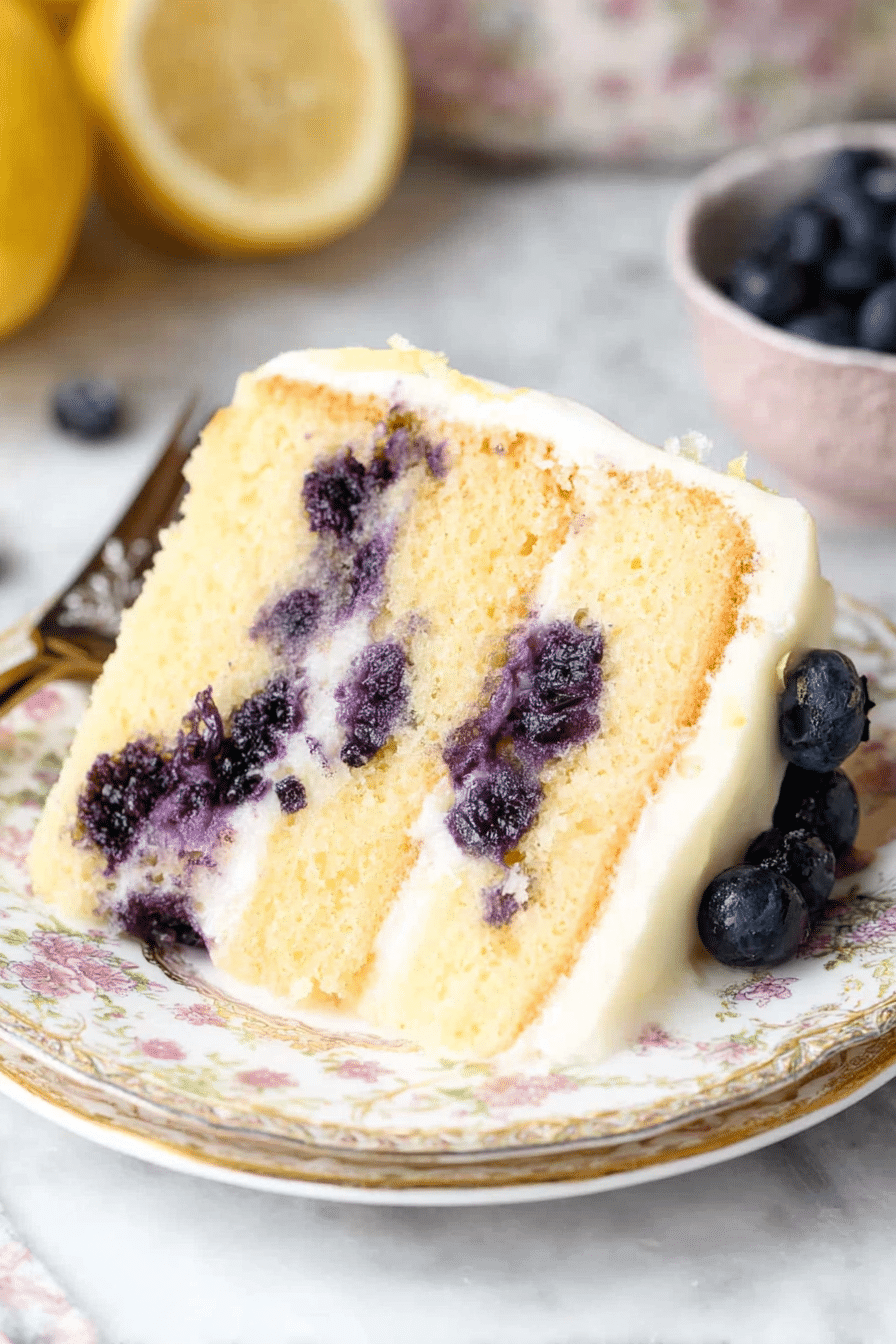
Lemon Blueberry Cake
Ingredients
Method
- Preheat the oven to 350F (180C) degrees. Grease and flour a 9x13 inch cake pan. For a layer cake, line the bottom of the cake tins with rounds of parchment paper. Then grease and flour the sides of the pans.
- In a medium bowl sift together the flour, baking powder, baking soda and salt. Whisk together and set aside.
- Combine the buttermilk and freshly squeezed lemon juice. Whisk with a fork and set aside.
- In a large bowl beat together the butter, sugar and lemon zest until fluffy. (About 2-3 minutes).
- Add in the vanilla extract and beat in the eggs 1 at a time.
- With the mixer on low speed, beat about 1/3 of the flour mixture into the butter mixture. Then mix in about 1/2 of the milk and lemon juice mixture. Turn off the mixer and scrape down the sides and bottom of the bowl. Repeat the process. Do not overmix.
- Toss the blueberries with the 2 teaspoons of flour, then gently fold into the batter.
- Pour the batter into the prepared pan/pans. Bake for 30-35 minutes for a 9x13 inch pan or about 25-30 minutes for layer cakes.
- Cool the cakes in the pan. Be very careful when inserting the pans.
- Beat the butter until soft, then mix in the cream cheese and lemon juice. Gradually mix in powdered sugar until desired sweetness is reached.
- Frost the cooled cake with frosting.
- Slice with a thin, sharp knife.