- Prep
- 30 min
- Cook
- 70 min
- Total
- 110 min
- Serves
- 8
- Calories
- 722 kcal
- Carbs
- 103.00 g
Introduction
I’ve baked this Lemon Bundt Cake for backyard barbecues, last-minute potlucks, and a too-pretty-to-eat birthday spread — and every time it disappears. The crumb is tender but sturdy, the lemon flavor is bright without being sharp, and the glaze adds that glossy, sweet-tart finish guests always love. What I love most is how forgiving this cake is: it tolerates a little variation in oven temperatures or a slightly longer mixing time and still turns out beautifully. That makes it my go-to when I need a bakery-quality dessert without fuss. I’ll share the small habits I learned in my kitchen that keep the crumb moist and the glaze glossy every time. Below you’ll find clear guidance for ingredients, technique, scaling, and presentation so your cake travels well and looks like you spent hours in the kitchen — even when you didn’t. Pro Tips, Troubleshooting, and Variations below are formatted as bulleted lists for quick scanning.Why This Lemon Bundt Cake Is Ideal for Parties and Potlucks
This cake reads as special on a table: the shape of a bundt is visually striking, the glaze gives it that professional shine, and the bright lemon keeps it feeling light next to heavier desserts. From experience, a few things make it particularly suited to gatherings:- The flavor is familiar and widely loved — bright lemon without being too tart — so it appeals to mixed crowds.
- Bundt pans create a large surface area for glaze, which makes each slice look finished without extra frosting work.
- It travels well when cooled completely and wrapped snugly; I’ve carried this cake in the back of my car for mile-long rides with no drama.
Everything You Need for Lemon Bundt Cake
Good technique starts with simple, dependable ingredients and a sturdy pan. Use room-temperature eggs and dairy for smooth emulsification, and choose a bundt pan with a nonstick coating and even weight distribution so the cake bakes evenly. A sturdy electric mixer helps the batter reach the right texture, but you can also use a strong whisk and some elbow grease.- Bundt pan – A heavy, well-coated pan helps the cake release cleanly and bake evenly.
- Electric mixer (or strong whisk) – Ensures thorough creaming and a smooth batter.
- Fresh lemons (zest and juice) – Fresh zest and juice give the best, brightest lemon flavor compared to bottled juice.
- Full-fat dairy – Adds richness and moisture; choose the higher-fat option you prefer for depth of flavor.
- Quality butter – Butter flavor matters here; choose a flavorful, unsalted butter and add salt separately if needed.
The Secret to a Tender, Moist Bundt Crumb
The difference between a dry bundt and a melt-in-your-mouth one comes down to technique and balancing leaveners. When I cream butter and sugar until light and fluffy, I’m deliberately trapping tiny pockets of air that expand in the oven and help create lift. Adding wet and dry ingredients in alternating increments prevents over-mixing and keeps the crumb tender. Sensory notes to watch for: the batter should look smooth and slightly glossy, and when you slice the cake, the interior should be even and springy to the touch with small, consistent crumbs. Baking powder gives lift; a touch of baking soda helps set the crumb and react with the lemon for subtle browning and flavor depth. Together they keep the cake light while the sour cream maintains moisture without making it dense.Sour Cream & Butter: The One Ingredient That Changes Texture
Sour cream is the quiet hero here — it adds tangy depth and stabilizes moisture so the cake stays soft for days. I prefer full-fat sour cream because the extra fat contributes to tenderness and mouthfeel. If you sub with plain Greek yogurt, choose a full-fat version for the closest effect. Butter should be at room temperature: soft enough to leave a slight indentation when pressed, but not so soft it looks greasy. Cold butter won’t cream properly and will produce a denser cake; too-warm butter can break down the batter. When you fold sour cream into the batter, do it gently and stop as soon as it is incorporated — that little restraint preserves air and keeps the crumb light.Scaling for Guests: Pan Sizes and Multiplying the Recipe
Adjusting this cake for a crowd is straightforward if you plan by pan size and bake time. Here’s a quick guide I use when I double or scale down the recipe.- Standard bundt (serves about 8–10) – The base recipe is ideal for a single-standard bundt tin and serves a small gathering.
- Larger bundt or tube pan – If you use a deeper, larger pan, expect the bake time to increase; check doneness with a toothpick and add time in 10–15 minute increments as needed.
- Two smaller bundts – Splitting batter between two pans shortens bake time slightly; start checking early and rotate pans halfway through baking for even color.
- Doubling the recipe – Mix in two batches if your mixer is small, or scale ingredients proportionally but avoid over-mixing by combining gently.
- Freezing options – Baked cakes freeze well unglazed; wrap tightly and freeze flat. Thaw in the refrigerator overnight and glaze the next day.
How to Make Lemon Bundt Cake (Step-by-Step)
- Preheat your oven and prepare the bundt pan thoroughly — grease and flour every nook so the cake releases cleanly (5–10 minutes prep).
- Whisk dry ingredients together in a bowl and set aside so they’re ready to add without overworking the batter (2–3 minutes).
- Cream room-temperature butter with sugar until light and pale; this step is where you incorporate air for structure (about 2 minutes with a mixer).
- Add zest, then the eggs one at a time, mixing briefly after each to maintain emulsion (3–4 minutes total).
- Alternate adding the dry mix and the milk/vanilla, beginning and ending with the dry ingredients; fold in sour cream and lemon juice last, mixing until just combined (4–5 minutes).
- Pour batter into the prepared pan and smooth the top; tap gently to release large air bubbles (2 minutes).
- Bake until a toothpick comes out clean or with a few moist crumbs; start checking at the shorter end of the suggested time and allow for 10–15 minute variations between ovens (60–70 minutes typical).
- Cool the cake in the pan until the pan is nearly cool to the touch, then loosen edges and invert onto a cooling rack; allow to cool completely before glazing (about 1 hour cooling).
- Whisk melted butter with powdered sugar and lemon juice to a pourable glaze; let it thicken slightly if you want a heavier coating, or pour right away for a thin, shiny finish (5–10 minutes).
Pro Tips for Lemon Bundt Cake: Transport, Presentation & Glazing Tricks
- Transporting: Cool the cake completely, then wrap it very gently in plastic wrap and place it in a cake carrier or a shallow box with a non-slip liner — this prevents sliding during transit.
- Glazing: If you want a two-tone look, reserve a small portion of glaze and tint it with a tiny bit of lemon zest-infused syrup before drizzling for contrast.
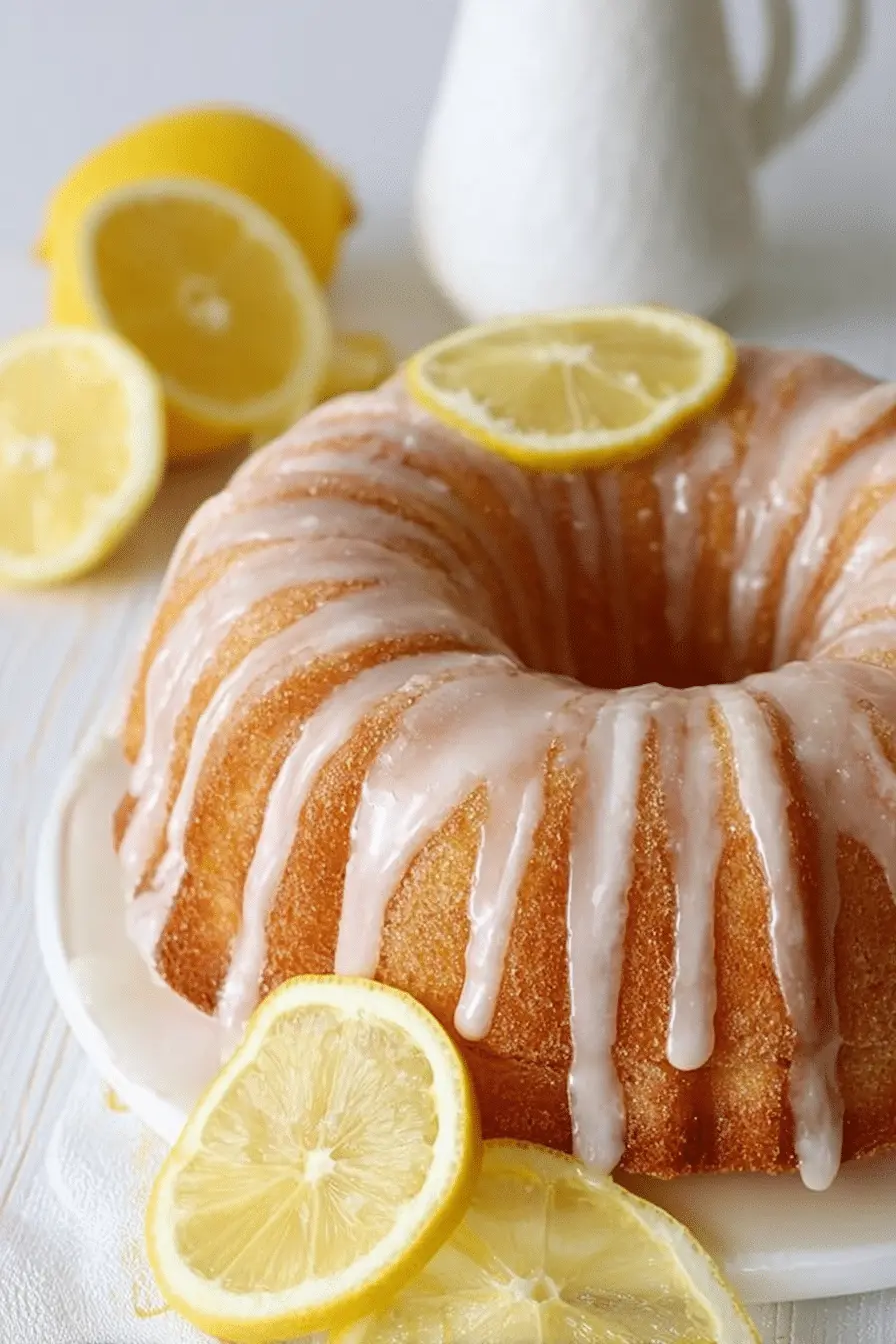
- Presentation: Garnish with thin lemon slices, edible flowers, or a sprinkle of finely grated zest right before serving so the colors pop.
- Make-ahead shine: Glaze the cake a few hours before your event and refrigerate uncovered briefly to set the glaze, then bring to room temperature before serving to restore shine.
- For a lighter finish: Dust with powdered sugar instead of glazing if you prefer a less sweet presentation.
Troubleshooting
- If the center sinks: I’ve found this usually means the cake was underbaked or the oven door was opened too early; check with a toothpick and extend bake time until it comes out clean or with a few moist crumbs.
- If the crumb is dense: You may have overmixed after adding the flour or used butter that was too soft; next time, mix until ingredients are just combined and make sure butter is room temperature, not melted.
- If the cake sticks to the pan: Ensure thorough greasing and dusting of flour or use a baking spray with flour; cool until the pan is only slightly warm before inverting.
- If the glaze is runny: Let the glaze sit a few minutes to thicken, then spoon or drizzle; for a thicker glaze, add more powdered sugar gradually.
How to Store, Reheat, and Make-Ahead Lemon Bundt Cake (Easy Variations)
Storage and reheating choices affect texture — here’s what I recommend depending on when you plan to serve the cake:- Room temperature short-term: Store in an airtight container for up to two days; this keeps the crumb soft without refrigeration.
- Refrigeration for longer freshness: Wrap tightly and refrigerate for up to five days; bring to room temperature before serving for best flavor and texture.
- Freezing: Freeze unglazed cake wrapped in plastic and foil for up to three months. Thaw overnight in the fridge and glaze the next day.
- Reheating slices: Warm individual slices briefly in a microwave or oven to revive the texture—15–20 seconds in a microwave or 5–7 minutes at low oven temperature works well.
- Make-ahead timeline: Bake a day ahead and glaze the morning of your event; this reduces last-minute stress while keeping the glaze fresh and glossy.
- Dietary swaps: Use a gluten-free all-purpose blend and a full-fat yogurt to mimic sour cream for a gluten-free version; for vegan adaptations, choose a vegan butter substitute and a plant-based yogurt but expect subtle changes in crumb and flavor.
Unique Flavor Variations and Pairing Ideas
- Blueberry lemon: Fold a handful of fresh berries into the batter for bursts of sweetness and color.
- Herb-laced: Add a small amount of finely chopped rosemary or thyme to the glaze for an adult, savory contrast to the citrus.
- Almond twist: Replace a portion of the flour with almond flour and add a touch of almond extract to deepen the nuttiness.
- Gluten-free and vegan options: Use a tested gluten-free flour blend and swap sour cream for full-fat coconut yogurt for a vegan-friendly texture (expect a slightly different crumb).
- Pairings: Serve with whipped cream and fresh berries, or alongside a fruit tart for a citrus-forward dessert table.
Frequently Asked Questions
Can I use a different type of flour for the Lemon Bundt Cake? While all-purpose flour is recommended for the best texture, you could experiment with gluten-free flour or cake flour. Just be aware it may alter the cake's texture. How can I tell when the Lemon Bundt Cake is done baking? Insert a toothpick into the center of the cake. It should come out clean or with a few moist crumbs, but no wet batter. What can I use instead of sour cream? You can substitute sour cream with Greek yogurt or buttermilk if you don't have any on hand. Both will keep the cake moist! Can I make this cake ahead of time? Absolutely! You can bake the cake a day or two in advance. Just store it in an airtight container at room temperature or refrigerate it for longer freshness. What can I use as a glaze alternative? If you want a different glaze, you could use a simple syrup or a cream cheese frosting, or even dust the cake with powdered sugar for a lighter finish.Recipe Card
The Cake I Bring to Every Party — Lemon Bundt Cake with Glaze
- Prep
- 30 min
- Cook
- 70 min
- Total
- 110 min
- Serves
- 8
- Calories
- 722 kcal
- Carbs
- 103.00 g
Ingredients
- 3 cupsall purpose flour
- 1 teaspoonbaking powder
- ½ teaspoonbaking soda
- ½ teaspoonsalt
- 1 cupunsalted Challenge butter (2 sticks, at room temperature)
- 2 cupssugar
- 1 tablespoonlemon zest (1 lemon)
- 4 wholeeggs
- ½ teaspoonvanilla extract
- ½ cupmilk (any but non-fat)
- ½ cupsour cream (full fat preferred)
- 1 tablespoonlemon juice (fresh)
- 2 tablespoonsChallenge butter (melted)
- 1 cuppowdered sugar
- 1 tablespoonlemon juice (fresh)
Instructions
- 1
Preheat oven to 325°F.
- 2
Grease and flour the bundt pan.
- 3
In a medium bowl, whisk together the flour, baking powder, baking soda, and salt.
- 4
In the bowl of an electric mixer, blend the butter until fully smooth.
- 5
Add sugar and beat on medium speed for 1-2 minutes.
- 6
Add lemon zest and blend.
- 7
While still mixing, add the eggs, one at a time.
- 8
Slowly add half of the flour mixture, then pour in the vanilla and milk.
- 9
Add the second half of the flour, then the sour cream and lemon juice.
- 10
Blend just until all ingredients are well incorporated.
- 11
Pour/scoop batter into prepared pan.
- 12
Bake for 60-70 minutes.
- 13
Cool in the pan for about 1 hour.
- 14
Invert the cake onto a plate.
- 15
Melt butter and add powdered sugar, whisking to combine.
- 16
Add lemon juice to the powdered sugar mixture and whisk.
You might also like

Reviews
Be the first to review this.