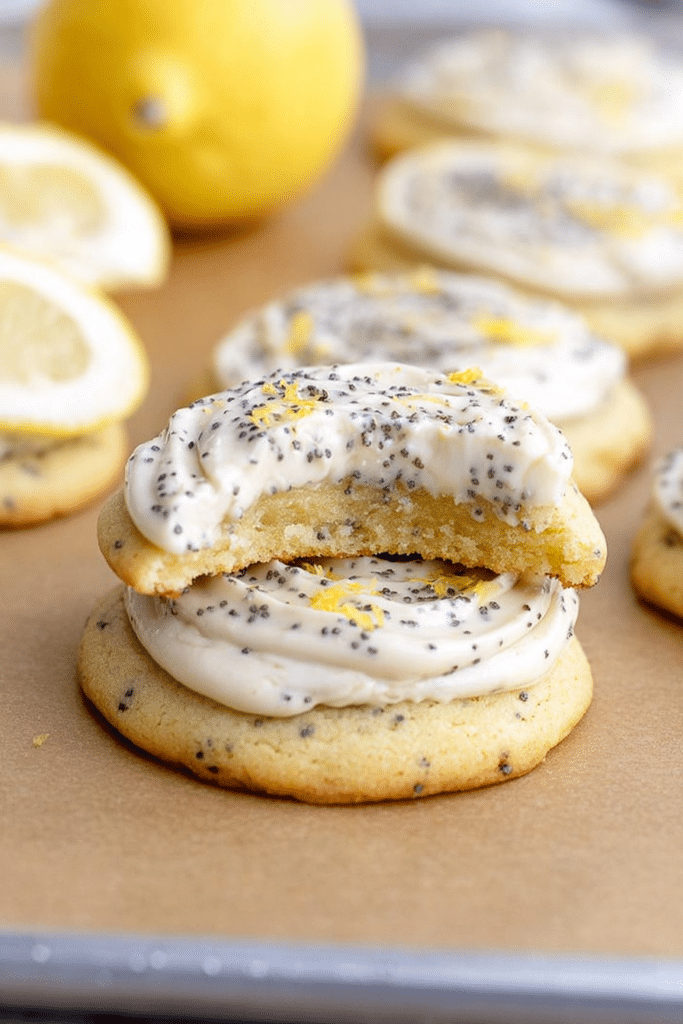
I bring these Lemon Poppy Seed Cheesecake Cookies to every spring brunch and backyard party because they balance bright citrus and creamy tang in a way that makes people line up for seconds. I remember the first time I tested them in my kitchen: the dough smelled like fresh lemon zest and the tiny black poppy seeds looked like little promises of crunch. After a few tweaks I landed on a cookie that is pillowy, tart, and just dense enough to hold a generous swirl of cheesecake frosting.
In testing, I learned that presentation matters almost as much as flavor—thick cookies with glossy, stiff cheesecake swirls read as both homey and elegant on a dessert table. I like to finish them with a scatter of poppy seeds and thin lemon slices for a bright pop of color that guests notice first. The aroma of lemon hits you immediately when you open the box; that citrus note pairs beautifully with the rich cream cheese frosting.
I also experimented with make-ahead strategies so these cookies travel well: cookie dough that’s chilled correctly keeps its shape, and the frosting holds up if you pipe it just before serving. If you’re planning a party, these cookies stack neatly on platters and won’t lose their charm under party lights—trust me, I’ve brought them to more than one event where they disappeared fast.
Below I walk you through everything you need, step-by-step instructions, texture secrets, dairy-free swaps, storage tips, and quick fixes for common problems so you can serve them confidently at your next gathering.
Why these Lemon Poppy Seed Cheesecake Cookies belong on your party platter
These cookies are a celebration-sized bite: the lemon zest gives a bright, fragrant top note while the cheesecake frosting provides a silky, tangy counterpoint that feels indulgent without being heavy. Visually, the contrast of pale yellow cookies, glossy white frosting, and speckled poppy seeds is eye-catching—perfect for a dessert table or plated alongside small teas and cocktails.
Sensory notes: imagine the citrus perfume as you unwrap the tray, the soft but substantial snap at the edge of each cookie, and the creamy velvet of the frosting melting on your tongue. They’re easy to share, transport well, and set a festive tone whether you’re hosting a baby shower, bridal brunch, or an afternoon tea.
Everything You Need for Lemon Poppy Seed Cheesecake Cookies
Below I describe each ingredient and tool in conversational terms so you know why it matters and how to adapt if you need dietary swaps.
- Granulated sugar – Gives sweetness and helps with spread; rubbing it with zest releases bright lemon oils.
- Lemon zest – The main citrus flavor; always zest fresh lemons for the best aroma.
- Butter – Adds richness and influences spread; use unsalted so you can control salt levels.
- Egg – Binds the dough and adds lift; for egg-free options use a commercial egg replacer suited for baking.
- Vanilla – Rounds and deepens flavor; a little goes a long way with lemon.
- All-purpose flour – Structure for the cookie; if you need gluten-free, see the variations section below.
- Leaveners (baking powder and baking soda) – Give a gentle lift while keeping texture tender.
- Poppy seeds – Tiny bursts of texture and visual interest; toast lightly if you want more nuttiness.
- Salt – Balances sweetness and brightens flavors.
- Cream cheese – The base of the frosting for tang and creaminess; for dairy-free options choose a high-quality plant-based cream cheese.
- Powdered sugar – Sweetens and stabilizes the frosting.
- Agave or honey – Adds smooth sweetness and helps the frosting sheen; use maple syrup for a different flavor profile.
- Heavy cream – Whipped into the frosting for body and stability; for vegan swaps use chilled coconut cream.
- Tools – A cookie scoop for even cookies, parchment paper for baking, a stand mixer or handheld mixer for smooth frosting, and a piping bag for neat swirls.
How to Make Lemon Poppy Seed Cheesecake Cookies (Step-by-Step)
- Start by melting your butter and letting it cool until it’s at room temperature; this prevents cooking the egg when you mix and helps the dough come together smoothly.
- Rub your granulated sugar with the lemon zest until the sugar looks damp and fragrant—this releases those citrus oils and gives the cookies a bright lemon aroma.
- Combine the cooled butter with the lemon-sugared mixture, then add the egg and vanilla; mix until homogenous and slightly glossy.
- Whisk together the flour, leaveners, poppy seeds, and salt in a separate bowl so everything is evenly distributed before folding into the wet ingredients.
- Use a cookie scoop to portion the dough and roll into tidy balls; chill the formed dough for at least 30 minutes to control spread and strengthen the flavor.
- Arrange the chilled dough on parchment-lined sheets (work in batches so the dough stays cold), and bake until the edges are set and the centers still look slightly soft—this keeps them thick and tender.
- Cool the cookies briefly on the sheet, then transfer to a rack to cool completely before frosting so the frosting doesn’t melt.
- Whip the cheesecake frosting ingredients in a mixer until you reach firm, glossy peaks; pipe onto cooled cookies and finish with extra poppy seeds and lemon zest or thin lemon slices for garnish.
The secret to thick, soft cookies every time
- Weigh or spoon-and-level your flour precisely so you don’t end up with dry, cakey cookies.
- Chill your scooped dough—this firms the fat, minimizes spread, and concentrates flavor.
- Don’t overmix once you add the flour; stop as soon as it’s combined to avoid developing too much gluten.
- Use a cookie scoop for uniform size so every cookie bakes in the same time and looks cohesive on a platter.
- Pull cookies from the oven when centers still look slightly soft; they’ll finish setting on the hot sheet and remain tender.
Why chilling matters: temperature tips for texture and spread
Chilling is the single most reliable trick for keeping these cookies thick and soft. When the dough is cold, the butter takes longer to melt in the oven, so the cookie spreads less and the edges set before the center collapses. You’ll also notice a cleaner lemon flavor after chilling—the citrus melds into the dough instead of smelling raw.
- Short chill (30–45 minutes): good when you need thick cookies with a quick turnaround.
- Overnight chill (8–24 hours): develops deeper flavor and an even tighter, chewier texture.
- Warning on over-chilling: if dough is rock-hard, let it sit at room temperature just until you can scoop it easily; baking from completely frozen dough can lengthen bake time and change texture.
Cheesecake frosting: achieving smooth, stable swirls (and vegan swaps)
The goal for frosting here is a silky, stable swirl that stands up on the cookie without sliding off. Texture contrast is important: a substantial cookie topped with a whipped, tangy frosting is what makes these feel special.
- Start with cold cream cheese and cold heavy cream for best whipping volume and stability.
- Beat the cream cheese smooth first, then gradually add powdered sugar so the texture stays velvety rather than grainy.
- Fold in whipped cream (or whip cream with the mixer) to lighten the frosting, then whip to firm peaks for piping—stop as soon as peaks hold to avoid a greasy or broken texture.
- Vegan swap: use a high-quality vegan cream cheese and chilled full-fat coconut cream. Sweeten with powdered sugar or sifted powdered sugar alternative and stabilize with a small amount of corn starch if needed.
Pro Tip for lemon poppy seed cheesecake cookies: dairy-free frosting & pairing ideas
- I find that a thick dairy-free frosting made from full-fat coconut cream and a tangy dairy-free cream cheese holds its shape best—chill the bowl and beaters beforehand for extra lift.
- Tea pairings: pair with Earl Grey for bergamot notes, or a bright green tea to contrast the sweet richness.
- Cocktail pairing: serve with a light Prosecco cocktail or a gin and tonic garnished with a lemon peel to echo the citrus profile.
- Presentation tip: arrange cookies on tiered trays or stagger them beside small lemon wedges and a bowl of extra poppy seeds for guests to sprinkle themselves.
How to store, make ahead, and scale these cookies for a crowd
- Short-term storage: keep frosted cookies in a single layer in an airtight container in the fridge for up to 3 days; bring to room temperature before serving so the frosting loosens slightly.
- Freezing baked cookies: freeze unfrosted cookies in a single layer, then transfer to a sealed bag; they freeze for up to 3 months. Thaw at room temperature before frosting.
- Freezing dough: portion dough and freeze the scooped balls on a tray, then bag them for future baking; bake from frozen, adding a minute or two to the bake time as needed.
- Scaling for a crowd: multiply the dough components evenly and chill mixes in batches if your mixer or fridge space is limited; portioning with a scoop keeps size consistent when you scale up.
- Gluten-free option: replace part or all of the flour with a reliable gluten-free flour blend and add a small binder like xanthan gum if your blend doesn’t already include it; test a small batch first to refine texture.
Troubleshooting: common problems and quick fixes
- If your cookies spread too thin: chill the dough longer and make sure your butter wasn’t too warm when mixed. I once baked a whole sheet of flat discs because my butter was still warm—chilling fixed it for the next batch.
- If cookies are dry or crumbly: you likely measured too much flour or overbaked—reduce bake time slightly and measure flour by spooning into the cup or by weight.
- If frosting is runny: chill the bowl and beaters, and whip to firmer peaks; for dairy-free frostings, chill the coconut cream thoroughly before whipping.
- If frosting tastes overly sweet: add a touch more cream cheese or a squeeze of lemon juice to bring back balance.
- If texture is gummy after chilling: allow the dough to rest at room temperature briefly before scooping so the fats are pliable but still cool.
Variations of Lemon Poppy Seed Cheesecake Cookies
- Gluten-free: use a cup-for-cup gluten-free flour blend and add a stabilizer if needed for chewiness.
- Blueberry-studded: fold in fresh or freeze-dried blueberries to the dough for a fruit-forward twist; reduce extra moisture from very wet fruit by using freeze-dried or gently tossing fresh pieces in a little flour.
- Lavender lemon: add culinary lavender to the sugar and zest mixture for a floral lift—use sparingly so it doesn’t overpower the lemon.
- Honey-lemon glaze: replace the piped frosting with a thin honey-lemon glaze for a lighter finish that still shines on a dessert tray.
- Citrus combo: swap some lemon zest for orange or lime zest for a rounded citrus profile that pairs nicely with a less sweet frosting.
Serve these cookies chilled or at room temperature, on a bright platter with extra lemon slices and a small jar of poppy seeds for guests who like a heavier sprinkle. They make a lively addition to a dessert table and travel well in stacked boxes with parchment between layers.
Frequently Asked Questions
Can I use a different type of frosting instead of cheesecake frosting?
Absolutely! You can use any frosting you like, such as buttercream or even a simple glaze. Just make sure it complements the lemon flavor of the cookies.
How can I make these cookies dairy-free?
For a dairy-free version, you can substitute the cream cheese with a dairy-free cream cheese alternative and use coconut cream or a plant-based milk for the frosting.
How do I prevent the cookies from spreading too much while baking?
Make sure to chill the cookie dough for at least 30 minutes before baking. This helps the cookies hold their shape and remain thick and soft.
Can I freeze these cookies for later?
Yes, you can freeze the baked cookies! Place them in an airtight container or a freezer bag, and they should last for up to three months. Just thaw them at room temperature before serving.
What can I serve with lemon poppy seed cheesecake cookies?
These cookies pair wonderfully with tea, lemonade, or a light white wine. They also make great additions to dessert platters or as a sweet treat at parties!
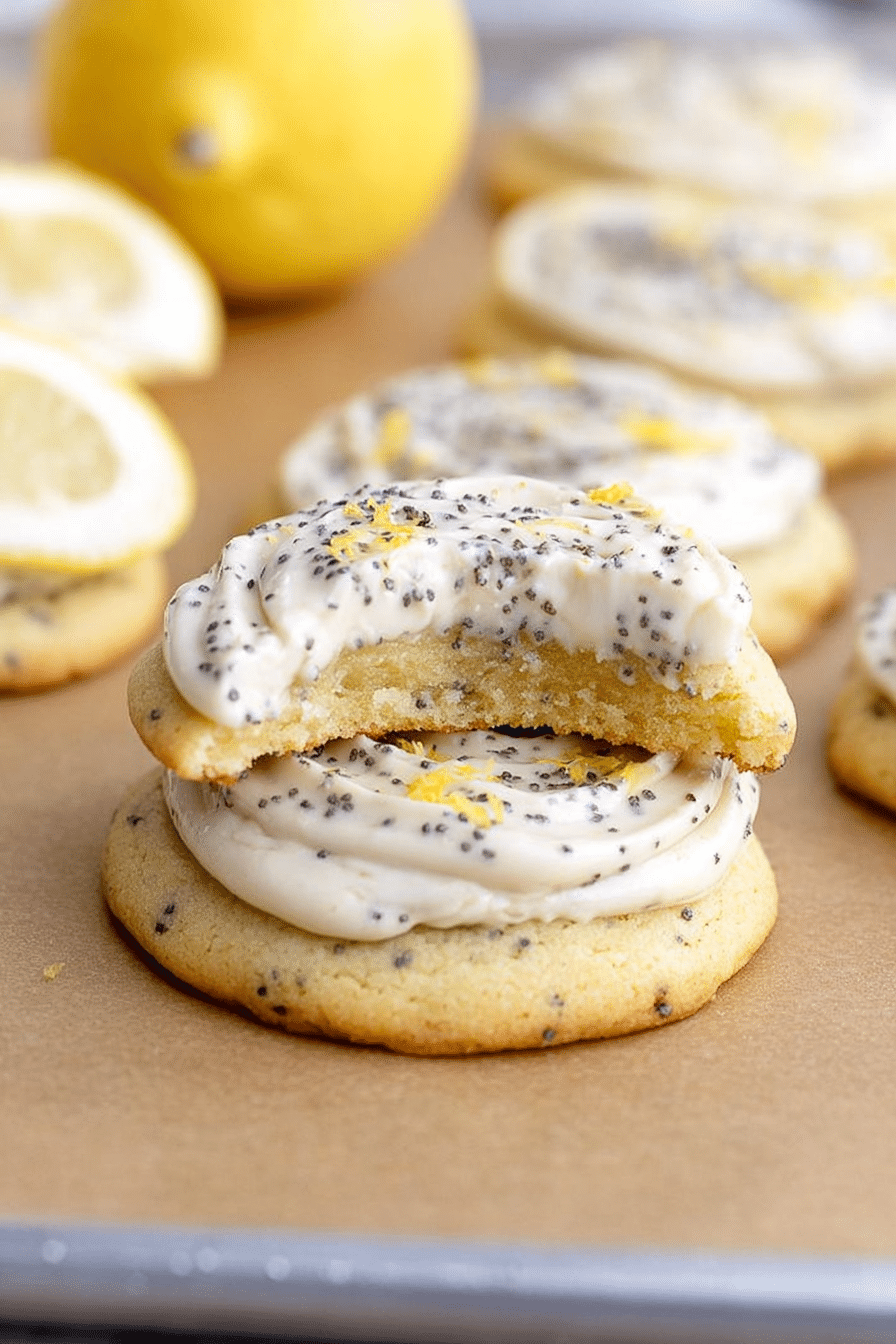
Lemon Poppy Seed Cheesecake Cookies
Ingredients
Method
- Melt the butter in the microwave or in a small saucepan over low-medium heat. Pour the melted butter into a large mixing bowl and let it cool down to room temperature in the fridge.
- In a bowl add the granulated sugar and lemon zest. Rub it together to release all of the lemon zest flavor, until it looks like wet sand.
- Once the butter has reached room temperature add the lemon granulated sugar and with rubber spatula whisk it together for 1 minute.
- Add the egg and vanilla extract and mix it in until combined.
- In a separate bowl, stir together flour, baking powder, baking soda, poppy seeds and salt. Add the dry ingredients and with a rubber spatula mix it together until combined.
- Using a 2 tbsp cookie scoop, scoop out 11 cookies and place them on a tray lined with baking paper. Roll them between your hands into a ball. Place the prepared cookies in the fridge to set for 30 minutes.
- Meanwhile, preheat the oven at 180ºC / 355ºF and prepare a baking sheet with baking paper.
- Once the 30 minutes has passed, place 6 cookies on a lined baking sheet and put the remaining 5 back in the fridge until the first batch has finished baking. Bake for 10-11 minutes.
- Once baked, let them cool down on the baking tray for 3 minutes then use a spatula to lift them onto a cooling rack and let them cool down completely.
- In a medium bowl with an electric mixer or in a stand mixer using the whisk attachment, whip together all of the frosting ingredients until it reaches stiff peaks.
- When ready to serve, add the cream to a piping bag and pipe the cheesecake frosting on top of the cookies. Sprinkle with poppy seeds and decorate with lemon zest or lemon slices.