- Prep
- 30 min
- Cook
- 20 min
- Total
- 110 min
- Serves
- 12
- Calories
- 320 kcal
- Carbs
- 45.00 g
Introduction
I make these mini lemon cakes whenever I want a dessert that looks like effort but tastes effortless. They’re small enough to pass around at a crowded brunch and pretty enough to sit on a gift plate; the lemon zest and lavender glaze always draw a few compliments before anyone takes a bite. In my kitchen they’ve become my go-to when I want something refined and cheerful. I love the way the lemon scent fills the kitchen as the batter comes together — bright, sharp, and impossible to ignore. The cakes bake quickly, so you get that golden edge and tender center in under half an hour. I’ll often make a batch the night before a gathering and finish them with glaze and flowers the next morning for the freshest presentation. There’s something about gifting a box of these cakes: they travel well, stack neatly, and they’re small enough that people feel comfortable taking one or two. They pair especially well with cookies and small bites when I’m assembling a dessert tray for friends.Why These Mini Lemon Cakes are Perfect for Hosting and Gifting
These mini cakes win on three fronts: visual appeal, flavor balance, and portability. They look elegant on a pastry stand — the bright yellow crumb and the pale lavender-specked glaze read as both special and intentional. Because they’re bite-sized, guests can try one without committing to a whole slice, which keeps the pastry table feeling abundant and varied. The lemon-lavender pairing suits spring and summer gatherings but also reads as fresh during holiday tea parties. You can make a dozen in one go and transport them stacked in a shallow box with parchment; they hold up well in transit if you chill them briefly after glazing. If you want a complement on your dessert table, I like to place them next to other citrus treats for contrast: Enhance your dessert table with our delicious glazed lemon cookies that complement mini lemon cakes beautifully.Everything You Need for Mini Lemon Cakes
Use good-quality, fresh ingredients and the right tools and these cakes come together easily. Below I break down the ingredients by purpose and offer straightforward substitutions so you can adapt without losing the bright lemon character.- All-purpose flour – The structure builder; for a lighter crumb you can try a blend of pastry flour and all-purpose.
- Butter – Adds flavor and tenderness; use unsalted so you control the salt level. If you need dairy-free, use a solid plant-based butter substitute that’s intended for baking.
- Sugars (granulated + brown) – Granulated keeps the cake light; a touch of brown adds moisture and a subtle caramel note.
- Lemons (zest and juice) – The bright focus of the cake; always zest before juicing to avoid wasting juice.
- Eggs – Provide lift and richness; bring them to room temperature for better emulsification.
- Sour cream – Keeps crumb moist and tender; buttermilk or yogurt can be used as a substitute to preserve acidity.
- Milk – Balances batter texture; any unsweetened plant milk works as a one-to-one swap.
- Vanilla – Rounds the citrus notes without competing with lemon.
- Culinary lavender – For the glaze’s floral aroma; use culinary-grade lavender only to avoid off flavors.
- Powdered sugar – Creates a silky, pourable glaze that sets nicely on mini cakes.
- Two 6-cup mini cake trays or a mini bundt pan — for consistent shape and even browning.
- Stand mixer or hand mixer — speeds up creaming the butter and sugar to the right texture.
- Microplane for zesting, fine mesh strainer for the lavender milk, and a wire rack for cooling.
The Secret to a Tender, Moist Crumb
Getting that soft, tender texture comes from balance and restraint. Too much mixing after adding the flour develops gluten and makes cakes tough; too little fat or acid leaves them dense. I aim for a batter that’s smooth and slightly thick but still pourable — that’s your visual cue that the proportions are right. Butter temperature matters: when butter is too cold it won’t cream properly and your cake won’t trap air; when too warm it collapses. For a light crumb, beat the butter and sugars until pale and aerated, add eggs one at a time so the emulsion stays stable, and alternate dry and wet ingredients so the batter comes together quickly and evenly. You should see the batter thicken and hold small air bubbles that give the cakes a gentle lift as they bake.Why Temperature and Timing Matter for Mini Cakes
Preheating the oven and consistent oven temperature are non-negotiable for mini cakes. Because they’re small, they bake fast; hot spots or incorrect temperature can brown the edges too quickly while leaving the center undercooked. I always let my oven fully preheat and check the cakes a few minutes before the listed time—look for a light golden edge and a springy center. Resting the cakes in their trays for a short time helps them set so they don’t tear when inverted. If you overbake by even a few minutes, the crumb will dry out quickly. Conversely, underbaking leaves a gummy center. Watch for the wooden pick to come out clean or with a few moist crumbs, and for the tops to feel springy to the touch.Why Lavender Works So Well with Lemon
Lavender’s floral, slightly sweet top notes accentuate lemon’s bright acidity without competing with it. The flavor pairing evokes springtime — the citrus cuts through the floral sweetness and the lavender lends a subtle perfume that feels grown-up and elegant. Use culinary lavender sparingly: its aroma should lift the glaze rather than dominate it. In the glaze, the softened milk extracts the aromatic oils from the lavender and creates a fragrant drizzle that brushes across the cake’s tart lemon notes. The result is a balanced aroma and flavor: floral on the inhale, citrus on the palate.How to Make Mini Lemon Cakes (Step-by-Step)
- Preheat and prepare pans: Preheat your oven and thoroughly grease your mini cake trays so the cakes release cleanly.
- Mix dry ingredients: Whisk the flour, salt, and baking soda together to distribute leavening evenly.
- Cream butter and sugars: In a mixer, beat the softened butter with the sugars and lemon zest until pale and fluffy; this trapped air helps lift the cakes.
- Add eggs: Add eggs one at a time, beating after each addition so the batter remains smooth and emulsified.
- Combine wet dairy: Whisk sour cream (or substitute), milk, and vanilla until smooth; this adds moisture and helps the crumb stay tender.
- Alternate additions: With the mixer on low, add the dry mixture and wet mixture in alternating batches, beginning and ending with the dry. Mix just until combined — the batter should be smooth with no streaks of flour.
- Portion batter: Divide the batter evenly into prepared trays, tapping the trays on the counter to release large air bubbles and level the batter.
- Bake and test: Bake until cakes are set and a wooden pick comes out clean or with a few moist crumbs; timing can vary, so check a little early.
- Cool correctly: Let cakes rest in their trays briefly, then invert onto a wire rack to cool completely; glazing warm cakes will cause the glaze to run.
- Steep lavender and make glaze: Heat milk, steep lavender briefly, strain, then whisk into powdered sugar with salt and vanilla until you get a smooth, pourable glaze.
- Glaze and garnish: Drizzle the cooled cakes with the lavender glaze and finish with lemon zest and edible flowers for an elegant touch.
Pro Tip for Mini Lemon Cakes: How to Steep Lavender Without Bitterness
- I steep lavender in hot milk for a short, controlled time — usually under 15 minutes — then strain. This pulls out aroma without the bitter, soapy notes.
- Use culinary-grade lavender and avoid over-steeping; if the milk smells floral but slightly medicinal, you’ve steeped too long.
- For a more subtle floral note, make lavender-infused sugar by rubbing dried lavender into granulated sugar and letting it sit for a day before use.
- Alternate method: Gently warm the milk, remove from heat, add lavender, and let it steep off the heat for a gentler extraction.
- Add the strained lavender milk slowly to your powdered sugar, a teaspoon at a time, until the glaze reaches a pourable consistency.
Troubleshooting
- If cakes are dense, I check that the butter was creamed long enough and that the eggs were at room temperature to create a stable emulsion.
- If the edges brown too quickly, the oven may be hot; rotate the trays halfway through or lower the temperature slightly next time.
- If the glaze tastes bitter or soapy, it likely steeped too long—discard that infusion and steep a fresh batch for a shorter time.
- If cakes stick to the pan, I make sure the trays are well-greased and cooled slightly before inverting; a thin cake release spray or brushing with melted butter helps.
How to Store, Freeze, and Gift Mini Lemon Cakes
Short-term storage: Keep cakes in an airtight container at room temperature for a couple of days to preserve tenderness. If you live in a warm climate, refrigerate to protect the glaze; bring to room temperature before serving so the crumb regains softness. Freezing: Freeze unglazed cakes in a single layer on a tray until firm, then transfer to a freezer-safe container separated with parchment to prevent sticking. Thaw overnight in the refrigerator, then bring to room temperature and glaze before serving for the freshest finish. Gifting: Arrange cakes in a shallow box on a bed of tissue or parchment and separate layers with paper. For a small gift bag, tie a ribbon and add a sprig of dried lavender. If you want a paired treat on your gift table, I like to include a small jar of lemon poppy seed energy bites alongside the cakes: For a quick treat, check out our lemon poppy seed energy bites, perfect for gifting alongside mini lemon cakes.Healthier Variations for Mini Lemon Cakes
You can lighten or adapt these cakes for dietary needs without losing their charm. Swap flours, use alternative sweeteners, or choose plant-based dairy to suit gluten-free or vegan diets. For a fruit-forward, lighter option, consider a lemon-blueberry take as a flavorful alternative: If you enjoy lemon, consider making a lemon blueberry cake for a healthier, fruit-filled option.- Gluten-free: Use a reliable gluten-free all-purpose blend and add a binder like xanthan gum if your blend lacks it.
- Vegan: Replace butter with a firm plant-based butter, use a flax or chia egg, and swap sour cream for a thick plant yogurt.
- Reduced sugar: Use a combination of natural sweeteners and a touch less sugar; note that texture may change slightly.
Customizable Mini Lemon Cake Recipes with Different Fillings or Toppings
These cakes are a blank canvas. Try piping a little lemon curd into the center after cooling, add a fresh berry compote on top, or finish with a light whipped topping and herbs. For a creative pairing, try a lemon poppy seed cheesecake cookie as a side or topping to contrast textures: Try adding a twist with our lemon poppy seed cheesecake cookies as a delightful topping or side.- Fillings: Lemon curd, mascarpone mixed with a touch of honey, or a berry compote spooned into a small cavity.
- Toppings: Light whipped cream, toasted almond slivers, a sprinkle of finely chopped candied lemon peel, or edible flowers for a showy finish.
- Herb accents: A few finely chopped mint leaves or a sliver of basil can add an unexpected, pleasant contrast.
Variations
- Lemon–Blueberry: Fold fresh berries into the batter or top with a warm blueberry compote.
- Lavender–Honey: Replace some sugar with honey and mellow the lavender slightly for a softer floral note.
- Almond–Lemon: Add a touch of almond extract and a dusting of toasted almonds for crunch and aroma.
- Mini Bundt vs. Round: Change the pan shape for visual variety — the same batter works well across shapes with slight timing adjustments.
Frequently Asked Questions
Can I use a different type of milk for the mini lemon cakes? Yes! You can substitute any type of milk you prefer, including almond milk or oat milk. Just make sure it's unsweetened for the best results. How long do the mini lemon cakes last? The mini lemon cakes can be stored in an airtight container at room temperature for up to 3 days or in the refrigerator for up to a week. You can also freeze them for longer storage! Can I make these mini lemon cakes gluten-free? Absolutely! You can use a gluten-free all-purpose flour blend in place of regular flour to make these cakes gluten-free. What can I use instead of lavender in the glaze? If you don't have lavender, you can use other flavors like lemon zest or even a splash of vanilla extract to create a delicious glaze. Are these mini lemon cakes suitable for vegetarians? Yes, these mini lemon cakes are vegetarian-friendly as they do not contain any meat or fish products.Recipe Card
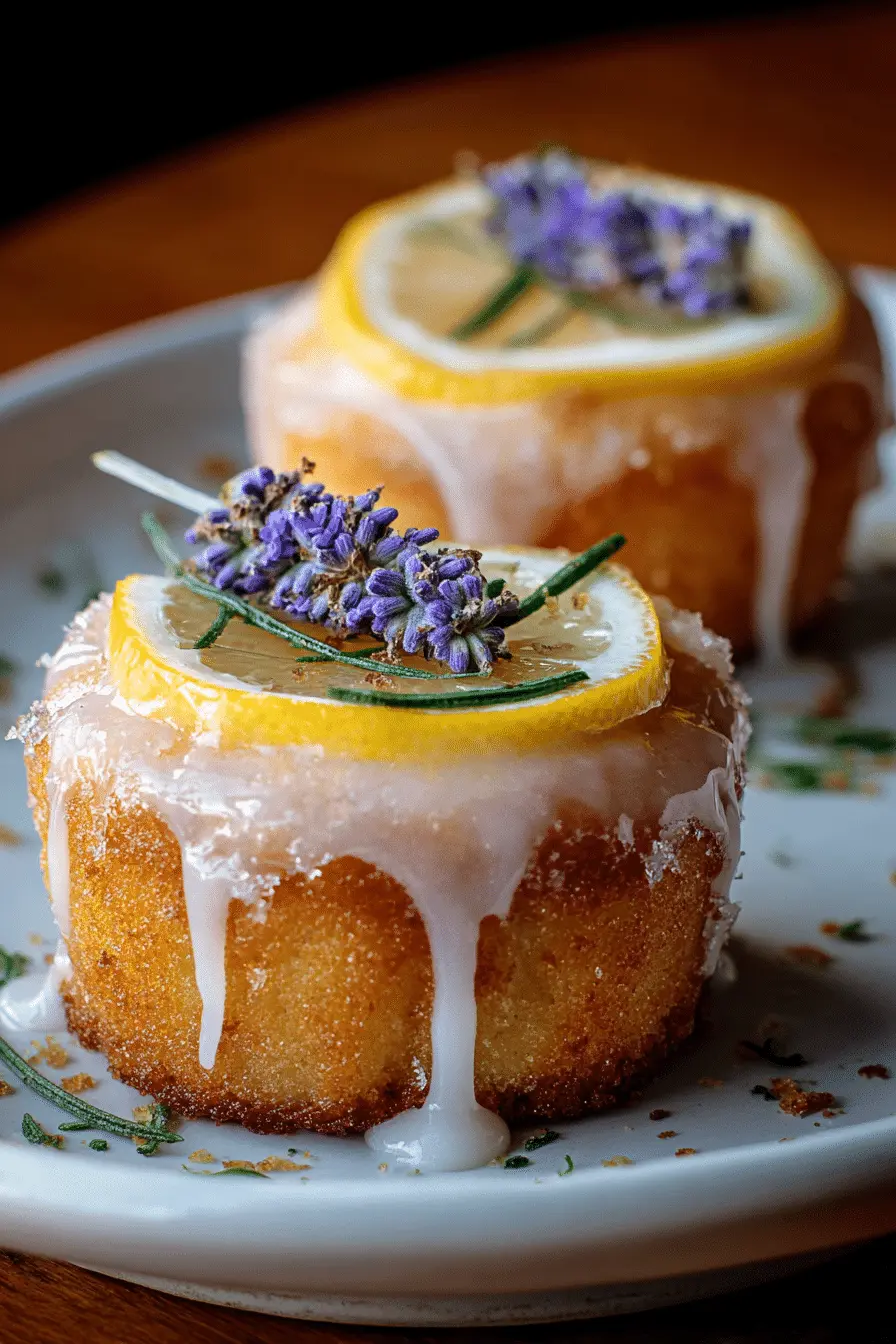
The Mini Lemon Cakes I Make for Every Brunch
- Prep
- 30 min
- Cook
- 20 min
- Total
- 110 min
- Serves
- 12
- Calories
- 320 kcal
- Carbs
- 45.00 g
Ingredients
- 1 1/3 cupsall-purpose flour
- 1/2 tsp.kosher salt
- 1/8 tsp.baking soda
- 1/2 cupunsalted butter, softened
- 2/3 cupgranulated sugar
- 1/3 cuppacked light brown sugar
- 1 Tbsp.grated lemon zest (from 2 lemons)
- 2 largeeggs, at room temperature
- 1/4 cupsour cream, at room temperature
- 1/4 cupwhole milk, at room temperature
- 1 tsp.vanilla extract
- 1/2 tsp.culinary lavender
- 1 1/2 cupspowdered sugar
- 1/4 tsp.kosher salt
- 1/8 tsp.vanilla extract
- as neededEdible flowers and lemon zest (for garnish)
Instructions
- 1
Preheat oven to 325°F. Thoroughly coat 2 (6-cup) mini cake trays with baking spray. Whisk together flour, salt, and baking soda.
- 2
In a stand mixer, beat butter, sugars, and lemon zest on medium speed until light and fluffy, about 3 minutes. Add eggs, 1 at a time, beating well after each.
- 3
In a small bowl, whisk together sour cream, milk, and vanilla. With the mixer on low, gradually add the flour mixture and sour cream mixture in alternating batches, beginning and ending with flour. Mix just until combined.
- 4
Divide batter evenly among prepared trays. Tap trays on the counter to release air bubbles. Bake for 18 to 20 minutes, until a wooden pick comes out clean.
- 5
Let cool in trays for 10 minutes, then invert onto a wire rack to cool completely, about 1 hour.
- 6
When cakes are cool, microwave 1/4 cup milk for 1 minute until hot. Add lavender and let steep for 10 minutes. Strain the milk through a fine mesh strainer, discarding the lavender.
- 7
In a medium bowl, combine powdered sugar, salt, and vanilla. Gradually stir in the steeped milk, 1 teaspoon at a time, until you have a smooth, pourable glaze.
- 8
Drizzle the cooled cakes with the lavender glaze. Garnish with additional lemon zest and edible flowers, if desired.
You might also like


Reviews
Be the first to review this.