- Prep
- 60 min
- Cook
- 20 min
- Total
- 100 min
- Serves
- 30
- Calories
- 150 kcal
On this page11 quick jumps
TOC
11 quick jumps
Introduction
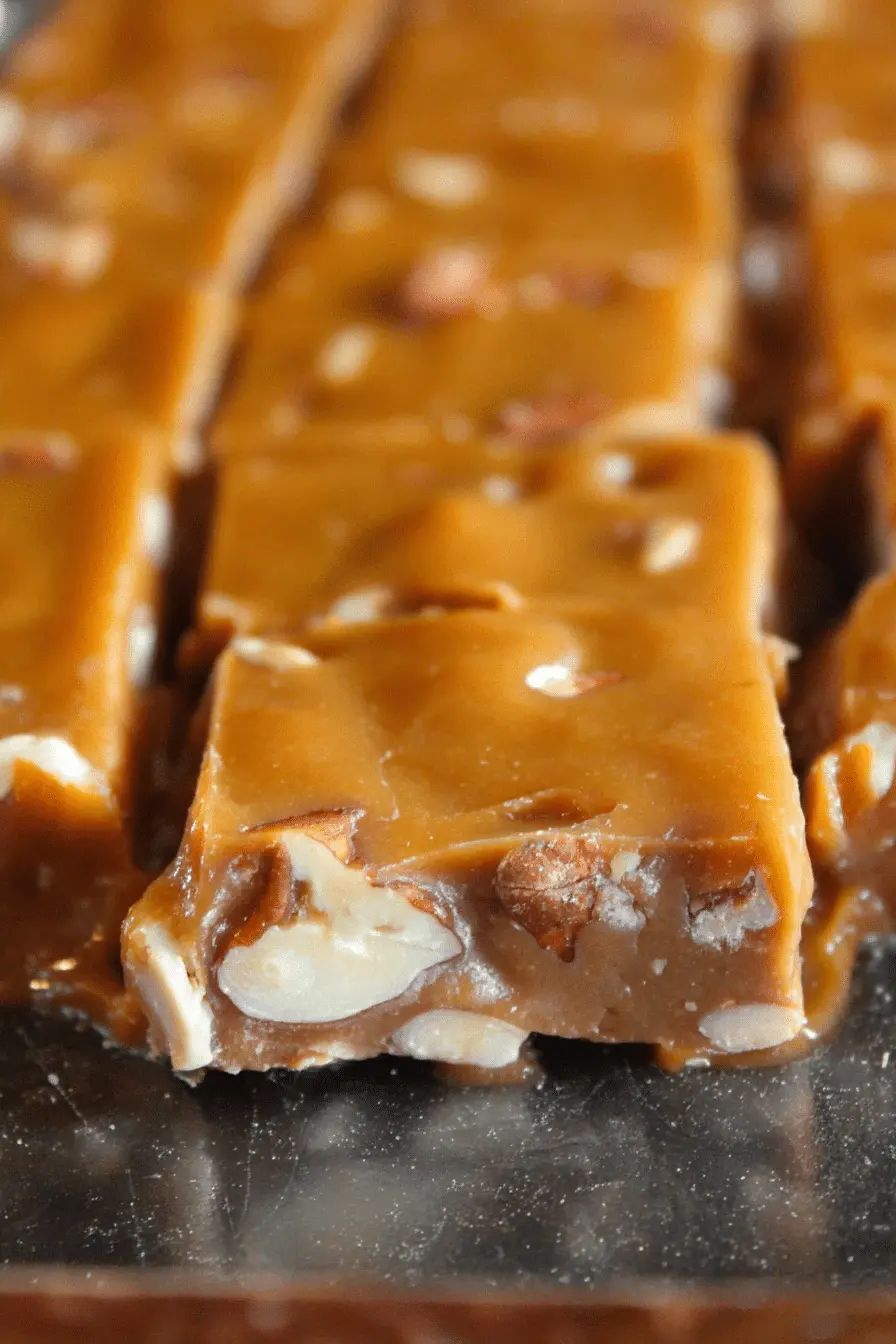
Oklahoma Nut Candy — also called Aunt Bill's Brown Candy in my family — is one of those old-fashioned Southern confections that smells like a holiday kitchen the moment you start. It's a brown, buttery, nut-studded candy that sets firm enough to cut into squares but stays soft enough to bite into without snapping your teeth. I made this batch on a rainy afternoon with the radio low and an old enamel pan on the stove; within 20 minutes the whole house smelled of caramelized sugar and butter, and I kept sneaking a corner piece before it had fully set.Ingredients Needed for Crafting
Below is a conversational explanation of the ingredients you'll use. I list what they do and how to choose them; exact measurements and the order they go in are in the step-by-step section so you can follow the proven method I used.- Sugar – the backbone of the candy; you’ll use two portions in the method (one melted separately to encourage even caramelization). Use plain granulated sugar for predictable results.
- Heavy cream – gives richness and a creamy texture. It reduces the syrup’s freezing point so the candy stays tender rather than glass-hard.
- Unsalted butter – adds flavor and shine. Unsalted lets you control the salt level; if you only have salted, omit any extra salt elsewhere.
- Baking soda – a surprisingly small but crucial ingredient. It lightens the candy and changes the texture so the final result isn’t a dense brick.
- Vanilla – a finishing flavor note that rounds out the caramel. Use pure vanilla extract for the cleanest aromatics.
- Walnuts or pecans – the nuts give the candy its name and lovely crunch. Use fresh, lightly toasted nuts for the best flavor; salted nuts will make the candy noticeably saltier.
- Grease for the pan – a little butter or nonstick spray for your 9x13 dish so the candy releases cleanly once set.
Step-by-Step Instructions for Beginners
I’ll walk you through the exact process I followed the afternoon I tested this recipe. Read through once before you start, have a candy thermometer on hand (or know the cold-water test), and be ready to give the mixture your attention as it nears the finish.- Grease a 9x13 baking dish and set it aside so it’s ready when the candy finishes.
- Measure ingredients: you’ll work with sugar split into two portions, heavy cream, butter, baking soda, vanilla, and chopped nuts. (Exact quantities are the traditional version: 6 cups sugar total separated into 2 and 4 cups, 2 cups heavy cream, 1/2 cup butter, 1/4 teaspoon baking soda, 1 teaspoon vanilla, and 1 1/2 cups chopped nuts — use these if you want the same yield I made, about 30 squares.)
- In a small, heavy-bottomed saucepan, pour in the smaller portion of sugar (2 cups is traditional) and set over low heat. Stir frequently at first as the grains soften and begin to melt; this step took me about 15–20 minutes. You’ll notice the sugar go from grainy to clear and glossy. Be patient — rushing with higher heat risks burning and bitter notes.
- While that sugar is melting, place the rest of the sugar (the remaining 4 cups) and the heavy cream into a large, heavy pot or Dutch oven. Warm gently over low heat until the larger sugar has dissolved and the mixture is simmering. You’re not trying to color this mixture — just to incorporate and get the temperature up so adding the melted sugar won’t shock it.
- Carefully add the melted sugar from the small pan into the large pot with continuous stirring. At this point your mixture will be glossy and quite hot; stir to combine thoroughly so the sugars homogenize.
- Increase the heat to medium and bring the mixture to the softball stage — about 244°F (118°C). If you don’t use a thermometer, perform the cold-water test: drop a small spoonful into a bowl of cold water. If it forms a soft, pliable ball that flattens when pressed, it’s ready. Watch closely as the syrup nears temperature; it can surge past the target if left unattended.
- Remove the pot from the heat and immediately stir in the baking soda until it’s fully combined. You’ll see the mixture foam and lighten slightly — that’s the baking soda reacting and aerating the candy, which is exactly what you want.
- Add the butter and vanilla and stir until the butter is fully melted and the mixture is smooth and shiny. The aroma here is beautiful: warm caramel with a whisper of vanilla. At first, the candy will look way too thin; after a minute off heat it will thicken noticeably and lose its sheen.
- Let the pot rest for 20 minutes. The resting step is important — it lets the temperature drop just enough so adding the nuts doesn’t cause them to sink or the mixture to seize unnaturally.
- After the rest, stir in the chopped nuts until they’re evenly distributed and the mixture’s glossy sheen has faded. Transfer the candy to your prepared 9x13 dish and smooth the top with a buttered spatula or the back of a spoon.
- I like to scrape the pot well; the edges sometimes hold slightly thicker caramel that’s delicious on its own.
- Let the candy cool at room temperature for 1–2 hours, or overnight if you prefer a firmer set. I usually leave it on the counter overnight and cut the next morning with an oiled knife; it cuts cleaner that way.
- Cut into small squares (this recipe yields about 30) and store as described in the FAQs below.
Tips for Perfect Texture and Flavor
Making sugar candy feels technical, but there are simple habits that make it predictable and enjoyable. These are the tricks I learned by burning a few batches and tasting still-warm pieces straight from the pan.- Use a heavy-bottomed pot — it distributes heat evenly and reduces hot spots that burn sugar.
- Keep a candy thermometer handy. For this recipe aim for about 244°F (softball stage). If you’re using the cold-water test, practice once so you know the feel of that soft ball.
- Avoid stirring too violently once the large pot is boiling. Vigorous stirring can encourage crystallization on the edges. If you see sugar crystals on the pot sides, wet a pastry brush and wash them down while the syrup is hot.
- Don’t skip the rest before adding nuts. I once added them immediately and the nuts sank to the bottom because the syrup was still too fluid.
- If your candy tastes flat, check the salt balance — a pinch of flaky sea salt sprinkled on top after pouring can wake up the flavors wonderfully.
- If the candy is too hard, you probably overshot the temperature. For rescue: gently rewarm with a splash of cream and re-cook to the correct stage, stirring constantly.
Alternative Nut Choices and Dietary Options
This candy is forgiving with the nut choice; you can swap in what you have or what you prefer. Texture and flavor will shift, but the method largely stays the same.- Pecans – classic Southern choice, sweeter and softer than walnuts; toast briefly for extra flavor.
- Walnuts – slightly bitter edge that contrasts nicely with the sweet caramel; I used these in my latest batch and loved the depth.
- Almonds – give a cleaner, nuttier finish and a firmer bite.
- Peanuts – economical and familiar; they bring a saltier profile if you use roasted salted peanuts.
- Seeds (pumpkin or sunflower) – good nut-free alternatives; the texture will be chewier and more seed-forward.
- Vegan options – swap the butter for vegan butter and the heavy cream for full-fat canned coconut milk. Note: coconut milk behaves differently (more water content), so watch the temperature closely — the candy may set a bit softer.
Cultural Significance of Oklahoma Nut Candy
Oklahoma Nut Candy sits in the same family as many Southern, midwestern nut confections—simple ingredient lists, technique-driven results, and a tendency to appear at holiday tables and church bake sales. It’s the kind of recipe passed around on recipe cards folded into church bulletins and scribbled in margins of spiral notebooks. Historically, candies like this came from a need to make something special with pantry staples: sugar, cream (or milk), butter, and a bag of homegrown or locally purchased nuts. The result is a treat that’s economical to make in larger batches, which is why it became a staple for community events, gifting, and holiday platters. In my town the recipe was often called Aunt Bill’s Brown Candy — a name that clung because one relative always showed up at Christmas with a tin of these squares. People remember the smell and the sticky hands of children sneaking pieces between carols. That personal connection is the real cultural currency here; recipes live because people make memories with them.Personal Stories and Holiday Traditions
My own memory of Oklahoma Nut Candy is instantly sensory: my aunt stirring a pot while my cousins pressed their noses to the stove, the kitchen light catching the buttered rims of the pot, and the sound of wax paper folding. I remember learning to stir without stopping (it’s a trust exercise — stop stirring and the mixture can grab at the bottom and scorch), and the small ritual of cutting squares and arranging them in a tin layered with wax paper. One year I forgot the butter to grease the pan; we had to peel the set candy out with a spatula and cut it on the counter—messy, but still delicious. That’s become a family story we laugh about now: the time someone forgot the grease but saved the candy with tenacity. For a quiet holiday idea, wrap small stacks of four squares in wax paper and tie with twine. They travel well and make for friendly neighbor gifts. For an easy holiday treat that echoes the flavors of Oklahoma nut candy, try our no-bake coconut pecan praline cookies.Frequently Asked Questions
How long does Oklahoma Nut Candy keep, and how should I store it? Store in an airtight container at room temperature for up to 2 weeks. For longer storage, refrigerate up to 1 month or freeze up to 3 months with pieces separated by wax or parchment paper. Can I use different nuts or make this recipe nut-free or vegan? Yes — pecans, walnuts, almonds, or peanuts all work well. For nut-free, try pumpkin or sunflower seeds (texture will differ). To make it vegan, substitute vegan butter and full-fat coconut milk for the heavy cream, but expect slight differences in texture and cooking behavior. What is the 'softball stage' and how do I know when the candy has reached it? Softball stage is when the syrup reaches about 235–245°F (use a candy thermometer). Or do a cold-water test: drop a little syrup into cold water — it should form a soft, pliable ball that flattens when pressed between fingers. Why did my candy turn out grainy or too hard? Grainy candy usually comes from sugar crystals forming (often from undissolved sugar or sugar on the pan edges). Avoid excessive stirring during boiling and wash down any crystals on the pot sides before boiling. Candy that’s too hard was likely cooked past the target temperature — try remelting gently with a little cream to soften, or remake and watch the thermometer closely. Can I make Oklahoma Nut Candy ahead for gifts, and how should I cut and package it? Yes — make ahead is ideal. Cool completely, then cut into small squares with a buttered or oiled knife (or chill slightly first). Wrap pieces in wax/parchment paper or place in layers within an airtight tin for gifting.Conclusion and Serving Suggestions
Oklahoma Nut Candy is honest, old-school confectionery: simple ingredients, technique forward, and endlessly giftable. Expect small variations each time you make it — nuts will shift the texture, and ambient humidity can affect setting time — but the basic method is forgiving if you pay attention around the boiling point. Serve it with a cup of strong coffee or black tea; the bitterness offsets the sweetness beautifully. It also pairs well with a sprinkle of flaky sea salt on top just after pouring for a salty-sweet finish. For gifting, stack squares in small boxes lined with parchment paper, or wrap individual pieces in wax paper for a classic look. Try this recipe on a weekend when you have a bit of time and patience. It’s a wonderful way to spend an afternoon — the stirring is oddly meditative, and the payoff is a tin of squares that carry the warmth of a kitchen and memories shared. If you make a batch, I'd love to hear which nut you chose and whether you sprinkled salt on top — share your variations and little kitchen stories so the tradition keeps getting better.Ingredients
- 6 cupssugar, divided
- 2 cupsheavy cream
- ½ cupunsalted butter
- ¼ teaspoonbaking soda
- 1 teaspoonvanilla
- 1 ½ cupschopped walnuts or pecan
Instructions
- 1
Grease a 9x13 baking dish and set aside.
- 2
In a small saucepan, pour in 2 cups of sugar and cook over low heat while stirring often until sugar is completely melted, about 20 minutes.
- 3
As sugar cooks down, add the 4 cups of remaining sugar and heavy cream to a large saucepan and simmer over low heat until the sugar in your small saucepan has melted.
- 4
Bring the heat up to medium and cook mixture until 244 degrees F or softball stage.
The best recipes reward patience — don't rush the sear.
- 5
Remove from heat and stir in baking soda until completely combined.
- 6
Add butter and vanilla. Stir until butter has melted and the mixture is smooth.
- 7
Let rest for 20 minutes.
- 8
After the mixture has rested, stir in nuts and mix until the sheen has gone. Transfer to prepared baking dish.
- 9
Let cool 1-2 hours or overnight. Cut into small squares to serve.
Recipe Card
Oklahoma Nut Candy: Irresistible Family Dessert Recipe to Satisfy Your Sweet Tooth
Keep it handy for later, send it to someone cooking with you, or open the clean print view.
- Prep
- 60 min
- Total
- 100 min
- Serves
- 30
You might also like
How I Make Quick Blueberry Lemon Jam — Canning in 1 Hour
May 21, 2026
The 5-Ingredient Japanese Jelly Dessert I Make All Summer
May 21, 2026
The Homemade Peachy Gummies My Kids Love — Fun, Simple Treat
May 21, 2026
How I Make Green Tea Lemon Ginger Gummies for Daily Immune Support
May 21, 2026
Reviews
Be the first to review this.