- Prep
- 25 min
- Cook
- 10 min
- Total
- 65 min
- Serves
- 40
- Calories
- 35 kcal
- Protein
- 0.50 g
- Carbs
- 4.00 g
- Fat
- 2.00 g
Introduction
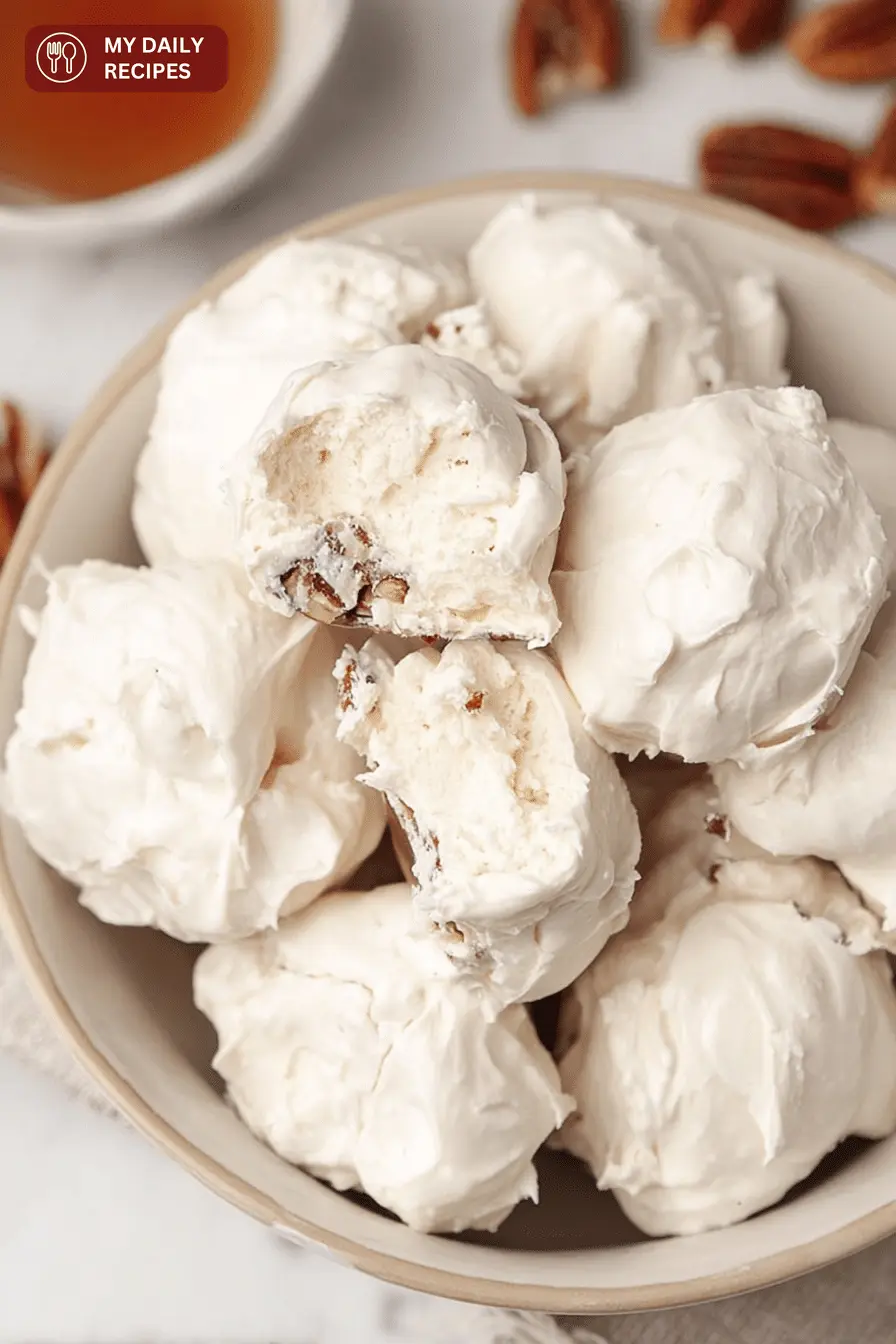
The first time I tasted old-fashioned divinity candy was at my grandmother's kitchen table when I was nine — a tiny plate of pillowy white mounds dusted with chopped pecans. I remember thinking they looked like little clouds that somehow tasted like sugar and sunlight. That day I learned what a holiday could smell like: a warm sugar syrup, a whisper of vanilla, and the sharp, toasty scent of toasted nuts. Divinity is the sort of candy that arrives with stories attached — grandparents who made it with a fork, neighbors who passed around wax-paper-wrapped pieces on Christmas Eve. In my house, it became the candy I made when the weather turned cold and I wanted something a bit old-fashioned and very comforting. Divinity candy embodies the holiday spirit in its texture and ritual. It’s glossy and slightly sticky when fresh, soft and cloud-like on the inside, and studded with crunchy nuts if you add them. Unlike caramels or brittle, divinity lives in that delicate middle ground — light because of whipped egg whites, yet sweet and substantial thanks to a hot sugar syrup cooked to the right temperature. In the South, where I grew up visiting every December, divinity has been a Christmas fixture for generations. I make it now when I want to slow down for an hour and let the kitchen smell of sugar and vanilla while I chat with a family member or listen to the oven hum.Ingredients Needed for Old-Fashioned Divinity Candy
- • Granulated sugar – the backbone of the candy; quality sugar gives a clean, bright sweetness.
- • Water – used to dissolve the sugar and create the syrup base; helps control crystallization.
- • Light corn syrup – prevents sugar from crystallizing and keeps the candy smooth.
- • Salt – a tiny pinch balances the sweetness and brightens flavor.
- • Egg whites – whipped to stiff peaks to create the airy, cloud-like texture; use fresh eggs for best volume.
- • Pecans (or nuts) – add a toasty crunch; chop them small so they distribute evenly (walnuts or almonds also work).
- • Vanilla extract – warmth and depth; vanilla bean paste is a great upgrade for a flecked appearance.
Step-by-Step Instructions for Making Old-Fashioned Divinity Candy
Making divinity is equal parts timing and attention. The most important technical points are getting the sugar syrup to the hard-ball stage and having the egg whites whipped to stiff peaks and ready when the syrup arrives. I’ve broken this into numbered steps and added the little cues I watch for in a busy kitchen.- Prep everything first. Line two sheet pans with parchment and set them within arm’s reach. Measure sugar, water, corn syrup, salt, and vanilla. Separate your egg whites into a clean, dry metal or glass bowl — any trace of fat prevents proper whipping. I like to have the nuts chopped and on a small plate so I don’t have to hunt for them as the mixture cools fast.
- Start the syrup. In a medium, heavy-bottomed saucepan, combine the granulated sugar, water, corn syrup, and salt. Bring to a boil over medium-high heat. Resist stirring once it begins to boil; stirring can encourage crystallization. Instead, if you see sugar crystals on the pan sides, use a wet pastry brush to wash them down. Attach a candy thermometer clipped to the side so the bulb sits in the syrup but doesn’t touch the bottom.
- Whip the egg whites. When the syrup is around 240°F (you’ll be watching the thermometer closely), start whipping the egg whites on high speed. You want them at stiff peaks by the time the syrup hits 260°F. I always taste a tiny bit of the whip (yes, raw egg white flavor) to confirm it’s frothy and glossy — if it’s still runny, it won’t hold the syrup.
- Hit the hard-ball stage (260°F). Cook the syrup to 260°F. This is the hard-ball stage — if you drop a bit into cold water it forms a firm, moldable ball. If you’re unsure about thermometer accuracy, practice this cold-water test once before you start.
- Pour and combine carefully. With the mixer on low, slowly pour the hot syrup in a steady stream into the whipped egg whites. Pouring too fast risks cooking or curdling the whites, and pouring directly onto the whisk can spatter hot syrup. Once all syrup is added, increase the mixer speed to medium-high and beat for 5–6 minutes until the mixture is thick, fluffy, and has turned a slightly dull white rather than glossy. It should fall off the whisk in soft ribbons.
- Flavor and nuts. Fold in the vanilla and chopped nuts with a spatula just until distributed. If you’re adding cherries or peppermint, fold them in gently at this point. Be aware: dried fruits add moisture and can slightly soften the set.
- Shape quickly. This mixture sets fast. Use two spoons sprayed with neutral oil or wax-paper-dipped hands to scoop tablespoon-sized portions onto the prepared pans. Work in small batches if it’s chilly in your kitchen — cold speeds setting. Each piece should be glossy and hold its mound shape.
- Cool and set. Let the divinity sit at room temperature until firm to the touch—about 30 minutes. Don’t refrigerate; the humidity and cold can make it sticky or weep. If you touch one and it seems tacky, give it a few more minutes. Once set, store in an airtight container layered with parchment paper.
Troubleshooting Common Old-Fashioned Divinity Candy Issues
I’ve had batches go right and a few go wrong. Divinity is forgiving once you know the usual traps. Below are the common problems I’ve seen in my kitchen, why they happen, and how to fix them.- Grainy texture – Cause: sugar crystallization. Solution: Don’t stir the syrup while it cooks; wash down pan sides with a wet pastry brush. Use a little corn syrup, which we do, to inhibit crystallization. If it still grains, you can reheat gently and add a touch more corn syrup, then restart the whipping process with fresh whites.
- Mixture won’t set (too soft) – Cause: syrup didn’t reach 260°F or you added too much moisture (e.g., wet nuts, fruit). Solution: Make sure the syrup reaches the hard-ball stage; use a reliable candy thermometer. Dry your add-ins thoroughly and, if necessary, reheat the syrup to the correct temp and fold into fresh whipped whites.
- Whole batch is too hard – Cause: syrup overheated above hard-ball stage. Solution: Overcooked syrup means the finished candy will be firmer. You can try gently reheating the mixture with a small splash of hot water and re-whipping, but often an overheated batch yields firmer than intended pieces; plan to chop or use it as an ingredient rather than discard.
- Divinity becomes sticky later – Cause: humidity or improper storage. Solution: Store divinity in an airtight container in a cool, dry place. Layer with parchment to prevent sticking. Avoid refrigerating in humid climates.
Creative Variations of Old-Fashioned Divinity Candy
Once you master the classic, divinity is a friendly canvas. I keep a small jar of chopped pecans on the counter around the holidays and will switch them for chocolate or mint depending on who’s coming for dessert.- Peppermint divinity – Swap some vanilla for peppermint extract and fold in crushed candy canes. The peppermint cuts the sweetness and gives a festive crunch.
- Chocolate divinity – Stir in a tablespoon or two of unsweetened cocoa powder or fold in mini chocolate chips right before shaping for little pockets of chocolate. Cocoa will darken the candy and slightly change its setting behavior, so mix gently.
- Nut-free divinity – Omit nuts and add finely chopped dried cherries or crystallized ginger for chew and flavor.
- Red and green holiday divinity – Tint a small portion and fold in separately, or top each piece with a sprinkle of colored sugars for a seasonal look.
- Maraschino cherry divinity – Chop maraschino cherries well and fold them in with a small dash of the cherry juice for a boozy edge (or use cherry extract for a cleaner flavor).
Tips for Storing Old-Fashioned Divinity Candy
Divinity is best the first few days but will keep with proper care. Here’s how I store mine after a long day of candy-making:- Room temperature is best — keep in an airtight container in a cool, dry cupboard away from direct heat or sunlight.
- Layer pieces with parchment to prevent sticking and crushing.
- Shelf life: expect 1–2 weeks for best texture and flavor. After two weeks it may dry out or become slightly chewier.
- Freezing is not ideal; ice crystals and thawing can make the texture gummy. If you must freeze, wrap tightly in plastic, then foil, and thaw slowly at room temperature — texture may change.
Historical Background of Old-Fashioned Divinity Candy
Divinity has roots in early 20th-century American confectionery and became widely popular in the Southern United States where sugar preserves and nut-growing regions made the candy accessible. The name likely speaks to the light, ethereal texture — something almost “divine.” For many families, divinity is interwoven with holiday lore: recipes passed through handwritten cards, kettles used only once a year, and neighbors swapping small boxes. Over time, the recipe has stayed remarkably consistent — sugar, egg whites, and vanilla — but regional twists like pecans (popular in the South) or peppermint around Christmas made it a seasonal favorite.Nutritional Information and Alternatives for Old-Fashioned Divinity Candy
Traditional divinity is primarily sugar and has minimal protein and fat from nuts. Per piece (rough estimate based on the original recipe yield), expect roughly 30–40 calories, mostly from carbohydrates (sugar), with a gram or two of fat if nuts are added and a half-gram of protein from the egg whites. If you need alternatives:- Sugar-free – True sugar-free divinity is tricky because the structure relies on sucrose behavior at specific temperatures. Artificial sweeteners don’t behave the same when heated, so sugar-free versions require different stabilizers and testing.
- Vegan / egg-free – Aquafaba (chickpea brine) can mimic egg whites in many meringue-style recipes. I’ve tried aquafaba once with a small batch; it whipped up but produced more variable results and needed careful adjustments to the syrup temperature and mixing time. If you're attempting a vegan version, start small and expect a bit of trial and error.
- Lower-sugar – Reducing sugar changes both flavor and setting. You can reduce quantity minimally, but keep in mind candy chemistry: the syrup must hit the hard-ball stage for the classic texture.
FAQ — Common Questions About Old-Fashioned Divinity Candy
- Why did my divinity turn out grainy? Graininess usually means the sugar crystallized. Common causes are stirring the syrup while it cooks, sugar crystals on the pan sides, or the syrup not reaching the correct temperature (260°F). To prevent this, avoid stirring, wash down pan sides with a wet pastry brush, use a candy thermometer, and include a little corn syrup to inhibit crystallization.
- How can I tell when the syrup is at the right temperature? Use a reliable candy thermometer and watch for 260°F (hard-ball stage). Start whipping egg whites when the syrup is around 240°F so you’re ready to pour. Consistent thermometer placement and steady heat help ensure accuracy.
- Can I make divinity without egg whites (vegan or egg-free)? Traditional divinity relies on whipped egg whites for its light, airy texture, so a direct vegan swap won’t behave the same. Aquafaba (chickpea brine) can sometimes mimic egg whites, but results vary and may require recipe adjustments and extra testing.
- When should I add nuts or flavorings, and what are good variations? Fold in chopped nuts and vanilla at the end, after the mixture has become fluffy but before it firms. Popular variations include pecans, walnuts, chopped almonds, maraschino cherries, peppermint extract for a holiday twist, or a bit of cocoa for chocolate divinity.
- How long does divinity keep and how should I store it? Store divinity in an airtight container at room temperature in a cool, dry place. It keeps best for about 1–2 weeks. To prevent stickiness, separate layers with parchment. Freezing isn’t ideal because thawing can affect texture, but you can freeze briefly with careful wrapping.
Recipe Card
Old-Fashioned Divinity Candy Recipe – A Southern Classic for Everyone
- Prep
- 25 min
- Cook
- 10 min
- Total
- 65 min
- Serves
- 40
- Calories
- 35 kcal
- Protein
- 0.50 g
- Carbs
- 4.00 g
- Fat
- 2.00 g
Ingredients
- 3 cupsgranulated sugar
- ½ cuplight corn syrup
- ½ cupwater
- ⅛ teaspoonsalt
- 3 wholeegg whites
- 1 cupchopped pecans
- 2 teaspoonsvanilla extract
Instructions
- 1
Line two sheet pans with parchment paper and measure out all ingredients.
- 2
In a medium saucepan, combine the sugar, corn syrup, water, and salt. Bring to a boil over medium-high heat without stirring. Attach a candy thermometer and cook until the syrup reaches 260°F.
- 3
When the syrup reaches about 240°F, begin whipping the egg whites on high speed in a stand mixer until stiff peaks form.
- 4
With the mixer on low, slowly pour the hot syrup into the egg whites. Once all the syrup is in, increase to medium-high and beat for 5–6 minutes, until the mixture is fluffy and slightly dull in appearance.
- 5
Add the pecans and vanilla extract. Mix just until combined.
- 6
Quickly scoop tablespoon-sized portions onto the prepared pans using the sprayed spoons. Work quickly as the candy sets fast.
- 7
Let cool and set at room temperature for about 30 minutes, or until firm to the touch.
You might also like
Reviews
Be the first to review this.