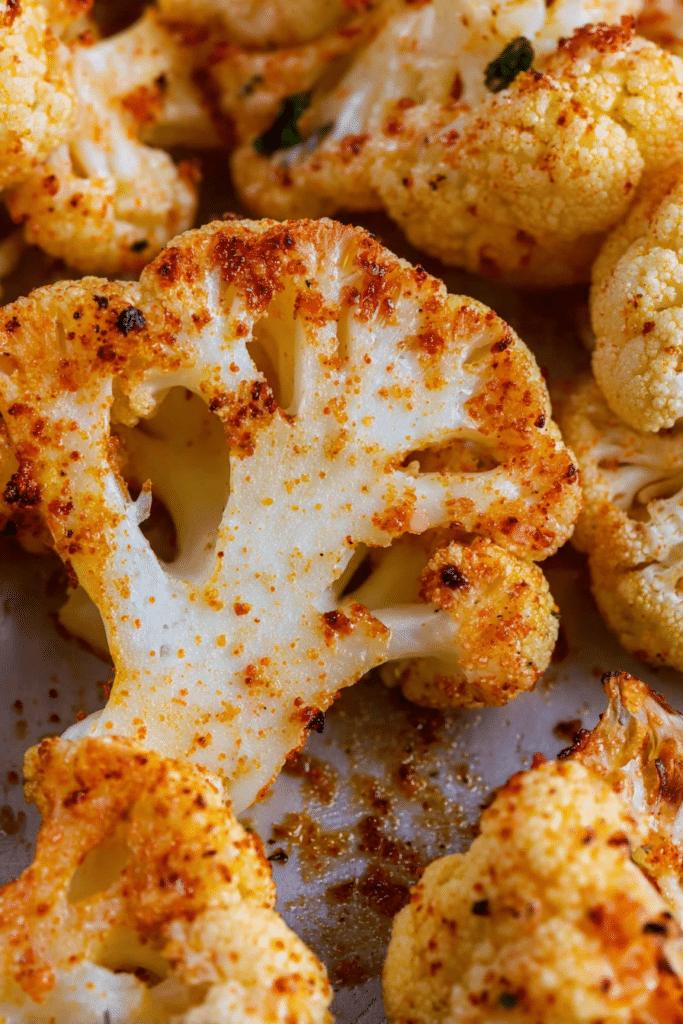
I make this oven-roasted cauliflower on repeat when weeknights get busy. In my kitchen it’s the easiest way to add a bright, vitamin-packed vegetable to dinner without a lot of fuss — just a quick prep, a hot oven, and a flaky golden edge that the whole family reaches for. I love how the aroma of roasted garlic and paprika fills the house while the oven works its magic.
Over the years I’ve learned the little things that separate a soggy roast from pieces with perfect crunchy tips: don’t crowd the pan, use a mix of oil and butter for flavor and browning, and watch carefully the last few minutes so the edges caramelize without burning. Those small changes make this a go-to when I want something healthy that still feels satisfying.
I appreciate recipes that fit clean eating and simple meal prep. This cauliflower is low in calories, takes about 30 minutes total from start to finish, and pairs well with grain bowls, salads, or a lean protein. I’ll share my favorite variations below so you can tailor it to whatever cuisine you’re serving that night.
When I test new tweaks I always taste for texture first — a soft interior with crisp, nutty edges — and then adjust the seasoning. Read on for pantry-friendly swaps, nutrition notes, and the little techniques I use to get consistent results every time.
Why This Oven Roasted Cauliflower Is Ideal for Healthy Weeknights
This recipe is built for simplicity and nutrition. It comes together quickly, requires minimal hands-on time, and uses ingredients most people keep in a busy kitchen. Cauliflower makes an excellent substitute for starchy sides because it adds volume and fiber without adding many calories.
Highlights that make it weeknight-friendly:
- Short total time—prep and roast in roughly 30 minutes—so it won’t slow down a busy evening.
- Flexible: you can leave it vegan by swapping the butter for extra oil, or make it indulgent with a finishing cheese if guests are coming.
- It pairs easily with proteins, grains, or can be tossed into salads and bowls for quick meal prep.
Everything You Need for Oven Roasted Cauliflower
Below are the ingredients and tools I rely on; I explain why each one matters and offer simple substitutions if needed.
- Cauliflower – The star: choose a firm head with tight, white curds. Smaller heads roast faster and more evenly.
- Olive oil – Provides healthy fats and helps with browning. Use a neutral oil if you prefer less flavor at high heat.
- Butter – Adds a rich, toasty flavor and encourages caramelization. For a vegan option, use a plant-based butter or more oil.
- Garlic powder – Gives a roasted garlic note without burning like fresh garlic can at high heat.
- Salt – Essential for coaxing out the cauliflower’s natural sweetness; adjust to taste.
- Paprika – Adds color and a subtle smoky warmth; smoked paprika intensifies that effect.
- Black pepper – Freshly ground for the best bite.
- Baking sheet and parchment – A sturdy rimmed sheet and parchment ensure even roasting and easy cleanup; the parchment also helps the bottoms brown without sticking.
Nutrition Spotlight: Low-Calorie, High-Fiber Benefits
Cauliflower is an excellent choice when you want a nutrient-dense side that won’t weigh down the meal. A typical serving of this roasted cauliflower is low in calories and provides a few grams of fiber, which supports digestion and keeps meals satisfying longer. It’s also a good source of vitamin C for immune support and vitamin K for bone health and circulation.
Roasting is a gentle method that preserves many of these nutrients while adding a toasty flavor profile that encourages people to eat more vegetables. The dish’s overall nutrition profile (modest calories, low carbs, and a touch of healthy fat from olive oil) fits well into balanced, calorie-conscious eating plans.
The Secret to Perfectly Crispy Edges
The technique for getting crunchy, caramelized tips is mostly about space, heat, and patience. When the florets have room to brown, the hot air circulates and moisture evaporates instead of steaming the vegetable.
- Give each floret space on the pan so hot air reaches every surface; avoid piling them up.
- Roast at a high temperature to encourage Maillard browning on the exposed edges while keeping the insides tender.
- Use a touch of butter with oil for richer browning and a nutty aroma; the butter helps the surface color faster than oil alone.
- Parchment keeps pieces from sticking and promotes an even, golden underside without scraping.
Flavor Variations: Indian, Mediterranean & Cheesy Options
Here are easy ways to transform the base roast into different cuisines — each bullet is a small, bold change you can make before roasting or right at the finish.
- Indian-inspired: Toss the florets with warm spices like cumin, coriander, and garam masala for a fragrant, savory profile. Add a sprinkle of fresh cilantro after roasting for brightness.
- Mediterranean: Finish with a squeeze of lemon, chopped fresh herbs such as parsley or oregano, and a drizzle of good olive oil for a bright, herb-forward plate.
- Cheesy: Add grated hard cheese toward the last few minutes of roasting so it melts and turns golden; you can also broil briefly to get a bubbly top.
For a delicious twist, try our garlic parmesan roasted cauliflower as a flavorful variation.
If you’re craving something cheesy, check out our cheesy cauliflower steaks for a satisfying alternative.
For a kick of flavor, try our spicy buffalo cauliflower wings that will surely impress your guests.
How to Make Oven Roasted Cauliflower (Step-by-Step)
Follow these steps to get consistently crispy, golden cauliflower. I include what to look for at each stage so you know when it’s done.
- Preheat your oven high so it’s fully hot when the cauliflower goes in; a hot oven is essential for browning.
- Cut the head into even florets or 1/2″ steaks so pieces cook at the same rate; uneven pieces lead to mixed texture.
- Place the cauliflower in a single layer on the baking sheet and drizzle with oil and melted butter; toss to coat every piece.
- Sprinkle the seasoning mix over the florets and toss lightly to distribute; the surface should look evenly coated but not dripping.
- Arrange the florets with space between them on the sheet to avoid steaming; the pieces should sit on a single layer.
- Roast until the edges are golden to deep brown and the centers are tender when pierced with a fork—watch carefully in the final minutes to prevent burning.
- If using cheese or a finishing squeeze of lemon, add it in the last 2–3 minutes so flavors are fresh and textures contrast.
Pro Tip for Oven Roasted Cauliflower: Space, Heat & Timing for Crispiness
Below I present concise, scannable tips to refer to while roasting. These are meant to be quick reminders you can apply every time.
- Give the florets plenty of space on the pan; overlapping equals steaming, not roasting.
- Maintain a high oven temperature so surfaces brown quickly and interiors stay tender.
- Rotate the baking sheet halfway through the cook time for even color and caramelization.
- Pat cauliflower dry if using thawed frozen pieces—excess moisture prevents crisping.
- Troubleshooting:
- I found the most common issue is overcrowding; if you see lots of steam, spread pieces onto a second sheet.
- If edges brown too fast, lower the rack slightly or reduce heat a bit and extend the time so centers become tender without burning tips.
- If cauliflower is pale after the recommended time, give it a few extra minutes and watch closely; some ovens run cooler than labeled temperatures.
How to Store, Reheat, and Meal-Prep Oven Roasted Cauliflower
Leftovers are convenient and versatile. Store roasted cauliflower in an airtight container in the fridge for up to three days. When I meal-prep, I roast a double batch and use it across several meals.
- To reheat while retaining some crunch, warm in a single layer in a hot oven or toaster oven until heated through and edges crisp again; avoid microwaving if you want to keep texture.
- For quick meals, toss cold roasted cauliflower into salads or grain bowls for added texture and flavor.
- Use leftovers as a filling for wraps or mix with cooked quinoa and greens for a fast lunch.
For an easy meal prep idea, pair with our healthy roasted vegetables to create a balanced meal.
Frequently Asked Questions
What makes oven roasted cauliflower a healthy side dish? Oven roasted cauliflower is low in calories and high in fiber, making it a nutritious choice for any meal. It’s packed with vitamins and minerals, and its versatility allows it to fit into various healthy eating plans.
Can I use frozen cauliflower instead of fresh? Yes, you can use frozen cauliflower! Just be sure to thaw it and drain any excess moisture before roasting to achieve that desired crispiness.
How can I add flavor variations to the recipe? You can try adding spices like cumin or turmeric for an Indian twist, or mix in herbed cheese for a cheesy Mediterranean flavor. Get creative with your favorite seasonings!
What is the best way to store leftover oven roasted cauliflower? Store leftover cauliflower in an airtight container in the refrigerator. It will stay fresh for up to 3 days. You can reheat it in the oven to maintain its crispiness.
How do I achieve perfectly crispy edges? To get crispy edges, make sure to space the cauliflower florets evenly on the baking sheet and avoid overcrowding. Cooking at a high temperature helps achieve that golden-brown crispiness!
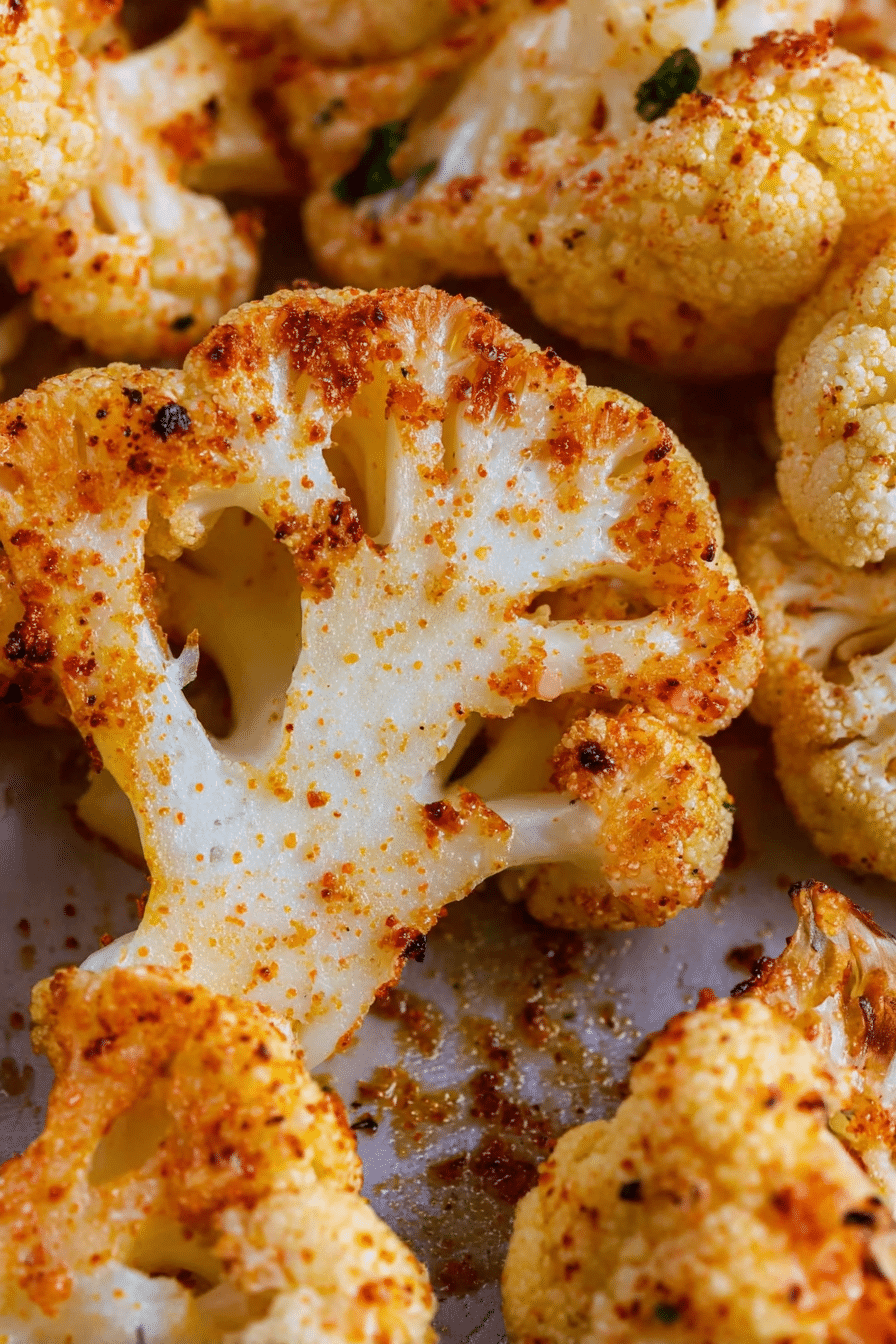
Oven Roasted Cauliflower
Ingredients
Method
- Preheat the oven to 425˚F and line a baking sheet with parchment paper.
- Slice the head of cauliflower into 1/2" thick steaks, breaking up wedges into even, bite-sized pieces.
- Add the cauliflower to the center of the baking sheet. Drizzle with the oil and melted butter and toss to combine.
- In a small bowl, combine garlic powder, salt, paprika, and pepper for the seasoning. Sprinkle onto cauliflower and toss to evenly coat.
- Spread the cauliflower evenly on the baking sheet and bake at 425˚F for 15-20 minutes, until cauliflower reaches desired crispiness.