- Prep
- 10 min
- Cook
- 40 min
- Total
- 50 min
- Serves
- 10
- Calories
- 249 kcal
- Carbs
- 18.60 g
On this page13 quick jumps
TOC
13 quick jumps
Introduction
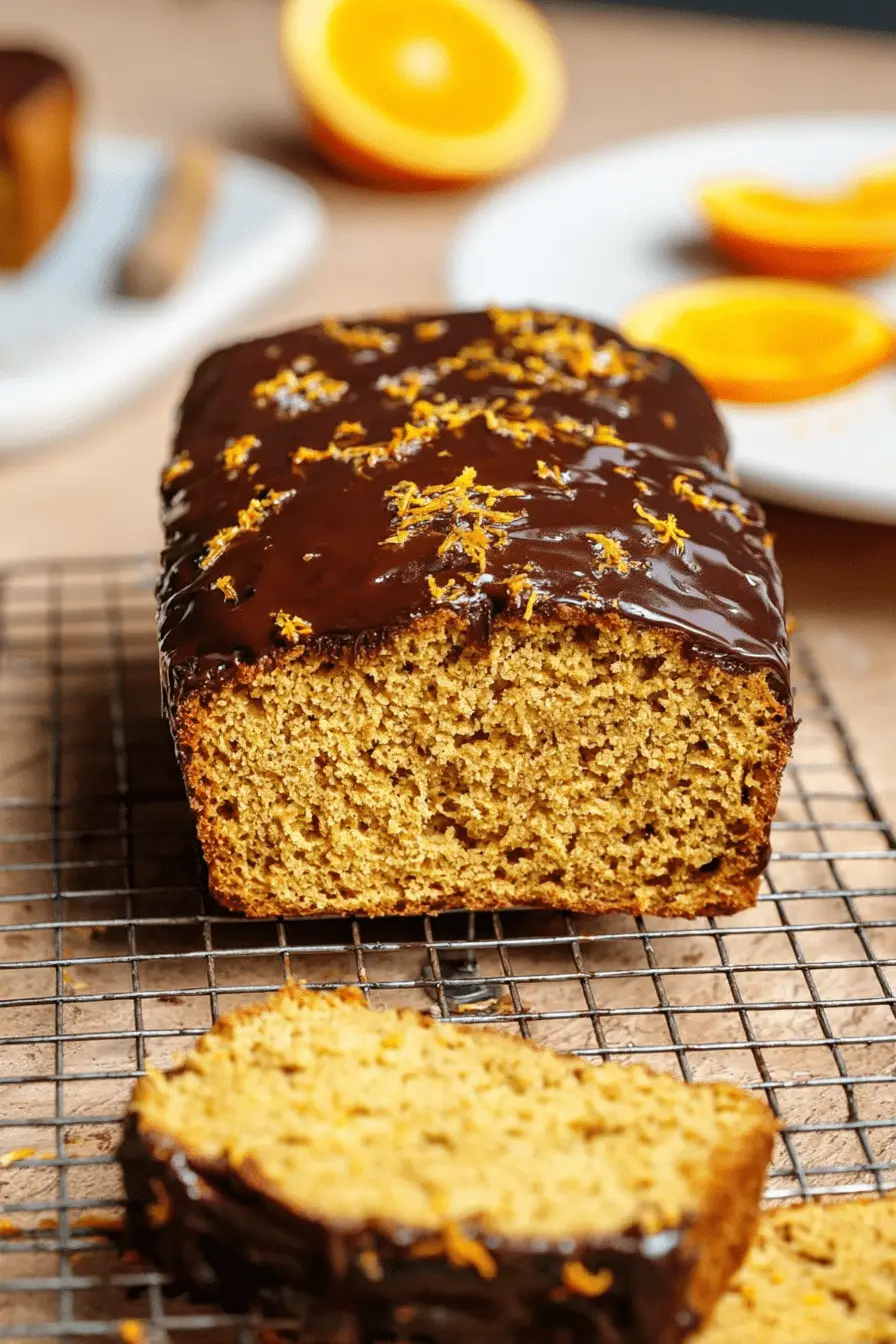
I first baked this paleo orange kissed loaf on a rainy afternoon when I wanted something bright, cozy, and a little indulgent without derailing a clean-eating week. In my kitchen I mix bright citrus with deep chocolate because the contrast makes every slice feel like a small celebration. The loaf comes out with a golden-brown crust and a tender, fragrant crumb that smells like fresh-cut oranges and warm maple. I remember the first time I glazed it with dark chocolate — the glossy ribbon of chocolate gave the loaf a refined finish while keeping it paleo-friendly. I learned a few hard lessons about ingredient temperatures and batter consistency the first few times I made it, and those tweaks are why this version comes out reliably moist every time. What I love most is how this loaf fits into a balanced week: it uses real, minimally processed ingredients and still feels like dessert. Whether you’re serving it for brunch, wrapping a slice for work, or nibbling slowly with a cup of tea, it delivers bright orange notes and rich chocolate without any guilt.Why This Paleo Orange Kissed Loaf Is the Guilt-Free Treat You Need
This loaf balances indulgence and health in a way that actually improves the eating experience: fresh orange juice and zest bring natural acidity and sweetness while pure maple syrup provides a clean sweet backbone. The dark chocolate glaze adds richness and texture without relying on refined sugar. Visually, imagine a golden crust with a glossy dark topping and flecks of orange zest; aromatically, the kitchen should fill with citrus and warm maple notes as it bakes. It’s considered guilt-free in the paleo community because the formula avoids gluten and refined sugars while using whole-food fats and a natural sweetener. It’s a dessert you can enjoy as part of a balanced day — a small, satisfying treat that doesn’t leave you reaching for more processed sweets.Everything You Need for Paleo Orange Kissed Loaf
Here’s what I consider the most important players and why each one matters — think of this as your practical ingredient guide rather than a shopping list with exact measures.- * Fine almond flour – The moisture engine of the loaf; it keeps crumb tender and adds a subtle, buttery nutty flavor. Use fine-milled for the smoothest texture.
- * Coconut flour – A moisture absorber that helps structure the loaf when you’re avoiding gluten. It soaks up liquid and prevents a gummy finish when used in small amounts.
- * Baking soda & salt – Leavening and flavor balance; the soda gives lift while salt amplifies the citrus and chocolate notes.
- * Eggs – Provide structure, lift, and richness. Warming them slightly helps them incorporate smoothly into the batter.
- * Coconut oil – A paleo-friendly fat that keeps the loaf soft and adds a faint tropical note when used melted and cooled.
- * Pure maple syrup – Natural sweetener with a deeper flavor than white sugar; it also contributes to moistness.
- * Fresh orange juice & zest – The parfum of the loaf. Juice gives bright citrus acidity; zest concentrates the essential oils for an aromatic punch.
- * Unsweetened almond milk – A neutral dairy-free liquid to loosen the batter and keep it tender.
- * Dark chocolate – For the glaze; choose a high-percentage dark chocolate for richness with less sugar. It creates a glossy, slightly bitter counterpoint to the sweet orange.
Why Almond & Coconut Flours Make This Loaf So Moist
Almond flour and coconut flour play very different but complementary roles. Almond flour contains natural oils and a tender crumb structure that mimic the richness of traditional wheat-based baked goods, while coconut flour is extremely absorbent and must be used sparingly to avoid dryness. Together they create a loaf that holds moisture without collapsing.- Almond flour retains moisture because of its natural oil content — that buttery feeling on the tongue is what keeps slices from drying out.
- Coconut flour soaks up loose liquids, which helps the loaf set and prevents a wet, uncooked center when balanced correctly.
- Without gluten, structure comes from eggs and the balance of flours; this is why the right proportion and gentle handling are essential for a tender crumb rather than a crumbly one.
Nutrition Spotlight: Maple, Oranges, and Dark Chocolate Benefits
These three ingredients bring more than flavor — they add nutritional perks that make the loaf feel like a smarter treat.- Pure maple syrup – A natural sweetener with antioxidants and minerals; it provides sweetness with a more complex flavor profile than refined sugar.
- Oranges (juice & zest) – High in vitamin C and flavonoids; the zest contains concentrated essential oils and antioxidants that bolster the loaf’s aroma and nutritional value.
- Dark chocolate – When chosen at a high cacao percentage it offers flavanols and a mood-boosting bitterness; it pairs beautifully with citrus to create a rounded flavor moment.
How to Make Paleo Orange Kissed Loaf (Step-by-Step)
Follow these clear steps in your kitchen — I’ve found they prevent the common pitfalls that leave paleo loaves dense or gummy. Use them as a process checklist.- Preheat your oven and prepare an 8x4 loaf pan with parchment or a generous spray so the loaf releases easily.
- Whisk the dry ingredients together until evenly distributed so there are no coconut flour clumps.
- In a separate bowl, whisk the wet ingredients: warm your eggs slightly (run under warm water for a minute) and make sure melted coconut oil is cooled before adding to avoid clumping.
- Fold the dry into the wet just until combined; don’t overmix — a few streaks are better than a dense loaf.
- Pour the batter into the prepared pan and smooth the top. Bake until a tester comes out clean or with a few moist crumbs but no raw batter.
- Cool completely in the pan before attempting to remove and glaze — cooling is crucial to prevent the glaze from sliding off or the center from going soggy.
- For the glaze, melt high-percentage dark chocolate over low heat, stirring frequently until glossy, then spread over the cooled loaf and finish with fresh orange zest.
The Secret to Perfect Texture in Paleo Baked Goods
I’ve learned that small technical details make the biggest difference in paleo baking. I often test a few loaves to get the texture right; here are the concrete adjustments that saved my loaf from crumbling or turning gummy.- Temperature matters: make sure eggs are at room temperature and coconut oil is melted and cooled — that helps the batter come together without lumps.
- Measure by feel: the batter should be scoopable but not runny; if it’s too loose the loaf may sink, if too dense it will be dry.
- Avoid over-mixing: fold until combined — overworked batter compresses air and yields a heavy loaf.
- Let it cool fully before slicing: the crumb needs time to set so slices hold cleanly without tearing.
Pro Tip for Paleo Orange Kissed Loaf: Prevent a Soggy Center
- Check doneness with a toothpick or skewer — it should come out mostly clean with a few moist crumbs, not wet batter.
- Don’t underbake to avoid a gummy middle; if the top is browning too quickly, tent loosely with foil and finish baking.
- Always cool the loaf completely in the pan before removing; the residual heat continues to set the interior.
- If your batter looks too wet, let it rest briefly so coconut flour can absorb some liquid before baking.
How to Store, Slice, and Reheat Your Orange Loaf
Storing correctly preserves texture and flavor — here’s how I keep slices tasting fresh for days or months.- Room temperature storage: keep the loaf in an airtight container for up to two days to preserve tender crumb and glaze sheen.
- Refrigeration: store in the fridge for up to five days; allow chilled slices to come to room temperature or warm slightly before serving.
- Freezing: wrap individual slices tightly and freeze for up to three months; thaw in the fridge overnight and warm gently to refresh moisture.
- Slicing tip: use a serrated knife and a gentle sawing motion to cut clean slices without crumbling the crumb or cracking the glaze.
Easy Flavor Swaps — Lemon or Berry Versions & Nut-Free Options
If you want to vary the loaf, these swaps keep the technique same but shift the profile. I often switch citrus or add fruit depending on the season.- Lemon version: substitute orange juice and zest with lemon for a brighter, tangier loaf; reduce additional sweetener slightly if lemons are very tart.
- Berry additions: fold in fresh or thawed berries gently at the end for pockets of fruit — coat berries lightly in a bit of almond flour to prevent sinking.
- Nut-free option: try sunflower seed flour in place of almond flour, but be aware the flavor will be more savory and may turn green with baking — it still bakes well and remains paleo-friendly.
- Chocolate variations: swap the dark glaze for chocolate shavings or a light drizzle to control sweetness and texture.
Frequently Asked Questions
Can I substitute almond flour with another type of flour? Almond flour is a key ingredient in this recipe that provides moisture and texture. If you're looking for a substitute, you might try sunflower seed flour for a nut-free option, but keep in mind that it may alter the flavor and consistency slightly. How can I make the loaf sweeter if I want? If you prefer a sweeter loaf, you can increase the amount of pure maple syrup or even add a tablespoon of honey. Just make sure to adjust the liquid content slightly to maintain the proper batter consistency. What’s the best way to store leftover Paleo Orange Kissed Loaf? Store any leftover loaf in an airtight container at room temperature for up to 2 days, or in the fridge for up to 5 days. You can also freeze slices for up to 3 months; just wrap them well in plastic wrap or aluminum foil! Can I use a different type of milk instead of almond milk? Absolutely! You can substitute almond milk with any other non-dairy milk like coconut, cashew, or even regular dairy milk if you're not following a paleo diet. Is it necessary to use a dark chocolate bar for glazing? While the dark chocolate bar gives a rich flavor, you can use any type of chocolate or even a dairy-free chocolate chip if you prefer. Just adjust the amount depending on the sweetness of the chocolate used!Ingredients
- 1 ½ cupspacked fine almond flour
- ⅓ cupcoconut flour
- 1 teaspoonbaking soda
- ¼ teaspoonsalt
- ¼ cupmelted and cooled coconut oil
- ⅓ cuppure maple syrup
- ½ cupfreshly squeezed orange juice
- Zest of 1large orange
- ¼ cupunsweetened almond milk
- 3.5 oz85% dark chocolate bar
- Zest of 1orange
Instructions
- 1
Preheat oven to 350 degrees F. Line an 8x4 inch loaf pan with parchment paper or spray pan generously with nonstick cooking spray.
- 2
In a large bowl, whisk together dry ingredients.
- 3
In a separate large bowl, whisk together wet ingredients. Make sure your coconut oil is melted and cooled; otherwise, it will become clumpy. It's best to run the eggs under warm water for 1 minute to bring them to room temperature before baking.
Taste as you go. Recipes are a guide, not a contract.
- 4
Add dry ingredients to wet ingredients and mix well to combine. Pour batter into the loaf pan and spread out evenly. Bake for 40-45 minutes until the tester comes out clean.
- 5
Allow the loaf to cool completely in the pan before removing.
- 6
To make the dark chocolate glaze: Add the dark chocolate bar to a small pot and place over low heat, stirring frequently until completely melted and smooth.
- 7
Pour over the loaf and spread evenly towards the sides. Garnish with zest from 1 orange. Cut into 10 slices and enjoy!
Recipe Card
The Paleo Orange Kissed Loaf I Make for Guilt-Free Dessert
Keep it handy for later, send it to someone cooking with you, or open the clean print view.
- Prep
- 10 min
- Total
- 50 min
- Serves
- 10
You might also like
How I Make Quick Blueberry Lemon Jam — Canning in 1 Hour
May 21, 2026
The 5-Ingredient Japanese Jelly Dessert I Make All Summer
May 21, 2026
The Homemade Peachy Gummies My Kids Love — Fun, Simple Treat
May 21, 2026
How I Make Green Tea Lemon Ginger Gummies for Daily Immune Support
May 21, 2026
Reviews
Be the first to review this.