- Prep
- 5 min
- Cook
- 6 min
- Total
- 11 min
- Serves
- 6
- Calories
- 205 kcal
- Carbs
- 17.00 g
Introduction
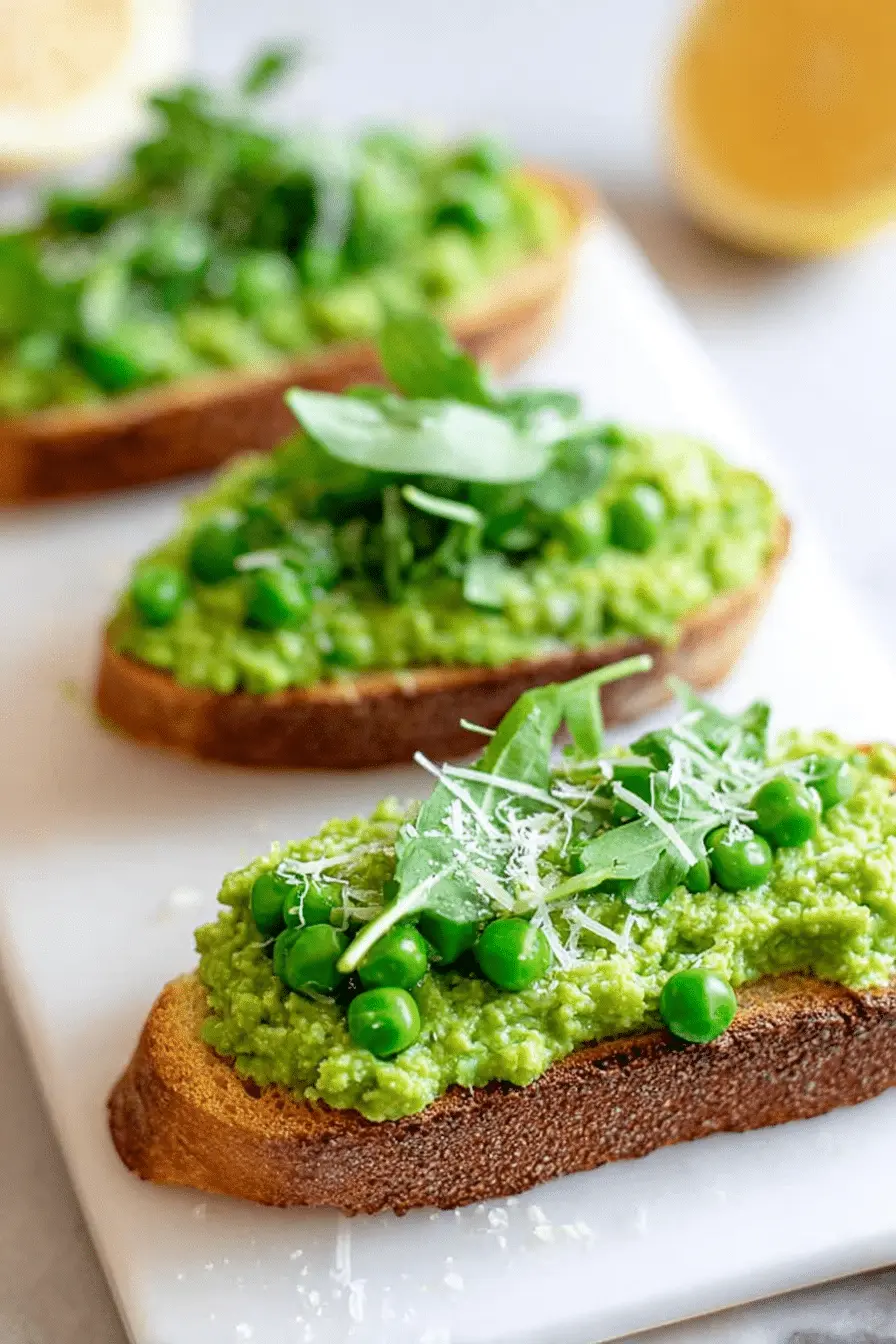
I make this pea bruschetta recipe all through spring when peas are at their sweetest and guests are dropping by with little notice. It’s one of those small plates I keep in my repertoire because the prep is almost no-cook and the results feel intentional — bright green topping, warm crunchy toast, a hit of lemon and parmesan.
In my kitchen I usually blitz frozen peas straight from the bag when time is short; other times I blanch fresh peas for a crisper snap. Either way the contrast between the silky pea pesto and the toasted ciabatta is what sells this appetizer — you get a silky, herbaceous topping and a satisfying crunch from the bread.
I love that this comes together quickly for casual gatherings: you can scale it up for a crowd or keep it small for a date night. The flavors are simple and forgiving, so small swaps (dairy-free cheese, gluten-free bread) work well when you need them.
Below I’ll walk you through what to have on hand, how to pick peas and bread, the quick steps I use in my kitchen, and a few practical make-ahead and storage tips so your bruschetta stays crisp and fresh for guests.
Why Pea Bruschetta Is Perfect for Quick, Casual Gatherings
This appetizer is built for speed and impact. The pea topping needs very little hands-on time, so you can be chatting with guests while the bread toasts. The vivid green color and small, tidy portions make it an inviting finger food on any spread.
Sensory notes: imagine the fresh, green scent of peas and lemon, the creamy texture of the pesto, and the audible crunch when someone takes a bite of a perfectly toasted crostini. Because the topping is bright and not heavy, it pairs well with wine or a light salad and won’t weigh down a relaxed evening.
Serve it as small crostini for cocktail hour or plate a few slices per person for a light lunch. The recipe scales easily and holds up well when you assemble the toasts just before serving.
Everything You Need for Pea Bruschetta
Below are the ingredients I consider essential and how each one contributes to the final dish. I keep measurements flexible so you can tweak to taste.
- Peas – Provide the bright green base; frozen peas are convenient, fresh peas give a firmer pop.
- Extra virgin olive oil – Adds richness and carries the aromatic flavors; choose a fruity, high-quality oil for the best taste.
- Parmesan – Brings savory depth and a salty finish; use finely grated parmesan for smooth blending, or a vegetarian hard cheese if preferred.
- Lemon juice and zest – Lift the pesto with acidity and freshness; zest adds an aromatic top note.
- Garlic – Use sparingly; it should perfume the topping without overpowering the peas.
- Ciabatta or similar crusty bread – Offers an open crumb that crisps well and holds the topping without collapsing.
- Optional greens (pea shoots or mint) – Add a fresh, herbaceous garnish and a bit of texture contrast.
Another delightful option is our ricotta crostini with peas and mint, which pairs beautifully with this recipe.
Frozen vs. Fresh Peas: Taste, Texture, and When to Use Which
I’ve tested both frozen and fresh peas in this pea bruschetta recipe. Fresh peas offer a lightly sweet, crisp pop that reads as more herbaceous; frozen peas are surprisingly good and often the better option because they’re picked and frozen at peak ripeness.
Texture differences: fresh peas will hold a bit more bite and give a slight grain when you chew, while frozen peas (thawed or quickly warmed) produce a silkier paste. Nutritionally they’re similar, but seasonality matters: use fresh when peas are in season and frozen when they’re not.
Preparing each type:
- Fresh peas – blanch briefly in boiling water, then shock in ice water to keep the color and stop cooking; drain well before blending so your pesto isn’t watery.
- Frozen peas – thaw quickly under cold running water or warm briefly in a saucepan; drain any excess water and pat dry if needed to keep the pesto thick.
In my tests frozen peas produced a consistently bright color and smooth texture with less fuss, which is why I often reach for them for last-minute entertaining.
Best Bread and Toasting Techniques for Crispy Crostini
Choosing the right bread makes the difference between soggy bites and crunchy crostini that hold up. I prefer ciabatta because its open crumb soaks up a little olive oil but keeps its structure under a topping. Sourdough and baguette are fine alternatives if that's what you have.
Quick toasting tips to avoid burning and get even color:
- Slice bread about half an inch thick so you get a crisp outside and some chew inside.
- Brush or drizzle the surface lightly with olive oil so it browns evenly under the broiler or in a hot grill pan.
- Toast under the broiler or on a hot cast-iron pan until the surface is golden, then flip and repeat; keep a close eye — it moves quickly.
- While the toast is still warm, rub with a cut clove of garlic to add a subtle layer of flavor without raw garlic bite.
Sensory focus: aim for an even golden-brown that snaps when broken and gives a warm garlic scent when you rub it.
The Secret to a Bright, Not-Bland Pea Pesto
Balance is key. Peas are delicate and can taste muted if you under-salt or under-acid. I aim for a fast balance of salt, a hit of lemon, and a touch of fat from olive oil and parmesan to carry flavors forward.
Tips to keep your pesto vibrant:
- Season in stages — add a little salt, taste, then adjust after blending so the flavor lifts rather than gets buried.
- Don’t overprocess — pulse until you have a slightly textured paste; too smooth can feel mushy and lose character.
- Adjust garlic to taste; start small, especially if you plan to rub garlic on the toast too.
If you like other ways to use pesto, try our pesto caprese pasta salad that highlights vibrant flavors and shows how versatile a bright pea pesto can be.
How to Make Pea Bruschetta (Step-by-Step)
Follow these steps in order so the toasts stay crisp and the topping stays fresh. Use the pacing that fits your gathering — you can make the pesto ahead and toast at the last minute.
- Prepare the pea topping: pulse your peas with a small amount of olive oil, parmesan, lemon juice, and just a touch of garlic until you have a coarse, bright green paste. Taste and adjust salt, pepper, and lemon.
- Preheat your broiler or grill so the bread will toast quickly and evenly.
- Brush each bread slice lightly with olive oil and toast until golden on both sides; keep a close eye under the broiler to avoid burning.
- While the toast is warm, rub one side lightly with the cut garlic clove to impart a gentle garlic aroma.
- Spread the pea pesto on each warm slice, then finish with extra parmesan, a little lemon zest, pea shoots if using, and a drizzle of extra virgin olive oil. Finish with a crack of black pepper.
If you're looking to explore more bruschetta options, check out our classic bruschetta recipe for a traditional twist on this appetizer.
Pro Tip for pea bruschetta recipe: Quick swaps for gluten-free & nut-free
Below are practical, scannable options to make the recipe fit dietary needs and to inspire small seasonal variations. I include troubleshooting notes from my own tests so you can avoid common hiccups.
- Gluten-free swap – Use a sturdy gluten-free baguette or bakery-style loaf and follow the same toasting method; expect a slightly different crumb but similar crunch when toasted well.
- Dairy-free / Nut-free cheese – Nutritional yeast or a shelf-stable vegan parmesan alternative adds savory depth without dairy; adjust salt to compensate.
- Herb swaps – If you don’t have pea shoots, small mint leaves or basil work well for a fresh finish.
- Protein boost – Add a thin slice of prosciutto or a smear of ricotta under the pea pesto for a heartier bite.
- Troubleshooting (from my kitchen) – If your pesto is watery, drain peas well and pulse less; if it tastes flat, add a squeeze of lemon and a pinch more salt; if the bread softens too quickly, toast it a touch longer and serve immediately.
- Variations – Try adding a small handful of arugula to the blender for peppery notes, or fold in a little ricotta for a creamier topping. Seasonal roasted baby carrots or blanched asparagus can be added on top for variety.
How to Store, Make-Ahead, and Reheat Pea Bruschetta
Smart make-ahead will keep textures intact for a gathering. Store components separately and combine right before serving.
- Store the pea pesto in an airtight container in the refrigerator; press a layer of plastic directly on the surface or drizzle a thin film of olive oil to prevent browning and keep it fresh for a couple of days.
- Keep the toasted bread in a single layer at room temperature for a few hours; for longer holding, re-toast briefly before serving to restore crispness.
- To reheat assembled bruschetta, warm the topping slightly and refresh the toast separately under the broiler for 30–60 seconds — assemble right before serving to avoid sogginess.
- For make-ahead service: prepare the pesto the day before, toast the bread just before guests arrive, and do the final assembly with garnishes on the spot.
Consider pairing your pea bruschetta with the best homemade caesar salad for a complete meal that impresses.
Frequently Asked Questions
Can I use fresh peas instead of frozen for the bruschetta?
Absolutely! Fresh peas will give your bruschetta a bright flavor. Just make sure to blanch them briefly to soften before blending.
What type of bread works best for bruschetta?
Ciabatta is an excellent choice for its crunchy texture when toasted, but you can also use sourdough or baguette for a different twist.
How can I make this recipe gluten-free?
To make a gluten-free version, simply substitute the ciabatta with gluten-free bread and follow the same toasting instructions.
Can I prepare the pea pesto in advance?
Yes! You can make the pea pesto ahead of time. Just store it in an airtight container in the refrigerator to keep it fresh.
What can I use instead of parmesan cheese?
If you're looking for a dairy-free option, nutritional yeast is a great substitute, or you could try a vegan parmesan cheese.
Recipe Card
The Pea Bruschetta Recipe I Make for Quick Spring Gatherings
- Prep
- 5 min
- Cook
- 6 min
- Total
- 11 min
- Serves
- 6
- Calories
- 205 kcal
- Carbs
- 17.00 g
Ingredients
- 1 cupfrozen peas (– see note 1)
- 1 small handfulpea shoots (optional)
- 1/4 cupgrated parmesan cheese
- 3 tbspolive oil
- 1 tsplemon juice
- 1/2 clovegarlic (save the other half for the bruschetta)
- —salt and pepper (to taste)
- 6 slicesciabatta
- 2 tbspolive oil
- 1/2 clovegarlic
- —Pea shoots
- —Fresh Parmesan
- —lemon zest
- —black pepper
- —extra virgin olive oil
Instructions
- 1
Place the peas, pea shoots, parmesan, olive oil, lemon juice, half a garlic clove, salt, and pepper in a food processor and pulse until you get a rough paste. Set aside.
- 2
Pre-heat your broiler or grill. Drizzle the ciabatta slices with olive oil and toast for 2-3 minutes on each side until golden brown.
- 3
While the toast is still warm, lightly rub the other half of the garlic clove on the toast. Spread the pea mixture over the slices, garnish with extra parmesan, lemon zest, pea shoots, and drizzle with extra virgin olive oil. Finish with black pepper.
You might also like
Reviews
Be the first to review this.