Tags
- Prep
- 25 min
- Cook
- 20 min
- Total
- 75 min
- Serves
- 16
- Calories
- 275 kcal
- Carbs
- 30.00 g
Introduction
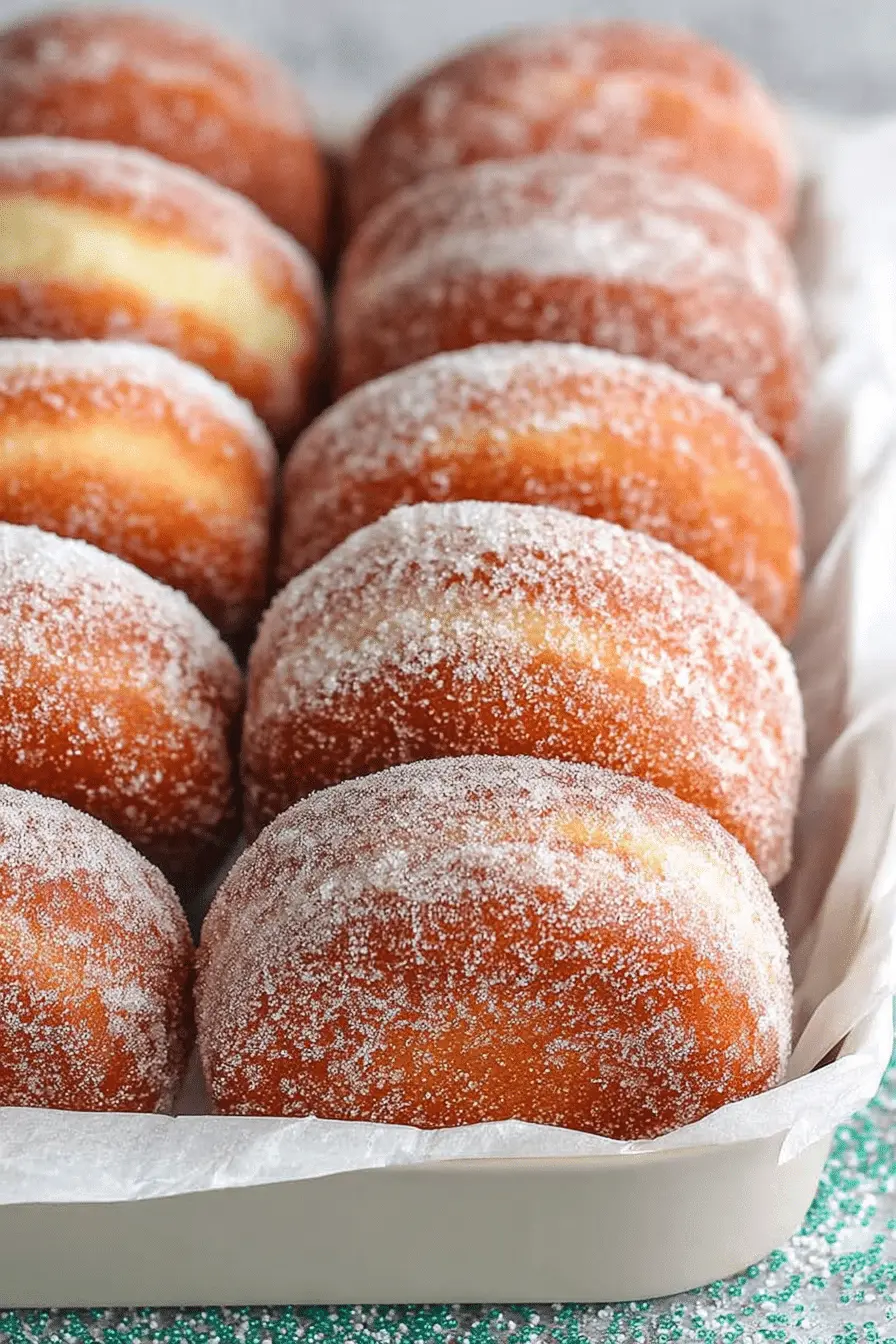
There’s something quietly magical about a warm sugar donut — the smell that hits first, like buttered rolls and a carnival fair rolled into one, then the pillowy bite that’s slightly chewy in the center and crisp at the edges. I made these Perfect Sugar Donuts a dozen times before I wrote this post; I’ve fried them on weeknights, shaped them in sleepy Sunday mornings, and even reheated leftovers for a surprisingly comforting midnight snack. This recipe yields about 16 donuts and needs patience (there’s a couple of rises), but the results are worth the wait. These are classic yeasted donuts: soft, slightly chewy, and rolled in plain granulated sugar. If you grew up dunking fried dough into milk or sharing a box with someone special, this will take you there. My kitchen test notes are woven through each section — what went wrong the first time and how I fixed it — so you don’t have to learn everything the hard way.Ingredients for Perfect Sugar Donuts
- Whole milk – warmed to wake the yeast and create tender crumbs; richer than skim and helps the dough brown.
- Dry active yeast – the leavener that gives you airiness; ensure it's fresh and froths during the proof.
- Granulated sugar – both inside the dough for sweetness and outside for the classic coating; caster sugar works well for a finer finish.
- All-purpose flour – the structure-builder for donuts; you can sub with a gluten-free blend, but texture may differ.
- Salt – sharpens flavor and balances sweetness; a small pinch goes a long way.
- Unsalted butter – adds richness and tenderizes the dough; room temperature butter incorporates best.
- Egg and egg yolks – give structure, color, and richness; the extra yolk makes the interior silkier.
- Vanilla extract – lifts flavor without overpowering the sugar and butter profile.
- Corn oil (for frying) – neutral-flavored oil with a high smoke point; you can use vegetable or canola oil instead.
Step-by-Step Instructions
This is the version I use when I want faithful, classic sugar donuts. Yield: about 16 donuts. Prep time is roughly 25 minutes active, cook time about 20 minutes, and total time about 3 hours and 15 minutes including rises.- Make the yeast mixture: Warm 1 cup of whole milk to about 108°F (warm to the touch, not hot). In a large measuring cup or small bowl whisk in 2½ teaspoons dry active yeast and 2 tablespoons granulated sugar. I start a timer — it usually takes 5–10 minutes to froth. If it doesn’t froth, your yeast may be dead; start over with fresh yeast and ensure the milk isn’t hotter than 115°F or it will kill the yeast.
- Mix the dough: In the bowl of a stand mixer fitted with the dough hook, combine 3½ cups all-purpose flour, ½ cup granulated sugar, and ½ teaspoon salt. Add 3 tablespoons unsalted butter (room temperature), 1 large egg, 2 large egg yolks, ½ teaspoon vanilla extract, and the frothy yeast mixture. Start mixing on low until there are no visible dry streaks of flour, then increase to medium-high and mix for 10–15 minutes. You’re aiming for a dough that’s slightly sticky and tacky but pulls cleanly from the bowl.Note from the test kitchen: when I first mixed this dough too briefly, the donuts were dense. The 10–15 minute window develops gluten and creates that chew you want. If your dough feels excessively sticky after mixing, add a tablespoon of flour at a time — but stop as soon as it’s tacky, not dry.
- First rise: Lightly grease a large bowl with a drizzle of olive oil or a spray, place the dough inside, cover with plastic wrap, and let it rise in a warm, draft-free spot until doubled or even tripled in size — about 1–2 hours depending on room temperature. I often set mine near a slightly warm oven or on top of the fridge. The dough will smell mildly yeasty and look puffy; that’s when it’s ready.Pro tip: If your kitchen is cold, set the bowl in an oven with the light turned on (oven off) or over a bowl of warm water to speed proofing.
- Shape the donuts: Once risen, punch the dough down gently and turn it out onto a lightly floured surface. Roll the dough to about ½ inch thickness. Use a 3-inch biscuit cutter or glass to cut circles; re-roll scraps and cut until you have about 16 donuts. Place cut donuts on a parchment-lined baking sheet, leaving room between them. Cover with a thin kitchen towel or plastic wrap and let them rise for another 30 minutes — they should look puffy and slightly domed.Observation: I always mark the baking sheet with a pen or stack a few with extra space — over-tight packing makes them proof unevenly. Also, keep the donut holes; they fry up into perfect tiny treats.
- Heat the oil: In a heavy-bottomed pot, pour enough corn oil to reach about 2 inches deep and heat to 340°F. I recommend an instant-read thermometer. If you don't have one, a small piece of dough should sizzle and rise steadily but not brown instantly on the outside. Temperature control is everything: too cool and donuts absorb oil and become greasy; too hot and they brown outside while staying raw inside.
- Fry the donuts: Working in batches, gently slip 3–4 donuts into the oil, frying about 2 minutes per side until golden brown. Use a slotted spoon or spider to flip them carefully. Transfer fried donuts to a baking sheet lined with paper towels briefly to drain. I like to move them to a cooling rack set over the towel after a minute so air circulates and the bottoms don’t steam.Timing note: I flip with a thin metal spatula the first few times to get comfortable. If your donuts brown too fast, lower the heat by 10–15°F; if they stay pale, increase heat slightly.
- Coat with sugar: When the donuts are warm (not piping hot, about a minute after frying), place about 1 cup of granulated sugar in a shallow bowl and roll each donut to coat. One cup is usually more than enough. Warmth is key — too hot and the sugar melts into a sticky glaze, too cool and the sugar won’t adhere.Family-tested trick: I place the sugar in a large brown paper bag, add a few donuts, and shake gently for even coverage. It’s fast and keeps your hands cleaner.
Tips for Perfecting Your Donuts
- Oil temperature control – keep oil steady at 340°F. Use an instant-read thermometer; a few degrees one way makes a big difference.
- Dough handling – don’t over-flour the surface when rolling. A lightly floured board prevents sticking and helps keep the interior tender.
- Don’t overcrowd the fryer – fry in small batches so the oil temperature doesn’t plummet and donuts brown evenly.
- Test one donut first – fry a single donut to check timing and oil behavior before committing the whole batch.
- Sugar coating timing – roll while warm. If the sugar slides off, the donut is too cool; pop it back in the oil for 20–30 seconds and try again.
- Storage & reheating – store at room temperature in an airtight container for 1–2 days. Reheat gently in a 350°F oven for 4–6 minutes to refresh texture.
Creative Variations and Substitutions
If you want to play with flavor, donuts are endlessly adaptable. Below are some of my favorite tested swaps and seasonal ideas.- Cinnamon-sugar – swap plain granulated sugar for a blend of cinnamon and sugar; toast lightly in a dry pan first for a nuttier flavor.
- Chocolate-glazed – dip warm donuts in a glossy chocolate glaze (melted chocolate with a little cream) for a luxe finish.
- Lemon zest sugar – fold finely grated lemon zest into the sugar for a bright, citrusy coating that cuts the sweetness.
- Filled donuts – pipe in vanilla pastry cream, lemon curd, or jam after frying for a decadent treat; use a small piping tip and avoid overfilling.
- Gluten-free – try a 1:1 gluten-free flour blend, but expect a slightly different crumb; adding xanthan gum (if not already in the blend) helps structure.
- Dairy-free – swap almond or oat milk for whole milk and use dairy-free butter or a neutral oil in place of butter.
Comparative Analysis: Baked vs. Fried Sugar Donuts
People often ask whether to bake or fry. I’ve done both and here’s what I learned in real tests.- Texture – Fried donuts get a thin, crisp exterior with a chewy interior; baked donuts are cakier and more bread-like. If you crave that instant contrast (crisp outside, soft inside), frying wins.
- Flavor – Frying adds a subtle toasty note from the oil and faster browning. Baked donuts taste lighter and rely more on added fats and eggs for richness.
- Nutrition – Baked donuts are lower in fat and calories because they don’t absorb oil. That said, portion control still matters; a baked donut with a heavy glaze can clock similar calories as a lightly sugared fried donut.
- Convenience – Baking is less hands-on and less smelly; frying feels more indulgent and is faster per donut once you’re comfortable with the technique.
Nutritional Information
Per donut (approximate, based on this recipe):- Calories – about 275 kcal per donut.
- Fat – roughly 4 g.
- Carbohydrates – about 30 g.
- Protein – around 5 g.
- Applesauce – use a small amount to replace some fat in baked versions for moisture without extra calories.
- Greek yogurt – adds protein and tang if you’re modifying a baked donut recipe.
- Natural sweeteners – honey or maple can be used in small quantities but will change texture and browning; adjust liquids accordingly.
FAQs About Sugar Donuts
What is the secret to perfect sugar donuts? The key to perfect sugar donuts is to ensure your dough is uniformly mixed and kneaded. Roll it out to a consistent thickness and use a sharp donut cutter to make clean cuts. Also, handle the cut donuts gently for the best results. How do I get sugar to stick on my donuts? To get sugar to stick on your donuts, allow them to cool for about 1 minute after frying, then roll them in sugar while they're still warm, making sure to coat all sides. What type of sugar should I use for coating my donuts? You can use caster sugar for coating your donuts, as it provides a nice fine texture that sticks well to the surface. How unhealthy are sugar donuts? Sugar donuts are high in calories, sugar, and refined carbs, and low in nutrients. They can lead to quick digestion, which might result in blood sugar spikes and cravings later. Can I substitute ingredients in the donut recipe? Yes! You can use gluten-free flour for a gluten-free option, or substitute dairy milk with almond milk or another dairy-free alternative based on your dietary needs.Conclusion and Final Thoughts
Making perfect sugar donuts at home is as much about patience as it is about technique. Pay attention to proofing, oil temperature, and the feel of the dough — those tactile cues are what separate a good donut from a truly memorable one. I’ve made these for quiet breakfasts, neighborhood bake sales, and a last-minute treat when guests arrived; they always bring a small, sweet kind of joy. If you try this recipe, start with the first test donut as described and make adjustments to oil temperature and frying time if needed. Save the scraps for donut holes, and if a batch turns out a touch oily, give them a quick minute in a 350°F oven to dry off slightly before sugaring. Don't forget to try out other dessert recipes like deep-fried s'mores for a fun dessert experience. Notes from Dina (author): I wrote this after several kitchen sessions — the first batch was a little underproofed and dense, the second one I let rise longer and the texture opened up beautifully. My favorite moment: rolling a warm donut in sugar and watching the grains catch on the surface, each one a tiny promise of crunch and sweetness. Happy frying — and enjoy the inevitable, delightful sugar on your fingers.Recipe Card
Delicious Perfect Sugar Donuts: A Step-by-Step Guide to Homemade Bliss
- Prep
- 25 min
- Cook
- 20 min
- Total
- 75 min
- Serves
- 16
- Calories
- 275 kcal
- Carbs
- 30.00 g
Ingredients
- 1 cupwhole milk (warm)
- 2.5 tspdry active yeast
- 2 tbspgranulated sugar
- 3.5 cupsall-purpose flour
- 0.5 cupgranulated sugar
- 0.5 tspsalt
- 3 tbspunsalted butter (room temperature)
- 1 largeegg
- 2 largeegg yolks
- 0.5 tspvanilla extract
- —Corn oil (for frying)
Instructions
- 1
In a large measuring cup, combine warm milk, yeast, and sugar. Let it froth for 5-10 minutes.
- 2
In a stand mixer, mix flour, sugar, salt, butter, egg, egg yolks, vanilla extract, and yeast mixture until a sticky dough forms.
- 3
Let the dough rise in a greased bowl covered with plastic wrap for 1-2 hours until doubled in size.
- 4
Roll out the dough and cut circles. Let them rise for another 30 minutes.
- 5
Fry the donuts in preheated oil at 340°F for about 2 minutes per side.
- 6
Once cooled, roll in sugar before serving.
You might also like
Reviews
Be the first to review this.