- Prep
- 15 min
- Cook
- 90 min
- Total
- 105 min
- Serves
- 6
- Calories
- 261 kcal
- Carbs
- 23.00 g
Introduction
Stews — or khoresh in Persian — are the heartbeat of many Iranian kitchens: slow, aromatic, and built to be shared. I first learned this particular Persian lamb stew from a friend who makes it every winter, and the first time I cooked it myself I remember the kitchen filling with a warm, nutty-sweet scent that stopped me mid-chop. The walnuts and pomegranate molasses sing together, and the lamb turns so soft it almost falls apart when you stir it. It’s a stew I reach for on cold evenings and when I want to bring people together around the table. In this post I’ll walk you through a classic approach — toasted walnuts ground into a paste, fragrant onions sweated low and slow, lamb shoulder browned and then simmered in a tangy-sweet broth. I tested this version several times, adjusting how long I sweat the onions and how much pomegranate molasses to add so you get that glossy, rich finish without it going too sweet. Below you’ll find the ingredient notes, a beginner-friendly step-by-step recipe (with exact timings), tips I learned from mistakes, regional variations, and modern methods using an Instant Pot or slow cooker.Ingredients for the Perfect Lamb Stew
- Lamb shoulder – the workhorse of the dish; well-marbled pieces become meltingly tender when simmered slowly.
- Walnuts – toasted and ground to thicken the stew and add a deep, toasty flavor; don’t skip toasting.
- Onions – sweat them low and long for a sweet, savory base; they should be soft and translucent, not browned.
- Garlic – adds aromatic depth; add after the onions so it doesn’t scorch and turn bitter.
- Pomegranate molasses – gives the stew its sweet-tart backbone; provides that classic Persian tang.
- Dried cranberries – pockets of sweet-tart chewiness that echo the pomegranate notes; raisins work in a pinch.
- Honey – balances acidity; a touch is enough to round the flavors.
- Chicken or vegetable stock – the simmering liquid; adds savory depth and controls final consistency.
- Warm spices (cinnamon, cumin, turmeric, nutmeg) – each brings its layer: cinnamon for warmth, cumin for earth, turmeric for color, nutmeg for a faintly sweet nuttiness.
- Cinnamon stick & orange peel – little aromatics that release perfume as the stew simmers; remove before serving.
- Herbs (parsley, mint) – fresh garnish that lifts the richness at the end.
- Basmati rice & cardamom – the traditional bed for the stew; cardamom pods in the rice add a floral counterpoint.
Step-by-Step Instructions for Beginners
Below is a clear, numbered recipe that I used exactly when testing. I cooked this on the hob in a heavy casserole (Dutch oven) and timed everything carefully — follow the steps and the lamb will be fork-tender and the sauce glossy and balanced.- Toast the walnuts. Toast them in a dry pan over medium heat or in the oven until they’re fragrant and just starting to brown at the edges. This takes only a few minutes in a pan and the smell will be unmistakable — warm, toasty, almost caramel-like. Transfer to a mini chopper and grind to a fine powder. Watch them like a hawk in the pan; walnuts burn quickly and a single bitter batch will ruin the stew.
- Sweat the onions — heat a drizzle of olive oil and a knob of butter in a heavy casserole until the butter foams. Add finely diced onions, cover, and cook over very low heat for about 20 minutes, stirring once in a while. You want sweet, translucent onions, not brown ones; low heat coax out sweetness and builds the stew’s backbone.
- Add garlic and spices. Stir in minced garlic, ground cinnamon, cumin, turmeric, nutmeg, a pinch of salt, a cinnamon stick and a strip of orange peel for brightness. Cook for a minute or two until you can smell the spices blooming — the scent will turn from sharp to warm and rounded. If your spices smell flat, they may be old; fresh spices make an enormous difference.
- Brown the lamb. Add diced lamb shoulder (fat trimmed) and stir to coat in the spiced onions. If the pot looks dry, splash in a little stock and scrape up any browned bits — those bits are flavor. You don’t need a perfect sear; the goal is to brown the meat a bit and seal the surface so it develops flavor in the final simmer.
- Add sweet-tart elements and stock. Drizzle in pomegranate molasses and honey, then add dried cranberries and pour in the stock. Bring to a gentle simmer.
- Stir in the ground walnuts and simmer low. Add the ground walnuts and combine. Cover and simmer on very low heat for about an hour. I open the lid every ~20 minutes to stir and make sure the walnuts aren’t sticking to the bottom. The stew should slowly thicken and become a glossy, deep brown; if the heat is too high, the walnuts will separate and form a grainy texture.
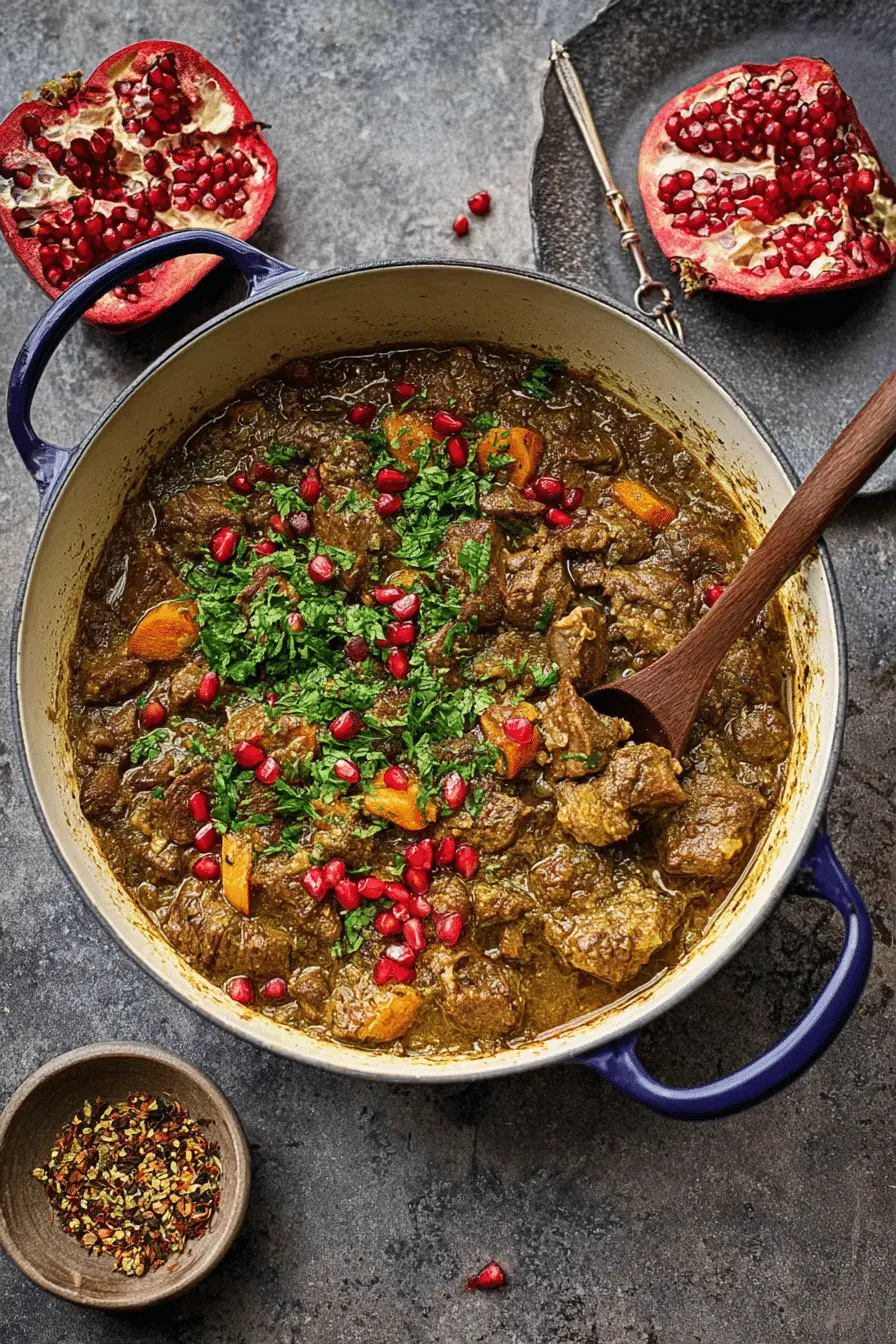
- Finish and adjust seasoning. Remove the cinnamon stick and orange peel. Taste and season with salt and pepper — if the stew tastes dull, it usually needs salt rather than more sweetness. Garnish with chopped parsley and mint and scatter pomegranate seeds if you have them; they give a jewel-like pop of acidity.
- Make the saffron cardamom rice. Melt a little butter, rinse basmati rice until the water runs clear, and cook with cardamom pods, a bay leaf, a short cinnamon stick, a pinch of turmeric and hot stock. A fluffy rice is the best partner — you want separate grains, fragrant and light.
Exploring Variations of Lamb Stew Across Iran
Persian stews vary wildly across regions, shaped by local produce and history. Two well-known variations you’ll encounter are:- Khoresh Fesenjan – A pomegranate and walnut stew where the fruit’s tartness is front-and-center; often made with duck or chicken in some families. The walnuts create a silky, almost paste-like sauce that clings to the meat.
- Khoresh Sibzamini – A potato-forward lamb stew where potatoes and lamb simmer together, making for a comforting, rustic dish; less sweet and more savory.
Modern Cooking Techniques: Instant Pot and Slow Cooker
Not everyone has hours to watch a casserole, so I’ve adapted this stew for set-and-forget methods. Both make excellent results if you follow a few rules. Instant Pot (pressure cooker) method:- Sauté onions, garlic and spices using the Sauté function until the onions are soft (about 8–10 minutes).
- Add the lamb and brown briefly, scraping up fond.
- Stir in pomegranate molasses, honey, cranberries, ground walnuts and stock.
- Seal and pressure cook on high for 25–30 minutes. Let the pressure release naturally for 10–15 minutes to avoid meat fibers seizing up and becoming tough.
- Open, reduce on Sauté if needed to thicken, and finish with fresh herbs.
Health Benefits of Key Ingredients
This stew is indulgent but contains several nutritious components:- Lamb – a rich source of high-quality protein and essential minerals such as iron and zinc, supporting muscle repair and immune function.
- Walnuts – supply heart-healthy fats (omega-3s), vitamin E and antioxidants; when used as a ground paste they add satiety and a nutrient-dense creaminess.
- Turmeric and other spices – turmeric contains curcumin, known for anti-inflammatory properties, while cinnamon and cumin provide antioxidants.
- Onions, garlic & herbs – provide fiber, vitamins and phytochemicals that support digestion and overall health.
Tips for Sourcing Persian Spices
Good spices lift this stew from good to spectacular. A few practical tips I use when sourcing:- Buy whole when possible — whole spices like cardamom pods, cinnamon sticks and whole cumin retain aromatics longer; toast and grind them just before use.
- Smell the spice — fresh spices should be fragrant. If cardamom smells muted, it won’t offer the floral lift you want.
- Look for pomegranate molasses with a balanced sweet-tart profile — if yours tastes too sweet, cut it with a squeeze of lemon; if too tart, a touch of honey will round it out.
- Substitutions — if you can’t find pomegranate molasses, simmer pomegranate juice until syrupy or mix a bit of balsamic vinegar with honey and lemon to mimic the sweet-tart balance.
Serving Suggestions and Pairings
This lamb stew is best served over fragrant rice to soak up the glossy sauce. I like saffron-tinged basmati for aroma and color; the rice’s clean flavor balances the stew’s intensity. A dollop of plain yogurt or a side of tangy cucumber-yogurt salad cools the palate.- Rice – saffron basmati with a few crushed cardamom pods.
- Bread – warm lavash or sangak to scoop and sop the sauce.
- Salads – a crisp Shirazi salad (tomato, cucumber, onion, lemon) or plain yogurt with cucumber and mint.
- Drinks – herbal tea or a light red wine that isn’t overly tannic; mint tea also cleanses the palate after each rich bite.
Storage, Freezing and Reheating
This stew stores well and, honestly, improves slightly after a day as the flavors marry. Cool completely and refrigerate up to 3 days. To freeze, divide into airtight containers and freeze for 2–3 months. Thaw overnight in the fridge and reheat gently on the stovetop; if the sauce thickened too much, loosen with a splash of stock. If reheating in the microwave, do it in short bursts and stir in between so the walnuts don’t separate.Common Problems and Fixes
- Burnt walnuts or bitter taste – toss the batch and start fresh. Don’t walk away when toasting nuts; they turn fast.
- Stew too thin – simmer uncovered to reduce, or stir in a little more finely ground walnuts. A small cornstarch slurry also works, but ground walnuts keep the authentic texture.
- Stew too sweet – balance with a squeeze of lemon or a touch more stock and salt.
- Lamb tough – this means it hasn’t simmered long enough; return to low heat and cook until tender. If using the Instant Pot, allow a natural pressure release to keep meat tender.
FAQ
- Can I substitute lamb with beef or chicken? Yes. Beef chuck works well as a direct substitute and can be cooked the same long, slow way. For chicken, use bone-in thighs and shorten cooking time (chicken is more delicate — cook less time in the Instant Pot or slow cooker and check for doneness).
- How do I adapt this recipe for an Instant Pot or slow cooker? Instant Pot: Sauté onions, garlic and spices, brown the lamb, add the liquids and cranberries, then pressure cook on high for 25–30 minutes with a 10–15 minute natural release. Slow cooker: Brown onions and lamb on the stove, transfer to the slow cooker, add remaining ingredients and cook low for 6–8 hours (or high 3–4 hours) until lamb is tender.
- What can I use if I don't have pomegranate molasses? Make a quick substitute by simmering pomegranate juice until syrupy, or mix a bit of balsamic vinegar with honey and a squeeze of lemon for a tangy-sweet alternative. Adjust quantities to taste so you keep that sweet-tart balance.
- Can I freeze the stew and how should I reheat it? Yes — cool completely and freeze in airtight containers for up to 2–3 months. Thaw overnight in the fridge and reheat gently on the stovetop (add a splash of stock if it’s too thick) or in the microwave until piping hot.
- How do I get the right thickness and prevent the ground walnuts from sticking? The ground walnuts help thicken the stew as it simmers. Cook on very low heat, stir every 20 minutes to prevent sticking, and finish uncovered if you need to reduce liquid. If it’s still too thin, stir in a little more finely ground walnuts or a small cornstarch slurry to thicken.
Conclusion and Final Thoughts
This Persian lamb stew is one of those recipes that feels like a warm hug — nutty, slightly sweet, and endlessly comforting. I recommend making it when you have the time to let it simmer slowly; the reward is a glossy, deeply flavored sauce and lamb that literally melts. Try it with saffron rice, some cooling yogurt, and a scattering of pomegranate seeds for brightness. If you make it, please tell me how it turned out and what variation you tried — it’s one of those dishes that invites experimentation and sharing. Happy cooking, and may your kitchen smell as inviting as mine did the first time I made this stew.Recipe Card
Celebrate Family with Authentic Persian Lamb Stew Recipe
- Prep
- 15 min
- Cook
- 90 min
- Total
- 105 min
- Serves
- 6
- Calories
- 261 kcal
- Carbs
- 23.00 g
Ingredients
- 130 gwalnuts (toasted and ground)
- 2 tbspolive oil
- 1 tbspunsalted butter
- 2onions (finely diced)
- 3 clovesgarlic (minced)
- ½ tspground cinnamon
- ½ tspground cumin
- ½ tspground turmeric
- ¼ tspground nutmeg
- 1cinnamon stick
- 1 small pieceorange peel
- 900 gdiced lamb shoulder (fat trimmed)
- 90 gdried cranberries
- 3 tbsppomegranate molasses
- 2 tbsphoney
- 500 mlchicken stock ((or broth))
- 1 tbspchopped parsley (to garnish)
- 1 tbspchopped mint (to garnish)
- 1 tbspunsalted butter
- 450 gbasmati rice
- 5 podscardamom
- 1bay leaf
- ½ stickcinnamon (for rice)
- ½ tspground turmeric (for rice)
- ¼ tspsalt
- 950 mlhot vegetable stock ((or water))
Instructions
- 1
Toast your walnuts for maximum flavor. You can do this in the same casserole dish you make the stew in or in the oven. Once the walnuts start toasting, transfer them to a mini chopper and grind to a fine powder.
- 2
Heat olive oil and butter in your casserole until butter starts foaming. Add the onions, cover the pot and cook over very low heat for 20 minutes, stirring occasionally.
- 3
Stir in the garlic, cinnamon, cumin, turmeric, nutmeg, salt, cinnamon stick and orange peel, cooking for a minute or two.
- 4
Add the lamb, stirring to coat in the aromatic spices. If the pan gets dry, add a little of the stock and scrape any browned bits in the pan.
- 5
Drizzle in the pomegranate molasses and honey. Add the dried cranberries, stirring to combine. Pour in the stock and bring to a simmer.
- 6
Add the ground walnuts, stir to combine then cover the pot and cook on very low heat for about an hour.
- 7
Discard the cinnamon stick and orange peel. Taste and season with salt and pepper. Garnish with chopped parsley and mint. Scatter jewel-like pomegranate seeds over the stew and serve.
You might also like
Reviews
Be the first to review this.