- Prep
- 25 min
- Cook
- 33 min
- Total
- 58 min
- Serves
- 8
- Calories
- 484 kcal
- Carbs
- 53.00 g
Introduction
I remember the first time I baked a Persian love cake in my kitchen: the house filled with a perfume of rosewater and warm cardamom while orange zest brightened the air. I baked it for a small family gathering and watched people pause mid-conversation to inhale the aroma — it felt like a ritual more than a recipe. Over the years I’ve baked this cake for birthdays, engagements, and slow Sunday teas; every time it brings a nostalgic hush to the room. In my kitchen this cake is the one I reach for when I want something that reads both festive and intimate — it’s not flashy, but its flavors tell a story. I’ve learned to trust simple techniques: gentle folding, careful timing, and small rituals like rubbing orange zest into the sugar until it smells like fresh citrus and blossom. These days I keep a small jar of good rosewater and a tin of green pistachios on a low shelf so I can make this cake with the same rhythm I first learned. When guests arrive and the fragrance reaches them from the oven, I always feel I’ve given them something personal — a bit of Persian warmth and hospitality from my kitchen to theirs.Why Persian Love Cake Is Perfect for Celebrations (A Heritage Dessert with Heart)
This cake traces its roots to Persian flavor traditions where fragrant floral waters and warming spices are used in both everyday sweets and special-occasion pastries. It’s often chosen for celebrations not because it’s ostentatious, but because its aromas — rosewater, cardamom, citrus — read as a gesture of care and ceremony. I have baked this cake for weddings and small family milestones. At one engagement tea the bride’s grandmother reached out to touch a dried rose petal on the cake and smiled; later she told me how those scents reminded her of the pastries from her childhood. Stories like that are exactly why this cake carries emotional weight: the flavors are anchors for memory. Imagine a living room where conversation softens as the cake is sliced: the first inhale of cardamom and rosewater, the bright lift of orange, the nutty hum of pistachio. That sensory pull is what makes it a favored choice at gatherings — it invites people to slow down and share a moment.Everything You Need for Persian Love Cake
Quality matters here: choose good rosewater, fresh cardamom, and vibrant pistachios. Below I describe ingredients by purpose and offer swaps so you can tailor the cake to dietary needs without losing its character.- Granulated sugar – Gives structure and, when rubbed with citrus zest, carries aromatic oils. Swap with coconut sugar for a deeper caramel note.
- Orange zest & orange juice – Brightens the floral and spice notes; use lemon if you want a sharper citrus edge.
- Eggs (room temperature) – Provide lift and structure; for vegan versions, consider a commercial egg replacer or aquafaba with adjusted binding.
- Sour cream or Greek yogurt – Adds moisture and a tender crumb; for dairy-free baking, use full-fat coconut yogurt or a plant-based sour cream alternative.
- Melted butter – Contributes richness and keeps the crumb soft; for dairy-free cakes use a neutral oil plus a touch more yogurt to mimic texture.
- Rosewater (or rose extract) – The floral signature; if unavailable, orange blossom water is an acceptable alternative though it shifts the profile slightly.
- All-purpose flour – The structure builder; for gluten-free baking see the dedicated section below with recommended blends.
- Almond flour – Adds tender, moist crumb and a nutty background; swap with ground hazelnuts or extra almond if almond is unavailable.
- Baking powder & baking soda – Leaveners for lift and crumb; use gluten-free labeled leaveners when necessary.
- Ground cardamom – Warms and perfumes the cake; freshly ground pods are far more fragrant than pre-ground.
- Pistachios (finely diced/ground) – Provide texture and the classic green flecks; if allergic, toasted almonds or sunflower seeds offer a different but pleasant crunch.
- Powdered sugar and cream (for glaze) – Create a glossy, lightly floral finish; swap cream with plant-based alternatives if needed.
- Edible rose petals – For garnish and visual tradition; if unavailable, use candied citrus peel for a different visual cue.
How to Make Persian Love Cake (Step-by-Step)
- Preheat the oven and prepare your pan so you have a heat-ready space; this helps your batter go straight into even heat for an even rise.
- Rub the citrus zest into the granulated sugar until fragrant — this releases citrus oils and layers the flavor deep into the cake.
- Whisk together the sugar-zest, room-temperature eggs, sour cream (or yogurt), melted butter, orange juice, and rosewater; use moderate speed and stop when the mixture looks smooth and cohesive.
- Sift (or whisk) the dry ingredients together — flour, almond flour, leaveners, salt, and ground cardamom — to ensure even distribution of spice and lift.
- Fold the dry ingredients into the wet gently: mix just until no dry streaks remain. Overmixing develops gluten and will make the cake dense instead of tender.
- Fold in the finely diced pistachios last to preserve little pockets of nutty texture throughout the crumb.
- Pour the batter into your prepared pan and smooth gently, pressing the batter to the edges to remove any air pockets; this gives an even top and consistent bake.
- Bake until a toothpick in the center comes out clean and the top springs back lightly; ovens vary, so watch the cake closely in the final minutes to avoid overbaking — this is the biggest enemy of a moist crumb.
- Cool the cake in the pan briefly, then transfer to a rack to cool completely before glazing. If you glaze a warm cake, the icing will run thin and won’t set properly.
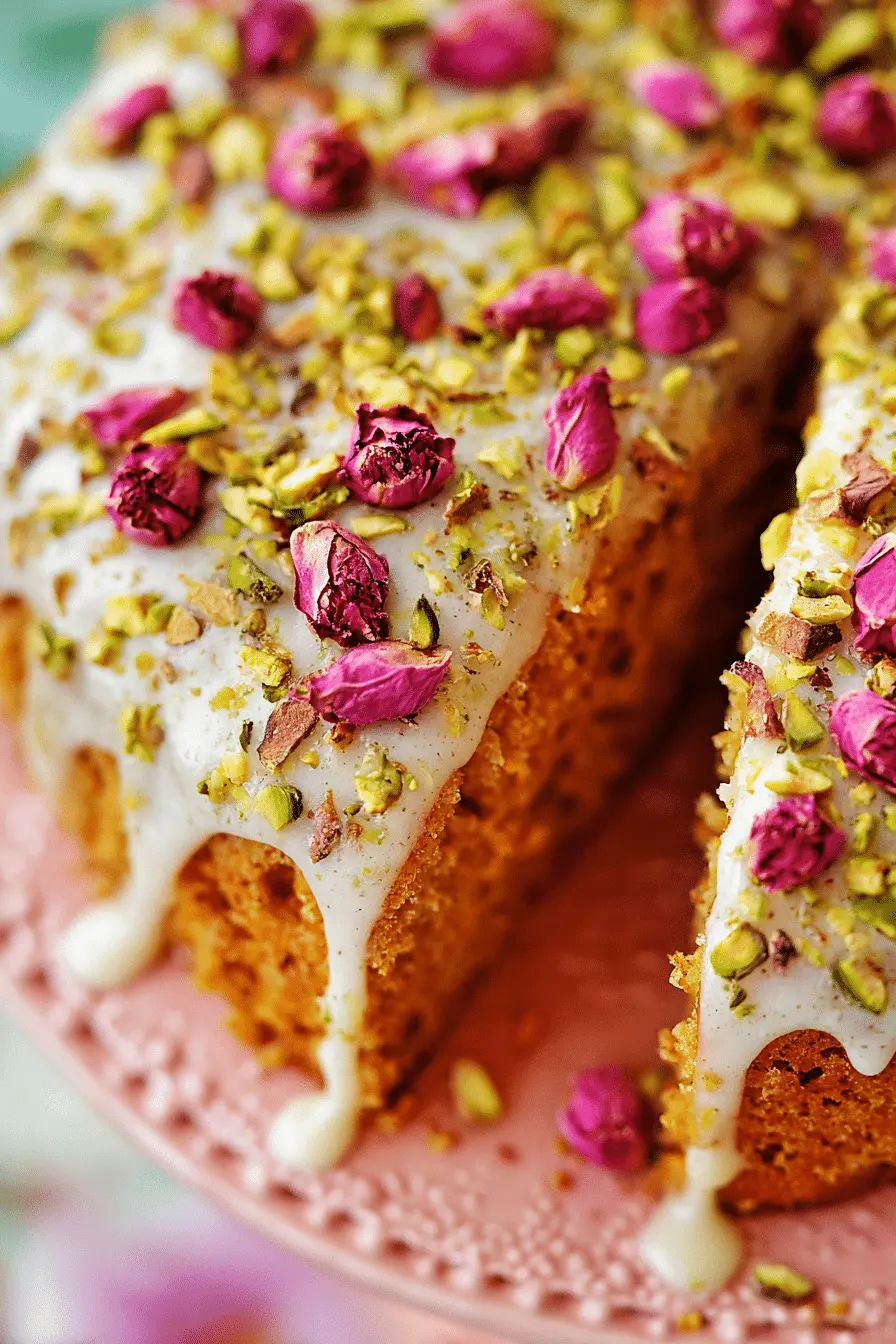
- Whisk the powdered sugar with orange zest, rosewater, and cream until the glaze is thick but pourable; pour onto the center of the cooled cake and coax it to the edges so it drapes the top rather than floods the sides.
- Garnish with diced pistachios and edible rose petals for that classic look and textural contrast.
The Secret to Its Fragrant, Moist Texture
The cake’s tenderness comes from a balance of fat, acid, and gentle mixing. Melted butter and sour cream add fat and moisture that make the crumb plush; almond flour contributes a soft crumb and retains moisture longer than straight wheat flour. When you fold in the nuts late and avoid overworking the batter, you keep the crumb airy while preserving pockets of pistachio crunch. Flavor-wise, cardamom’s volatile oils thrive in the presence of citrus and fat — that’s why rubbing citrus into sugar and using a little fat in the batter makes the perfume of the spice bloom. I always recommend grinding green cardamom fresh; the difference between fresh and stale cardamom is as noticeable as fresh herbs versus dried. For texture-enhancing technique, lightly toast the almond flour or pistachios for a minute or two to deepen their aroma, but cool them completely before folding into the batter so they don’t affect the batter temperature. Small gestures like these are why the cake remains moist and aromatic long after baking. For related ideas on playing with pistachios in cakes, try this complementary recipe: If you're looking for more ways to incorporate pistachios, try our salted dark chocolate pistachio quinoa crunch bars for a delicious treat.Why Rosewater and Cardamom Define the Flavor
Rosewater supplies a bright, floral top note that lifts the denser spice of cardamom. The two together create a balance: rosewater brings an airy perfume while cardamom adds warm, resinous depth. High-quality rosewater (made from real rose distillate) reads clean and fragrant — avoid synthetic extracts that can taste soapy or medicinal. On a chemical level, the aromatic compounds in rosewater and cardamom complement each other: floral esters and citrus oils shine brighter when paired with cardamom’s terpene and ketone profile. Practically, this means a little rosewater goes a long way; measure it thoughtfully and taste as you go when you’re making the glaze. For another use of cardamom in desserts that highlights its citrus-friendliness, consider this inspiration: For another delightful use of cardamom, check out our cardamom orange rice pudding recipe.Selecting and Preparing Pistachios the Persian Way
Good pistachios are bright green with hints of cream; avoid ones that look dull or shriveled. For the best flavor, buy raw, unsalted pistachios and prepare them yourself: a quick toast in a dry skillet enhances their aroma and crunch without adding salt.- Toast the nuts briefly over medium heat, stirring constantly, until fragrant and slightly darker — this concentrates their oils.
- Cool them fully on a sheet before chopping or grinding; warm nuts will release oil and can change the batter texture.
- For texture contrast, reserve a small handful of roughly diced pistachios to sprinkle over the glazed cake.
- If allergy is a concern, toasted sunflower seeds or chopped toasted almonds are serviceable substitutes that still provide toasty crunch.
Pro Tip for Persian Love Cake: Make It Gluten-Free Without Losing Flavor
Below are focused, scannable tips so you can make a gluten-free version that keeps the cake’s character. (Writer note: generate the 'Pro-Tips', 'Troubleshooting', and 'Variations' sections as bulleted lists for high scannability.)- Use a reliable gluten-free flour blend that contains a mix of rice flour, tapioca starch, and a binder — blends that mimic all-purpose flour perform best.
- Add a small amount of xanthan gum or a commercial binder if your blend lacks it, to improve crumb structure and sliceability.
- Increase the almond flour slightly to add tenderness and moisture; nut flours help mimic the mouthfeel lost without gluten.
- Watch moisture: gluten-free flours often need a touch more liquid — a splash of extra yogurt or a tablespoon more juice can prevent dryness.
- Be gentle when mixing: gluten-free batters can be more fragile, so fold with care and avoid vigorous beaters.
How to Store, Make-Ahead & Serve Persian Love Cake
Store this cake at room temperature, covered, for a few days; refrigeration extends life but slightly mutes the flavors, so bring slices to room temperature before serving for the best aroma. If you need to make the cake ahead, bake it a day in advance and add the glaze the morning you’ll serve it so the petals and nuts stay fresh and crisp. When serving, I like to offer small plates, a pot of strong black tea, or a cardamom-spiced coffee alongside this cake — the beverages echo the flavors and make the moment feel intentional. If you’re presenting a dessert spread, pair it with a light, citrusy sorbet or a creamy pistachio custard for contrast. If you’re entertaining and want another pistachio-forward option, consider this companion dessert: If you're having guests over, consider serving our chocolate pistachio tiramisu for a delightful dessert option.Frequently Asked Questions
What is Persian Love Cake? Persian Love Cake is a fragrant dessert that combines flavors of rosewater, cardamom, and almonds, resulting in a moist and aromatic cake often garnished with pistachios and dried rose petals. How do I ensure my Persian Love Cake comes out moist? To achieve a moist cake, it’s important to properly measure your ingredients, especially the wet ones like sour cream and butter. Also, avoid overmixing the batter and take care not to overbake! Can I make Persian Love Cake gluten-free? Yes! You can substitute the all-purpose flour with a gluten-free blend. Make sure you also use gluten-free baking powder for the best results. How should I store leftover Persian Love Cake? Store the cake at room temperature for up to 3 days, or cover it and place it in the fridge for up to a week. Just let it come to room temperature before serving for the best flavor! What can I use instead of rosewater? If you don’t have rosewater, you can substitute with orange blossom water or simply omit it for a different flavor profile. However, it’s advised to stick to the recipe for the traditional taste.Recipe Card
The Persian Love Cake I Make for Cozy, Romantic Nights
- Prep
- 25 min
- Cook
- 33 min
- Total
- 58 min
- Serves
- 8
- Calories
- 484 kcal
- Carbs
- 53.00 g
Ingredients
- 3/4 cupwhite granulated sugar
- 1 largeorange (zest)
- 2 largeeggs (at room temp)
- 1/2 cupsour cream (or Greek yogurt)
- 1/2 cupunsalted butter (melted)
- 1/4 cuporange juice (freshly squeezed)
- 1.5 tsprosewater extract
- 1 cupall-purpose flour
- 1 cupalmond flour
- 1 tspbaking powder
- 1/2 tspbaking soda
- 1/4 tspsea salt
- 1.5 tspground cardamom
- 1/3 cuppistachios (finely diced/ground)
- 1 cuppowdered sugar
- 1 tsporange zest
- 1/2 to 1 tsprosewater extract
- 3 to 4 tbspcream
- 3 tbspdiced pistachios (for garnish)
- 1/4 cupedible rose petals (for garnish)
Instructions
- 1
Preheat the oven to 350°F. Line an 8-inch cake pan with parchment paper and spray the sides with a baking spray.
- 2
Place the granulated sugar into a large mixing bowl and zest in the orange.
- 3
Add the eggs, sour cream, melted butter, orange juice, and rosewater/extract. Whisk until well-beaten.
- 4
In a separate bowl, combine the dry ingredients: all-purpose flour, almond flour, baking powder, baking soda, salt, and ground cardamom.
- 5
Sift the dry ingredients into the wet ingredients, then mix just until well combined.
- 6
Fold in the finely diced pistachios.
- 7
Pour the cake batter into the prepared pan and bake for 33 to 35 minutes.
- 8
Allow the cake to cool in the pan for about 5 minutes, then transfer to a wire rack to cool completely.
- 9
Prepare the glaze by combining powdered sugar, orange zest, rosewater/extract, and cream.
- 10
Allow the cake to cool to room temperature before adding the glaze. Pour glaze onto the center of the cake.
- 11
Garnish with diced pistachios, rose petals, and/or rose buds.
You might also like
Reviews
Be the first to review this.