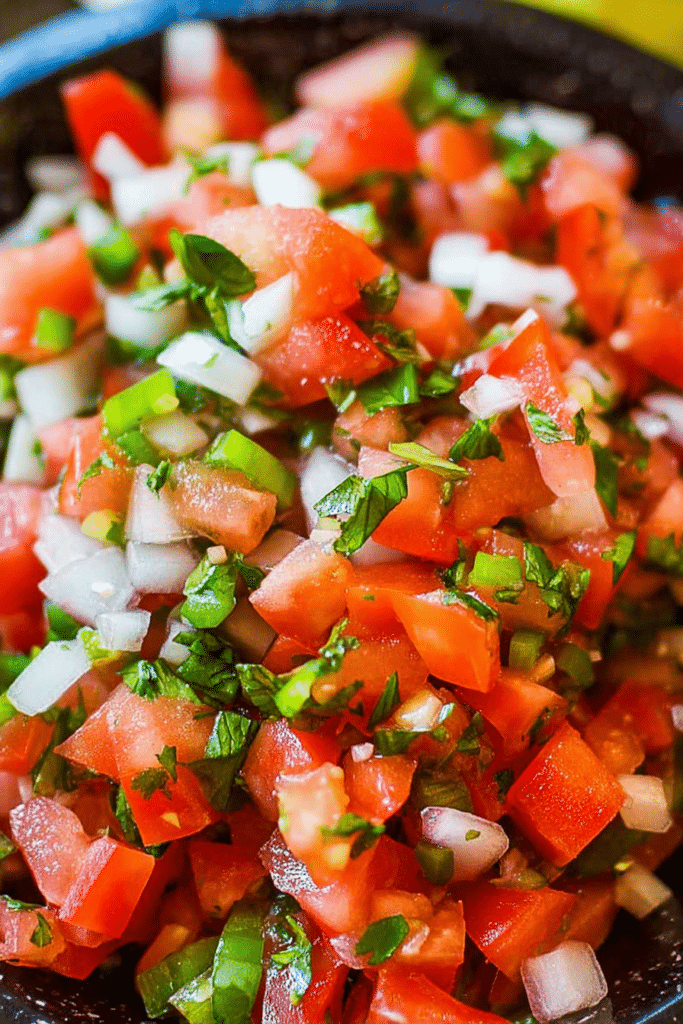
I make pico de gallo all through the warmer months in my kitchen because it’s fast, bright, and forgiving. In about fifteen minutes I can turn a handful of simple ingredients into something that livens up dinner: the tomatoes add sweet juiciness, the onion gives a crisp bite, and lime ties everything together. I keep the process straightforward so you can make it any night of the week without fuss.
What I love most is how the salsa stays visually stunning even when you’re rushing — the reds, whites, and greens look like a small celebration in a bowl. The technique I use preserves crunch and clarity of flavor, so the vegetables still snap when you bite them. That contrast is what makes pico de gallo so refreshing and useful across meals.
Because I cook this so often, I’ve learned a few small habits that save time without sacrificing texture: a very sharp knife, properly ripe tomatoes, and holding back a little lime until the last minute. Those choices keep the salsa tasting freshly chopped, never soggy. Read on for the simple ingredient guide, quick chopping tips, and sensible make-ahead tricks that let you serve pico de gallo that still feels freshly made.
Why This Pico de Gallo is Perfect for Busy Cooks
This version is built for speed and clarity. The whole recipe comes together in about fifteen minutes using ingredients you can find year-round at most markets. You don’t need special tools or long marinating times — just clean, fresh produce and a good knife.
It’s versatile: use it as a chip dip, a taco topper, a bright spoonful over grilled protein, or folded into grain bowls. Because the ingredients are raw and bright, the salsa instantly refreshes heavier dishes and makes simple meals feel intentional. Picture a small bowl of vivid red tomatoes, bright green cilantro, and glistening lime—inviting to the eye and lively on the palate.
Everything You Need for Pico de Gallo
- Tomatoes – Provide the bulk, sweetness, and texture; choose a firmer tomato for less liquid or a juicy one if you want more sauce.
- Onion – Adds sharpness and crunch; rinse briefly if you prefer a milder bite or swap varieties for color.
- Jalapeño – Gives heat and brightness; remove seeds for less spice or keep them for a bolder kick.
- Cilantro – Brings that classic herbaceous note; omit or swap for parsley if you don’t like cilantro.
- Lime – Adds acidity and aroma; fresh juice brightens flavors and helps preserve the mix briefly.
- Salt & Pepper – Essential for seasoning; adjust to taste to balance the sweetness of the tomatoes and the acidity of the lime.
- Tools – A sharp chef’s knife and a sturdy cutting board are the only must-haves; a bowl for mixing and a spoon for tasting finish the job.
As you chop, you’ll smell the citrus lifting the vegetable aromas—an immediate cue that the salsa is coming together.
Choosing the Best Tomatoes for Pico de Gallo
Tomato choice determines texture. Roma or plum tomatoes are often recommended because they have denser flesh and less watery interiors, so the salsa stays chunky. If you use garden or vine-ripened tomatoes, pick ones that are fully colored and yield slightly when pressed but aren’t mushy.
Look for uniform color, a smooth skin, and a slight spring to the touch; avoid tomatoes with deep cracks or soft spots. If tomatoes are very juicy, drain excess liquid or remove seeds to keep the mixture from becoming soupy. For a different take that showcases other tomato types, try a variation built around green tomatoes to change acidity and texture:
For an interesting twist, try our green tomato salsa recipe that highlights different types of tomatoes.
How to Balance Heat and Acidity for a Bright Salsa
Lime juice is the brightening agent and a light preservative; it heightens flavors and keeps the salsa tasting crisp for a short time. Add most of your lime early to meld flavors, but hold back a touch to finish if you want a brighter final punch just before serving.
Adjust heat by controlling the jalapeño: remove membranes and seeds for mild heat, or include them for more kick. If you want a different chili profile—milder or smokier—substitute serrano or a mild poblano depending on your tolerance.
Onion and lime interact chemically: lime softens raw onion bite and tames sharp sulfurous notes while lifting sweetness. That’s why a short rest after mixing often yields a more balanced flavor. For extra resources on balancing flavors in fresh salsas, see a related guide on green sauces:
Enhance your salsa-making skills by checking out this easy salsa verde which balances flavors beautifully.
Quick Chopping Tips for Fast, Even Pieces
- Use a sharp chef’s knife for clean cuts; a dull blade crushes tomatoes and releases more juice.
- Trim the tomato core and slice into even slabs, then stack and cut into strips before dicing for uniform pieces.
- For brisk onion dicing, halve the onion through the root, make parallel cuts, then cross-cut—hold the root to keep layers intact.
- Minimize handling the cilantro—chop with a rocking motion for a quick, even chop and keep the stems if you like extra herb flavor.
- If you’re learning knife skills, watch a short visual guide or practice basic cuts to build speed and confidence—visual cues make a big difference.
How to Make Pico de Gallo (Step-by-Step)
- Dice the tomatoes and add them to a medium mixing bowl; if they’re very juicy, scoop out seeds first to reduce liquid.
- Finely chop the onion and add to the bowl; if you prefer milder onion, rinse the chopped pieces briefly and drain before adding.
- Seed and finely mince the jalapeño (or leave seeds in for more heat), then add to the bowl.
- Roughly chop cilantro and add it in—reserve a few leaves for garnish if you like.
- Squeeze in most of the lime juice and season with salt and pepper; toss gently to combine so the tomatoes keep their shape.
- Taste and adjust: add more lime for brightness, more salt to draw out juices, or a pinch of sugar only if tomatoes are overly acidic.
- Serve immediately for maximum crunch, or refrigerate briefly if you prefer the flavors slightly melded.
Pro Tip for Pico de Gallo: Make-Ahead Without Losing Crunch
- I often keep the wet and dry components separate if I need to prepare ahead: chop tomatoes and store them lightly drained, then combine with onions, cilantro, and jalapeño just before serving.
- If you must mix ahead, add a little extra lime and salt right before serving to revive flavors and refresh texture.
- Store in a shallow airtight container so the salsa cools quickly and evenly; avoid long periods at room temperature once combined.
Pro-Tips, Troubleshooting, and Variations are presented as bulleted lists for quick scanning and easy reference.
Troubleshooting
- If the salsa is soggy, I usually drain excess tomato liquid and let the mixture sit briefly in a sieve before re-mixing with fresh herbs and lime.
- If it tastes flat, I add a squeeze more lime and a pinch of salt; acidity and salt revive muted flavors quickly.
- If it’s too spicy, I stir in a bit more diced tomato or a splash more lime to tame heat without watering down the salsa.
How to Store, Serve, and Customize Your Pico de Gallo
Store pico de gallo in an airtight container in the refrigerator and use within a couple of days for best crunch and color. If you need a quick, crunchy pairing, enjoy your pico de gallo with crispy homemade tortilla chips for a delightful crunch.
Serving ideas beyond the usual: spoon it over grilled fish or chicken, mix into grain bowls, or use as a fresh garnish for scrambled eggs. For low-sodium options, reduce added salt and increase lime to keep flavors bright.
Variations
- Roasted Tomato Pico — replace some raw tomatoes with charred ones for deeper flavor.
- Mango or Pineapple Pico — add diced stone fruit for a sweet-heat contrast that pairs well with pork or fish.
- Low-Sodium — omit added salt and boost acidity with extra lime and fresh herbs.
- Herb Swap — use parsley instead of cilantro if you dislike cilantro’s flavor.
Cultural Significance and History Behind Pico de Gallo
Pico de gallo has humble roots in Mexican home cooking where fresh, chopped salsas were made to complement staples like tortillas, beans, and grilled meats. The name, which literally translates as “beak of rooster,” is said to reference the way it was traditionally eaten by pinching pieces between thumb and finger.
Regional variations abound across Mexico: some areas add fruit, others prefer different chiles, and ingredient proportions shift by household. Pico de gallo is as common at everyday family meals as it is at festive gatherings, serving the dual role of refreshment and bright flavor to balance richer dishes. For a related style and cultural perspective, see a classic fresh salsa approach:
Pico de gallo is a staple in Mexican cuisine, much like this classic salsa recipe that shares its cultural heritage.
Frequently Asked Questions
What does ‘pico de gallo’ literally mean? Translated in Spanish, pico de gallo literally means ‘beak of rooster.’ This name is believed to come from the way it was traditionally eaten, pinched between the thumb and finger, resembling a rooster’s beak.
What are the key ingredients for pico de gallo? The key ingredients for pico de gallo include ripe Roma tomatoes, onions, jalapeño pepper, cilantro, lime juice, salt, and black pepper.
Can I make pico de gallo ahead of time? Yes! You can prepare pico de gallo ahead of time. Just remember to store it properly to maintain its crunchiness; cover it tightly and keep it in the refrigerator.
How do I choose the best tomatoes for pico de gallo? For the best pico de gallo, choose ripe, red tomatoes that are firm yet slightly soft to the touch. Roma tomatoes are a great choice due to their flavor and texture.
Is pico de gallo healthy? Yes, pico de gallo is quite healthy! It’s low in calories and packed with fresh vegetables, which support digestion and overall gut health.
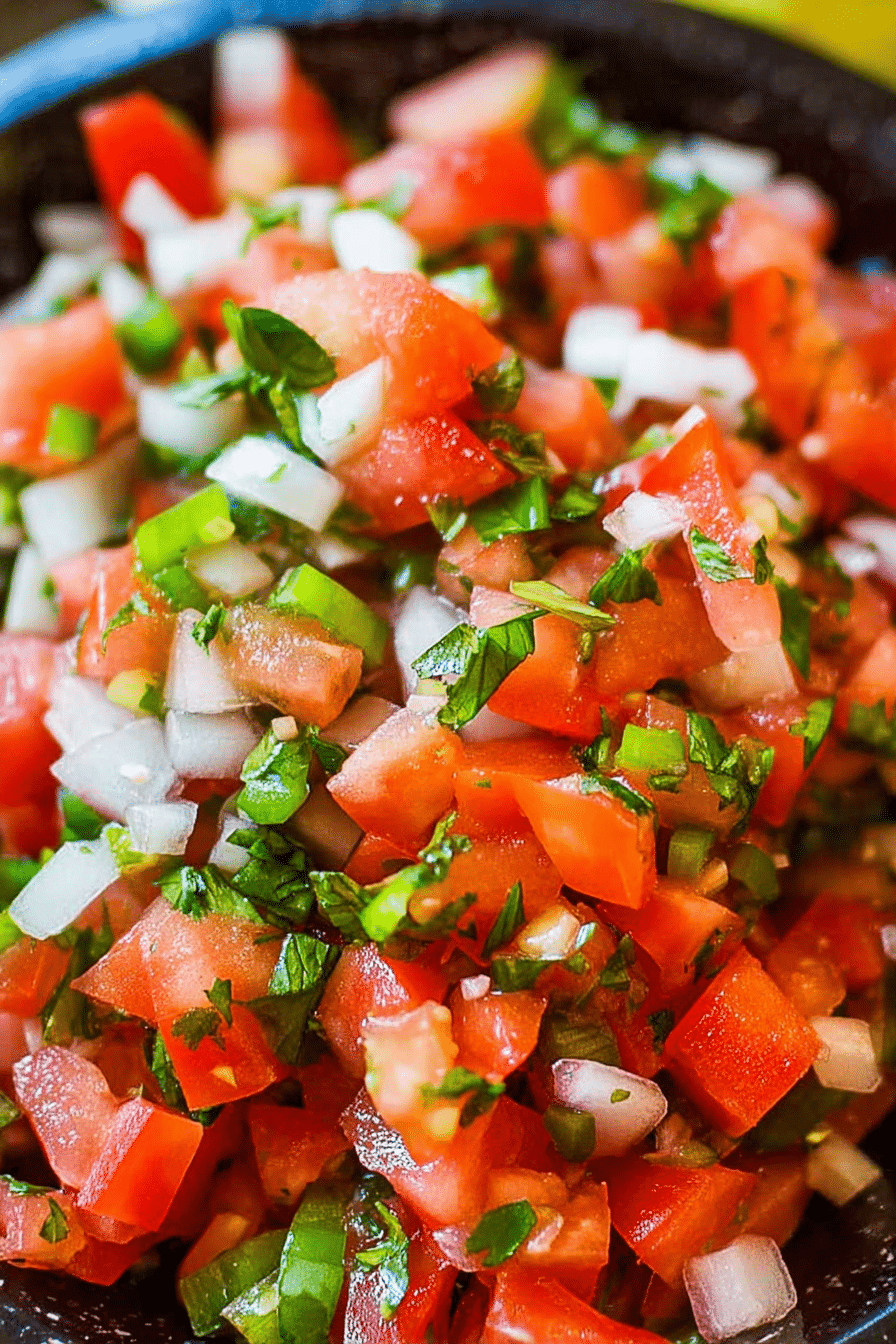
Authentic Pico de Gallo
Ingredients
Method
- In a medium bowl, diced tomatoes, onion, jalapeno pepper and chopped cilantro.
- Stir in lime juice and lightly season with salt and black pepper, or season to taste. Enjoy right away or cover and refrigerate overnight.