- Prep
- 45 min
- Cook
- 25 min
- Total
- 70 min
- Serves
- 12
- Calories
- 196 kcal
- Carbs
- 18.00 g
Introduction
Profiteroles are those little clouds of pastry that somehow make you feel both elegant and comforted at the same time. I’ve been making them for years — for holiday dinners, quick weekend treats, and once, wildly, for a neighborhood bake sale where they vanished in twenty minutes. The magic is the choux: crisp outside, hollow inside, ready to cradle something cold and creamy or warmly saucy. In French patisserie they’re a humble star, showing how a tiny dough ball can become a showpiece. They’re versatile: scooped with ice cream for a classic French finish, piped with pastry cream for a tea-time treat, or stacked into an impressive croquembouche for a celebration. I love that you can make the puffs ahead, crisp them properly in the oven, and then finish them when guests arrive — that make-ahead friendliness is why this is a recipe I return to again and again.Understanding Choux Pastry: Tips for Perfection
Choux (pâte à choux) is deceptively simple: water, milk, butter, flour, eggs and a pinch of salt. But its success depends on a few technique points. The interplay of moisture and heat creates steam inside the dough during baking, which makes the puffs rise and hollow out — that hollow is what you’ll fill. Too little moisture, and the dough won’t puff; too much, and it won’t hold shape. Same with oven temperature: you need a hot start to produce steam and lift, then a drying period so the shells set crisp and don’t collapse. When I make choux I watch three moments closely: when the roux (the cooked flour-butter mixture) pulls away from the pan into a smooth ball; when the dough cools just enough to accept the eggs without scrambling them; and when the shells are golden and sound hollow when tapped. Those cues will save you from guesswork. Common pitfalls: adding eggs too quickly will result in a runny batter that won’t hold shape. Opening the oven door early can collapse the puffs. And under-baking leaves the centers soggy — if that happens, slide them back into a low oven to dry. If the dough looks too stiff after adding eggs, it probably needs one more egg or a slightly longer beating; if it’s too loose, try chilling the dough briefly and piping smaller mounds so they have structure.Ingredients Breakdown: What You Need
- Water – provides the steam that lifts the choux and contributes to the shell’s structure.
- Milk – softens the flavor and browning; a little milk gives a richer, more golden crust.
- Unsalted butter – adds richness and helps the dough form a smooth ball when cooked.
- Sugar – a touch sweetens the dough and encourages browning without making it pastry-sweet.
- Salt – balances sweetness and strengthens dough flavor; never skip a pinch.
- All-purpose flour – gives the structure. Use fresh flour and measure properly — too much will make dough heavy.
- Eggs – the main leavener once the dough hits the oven. They add fat and help create the glossy, pipeable texture.
- Vanilla ice cream or pastry cream – classic fillings; ice cream is the old-school favorite for warm chocolate sauce over cold filling.
- Heavy cream – used to make a simple chocolate ganache, giving a shiny, pourable sauce.
- Semisweet or bittersweet chocolate – the backbone of the sauce; choose a quality bar and chop finely to melt evenly.
- Substitutions – for dairy-free try plant-based milk and vegan butter with an egg replacer (note: ovens behave differently). For gluten-free, use a tested gluten-free flour blend and expect slight differences in puff and color.
Step-by-Step Instructions: Making Profiteroles
Below is the tested recipe I rely on. Yield: 12 small profiteroles. I include the exact steps I use in the kitchen, and beneath each step I add troubleshooting notes from my tests.- Preheat and prepare: Preheat the oven to 400°F (200°C) and set an oven rack in the middle position. Line a baking sheet with parchment paper. Tip: I always bake one test puff first to check oven behavior. If it colors too quickly, your oven runs hot; reduce temperature by 10–20°F next time.
- Make the base: In a medium saucepan, combine the water, milk, butter, sugar, and salt. Bring to a boil over medium heat, stirring occasionally, until the butter is fully melted. Observation: As the mixture comes to a boil you’ll smell butter and milk warming — that moment means the water is ready to gelatinize the flour. Don’t rush this stage.
- Add the flour: Reduce the heat to low, add the flour all at once, and stir vigorously with a wooden spoon until the mixture forms a smooth ball and pulls away from the sides of the pan, about 1 minute. Why it matters: Cooking the flour and liquid together removes the raw taste and allows the dough to form the proper structure. If you see streaks of raw flour, keep stirring a little longer — the dough should be smooth and slightly glossy.
- Cool and beat: Transfer the dough to the bowl of an electric mixer fitted with the paddle attachment. Let it cool for 5 minutes, then beat on low speed for 30 seconds to release steam. Kitchen note: If you skip the cooling step the eggs will cook when added. You want the mixture warm, not steaming.
- Add the eggs: With the mixer on low, add the eggs one at a time, beating well after each addition. Scrape down the sides as needed. Once all the eggs are incorporated, continue mixing for 1 minute more, until the dough is smooth, thick, and pipeable. How to tell it’s right: The dough should fall in a thick ribbon when the paddle is lifted. If it’s too loose, the puffs will spread; too stiff and they won’t puff up. I sometimes beat an extra 10–20 seconds for a silkier texture.
- Pipe the puffs: Transfer the dough to a piping bag fitted with a ½-inch (1.25-cm) round tip. Pipe 1¾-inch (4.5-cm) mounds onto the prepared baking sheet, spacing them 2 inches (5 cm) apart. Wet your fingertip and gently press down any pointed tips to prevent burning. Pro tip: If you don’t have a piping bag, a sturdy zip-top bag with a corner snipped will work. I keep a small bowl of water nearby to smooth peaks so each puff bakes evenly.
- Bake and dry: Bake for 22 to 25 minutes, without opening the oven until near the end of the baking time, until the puffs are golden and well-risen. Turn off the oven, crack the door open slightly, and let them sit inside for 30 minutes to dry out. Transfer to a wire rack to cool completely. Troubleshooting: If you open the oven early they may deflate. If centers are still soft after baking, return the tray to the oven at 300°F (150°C) for 8–12 minutes to dry them out. The internal texture should be hollow and dry, not sticky.
- Make the chocolate sauce: In a small saucepan, heat the heavy cream over medium heat until steaming (do not boil). Remove from heat and add the chopped chocolate and salt, stirring until smooth. Let it cool slightly before drizzling over the profiteroles. Sensory note: The sauce should be glossy and pourable — a few bubbles will disappear as it cools. If it’s too thick, whisk in a teaspoon of warm cream; too thin, warm gently until it thickens slightly.
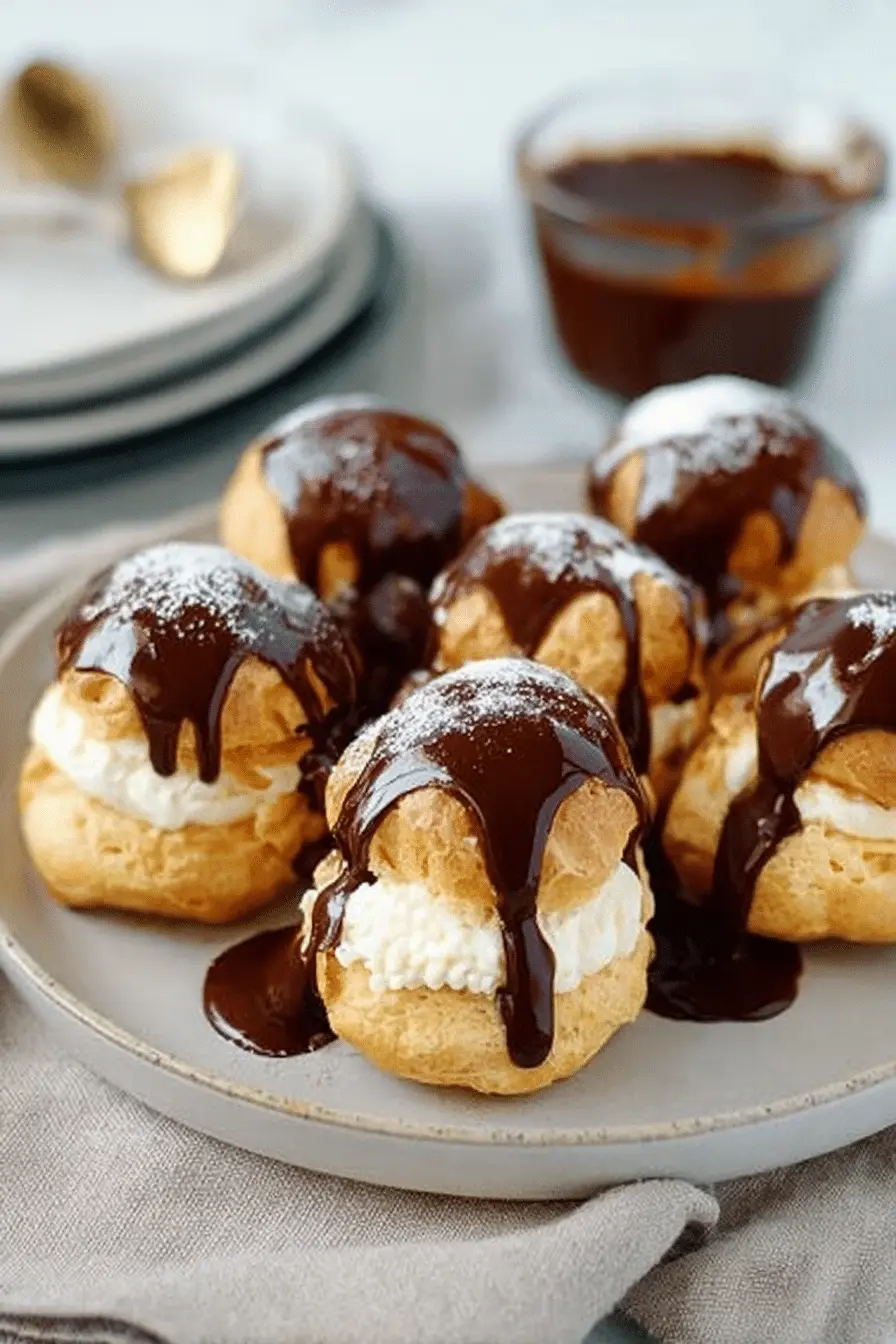
- Assemble with ice cream: For Ice Cream-Filled Profiteroles: Before assembling, scoop small balls of ice cream onto a parchment-lined baking sheet and freeze until firm, at least 30 minutes and up to 2 hours. Once the profiteroles are completely cool, slice them in half horizontally using a serrated knife. Place a frozen ice cream ball onto the bottom half of each profiterole, then place the top half back on. Drizzle generously with the warm chocolate sauce and serve immediately. Serving note: This is the classic cold-and-warm contrast — the warm chocolate over chilled ice cream is an irresistible juxtaposition of temperatures and textures.
Creative Filling Ideas: Beyond Vanilla
Once you’ve nailed the choux, fillings are where you can have fun. I keep a small selection on hand: a good vanilla pastry cream, salted caramel, espresso mousse, and a quick berry compote for bright, tart contrast. For a seasonal twist, try filling your profiteroles with pumpkin cheesecake filling. Here are some ideas I’ve tested and love:- Vanilla pastry cream – silky and classic; it holds well in the shell and won’t melt like ice cream.
- Salted caramel – thick, slightly pourable caramel with a pinch of sea salt; pairs beautifully with chocolate.
- Coffee mousse – airy, with a pronounced espresso hit; great with dark chocolate sauce.
- Berry compote – stewed berries reduced to a spoonable jam; adds acidity and freshness.
- Mascarpone-citrus – mascarpone whipped with orange zest and a touch of powdered sugar for a tangy, creamy filling.
- Vegan coconut cream – chilled coconut cream whipped with a bit of maple syrup for a dairy-free alternative.
Serving Suggestions: Pairing with Drinks and Dips
Profiteroles can be plated in several ways: individually drizzled, stacked as a simple tower, or arranged on a platter with a bowl of extra chocolate sauce for dipping. For a party I like to make a platter with three filling types and label each, so guests know what they’re tasting. For drinks, think about contrasts: a sweet, fizzy Moscato pairs well with the richness of cream-filled puffs; a robust espresso or an Americano cuts through the creaminess and highlights chocolate notes. For something boozy, a tawny port or a Vin Santo is lovely with caramel or pastry cream fillings. Consider serving your profiteroles with a side of classic tiramisu for a delightful dessert duo.Variations: Healthier Options and Twists
When friends ask for lighter versions I make small changes that preserve the spirit of the profiterole. Using half-and-half instead of heavy cream in the sauce will reduce fat without wrecking texture; swapping part of the sugar in a filling for fruit purée cuts sweetness and adds fiber. Gluten-free choux is possible with a tested blend — expect slightly different browning and a softer shell. For lower-sugar fillings, try a Greek yogurt-based mousse sweetened with a little honey and stabilized with gelatin or agar for hold. Fruit-infused shells (like adding lemon zest to the dough) can brighten flavors without adding calories.FAQs: Common Issues and Troubleshooting
- How do I store leftover profiteroles?To store leftover profiteroles, keep them in an airtight container in the refrigerator for up to 2 days. You can also freeze them, but it's best to freeze them before adding the filling for optimal texture.
- Can I make profiteroles ahead of time?Absolutely! You can make the choux pastry ahead of time and store the baked puffs in an airtight container at room temperature for a day or two, or freeze them for longer storage. Just fill them with ice cream or cream right before serving.
- What should I do if my profiteroles don’t puff up?If your profiteroles don’t puff up, it might be due to insufficient moisture in the dough or opening the oven too early. Make sure you follow the baking times closely and don’t open the oven until they are almost done!
- Can I use a different filling other than ice cream?Definitely! While traditional profiteroles are filled with ice cream, you can also use pastry cream, whipped cream, or even mousse. Get creative with flavors like salted caramel or coffee!
- What is the best way to serve profiteroles?Serve profiteroles drizzled with warm chocolate sauce, and consider complementing them with a side of coffee or dessert wine for an elegant touch!
Conclusion: Making Profiteroles a Family Tradition
Making profiteroles has become one of my small household rituals: the sound of the mixer, the smell of butter and caramelizing sugar, the nervous moment when you open the oven and your puffs are perfectly risen. It’s a recipe that rewards attention — not with complicated techniques, but with quiet observation and a steady hand. Invite the kids to pipe the dough or let guests choose fillings; it’s a great way to involve others in a process that’s both precise and playful. Making desserts like profiteroles can be a great tradition to share with your family, just like our chocolate chip cookie dough bars. Try the recipe as written once, then tweak — smaller puffs for bite-size parties, an espresso ganache for coffee lovers, or a lemon-mascarpone filling for brightness. Each little change is part of the learning, and after a few batches you’ll know exactly how your oven likes them and what fillings make your table sing. Final note: Expect some trial and error the first few times — ovens and flours vary. Keep notes (I write oven temps and bake times on the recipe card), and don’t be discouraged by a collapsed puff now and then. That’s part of learning. With practice, you’ll have a repertoire of fillings and sauces that make these small pastries a signature for any occasion.Recipe Card
Easy Profiteroles: Mastering the Art of Choux Pastry for Impressive Desserts
- Prep
- 45 min
- Cook
- 25 min
- Total
- 70 min
- Serves
- 12
- Calories
- 196 kcal
- Carbs
- 18.00 g
Ingredients
- ¼ cupwater
- 2 tablespoonsmilk
- 4 tablespoonsunsalted butter
- 1.5 teaspoonssugar
- ¼ teaspoonsalt
- ½ cupall-purpose flour
- 2 largeeggs
- 1 quartvanilla ice cream or vanilla pastry cream
- ¼ cupheavy cream
- 2 ozsemisweet or bittersweet chocolate
- pinchsalt
Instructions
- 1
Preheat the oven to 400°F (200°C) and set an oven rack in the middle position. Line a baking sheet with parchment paper.
- 2
In a medium saucepan, combine the water, milk, butter, sugar, and salt. Bring to a boil over medium heat, stirring occasionally, until the butter is fully melted.
- 3
Reduce the heat to low, add the flour all at once, and stir vigorously with a wooden spoon until the mixture forms a smooth ball and pulls away from the sides of the pan, about 1 minute.
- 4
Transfer the dough to the bowl of an electric mixer fitted with the paddle attachment. Let it cool for 5 minutes, then beat on low speed for 30 seconds to release steam.
- 5
With the mixer on low, add the eggs one at a time, beating well after each addition. Scrape down the sides as needed. Once all the eggs are incorporated, continue mixing for 1 minute more, until the dough is smooth, thick, and pipeable.
- 6
Transfer the dough to a piping bag fitted with a ½-inch (1.25-cm) round tip. Pipe 1¾-inch (4.5-cm) mounds onto the prepared baking sheet, spacing them 2 inches (5 cm) apart. Wet your fingertip and gently press down any pointed tips to prevent burning.
- 7
Bake for 22 to 25 minutes, without opening the oven until near the end of the baking time, until the puffs are golden and well-risen. Turn off the oven, crack the door open slightly, and let them sit inside for 30 minutes to dry out. Transfer to a wire rack to cool completely.
- 8
In a small saucepan, heat the heavy cream over medium heat until steaming (do not boil). Remove from heat and add the chopped chocolate and salt, stirring until smooth. Let it cool slightly before drizzling over the profiteroles.
- 9
For Ice Cream-Filled Profiteroles: Before assembling, scoop small balls of ice cream onto a parchment-lined baking sheet and freeze until firm, at least 30 minutes and up to 2 hours. Once the profiteroles are completely cool, slice them in half horizontally using a serrated knife. Place a frozen ice cream ball onto the bottom half of each profiterole, then place the top half back on. Drizzle generously with the warm chocolate sauce and serve immediately.
You might also like
Reviews
Be the first to review this.