Tags
- Prep
- 15 min
- Cook
- 300 min
- Total
- 315 min
- Serves
- 6
- Calories
- 342 kcal
- Carbs
- 6.00 g
Introduction
I still remember the first time I slow-roasted a whole boneless lamb shoulder: the house filled with a warm, herb-scented steam that made everyone wander into the kitchen. Pulled lamb is one of those dishes that starts very humbly — a hunk of meat, a handful of aromatics, a low oven — and ends up tasting like a celebration. It's part comfort food, part Middle Eastern tradition, and part kitchen magic. Over the last several years pulled meats have become a big food trend, and with good reason — slow cooking converts tough cuts into fork-tender, shreddable deliciousness. Pulled lamb stands out because lamb’s natural fattiness and bright, slightly gamey flavor carry Middle Eastern spices beautifully. It’s versatile: pile it into sandwiches, stuff it in pita, serve it over rice, or spoon it onto roasted vegetables. In the sections below I’ll walk you through my tested approach, what to expect at each stage, and little fixes for common problems so you can feel confident in the kitchen.Ingredients for Pulled Lamb
- Lamb shoulder or leg – the star; shoulder has the most connective tissue for silky shredding.
- Onions – quartered, they provide a sweet bed under the meat and caramelize during roasting.
- Garlic – halved bulbs or whole cloves, they mellow and sweeten as they roast.
- Rosemary and thyme – woody herbs that perfume the lamb without overpowering it.
- Bay leaves – add a subtle depth to the braising liquid.
- Kosher salt – draws out and then seasons the meat deeply as it cooks.
- Baharat / spice blend – an aromatic Middle Eastern 7-spice or a mix of cumin, coriander, and cinnamon gives the lamb its character.
- Garlic powder and pepper – for even seasoning all over the surface.
- Ground cardamom (optional) – a small amount lifts the flavor in an unexpectedly bright direction.
- Olive oil – a drizzle to help the seasoning adhere and turn the aromatics golden.
- Chicken stock or broth – the braising liquid that keeps the lamb moist and later becomes pan sauce.
- White wine (optional) – adds acidity and complexity; swap for more stock if you prefer.
Step-by-Step Instructions
I’ve given exact timings below because slow-roasting is forgiving but benefits from a clear plan. The recipe serves about six people once pulled and dressed with sides.- Prepare the roasting pan. Lay quartered onions, halved garlic bulbs, rosemary, thyme and bay leaves in the bottom of a heavy roasting pan or braiser. These aromatics will caramelize and flavor the braising liquid — don’t skip them.
- Season the lamb. Mix kosher salt (or reduce if using table salt), Baharat (or equal parts ground cumin, coriander, cinnamon), garlic powder, cracked black pepper and a touch of ground cardamom. Rub this dry mix all over a boneless 4–5 lb lamb shoulder or leg. If your lamb is netted, remove the mesh and open it up to reach all surfaces; then roll back and secure with twine or the original mesh. Place the lamb fat-side up on the aromatics and drizzle a little olive oil over everything.
- Sear in the oven. Preheat the oven to 500°F / 260°C and put the roasting pan in for about 20 minutes. This step isn’t a high-heat pan sear — it browns the aromatics and the top of the lamb, building deeper flavor for the long roast. You’ll smell the rosemary and onions sing; that’s a good sign.
- Slow roast. Reduce oven to 300°F / 150°C. Add roughly 1 cup chicken stock and ½ cup white wine (or more stock) to the pan. Cover tightly with foil or the lid and leave it to slow roast for 4–5 hours undisturbed. The meat should become very tender and start to pull apart when ready. If it’s still firm after 5 hours, give it another hour — this cut wants low and slow.
- Finish under the broiler. Once the lamb is fork-tender, remove the lid and baste the roast with juices from the pan. Broil on high 10–15 minutes to encourage a browned top — watch closely so it browns, not burns. The surface should crisp slightly while the interior remains silky.
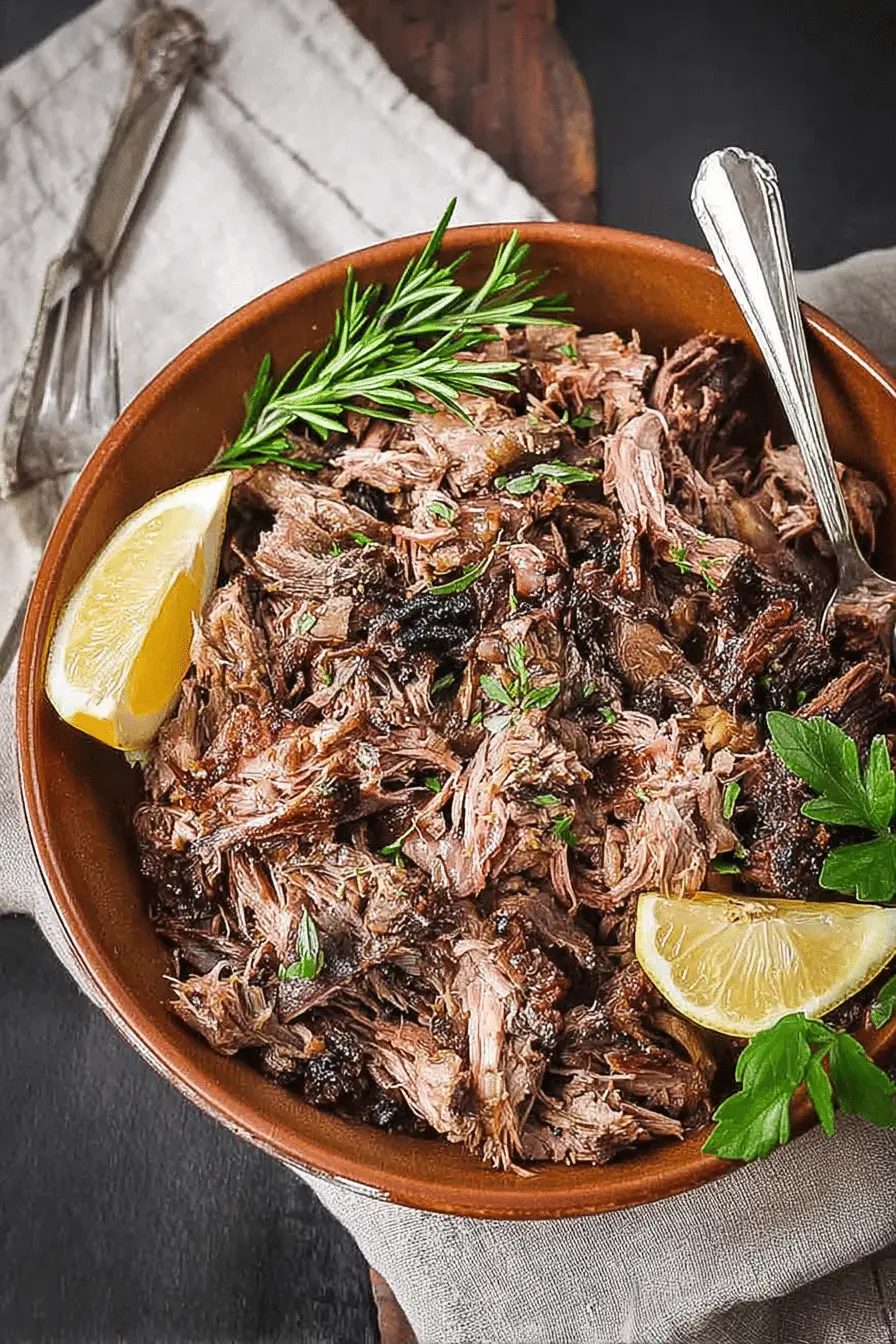
- Rest and shred. Let the lamb rest 10–20 minutes in the pan before transferring to a board or platter. Use two forks (or meat claws) to pull the lamb apart into long shreds; leave any delicious pan juices to spoon over the meat.
Cooking Method Options: Pros and Cons
- Oven roasting (my go-to) – great caramelization and easy hands-off cooking; requires a covered pan and space in the oven.
- Slow cooker – excellent for set-it-and-forget-it; use low for about 8 hours and you’ll get the same tender pull. It lacks the high-heat browning unless you finish under a broiler.
- Pressure cooker / Instant Pot – fastest tender result (around 60–90 minutes under pressure), but you lose some of the deep oven-roasted flavors. Finish under high heat if possible for color.
Tips for Shredding and Texture
- Shred while warm – the meat is easier to pull when it’s freshly rested but still warm; it will firm up a bit as it cools.
- Remove excess fat if desired – lamb is naturally fatty; I usually leave a little for flavor, but trim large pockets before shredding if you want leaner meat.
- Save the juices – spoon pan juices over the shredded lamb to keep it moist. If you want a saucier finish, reduce the juices on the stove and toss the shredded lamb in them.
Flavor Profile and Seasoning Tips
Lamb has a distinct, slightly sweet and nutty flavor with a hint of game that stands up to bold spices. The goal when seasoning pulled lamb is to complement that natural character, not mask it. The warmth of cumin and cinnamon in a Baharat blend harmonizes with rosemary and thyme; garlic brings savory depth; a little acid at the end — lemon or a splash of wine — brightens the dish. If you want to experiment with spice blends, keep the balance in mind: savory (salt, garlic), bitter/earthy (rosemary, thyme), warm/sweet (cinnamon, cardamom), and spicy (black pepper, chili flakes). Too much cinnamon will read sweet; too little salt will make the whole dish taste flat. Explore additional spice combinations similar to our Moroccan meatballs, which utilize vibrant and aromatic spices.- Salt is your friend – if the final dish tastes dull, add salt before adding sweetness. Salt amplifies flavors and finishes the meat.
- Acidity brightens – a squeeze of lemon or a spoon of yogurt on the plate wakes up rich lamb.
- Don’t overdo heat – chili flakes are great, but lamb’s fatty richness can carry spice; add gradually and taste.
Serving Suggestions for Pulled Lamb
Pulled lamb is almost annoyingly versatile — here are my favorite ways to serve it depending on the mood and occasion.- Vermicelli rice and fresh salad – a classic pairing. The rice catches the juices and a lemony salad cuts through the richness.
- Pitas or flatbreads – tuck warm pulled lamb into pita with sliced cucumber, tomato, and a spoonful of Greek yogurt or tzatziki.
- Tacos – swap lamb for pork and use pickled red onions, cilantro, and a squeeze of lime for a lively contrast.
- Stuffed vegetables – use the lamb to fill roasted peppers or eggplants for a more composed presentation.
- On a grain bowl – combine shredded lamb, roasted vegetables, greens, and a drizzle of tahini or yogurt sauce.
Health Benefits of Lamb
Lamb is a nutrient-dense red meat. A serving supplies a solid amount of high-quality protein and is rich in vitamins B12 and B6, iron, zinc, and other essential minerals. Choosing leaner cuts or trimming excess fat reduces calories and saturated fat; grass-fed lamb tends to have a more favorable fatty acid profile with higher omega-3s.- Protein – supports muscle repair and satiety; pulled lamb makes for a filling meal.
- Vitamins and minerals – particularly B12 and iron, helpful for energy and blood health.
- Moderation – as with all red meats, enjoy in balanced portions alongside vegetables, whole grains, and legumes.
Variations and Twists on Pulled Lamb
If you want to change up the profile, pulled lamb adapts well to many cuisines.- Moroccan-style – add more cinnamon, cumin, coriander, and a pinch of saffron for aromatic warmth; add preserved lemon at the end for bright salinity.
- Asian-fusion – marinate with soy, ginger, and star anise for a sweet-savory edge, and finish with sesame and scallions.
- Mexican-inspired – increase chili and cumin, finish with lime and cilantro for taco-ready lamb.
- Vegan alternative – jackfruit or shredded king oyster mushrooms can be braised in similar spices and tossed with a reduced braising sauce to mimic pulled texture.
- Healthier swaps – use leaner leg cuts, skimming fat from juices before saucing, and serve over big salads or cauliflower rice.
Make-Ahead, Storage, and Leftover Ideas
- Make ahead – You can roast the lamb a day ahead, refrigerate it in its juices, then reheat and shred before serving. Flavor will deepen overnight.
- Storage – Refrigerate for up to 3–4 days in an airtight container. For longer storage freeze in portions for up to 3 months. Thaw in the fridge before reheating slowly.
- Reheating – Warm shredded lamb gently in a pan with a splash of stock, or in a covered dish in a 300°F oven until just heated through to prevent drying out.
Common Problems and How to Fix Them
- Meat isn't tender: Return to the oven for another 30–60 minutes at 300°F, covered. Connective tissue needs time to break down.
- Too salty: Pull and discard excess juices, shred and rinse lightly in a colander, then reheat with unsalted stock and a squeeze of lemon to balance.
- Too fatty: Chill the pan juices, skim the solidified fat, then reheat the clarified juices and toss with the lamb.
Final Steps & Serving
When you pull the lamb, taste a small amount and adjust: a pinch more salt, a squeeze of lemon, or a drizzle of olive oil can lift the whole plate. Serve with warm vermicelli rice, a bright chopped salad, and plain Greek yogurt or tzatziki to cut the richness. The original recipe suggests a little lemon squeezed over the roast for the final bright note — I always do it.FAQ
- What is the best cut of lamb for pulled lamb? For pulled lamb, the best cut is lamb shoulder because it has plenty of connective tissue and fat that break down during slow cooking, resulting in a moist and flavorful dish.
- How long does it take to cook pulled lamb? Cooking pulled lamb typically takes about 4 to 5 hours in the oven for a tender result. Make sure to keep it slow-roasting for the best texture!
- Can I use a slow cooker for this recipe? Yes! You can use a slow cooker for pulled lamb. Just follow the same seasoning and cooking steps, and allow it to cook on low for about 8 hours.
- What should I serve with pulled lamb? Pulled lamb pairs beautifully with vermicelli rice, fresh salads, or even in sandwiches. You can also serve it with yogurt or tzatziki for added flavor!
- Is pulled lamb a healthy dish? Yes, pulled lamb can be part of a healthy diet. It’s rich in protein and provides essential nutrients like iron and vitamins B12 and B6, especially if you choose lean cuts.
Conclusion and Final Thoughts
Pulled lamb is a forgiving, impressive dish that rewards patience. The technique is simple — season, slow-roast, and shred — but the layers of flavor from aromatics, spices, and slow cooking make it feel special. I’ve tested this method multiple times and find it perfect for weekend dinners or small gatherings where you want something that feels both rustic and polished. Try one of the variations listed, and don’t be afraid to make it yours. If you cook it, come back and tell me how you served it and what twists you tried — I always learn new things from readers' adaptations. Author note: I often make this on a chilly weekend when I want the house to smell like something comforting and deep. The slow roast frees up the afternoon, and the leftovers become quick lunches that I actually look forward to.Recipe Card
Pulled Lamb: The Ultimate Comfort Dish for Special Occasions
- Prep
- 15 min
- Cook
- 300 min
- Total
- 315 min
- Serves
- 6
- Calories
- 342 kcal
- Carbs
- 6.00 g
Ingredients
- 2 wholeRed onions (Peeled and quartered)
- 2 wholeGarlic bulbs (Cut in half horizontally or broken into cloves)
- 5 sprigsRosemary
- 10 sprigsThyme
- 3-5 piecesBay leaves
- 1.5 tbspKosher salt (If using table salt, cut the amount by half)
- 2 tspBaharat (7-Spice blend)
- 2 tspGarlic powder (Use salt-free garlic powder)
- 1 tspFresh cracked black pepper
- 0.5 tspGround cardamom (Optional but recommended)
- 4-5 lbsBoneless lamb shoulder or leg
- 2-3 tbspOlive oil
- 1 cupChicken stock (250ml)
- 0.5 cupWhite wine (Optional (replace with more stock))
Instructions
- 1
Prepare the roasting pan by adding quartered onions, garlic, rosemary, thyme, and bay leaves.
- 2
Combine salt, baharat, garlic powder, black pepper, and cardamom. Rub the mixture all over the lamb.
- 3
Preheat oven to 500F/260C and roast for 20 minutes to brown the aromatics.
- 4
Lower the oven to 300F/150C, add chicken stock and wine, cover, and slow roast for 4-5 hours.
- 5
After 4-5 hours, baste the meat with lamb juices and broil for 10-15 minutes until the top is slightly browned.
- 6
Let the lamb rest for 10-20 minutes before serving with your favorite sides.
You might also like
Reviews
Be the first to review this.