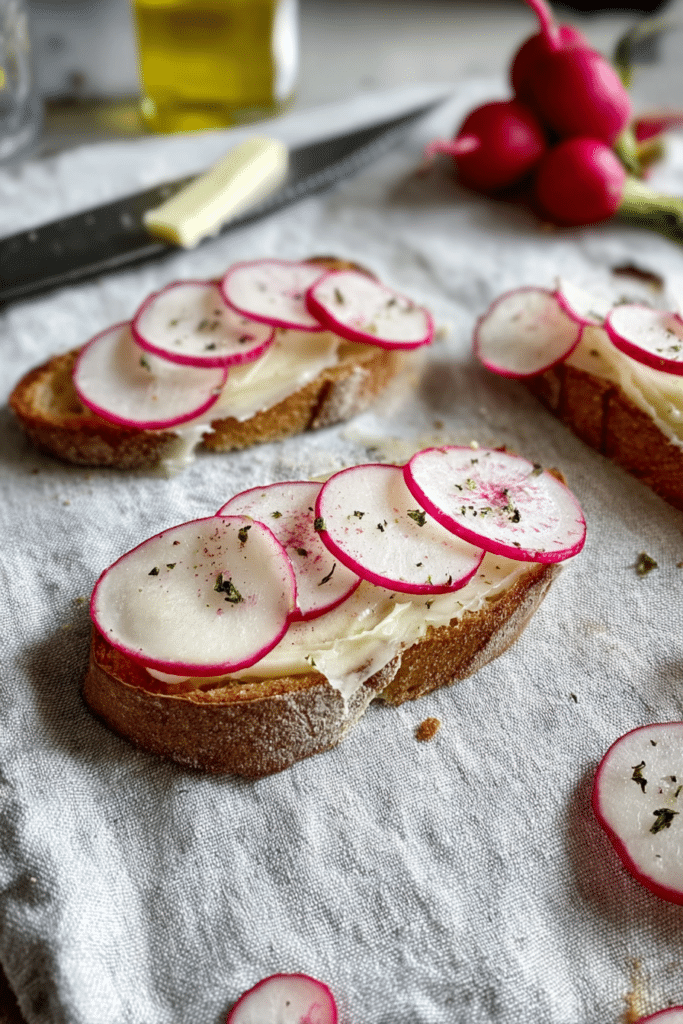
I have a soft spot for the tartine. In my kitchen it appears most often in spring, when the market bundles of radishes arrive with their bright pink skins and peppery perfume. A slice of good bread, a smear of quality butter and a scatter of radishes says more about seasonality and restraint than any elaborate plate.
I first learned the rhythm of this simple snack from friends who grew up in the south of France: food that trusts excellent ingredients to do the work. In my experience, the charm of the radish-and-butter tartine is how it balances opposites — the cool silk of butter against the bracing crunch of a radish, the visual pop of coral against the pale sheen of butter.
I’ve made this tartine countless times and, over the years, settled on a handful of small practices that keep it reliable: warm, soft butter that spreads without sliding off the bread; radishes sliced just thick enough to retain a satisfying bite; and a final, generous grind of black pepper. The result is unpretentious and vivid, perfect for a light lunch or a prelude to a longer meal.
Why the Radish and Butter Tartine Is Perfect for Fans of Authentic French Cooking
The tartine is a modest emblem of French kitchen philosophy: little fuss, great ingredients. Its roots in southern French culinary life emphasize mornings at the market and meals that respect seasonality and texture. The tartine’s simplicity allows each component to speak—there is no hiding behind heavy sauces or complicated seasoning.
Think visually: the white of the butter, the deep pink of radish skins, the scatter of coarse salt and pepper. Smell the faint peppery tang of freshly cut radish and the dairy richness of a cultured butter. The experience is direct and honest—food made to be enjoyed immediately, with clarity.
Everything You Need for Radish and Butter Tartine
Lay your ingredients out on the counter. Seeing them together—rustic bread, softened butter, vibrant radishes—helps you tune into what the tartine is about before you begin.
- * French baguette or other artisan bread – Provides the structural base; choose a loaf with a crisp crust and tender crumb, or opt for sourdough or country loaf for more texture.
- * High-quality butter, softened – The star of the tartine; cultured or European-style butters bring a deeper, tangier note, while a good salted butter adds convenience.
- * Radishes – Look for firm, crisp radishes with bright skins and fresh greens; small round varieties give a pleasing bite.
- * Fleur de sel or other coarse sea salt – A finishing salt that lifts the butter and complements the radishes without overwhelming them.
- * Freshly cracked black pepper – Adds aroma and a gentle heat; grind just before serving for the best fragrance.
- * Optional tools – A sharp knife or mandoline for slicing radishes thinly, and a butter knife or offset spatula for spreading.
Why Simple, High-Quality Ingredients Make the Tartine Radis-Beurre
Each component matters because there are so few of them. A cultured butter brings a faint tang and glossy mouthfeel that a standard butter cannot quite match; its higher fat content and slight acidity play beautifully against the peppery radish. Fresh-from-the-market radishes have a clean, snappy texture and a real bite—store-bought, limp radishes will mute the effect.
Think about the bread: a crusty baguette will give you crisp edges and a chewy interior, while a denser country loaf will lend more heft. I prefer bread where the crumb can cradle the butter without turning soggy. Emotionally, preparing these few fine ingredients connects me to a long tradition of simple, seasonal eating—there is warmth in that restraint.
The Secret to the Perfect Crunch and Butter Spread
- Use room-temperature butter so it spreads smoothly without tearing the bread. Cold butter leaves lumps; melted butter loses presence on the palate.
- Slice radishes to a thickness that preserves crunch. Aim for slices that are thick enough to be felt—if they’re translucent, they can disappear into the butter.
- Apply butter generously. The point is to taste the butter as a primary component rather than merely a lubricant for the bread.
- Finish with coarse salt and a steady grind of black pepper to balance the radish’s bite and the butter’s richness.
How to Make Radish and Butter Tartine (Step-by-Step)
- Slice your baguette into relatively thin rounds. You may choose not to toast them; I often serve the bread at room temperature so the butter stays substantial rather than melting away.
- Spread a generous portion of softened butter across each slice. The spread should be even and thick enough that each bite is buttery without the butter collapsing entirely into the crumb.
- Thinly slice radishes to about one-eighth-inch thickness—keen knife skills or a mandoline will help you keep the slices consistent.
- Arrange radish slices over the butter in a single layer so each slice gets a balance of crunch and fat.
- Season with a pinch of fleur de sel or coarse sea salt and a few twists of freshly cracked black pepper.
If you enjoy another open-faced sandwich style, you might also like making classic French bruschetta as an alternative option for casual entertaining.
Troubleshooting
- If the butter is too hard to spread, let slices sit at room temperature for a few minutes rather than microwaving—it preserves texture and flavor.
- If radishes taste sharp or bitter, try a quick rinse and pat dry; very old radishes lose their crisp sweetness and should be replaced.
- If bread becomes soggy, serve buttered slices immediately and add radishes just before plating to maintain texture.
Pro Tip for radish and butter tartine: Use room-temperature butter & fleur de sel
- I always use room-temperature butter because it lets you smear an even layer that carries flavor and mouthfeel; cold butter tears the crumb, and melted butter disappears.
- Apply fleur de sel sparingly and at the end so each flake provides a concentrated burst of salinity against the butter.
- Grind your black pepper just before serving to preserve its aroma and mild heat.
After indulging in your tartine, satisfy your sweet tooth with homemade butter tarts for dessert.
How to Store, Serve, and Vary Your Radish and Butter Tartine
Storage is straightforward: keep leftover radishes in a cool, humid drawer wrapped in a damp towel to preserve crunch; store sliced bread in a paper bag to maintain crust integrity for as long as possible. Butter keeps best wrapped in the refrigerator, brought to room temperature before serving.
For a comforting meal, enjoy your tartine with a bowl of delicious French onion soup.
Variations
- Herbed butter: fold finely chopped chives or tarragon into softened butter for an aromatic lift.
- Radish and cheese: add a smear of soft cheese under the butter or a thin shaving of a tangy cheese for contrast.
- Greens and seeds: scatter chopped radish greens, toasted seeds, or a drizzle of good olive oil for texture and color.
- Warm tartine: lightly toast the bread and use butter at room temperature so it softens but still provides body.
You might also serve the tartine as part of a small spread with charcuterie and a chilled rosé for a more substantial offering.
Dietary Swaps: Vegan Alternatives for Radish and Butter Tartine
Vegan preparations honor the same principles: quality, texture, and seasoning. Use the same assembly but substitute plant-based spreads and attend to salt balance.
- Plant-based butter – Choose a cultured-style vegan butter for a similar tang and richness; ensure it is soft enough to spread at room temperature.
- Nut spreads and oils – For a different profile, try a thin smear of mild nut butter or a brush of extra-virgin olive oil with a sprinkle of flaky salt.
- Enhancements – Add finely chopped herbs, lemon zest, or a touch of mustard to lift the flavors when butter is absent.
If you would like a heartier vegan option, consider topping the tartine with smashed avocado and radish slices or a smear of white bean purée under the radishes.
Frequently Asked Questions
What is a radish and butter tartine?
A radish and butter tartine is an open-faced sandwich made with high-quality butter spread on a slice of crusty bread, topped with thinly sliced radishes, salt, and pepper. It’s a simple yet flavorful dish celebrated in French cuisine.
Can I use other types of bread for the tartine?
Absolutely! While a French baguette is traditional, you can use any artisan bread you like. Whole grain or sourdough also work wonderfully!
What type of butter should I use?
It’s best to use high-quality, softened butter. Salted butter enhances the flavor of the radishes, but feel free to choose according to your taste preferences.
How can I make this recipe vegan?
To make a vegan version of the tartine, you can use a plant-based butter alternative and ensure that the bread is dairy-free. This way, you can enjoy the dish while adhering to your dietary preferences!
What pairs well with radish and butter tartine?
A chilled French rosé is a classic pairing, but you can also serve it with a light salad or some charcuterie for a more substantial meal!
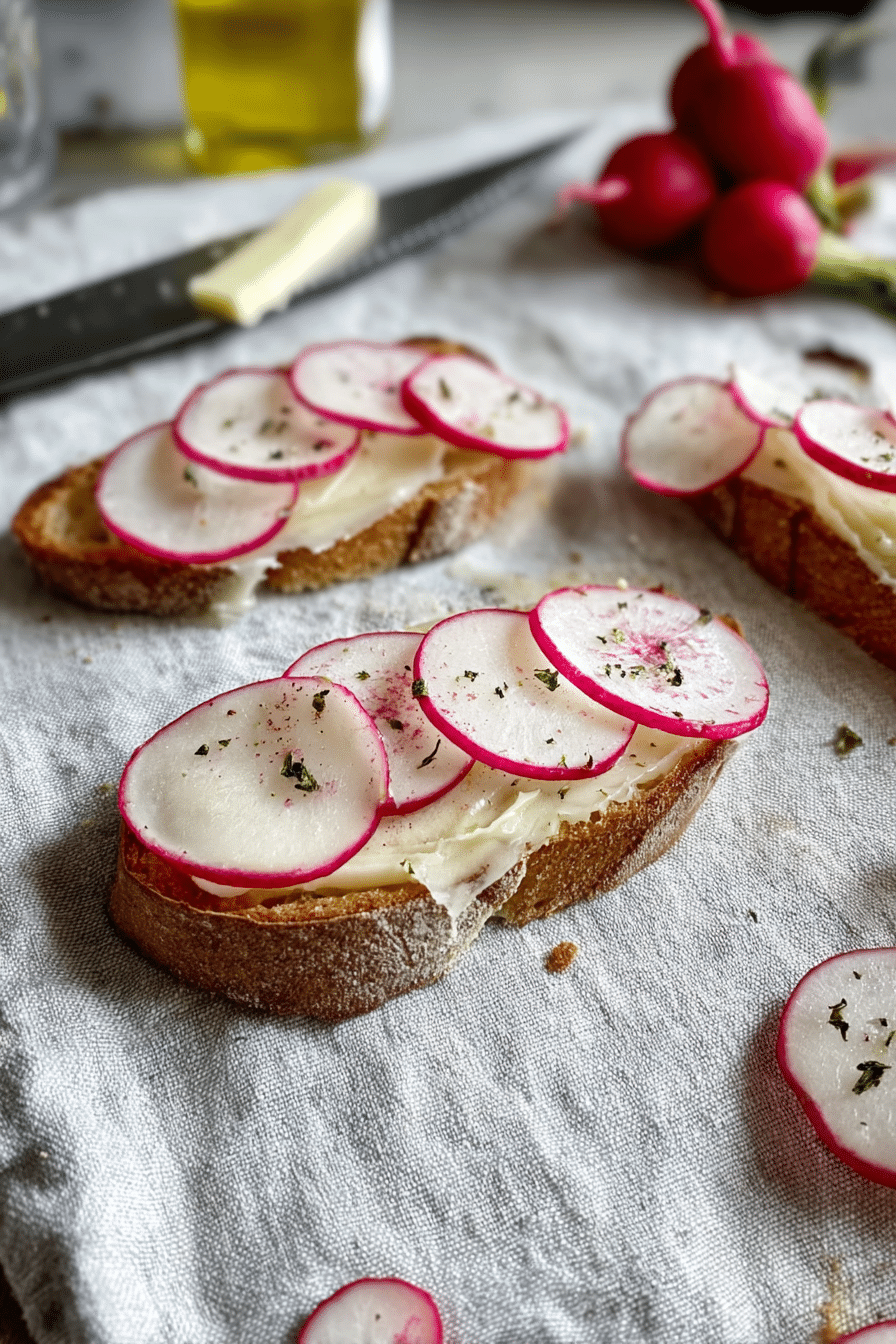
Radish and Butter Tartine
Ingredients
Method
- Slice baguette into approximately 1/4" slices. Toasting is optional – I find this tartine is best when the bread is not toasted, but if you're looking for some warmth or extra crunch, feel free to try toasting.
- Spread a generous portion of butter onto each slice of baguette. The butter shouldn't be melting entirely into the bread. You really want to taste the butter in each bite.
- Thinly slice radishes into at least 1/8" thick slices. You want them to be thick enough to have a satisfying crunch.
- Sprinkle on fleur de sal or other coarse sea salt and freshly cracked black pepper.
- Serve with a chilled French rosé!